Tag Archives: art

Quotes and Inspiration

Churchill

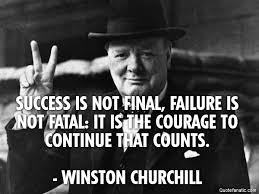
It is no secret that Winston Churchill is one of my favorite historical figures (although one among many). As quotes are a big part of the curriculum where I will be teaching, I decided to start off the school year with this quote. I love it. Students may not fully appreciate it until they are older, but man, is it ever true. There is always the opportunity to start over and to make tomorrow better than today.

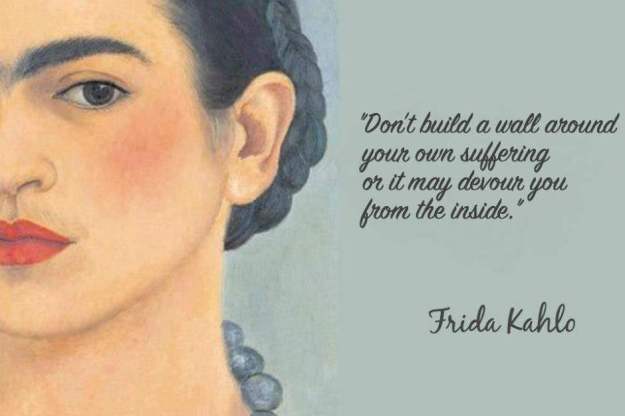
This is precisely why I love Churchill. He refused to give up in the worst of circumstances. Period. I want to build upon that idea all year long. In fact, my Spanish classes will definitely be studying Frida Kahlo. She had that same tenacity. In fact, I wish that I could show the movie Frida (one of my favorites). Unfortunately, that isn’t a possibility. Hopefully, sharing some of her artwork and quotes will inspire them anyway.

It is by studying those who came before us and accomplished great things that we can truly become inspired. This is why I love memoir, biographies, and autobiographies. So many times I am left wondering how people persevered in the face of what appeared to be insurmountable obstacles. There is always a way.

Frida 2

Essential Questions

Essential Questions by Jay McTighe and Grant Wiggins

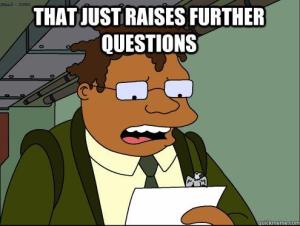
hermes-meme

Sometimes distinct areas of my life overlap.  This is one of those times.  Who knew I’d find inspiration for my blog in the required reading for one of my education classes?  I love when things like this happen.  When I first read this article, I immediately saw the potential for a series of blogposts, each one exploring an essential question, of course.

For those who don’t know, I am currently working on completing a teacher certification program that will allow me to teach Spanish and social studies at the secondary level (grades 6-12).  Add in my interest in all things relating to language, and it isn’t surprising that I will be focusing on the essential questions in those subject areas:  world languages, history and social studies, along with language arts.  I may add in a few from art as well.  Here are a few questions that left me inspired to write.  Please keep in mind that I did not come up with these questions as they are taken verbatim from the article above.  I’m not exactly sure how I will use these questions here on my blog, but they are worth noting.

Essential Questions in History and Social Studies

  • Whose “story” is this?
  • How can we know what really happened in the past?
  • How should governments balance the rights of individuals with the common good?
  • Should _______ (e.g., immigration, media expression) be restricted or regulated? When? Who decides?
  • Why do people move?
  • What is worth fighting for?

Essential Questions in Language Arts

  • What do good readers do, especially when they don’t comprehend a text?
  • How does what I am reading influence how I should read it?
  • Why am I writing? For whom?
  • How do effective writers hook and hold their readers?
  • What is the relationship between fiction and truth?
  • How are stories from other places and times about me?

Essential Questions in World Languages

  • What should I do in my head when trying to learn a language?
  • How can I express myself when I don’t know all the words (of a target language)?
  • What am I afraid of in hesitating to speak this language? How can I overcome my hesitancy?
  • How do native speakers differ, if at all, from fluent foreigners? How can I sound more like a native speaker?
  • How much cultural understanding is required to become competent in using a language?
  • How can I explore and describe cultures without stereotyping them?

Essential Questions in the Arts

  • What can artworks tell us about a culture or society?
  • What influences creative expression?
  • To what extent do artists have a responsibility to their audiences?
  • Do audiences have any responsibility to artists?
  • What’s the difference between a thoughtful and a thoughtless critique?
  • If practice makes perfect, what makes perfect practice?

Meta and Reflective Questions

  • What do I know and what do I need to know?
  • Where should I start? When should I change course? How will I know when I am done?
  • What’s working? What’s not? What adjustments should I make?
  • Is there a more efficient way to do this? Is there a more effective way to do this? How should I balance efficiency and effectiveness?
  • How will I know when I am done?
  • What should I do when I get stuck?
  • How can I overcome my fear of making mistakes?
  • What have I learned? What insights have I gained?
  • How can I improve my performance?
  • What will I do differently next time?

(McTighe & Wiggins, 2013)

“The Lost Art of Keeping Secrets” By Eva Rice

Book Review:  “The Lost Art of Keeping Secrets” By Eva Rice – Write Meg!

Lost Art

Even though I read The Lost Art of Keeping Secrets by Eva Rice several years ago now, it never really left the back of my mind.  On the surface, it is dishy and a guilty pleasure in the best sense of the term.  As easy as it is to write off as a beach read, there has to be something more there in order for it to stick with me for so long.  That is partly why it stuck with me:  I’ve been trying to figure out exactly what it is about this book that fascinates me.  I finally think I have it figured out.  The book itself is set in post-war, 1950s London.  While there are still vivid memories of World War II and the Blitz, there is a contagious sense of renewal, hope, and general optimism throughout the book.

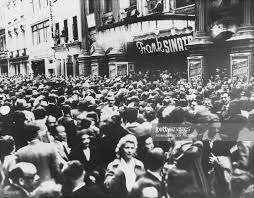
That atmosphere, used effectively as a backdrop for an interesting group of teenage characters (Penelope and Inigo Wallace, Charlotte Ferris and her cousin Harry), allows them to shine and adds to the excitement of early rock and roll in London.  So much of the novel revolves around the music!  Inigo is obsessed with Elvis, while Penelope and Charlotte adore Johnnie Ray.  In fact, one of the pivotal events in the novel involves a Johnnie Ray concert at the London Palladium.  I can just imagine the excitement and what it meant to be a teenage girl waiting to see your rock and roll idol in concert.

I think that is why I love this novel so much.  It takes place during a period of time that influenced the likes of the Beatles, the Rolling Stones, David Bowie, and countless others.  The music I know and love simply wouldn’t exist without the likes of Elvis, Little Richard, or Johnnie Ray.  Knowing the history of rock and roll and what takes place in the late 1950s and early 1960s makes this book that much sweeter.  I definitely need to reread it.

London Palladium, 1950

London Palladium, 1950

Personal Heroes

Little Richard

We all have personal heroes, whether we want to admit it or not.  Personally, most of mine are people I know well in real life, but there are exceptions.  One huge exception for me is the Beatles, Paul McCartney in particular.  There are bands and musicians I like, and then there are the Beatles.  I bring this up because a friend of mine just lost one of hers on Monday:  David Bowie.  In fact, she wrote a moving piece on what his music, and more importantly, his persona, meant to her on Facebook.  I get it; I truly do.

The thing is, until he passed away, I never thought of David Bowie or his music that much, although my friend’s enthusiasm for his music is contagious.  Now that I have a better understanding of what his music represented and the risks he took with his career, not to mention the generations of artists he inspired, I can say that David Bowie belongs alongside people like Elvis, Johnny Cash, and yes, the Beatles, in a category all their own.  All of those artists broke barriers, created – or helped to create – new genres of music.  They also crossed genres and inspired new generations of musicians.

So why do we care so much about people we’ve never met?  I think that is part of the mystery of art, music in particular.  We feel as though we know the artists when we’ve spent decades listening, discussing, and analyzing their work.  We invest so much time and energy in the things we love – art, books, music, TV, films, etc. – that when their creator dies, a part of the magic is gone.  For example, in my life, there was never the possibility of a Beatles reunion.  John Lennon died ten days before I was born.  My generation will always wonder what Kurt Cobain would have accomplished musically with or without Nirvana had he lived.  Instead of wondering what an artist will do next, after his or her death, fans are left with a finite catalog of music, writing, films, paintings, etc.  There is nothing new to discover, only memories of what it felt like to await a new release.