Tag Archives: books

My First Love

Roald Dahl

Without a doubt, my first love happened to be books.  A conversation last week made me think of what books I loved as a child and how they shaped the adult I became.  Unfortunately, this list may date me.  The funny thing is, there is no way I could limit it to just one book, one series, one period of my childhood and teenage years.  Instead, I – and by extension you – will have to settle for categories.

Poetry –

Where the Sidewalk Ends – Shel Silverstein

This was the first book of poetry I ever owned, and I absolutely loved it.  It still holds a special place in my heart.

Favorite Children’s Authors –

Roald Dahl

All of Roald Dahl’s books were in vogue with elementary school teachers throughout my childhood, and frankly, elementary school would not have been the same without James and the Giant Peach, The BFG, The Witches, Charlie and the Chocolate Factory, Matilda, among others.  Some of my favorite elementary school memories are tied to his books.  My first grade teacher read James and the Giant Peach, and none of us could get enough.  Even in 5th and 6th grades, the best part of the school day hands down happened to be the half hour after lunch recess when teachers would read to us.  I even know a certain 5th grade teacher who can fake out her students with The Witches.

Laura Ingalls Wilder

The popularity of the TV show, even in reruns, during my early elementary school years ensured that I would discover The Little House on the Prairie series eventually, but my 2nd second grade teacher read The Little House in the Big Woods to our class.  I couldn’t get enough.

Laura Ingalls Wilder’s work is at least part of the reason why I write.  I reread all of The Little House on the Prairie books as an adult, including Farmer Boy and The First Four Years.  I also read collections of her essays and letters, including West from Home.  Reading even more of her work made me admire her even more.

Favorite Series –                                                          

Anne of Green Gables

I read and loved all of the Anne of Green Gables books.  They captured my imagination as few others.  Anne reinforced my love of strong female protagonists.

Little House on the Prairie

See above.

Nancy Drew

I discovered Nancy Drew early in elementary school thanks to my Grandma who let me borrow her collection.  Once I read all of the traditional Nancy Drew novels, I started on the new series.  I could not get enough.  Unfortunately, I loved Nancy Drew so much that I burned out on mysteries.  I tried getting into the Kinsey Millhone mystery series by Sue Grafton as a young teenager, but soon became bored, even though I loved Kinsey.

Choose Your Own Adventure

These books were not great children’s literature, but they were entertaining.  I could not rest until I read every single version of the story.

Favorite Classics –                                                          

Gone With the Wind by Margaret Mitchell

I read this book the summer after 8th grade.  It took me most of the summer, but I lost myself in Civil War era Atlanta and Tara.  It was the perfect antidote to an 8th grade English teacher who spent most of the year on short stories more appropriate for younger students, along with spelling and grammar.

To Kill a Mockingbird by Harper Lee

It saddens me that I didn’t love this novel more when I read it in 10th grade.  I am grateful that I reread it for book club as an adult.  It deserves its revered place in American literature.

Lord of the Flies by William Golding

Another book read as part of the 10th grade English curriculum, this is one that stayed with me long after high school.  Never underestimate teenagers.  Never.

I Know Why the Caged Bird Sings by Maya Angelou

Even though this isn’t an Oprah Book Club pick, I associate it with that era in my life.  I used to rush home from school to watch Oprah, and her book club influenced what I read in my later high school years.  There are many school of thoughts as to whether or not this novel should be taught to teenagers.  I understand both sides, but I did love it.  I am glad that teenagers can find it even if it isn’t taught.

Edgar Allen Poe

I swear I came across one or two of Poe’s stories in an ancient collection of spooky stories in my elementary school library.  I question the memory simply due to the fact that it was an elementary school library.  Then again, the book itself was so old that it could have possibly dated from when there was a high school at the same location.  I like to think that I really did come across Poe in elementary school, and that it was his short stories that fed my love of ghost stories.  I have no idea why today’s high school students hate studying Poe – and they do.  I loved it.

Favorite Historical Fiction –

Christy and Julie by Catherine Marshall

These books introduced me to historical fiction, the Cumberland Gap, and Appalachia.  I loved them, even if I probably wouldn’t pick them up now.  They did spark my love of historical fiction.

Honorable Mentions –

Roll of Thunder Hear My Cry and Let the Circle Be Unbroken by Mildred D. Taylor

These books, depicting racism in the segregated South, made me recognize just how much I took my life for granted.  The children in these books faced so many obstacles on a daily basis just to get to school.

Randall’s Wall by Carol Fenner

The book itself isn’t all that remarkable, even though it does have a good anti-bullying message.  The reason I included it is due to its author.  As part of a young writer’s club in elementary school, I had the opportunity to meet her.  I even had her sign my copy of the book, and I almost missed the bus.  Another favorite elementary school memory tied to books, reading, and writing.

The Cay by Theodore Taylor

My Mom taught this novella as part of the 6th grade social studies curriculum.  She also happened to be my 6th grade social studies teacher.  She was the first teacher I had that used literature to teach social studies.  As a future social studies teacher, I plan to do the same.  My Mom may not know this, but she is largely responsible for my interest in teaching social studies and Latin America in general.  Recently I saw 6th graders carrying around The Cay; it is still taught nearly 25 years later.
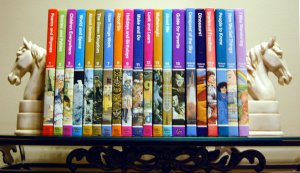
Childcraft

Chasing Happiness

meant to be

As February and Turner Syndrome awareness month comes to a close, some old debates in the Turner Syndrome community rear their ugly heads.  Every now and then, someone brings up the subject of how women with Turner Syndrome are portrayed in popular culture.  Believe it or not, Turner Syndrome is portrayed in popular culture with varying degrees with accuracy.  Some stereotypes do more harm than good.

One of my old favorite TV shows, Law and Order:  SVU, once aired an episode named Clock with a protagonist, 17 year-old Janey Speer, with Turner Syndrome.  Originally Stabler and Benson believe that Janey is the victim, but soon it becomes much more complicated than that.  Inaccuracies relating to Turner Syndrome aside, the way in which Janey’s boyfriend is treated in the episode is particularly troubling to me.  Essentially he is treated as a pedophile.  Connor’s motives for being with Janey and going along with her plans – and they are certainly her plans – are continually questioned due to the fact that Janey looks so much younger than she actually is.  Janey’s emotional and intellectual maturity is never mentioned.

The episode is also troubling because nothing is mentioned about hormone replacement therapy and suggests that most women with Turner Syndrome have a short window in which to become pregnant.  I understand that this piece of information drives the plot; however, I worry that it gives younger girls with Turner Syndrome false hope.  While this may be true for an extremely small percentage of women with Turner Syndrome (less than 5%), it certainly isn’t the norm.  This fact was never mentioned in the episode.

There is one particular scene in Clock that I love though.  When Janey is the hospital and her entire plot to become pregnant comes to light, someone mentions that women and girls with Turner Syndrome are extremely stubborn.  While it is fair to mention that I would have been extremely stubborn anyway given family history, I love the idea that it is a trait of women and girls with Turner Syndrome.  Why wouldn’t we be?  We have to fight that much harder to get what we want out of life – and I see nothing wrong with that.

Another well-known portrayal of Turner Syndrome in popular culture, Gwen in The Condition by Jennifer Haigh, is much more realistic in my opinion.  There is a scene in the beginning of the novel where Gwen is compared to her slightly older female cousin.  That scene sticks with me because it is precisely what I did at that age.  While the way in which Gwen’s family deals with the fact that she has Turner Syndrome is extreme and appears false to me, I love Gwen’s reaction to it all.  She comes across as the most levelheaded person in her family.  Ultimately, she realizes what she is missing in her life and pursues it with all that she has.  Her decision to risk it all for love by uprooting her life and starting over in the Caribbean is one of the most personally satisfying endings to a novel that I have ever read.  It is something I would consider if I were in Gwen’s situation.  I couldn’t help but cheer for her sheer force of will to be happy.

Everyone seems to have a different opinion about Clock and The Condition.  I admit that both have their issues, but it still amazes me that Turner Syndrome is portrayed in popular culture at all.  What impresses me is that girls and women with Turner Syndrome are largely shown to be strong willed and determined to let nothing stop them from achieving anything.  It may come across as naïve or overly optimistic, but I would rather be determined than resigned.  Resignation never helped anyone.

Caribe

Ten Books to Keep Your Brain Happy

love-fictional-characters

The Ten Most Important Books to Feed Your Brain

I’ve been on a reading kick lately, and frankly, after finishing A Little Life by Hanya Yanagihara, nothing is going to compare to the emotional intensity of that book.  Fortunately, I came across this list of books that contains titles that offer something different.  I expect to be intellectually challenged, but in these titles, at least I won’t be looking for the emotional intensity and character development of A Little Life.  I do not remember the last time I became so emotionally invested in fictional characters.  In fact, it will be nice to read something other than fiction for a change.

What drew me to this article is the author’s list of what he considers to be the top 10 braingasm books.  He defines these books as books that can fundamentally change lives.  If the one book I’ve read (Malcolm Gladwell’s Outliers) included on the list is any indication, all of the books deserve to be read at least once.  In fact, the way the list is structured, it offers additional titles for anyone willing to do a little research.  As for Malcolm Gladwell’s books, I can recommend them all.  In fact, I might just reread Outliers.  Above all, I love coming across lists like this.  I will never be able to read (or reread) all of the books I love or are highly recommended, much less books that just sound interesting.  I will never understand why people do not like to read.  I am convinced that he or she simply hasn’t found the right title yet.


My Life in Books – Back to Square One

read-writer

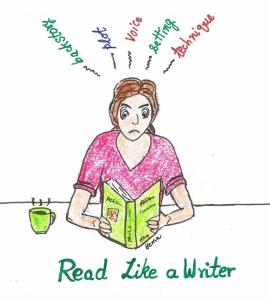
As part of my original blog, I religiously kept a log of books I read.  When I began keeping track, my reading life took off, particularly after I read Reading Like a Writer by Francine Pose.  I finally recognized that what I read is just as important as what I write if I am ever to be a successful writer.  It is still true.  Unfortunately, as I became so focused on my classes, I simply didn’t read quite as much.  Fortunately, I still read to keep up with book club and a few of my writing courses.

Even though I did keep reading over the last couple of years, I do feel as though I’m starting over as an intentional reader.  I used to plan my reading.  There was a method, although I wouldn’t be able to fully describe it.  I wish I had kept better track of what I read over these last few years, although I may attempt to recreate the list (thanks to my book club lists and an old syllabus or two).  It will be interesting to see how well I succeed.

There is another component to all of this though relating to my theme of “home.”  I have a fairly large personal library that needs to be cataloged and organized.  I need to somehow manage working my way through my personal library, both traditional books and e-books, with discovering new authors and titles.  So many books, so little time.

books

“The Lost Art of Keeping Secrets” By Eva Rice

Book Review:  “The Lost Art of Keeping Secrets” By Eva Rice – Write Meg!

Lost Art

Even though I read The Lost Art of Keeping Secrets by Eva Rice several years ago now, it never really left the back of my mind.  On the surface, it is dishy and a guilty pleasure in the best sense of the term.  As easy as it is to write off as a beach read, there has to be something more there in order for it to stick with me for so long.  That is partly why it stuck with me:  I’ve been trying to figure out exactly what it is about this book that fascinates me.  I finally think I have it figured out.  The book itself is set in post-war, 1950s London.  While there are still vivid memories of World War II and the Blitz, there is a contagious sense of renewal, hope, and general optimism throughout the book.

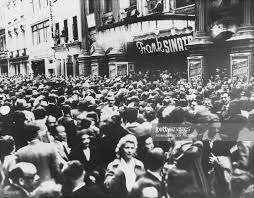
That atmosphere, used effectively as a backdrop for an interesting group of teenage characters (Penelope and Inigo Wallace, Charlotte Ferris and her cousin Harry), allows them to shine and adds to the excitement of early rock and roll in London.  So much of the novel revolves around the music!  Inigo is obsessed with Elvis, while Penelope and Charlotte adore Johnnie Ray.  In fact, one of the pivotal events in the novel involves a Johnnie Ray concert at the London Palladium.  I can just imagine the excitement and what it meant to be a teenage girl waiting to see your rock and roll idol in concert.

I think that is why I love this novel so much.  It takes place during a period of time that influenced the likes of the Beatles, the Rolling Stones, David Bowie, and countless others.  The music I know and love simply wouldn’t exist without the likes of Elvis, Little Richard, or Johnnie Ray.  Knowing the history of rock and roll and what takes place in the late 1950s and early 1960s makes this book that much sweeter.  I definitely need to reread it.

London Palladium, 1950

London Palladium, 1950