Category Archives: creativity

The “L” Word – Love

love

There is no more loaded and misused word in the English language than love.  This post, as much as I wish it could be about romantic love, is about the everyday love that gets people up in the morning.  The thing is that I would not be here or in the position I am now if it were not for the love of several people in my family – namely my parents and every single one of my grandparents.  I realize that many people can say that, but not all.  Also, I have the unique perspective of being able to directly tie my future to the love and support of my parents and grandparents.  If it weren’t for my family, I would not have been able to go back to school to pursue my teaching degree.  If I am able to fully realize my dream of being a high school teacher, business owner, and mom, it certainly won’t be due to my efforts alone.  Only the love of several people could help me accomplish those goals.

When I first began thinking about this post, I couldn’t help but think of my Grandma B., my maternal grandmother.  She passed away in 2014 just as I was beginning my second college career.  She most definitely approved of my plan.  When I finally have my first classroom, I know that she’ll be watching over me from wherever she may be.  Education meant that much to her.  My other grandmother, Grandma R., values education every bit as much, but never had the opportunity to obtain a college education.  Even at 91, she reminds me at least once a week that she loved school, and she tells me old school stories that I’ve heard too many times to count.  I love it because I will never forget them.  In some ways, I feel as though I am getting an additional opportunity at a college education that she never had.  If I eventually do adopt, my child(ren) will know all about them and the profound influence they had on our entire family.

What frustrates me at the moment is that I so badly want to give back what has been given to me.  I want to help someone achieve their dreams.  I am just not there – yet.  I am not in that position – yet.  I have so much love to give and, as of yet, no family of my own.  I am simply way too impatient.

The “L” Word – Lying

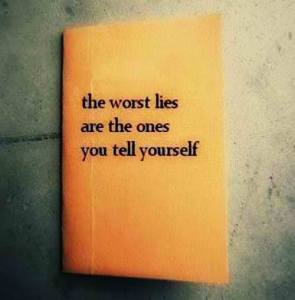
lies-quotes-tumblr-life-Favim.com-803231

It cracks me up how a blog post evolves over time.  I’ve been meaning to write a post entitled The “L” Word discussing my political views, which have taken on an increasingly libertarian bent (hence the “L” word).  As I thought about the post, I realized that I could write a completely different post with the same title.  Instead of libertarian, the “L” would stand for love.  It is almost Valentine’s Day after all, even if my personal life appears to be permanently on hold.  Yet, I still believe in love.

The funny thing is that I kept thinking about possible topics for this blogpost; I couldn’t help myself.  The title could certainly refer to lying as well, as in how we all lie to ourselves.  Now that I have at least three topics, it’s turned into a series of posts.  Let’s get started:  It is time to talk about the lies we tell ourselves.

The sad truth is that if a person believes something will NOT happen, it never will.  For instance, I somehow convinced myself that choosing to live in my hometown permanently means that I will never meet the right man.  Will it be more difficult?  Probably.  The thing is that I don’t know what the future holds, and yet, I automatically tell myself that I will be alone the rest of my life.  I simply have to trust that there is some larger plan out there.  Unfortunately, I have to keep reminding myself that anything can happen.  The larger question is why do we do this to ourselves?  I know I am far from alone.  The false narratives need to go.

lies

The High Cost of (Not) Being Yourself – Part 2

maxresdefault

What It Means to Just Be Yourself and 3 Ways to Do It – Tiny Buddha

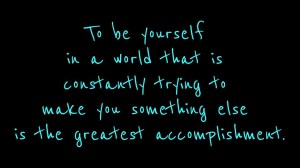
All this week I’ve been thinking about what it means to be true to yourself.  It is something I’ve struggled with lately.  For example, I’ve given a lot of thought to the type of man I would want to date.  There are a few things I know.  First, he will have to love to read and at least highly value education.  The first realization I came to in the aftermath of my breakup with my ex is that I am still attracted to intellect.  I need something interesting to talk about, something that goes beyond pop culture and a glossing over of current events or sports.  Second, I also recognize the importance of being at least understanding of each other’s political views, no matter how different or similar.  Unfortunately, many people wonder why there isn’t more actual political debate, are upset by that fact, and yet shutdown anyone with an opposing viewpoint.  The reality is that it is difficult to understand my political perspective unless you understand how growing up in a small business affected my outlook on just about everything.  The thing is, I don’t fit the traditional political paradigm well, which is another blogpost entirely.  The point is that I know exactly what I want now.  It just feels impossible to find the right man given where I live.  Then I ask myself, does it really matter?

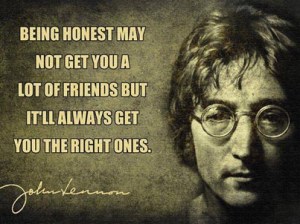
It doesn’t matter.  If I do end up alone, so be it.  I’m used to being alone.  I know what it is like to be in an awful relationship long after its expiration date.  My entire life I’ve paid an extremely high price for being myself.  Over the decades I’ve grown, but I’ve always been true to myself, even though it may have cost me everything I thought I wanted.  I hope that one day it will pay off.  I know of no other way to be.

Lennon Quote

Schedule and Structure: Finding Time to Write

3-steve-job-meme

Overwhelmed?  Here is How to Schedule Your Online Life – BlogHer

I thrive on schedule and structure.  Unfortunately, it hasn’t been easy to get a set schedule when taking class at two different institutions, subbing when able, and fitting in field work for my education classes.  I am looking forward to a traditional school schedule.  The thing is, as much as I love schedule and structure, I like variety too.  That is where my business life comes in.  During the summer, my life is completely different, and I spend most of my days working in the family business, Russell Canoe Livery.  I love having a completely different set of responsibilities for part of the year.

Unfortunately, this semester is off to a strange start.  Even with my intention of finally creating a good schedule (which includes blogging and writing in general) and a more sane class schedule, it just hasn’t worked well over the last couple of weeks.  Maybe I can put those weeks behind me and actually get somewhere.  There are so many things I that need to get done.

Lately I’ve been thinking about what I want my life to look like.  I am working on balancing a teaching career with running a family business and still find time to keep writing.  The thing is:  I know I can do it.  I’ve only been training for all of it for most of my life.  That is what so frustrating at the moment.  I can’t move on just yet.  My brother and I haven’t purchased the business yet.  I still have a semester of classes left, student teaching, and a battery of tests to take.  Once I’m done with all of that, I still need to land a teaching position.  Hopefully these tips and suggestions outlined in the article above will help me find the time to write.

Essential Questions

Essential Questions by Jay McTighe and Grant Wiggins

hermes-meme

Sometimes distinct areas of my life overlap.  This is one of those times.  Who knew I’d find inspiration for my blog in the required reading for one of my education classes?  I love when things like this happen.  When I first read this article, I immediately saw the potential for a series of blogposts, each one exploring an essential question, of course.

For those who don’t know, I am currently working on completing a teacher certification program that will allow me to teach Spanish and social studies at the secondary level (grades 6-12).  Add in my interest in all things relating to language, and it isn’t surprising that I will be focusing on the essential questions in those subject areas:  world languages, history and social studies, along with language arts.  I may add in a few from art as well.  Here are a few questions that left me inspired to write.  Please keep in mind that I did not come up with these questions as they are taken verbatim from the article above.  I’m not exactly sure how I will use these questions here on my blog, but they are worth noting.

Essential Questions in History and Social Studies

  • Whose “story” is this?
  • How can we know what really happened in the past?
  • How should governments balance the rights of individuals with the common good?
  • Should _______ (e.g., immigration, media expression) be restricted or regulated? When? Who decides?
  • Why do people move?
  • What is worth fighting for?

Essential Questions in Language Arts

  • What do good readers do, especially when they don’t comprehend a text?
  • How does what I am reading influence how I should read it?
  • Why am I writing? For whom?
  • How do effective writers hook and hold their readers?
  • What is the relationship between fiction and truth?
  • How are stories from other places and times about me?

Essential Questions in World Languages

  • What should I do in my head when trying to learn a language?
  • How can I express myself when I don’t know all the words (of a target language)?
  • What am I afraid of in hesitating to speak this language? How can I overcome my hesitancy?
  • How do native speakers differ, if at all, from fluent foreigners? How can I sound more like a native speaker?
  • How much cultural understanding is required to become competent in using a language?
  • How can I explore and describe cultures without stereotyping them?

Essential Questions in the Arts

  • What can artworks tell us about a culture or society?
  • What influences creative expression?
  • To what extent do artists have a responsibility to their audiences?
  • Do audiences have any responsibility to artists?
  • What’s the difference between a thoughtful and a thoughtless critique?
  • If practice makes perfect, what makes perfect practice?

Meta and Reflective Questions

  • What do I know and what do I need to know?
  • Where should I start? When should I change course? How will I know when I am done?
  • What’s working? What’s not? What adjustments should I make?
  • Is there a more efficient way to do this? Is there a more effective way to do this? How should I balance efficiency and effectiveness?
  • How will I know when I am done?
  • What should I do when I get stuck?
  • How can I overcome my fear of making mistakes?
  • What have I learned? What insights have I gained?
  • How can I improve my performance?
  • What will I do differently next time?

(McTighe & Wiggins, 2013)

Politically Incorrect

overshare

Is There Such A Thing As Oversharing? – Blog Her

This.  All of this!  I could have easily written this blog post.  Fortunately, this past year in particular, I’ve tried to be more discrete when it comes to what I share online.  There is always – and I do mean always – so much more I would love to say.  In fact, it ended up biting me in the butt once or twice.  The funny thing is that in one case, one side of my family thought I was referring to them when in reality, it happened to be about something else entirely.  In the other case, the blog post in question was over five years old.  Five years!  It is the only blog post I’ve ever taken down.  I took it down more for personal reasons than any other concern.  It was definitely a case where I wrote out of raw emotion more than anything else.  The bottom line is this:  Aside from close family and friends, I really don’t care what people think about me.  Life is too short.

I’m struggling with this issue again.  February is Turner syndrome awareness month.  As a result, I want to write about my personal experiences with Turner syndrome.  Whether I acknowledge it or not, it has a profound impact on who I am.  The piece will be shared via a Facebook Page for a non-profit organization called A Walk for Ferrial.  I have so much to say, and not everyone will want to hear it.  In the past, I’ve actually left Facebook groups designed for women and girls with Turner syndrome due to conflicting issues.  How do I manage not to be misunderstood?  I’ll have to tread lightly, but if just one girl or young woman with Turner syndrome comes across my writing and recognizes that she is not alone, that there is someone else out there who has had to deal with the exact same issues, it will have all been worth it.  I am fed up with political correctness and not discussing issues that need to be discussed.

My Life in Books – Back to Square One

read-writer

As part of my original blog, I religiously kept a log of books I read.  When I began keeping track, my reading life took off, particularly after I read Reading Like a Writer by Francine Pose.  I finally recognized that what I read is just as important as what I write if I am ever to be a successful writer.  It is still true.  Unfortunately, as I became so focused on my classes, I simply didn’t read quite as much.  Fortunately, I still read to keep up with book club and a few of my writing courses.

Even though I did keep reading over the last couple of years, I do feel as though I’m starting over as an intentional reader.  I used to plan my reading.  There was a method, although I wouldn’t be able to fully describe it.  I wish I had kept better track of what I read over these last few years, although I may attempt to recreate the list (thanks to my book club lists and an old syllabus or two).  It will be interesting to see how well I succeed.

There is another component to all of this though relating to my theme of “home.”  I have a fairly large personal library that needs to be cataloged and organized.  I need to somehow manage working my way through my personal library, both traditional books and e-books, with discovering new authors and titles.  So many books, so little time.

books

“The Lost Art of Keeping Secrets” By Eva Rice

Book Review:  “The Lost Art of Keeping Secrets” By Eva Rice – Write Meg!

Lost Art

Even though I read The Lost Art of Keeping Secrets by Eva Rice several years ago now, it never really left the back of my mind.  On the surface, it is dishy and a guilty pleasure in the best sense of the term.  As easy as it is to write off as a beach read, there has to be something more there in order for it to stick with me for so long.  That is partly why it stuck with me:  I’ve been trying to figure out exactly what it is about this book that fascinates me.  I finally think I have it figured out.  The book itself is set in post-war, 1950s London.  While there are still vivid memories of World War II and the Blitz, there is a contagious sense of renewal, hope, and general optimism throughout the book.

That atmosphere, used effectively as a backdrop for an interesting group of teenage characters (Penelope and Inigo Wallace, Charlotte Ferris and her cousin Harry), allows them to shine and adds to the excitement of early rock and roll in London.  So much of the novel revolves around the music!  Inigo is obsessed with Elvis, while Penelope and Charlotte adore Johnnie Ray.  In fact, one of the pivotal events in the novel involves a Johnnie Ray concert at the London Palladium.  I can just imagine the excitement and what it meant to be a teenage girl waiting to see your rock and roll idol in concert.

I think that is why I love this novel so much.  It takes place during a period of time that influenced the likes of the Beatles, the Rolling Stones, David Bowie, and countless others.  The music I know and love simply wouldn’t exist without the likes of Elvis, Little Richard, or Johnnie Ray.  Knowing the history of rock and roll and what takes place in the late 1950s and early 1960s makes this book that much sweeter.  I definitely need to reread it.

London Palladium, 1950

London Palladium, 1950

Personal Heroes

Little Richard

We all have personal heroes, whether we want to admit it or not.  Personally, most of mine are people I know well in real life, but there are exceptions.  One huge exception for me is the Beatles, Paul McCartney in particular.  There are bands and musicians I like, and then there are the Beatles.  I bring this up because a friend of mine just lost one of hers on Monday:  David Bowie.  In fact, she wrote a moving piece on what his music, and more importantly, his persona, meant to her on Facebook.  I get it; I truly do.

The thing is, until he passed away, I never thought of David Bowie or his music that much, although my friend’s enthusiasm for his music is contagious.  Now that I have a better understanding of what his music represented and the risks he took with his career, not to mention the generations of artists he inspired, I can say that David Bowie belongs alongside people like Elvis, Johnny Cash, and yes, the Beatles, in a category all their own.  All of those artists broke barriers, created – or helped to create – new genres of music.  They also crossed genres and inspired new generations of musicians.

So why do we care so much about people we’ve never met?  I think that is part of the mystery of art, music in particular.  We feel as though we know the artists when we’ve spent decades listening, discussing, and analyzing their work.  We invest so much time and energy in the things we love – art, books, music, TV, films, etc. – that when their creator dies, a part of the magic is gone.  For example, in my life, there was never the possibility of a Beatles reunion.  John Lennon died ten days before I was born.  My generation will always wonder what Kurt Cobain would have accomplished musically with or without Nirvana had he lived.  Instead of wondering what an artist will do next, after his or her death, fans are left with a finite catalog of music, writing, films, paintings, etc.  There is nothing new to discover, only memories of what it felt like to await a new release.

Middle Grades Versus Young Adult Fiction

LIW Quote 2

The topic of young adult literature fascinates me.   As part of her MOOCs discussing the life and work of Laura Ingalls Wilder, Pamela Smith Hill, an author herself, explores the development of the YA genre, as well as the ever-shifting boundary between middle grade and young adult literature.  As a writer who intends to eventually write in both genres and as a future middle school/high school teacher, her explanations of both genres left me wanting to learn more.  It also left me feeling as though there are no hard and fast rules.  Pamela Smith Hill credits authors such as Mark Twain, Louisa May Alcott, and Laura Ingalls Wilder with creating the young adult genre, even though the modern classification didn’t formally come into use until the 1950s.

Until I watched this series of videos, I never thought of the Little House series as divided into middle grades and young adult fiction.  I classified it all as middle grades, even though I reread the entire series, including The First Four Years, as an adult.  However, throughout her series of videos, Pamela Smith Hill makes a compelling case for considering On the Shores of Silver Lake, The Long Winter, Little Town on the Prairie, and These Happy Golden Years among the first young adult novels.  While I always knew that The First Four Years could not rightly be considered a part of the Little House series, I now have a much better understanding as to why.

According to Pamela Smith Hill, the book was Wilder’s attempt to write for an adult audience.  Indeed, it does deal with adult themes such as marriage, choosing a vocation, and economic hardship.  Interestingly, the book only came to the attention of Rose Wilder Lane, Wilder’s only child and literary heir, upon her mother’s death.  There are several theories as to why, but what I find interesting as a reader is that The First Four Years just feels different.  There is a different tone, and in many ways, it is sparse where other novels in the series are not.  As a writer, I understand why it was not published in Wilder’s lifetime, even though it is a good book.  It simply did not fit her literary legacy.

All of this leads me to a few conclusions.  First, it is possible to allow a series of books to grow with the reader.  As a child, this is what left me disappointed with mystery series.  The main characters never seemed to grow.  This is also why the Anne of Green Gables series and the Little House books remain among my childhood favorites.  Second, rules in publishing can be broken.  What it is important is to tell the truth, even if it isn’t the whole truth.  Dealing with difficult issues honestly is particularly important in YA literature.  Laura Ingalls Wilder did this well, even if she did fictionalize some aspects of her story to conceal identities or to simply make a better story.  Finally, it is important to control one’s literary legacy, even if only during one’s lifetime.  As a child of the ‘80s, I am completely conflicted when it comes to the Little House on the Prairie TV series.  I loved it as a child.  As an adult, I question the liberties taken with the source material, among many other things.  That leads to an overarching question:  How much control can a writer exert over his or writing from the grave?  If nothing else, it is an interesting topic.