Category Archives: World War II

Faster. Better. Cheaper.

Little known fact: The US military is the largest supply chain in the world.

My supply chain management education will always color the way I view things.  At times, I wish it didn’t.  In education, I like to believe that most students will find their way, eventually.  Most will find their purpose.  I feel for those who don’t, but it is a reality of life.  There are always those who remain lost, and sadly, I’ve known a few.  I can help, but I can’t be everything to everyone.

With supply chain issues, there is a solution.  There is always a solution.  We just need the resolve to follow through and make necessary changes.  We learned so many supply chain and economic lessons from the Greatest Generation and World War II, but as that generation passed away, I fear that we have lost those lessons or even ignored them completely.

Let me start at the beginning.  I am deeply proud to come from a long line of entrepreneurs.  I long idolized my dad and Grandpa Buttrick.  Both owned and ran their own companies and were self-employed, as different as their companies were and still are.  My dad developed Russell Canoe Livery around our family and our lifestyle.  He had no desire to build it beyond what it is now, even if we had the opportunity.  

Grandpa, on the other hand, loved to build.  He expanded his convenience store business into screen printing, Subway franchises, propane, hotels, and more.  He even loved to compete against himself from time to time.  As a child who loved to build, I took notice.  In having the opportunity to manage one of his convenience stores for a few years, I am grateful to have learned just why Grandpa loved the c-store business so much.  Ultimately, it helped me become a better manager at the canoe livery and a more empathetic boss.
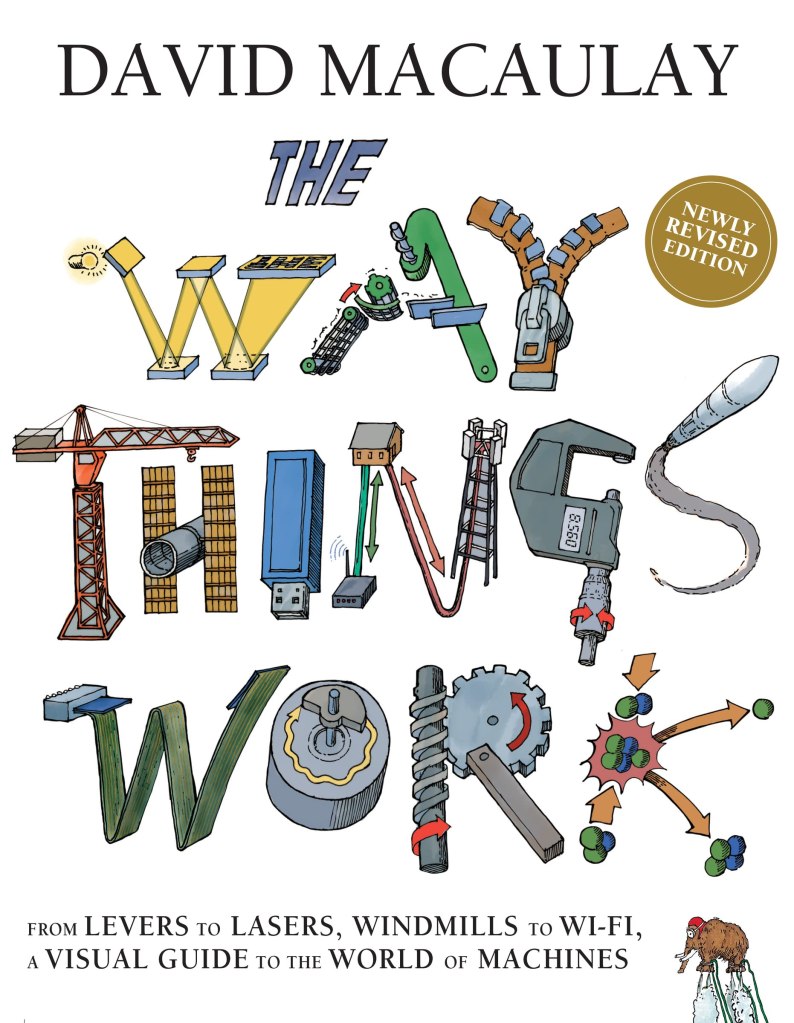
While this cover is exactly how I remember it, it must be an updated version!
No WI-Fi in the 80s and 90s!

As a child, one of the most fascinating books I owned was The Way Things Work by David Macaulay.  I wanted to know how and why things worked.  Looking back, this helps explain why I chose supply chain.  It fit the bill.  I knew I didn’t want to study management.  I wanted to know exactly how value was added, and not just become increasingly removed from day-to-day operations that actually pay the bills.  Accounting and finance never even entered the picture.  In fact, my mom and I joke that we would starve if we had to try and make a living as accountants.  I am decent at math, but I make errors far too often, and it is not my thing.

I do have two older cousins who earned supply chain degrees from Michigan State and blazed the trail, but as my older cousin Emily tried to sell me on supply chain, it made me look at the program more critically.  Instead, my experiences at the Broad Business Student Camp (BBSC) after my junior year of high school sold me on Michigan State and supply chain management.  During that week attending BBSC, I had the opportunity to explore State’s incomparable campus, everything the Eli Broad College of Business had to offer, as well as all things supply chain.  In short, I had the opportunity to preview what my life would be like as a Michigan State business student with one of my best friends.  What was not to like?  By the time my parents dropped me off at MSU in August of 1999, I had to kick them out of my dorm room as I had already connected with student groups in the business school, and I was not going to be late for the first meeting.

Now you know why I never wavered in my pursuit of my supply chain degree, in spite of the fact that, deep down, I knew that I wanted to be a teacher as well.  As for the deeper lessons that stayed with me and kept me up at night, it all started with a business history class I took during the winter of 2000, the very heights of the dot.com bubble.  In fact, the bubble burst that consumed that spring forced me to pay attention.  My history professor, in fact, predicted the fall of the stock market (the dot.com bubble) publicly almost as soon as classes started in January.  When it finally happened in March, as a 19 year old, it left a deep impression.  However, as memorable as that experience was, this is not primarily why I remember this class 25 years later.

Instead, my professor’s description and explanation of how Detroit became the “arsenal of democracy” still sends shivers down my spine.  He made the case that the United States and the Allies would not have won World War II without Detroit.  While I knew Detroit played an important part in the war, I didn’t realize just how important.  Supposedly, when Hitler received intelligence of manufacturing totals coming out of Detroit, he didn’t believe it.  Those who had gained manufacturing experience in cities like Detroit, especially Detroit, would turn their focus to the war effort.

When you think of the manufacturing capability we had during that time, the early 20th century, it makes sense. We were able to help supply Great Britain long before we officially entered the war after Pearl Harbor.  Thanks to FDR, we switched from manufacturing consumer goods to munitions.  We went from cars and refrigerators to tanks and aircraft.  This is the question that keeps me up at night:  Would we be able to do so again if faced with such a crisis?  I don’t know.

Actually, I doubt it, as the way things are now.  Born at the end of 1980, I’ve watched my entire life as Michigan lived up to its “rust belt” image.  Most of the business professionals I graduated with in 2004, me included, had to relocate to states such as Texas and California to find jobs.  When my parents graduated from college in the late 70s, there were still good manufacturing jobs to be had right out of high school, although that would soon come to an end.  I grew up hearing of plant closures, manufacturing outsourcing, and general loss of manufacturing capability in the United States.  It is all I knew. By the time I sought to start my career, little remained.  Instead, less secure positions with multinationals outsourcing much of their labor to places like China, Mexico, and India took their place, particularly in the shadow of the first dot.com bust.

By the time I interned with IBM out in Rochester, Minnesota during the summer of 2001, not only did they not have enough for their interns to do, their full-time, permanent employees didn’t either.  Instead, they were focusing on their garage bands and updating their resumes.  In 2003, as part of a tour of a GM factory in Mexico near the border, I vividly remember seeing rows upon rows upon rows of brand new Pontiac Azteks and Buick Rendezvous awaiting shipment as our chartered bus slowly approached the plant.  Looking back, it foreshadowed Pontiacs epic downfall several years later. Tragically, Pontiac would never recover from the monstrosity that was the Pontiac Aztek.

My last semester at Michigan State in 2004 brought the Eli Broad College of Business’s first Chinese Supply Chain Symposium.  Of course, it focused on all of the wonderful benefits of outsourcing manufacturing to China.  I left wondering if I was the only one asking just how long before we were outsourcing our own jobs?  Where and when would it end?  Was I the only one seeing the connection between outsourcing and both unemployment and underemployment in the United States?

Even Russell Canoe Livery has a supply chain,
one with its own set of challenges and setbacks.

I will leave you with this summary.  We desperately need to bring manufacturing back to this country.  If you think the supply chain interruptions during the COVID 19 pandemic were bad (and I followed them closely), what would happen in the case of an even worse global crisis?  Good manufacturing jobs helped finance the growth of the middle class throughout most of the 20th century, particularly after World War II.  Why can’t we get back there?  We’ve learned so much during that time, and we have the workforce, if given a chance.  I hope I live to see it.  By the way, this doesn’t mean becoming isolationist.  It is simply expanding beyond the pharmaceutical, technology, and service industries.  Supporting local farms wouldn’t hurt either!  Cheap is good, but it is not always best in the long-run.  We’ve remained far too short-sighted and complacent for far too long.
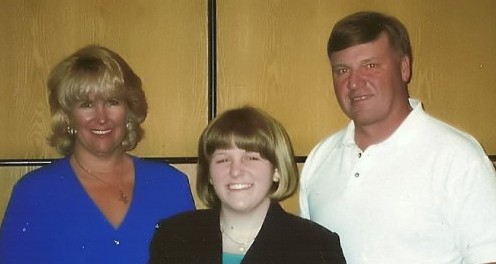
Mom, Dad, and I – Spring 2001
Tower Guard Induction – Beaumont Tower, Michigan State University
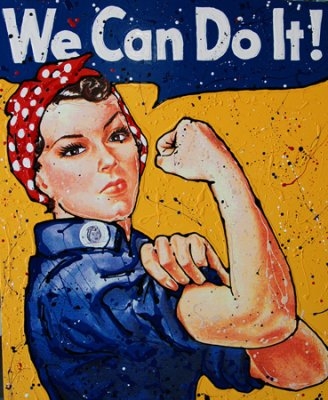
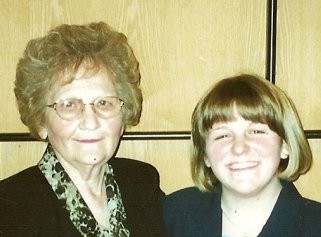
In honor of Grandma Reid, who worked as a riveter in both Hamtramck, MI and Fort Worth, TX during the World War II era, all before the age of 20.

The Eyes of Texas Are Upon You – Part 2

texas-postcard.jpg

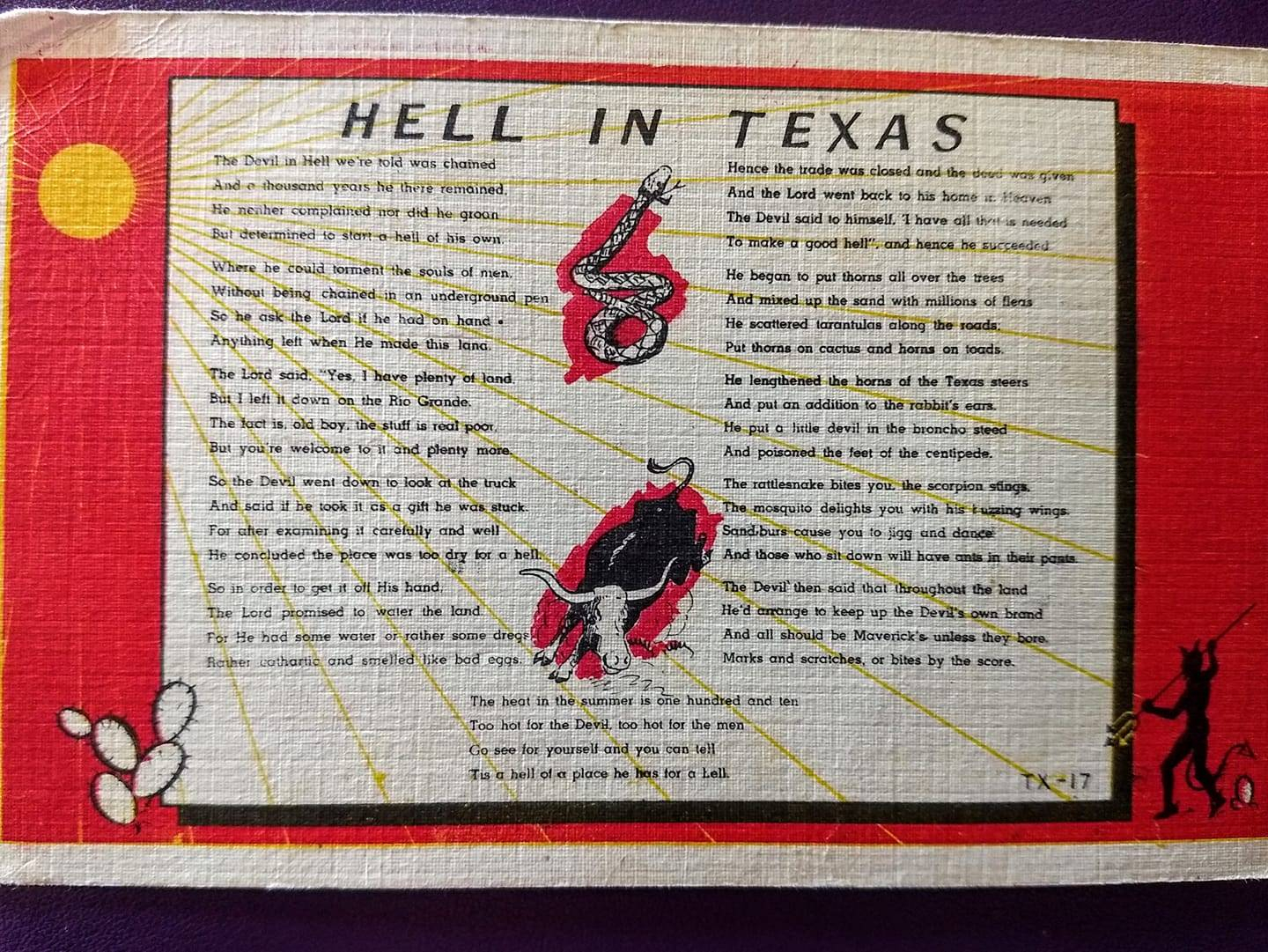
My Grandpa Russell sent this postcard from Moore Field near Mission, Texas to Julia Suszko (Grandma) in Hamtramck, Michigan in 1943. They later married in Mission, Texas – May 1943. Finding this postcard among family pictures answered a lot of questions about Grandma’s life between graduating from Sterling High School in June 1942 and marrying Grandpa by May 1943. I am so close to answering my questions!

The Eyes of Texas Are Upon You – Part 1
Somehow, I always sensed family ties to Texas, but until fairly recently, I didn’t realize how strong that connection remains. Growing up, I knew that Grandma Reid lived in Texas with Grandpa Russell during World War II. In fact, they married in Mission, near McAllen and the border. After training at Moore Field (near Mission), Grandpa Russell served in the Army Air Corp in Fort Worth. Grandma worked as an ice box riveter, eventually telling me stories about her experiences at Plant 4. I couldn’t get enough of the stories or the era. Unfortunately, I couldn’t simply ask.

Grandma and Grandpa

My Russell grandparents in front of their rec home in Fort Worth, Texas ~ 1943

Or at least I didn’t feel I could. Grandma and I always had a great relationship, but some things didn’t require words. During their time in Fort Worth, 1943-1945, Grandpa Russell, and later, my dad’s older brother Eddie, made up Grandma’s family. My dad and aunt wouldn’t be in the picture for years yet.

Sadly, both Grandpa Russell and Eddie passed away long before I could meet either. I felt bringing up and asking questions about Grandma’s life in Texas would be unnecessarily cruel. Yet, she did tell me a few stories, and I consider myself lucky. Grandma remained a part of Grandpa Russell’s family long after she remarried. It is through her that I gained a sense of what Grandpa Russell and Eddie were like and learned about the Russell family.

During the year I lived in Houston, I finally visited Fort Worth. I drove by the factory where Grandma worked. At a mile long, it continues to impress. What struck me most was the courage it must have taken for two young adults to leave rural Arenac County, Michigan and their family farms for the unknown of wartime Texas. While it is true that Grandma lived in Hamtramck, Michigan with family prior to moving to Texas, neither she nor Grandpa Russell had family in Fort Worth or even Texas. They, of course, were far from alone. Sacrifices made by the Greatest Generation, at home and abroad, will never fail to inspire me.

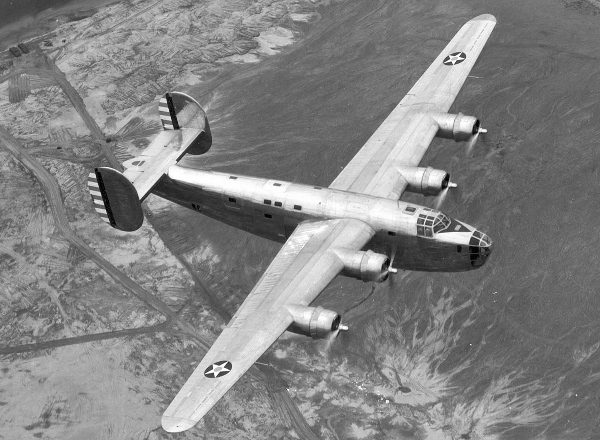
Consolidated B-24 Liberator

Consolidated B-24 Liberator – Consolidated Aircraft manufactured the B-24 in Plant 4 in Fort Worth, among other locations. This is likely the type of plane my grandmother worked on.

One of my favorite Texas stories is the story Grandma told of meeting her manager at Plant 4 for the first time. He went on about how wonderful it was to have someone with experience riveting in Detroit. In reality, his speech left Grandma terrified. She did have experience riveting in Detroit – true – but it completely differed from what she was now being expected to do. Who knew there were so many different types of riveting? Fortunately, she learned quickly.

After the war, my grandparents eventually moved back to Michigan and the Russell farm. Still, those experiences stayed with Grandma. In June 2002, as I prepared to leave for Austin, I said goodbye to Grandma at the canoe livery. Always the joker, one of the last things she said before I left was: “They’ll call you a damn Yankee, you know.” I brushed it off. In 1943, maybe. 2002? Never.

Well, Grandma proved to be correct. The first words words I heard in Texas were: “Damn Yankee, huh?” After landing in Austin, I loaded up my rental car with all I needed for the next six months. Predictably, in the era before GPS and Google Maps, I became lost on my way to my new apartment complex. I pulled into a supermarket and asked for directions. Of course, as soon as I opened my mouth, the nice man I asked responded jokingly “Damn Yankee, huh?” We laughed as he gave me directions. Yes, my time in Texas started off well.

When I think of family history and Texas, I tend to think of Dad’s family. His parents married there. Uncle Eddie, born in 1945 in Fort Worth, truly was a Texan. Well, there is history in Texas on Mom’s side as well. It is murkier, and I wish I knew it better.

Mom’s maternal grandparents, Bion A. Hoffman and Beatrice Smith, divorced during the 1930s. While my great-grandmother regrouped and went back to school to become a teacher, Grandma B. and her sisters lived with their grandparents in Lincoln, Nebraska. While I am not exactly sure when, Bion, or as my mom knew him, Grandpa Pat, eventually moved to Houston. In fact, he died in Houston in the late 1980s. While I can’t confirm this, I believe he ranched. If it is true, it makes perfect sense. Bion came from a long line of ranchers and farmers who moved west and eventually settled in Nebraska. Hopefully one day I will be able to confirm that my great-grandfather ranched near Houston.

While I didn’t fall in love with Houston – or even like it much – one good thing did come out of it all. Even though my sister and my brother-in-law met at Michigan State, they fell in love in Houston. Spring break 2005, my sister decided to visit and bring a “friend.” It didn’t take me long to figure out that there was more to the story. My nephews can honestly say that their parents fell in love in Texas. My family may be firmly rooted in Michigan, but there are also deep Texas ties.

The Eyes of Texas Are Upon You – Part 1

Texas

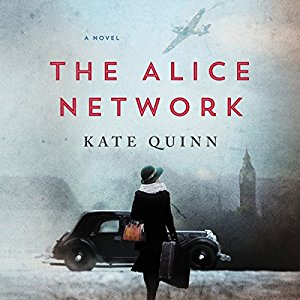
Book Review: The Alice Network by Kate Quinn

The Alice Network, by Kate Quinn

I can’t recommend The Alice Network by Kate Quinn enough, particularly if interested in historical fiction and World Wars I and II.  American college girl Charlie St. Clair is pregnant and trying to find out what happened to her cousin Rose.  Set in 1947 and the aftermath of World War II, Charlie leaves her mother behind and travels to London to find Eve Gardiner, her only lead in her search for Rose.  She is lost, driven by emotion, and angry that she is unable to access her own money.  What happens next sets Charlie on an adventure throughout the French countryside.

Throughout the novel, we get Eve’s history during World War I and her involvement with the Alice Network, which is almost another novel.  I normally don’t read afterwards in novels, but I did this time.  I am glad I did.  It turns out that much of Eve’s story does involve real actions taken by the Alice Network during World War I.  Eve’s story intertwines with Charlie’s in unique and interesting ways, ultimately answering Charlie’s questions about Rose and helping Eve to make long awaited peace with her past.

There is romance in both stories to some extent, but it tends to move the plot along and isn’t romance for the sake of romance.  The part I enjoyed most is Charlie’s determination to live her life on her terms and her terms alone.  Throughout the novel, she is bombarded with familial and societal expectations.  Ultimately, she leaves them behind and creates her own future.  The reader is taken along for one fun ride.

In Eve’s story, much of the action is hard to take.  It is difficult to realize just how much she and her fellow Alice Network members risked every minute they lived under German occupation.  It is ultimately satisfying for the reader when she finally makes peace with her past.  I only wish that a few of the male characters were more fully developed, but it is a minor issue considering it is not their story.  I hate to admit this, but it would make a wonderful movie.

Book Review: The Storyteller by Jodi Picoult

Storyteller 1

I just finished reading The Storyteller by Jodi Picoult.  I found it difficult to put down, and that hasn’t happened for quite some time.  That isn’t to say that I didn’t find issue with some parts of the book.  It simply means that I enjoyed the overall story, particularly Minka’s story of survival during World War II.  I could certainly relate to Sage as well, particularly to her desire for solitude and her relationship with her grandmother.  Unfortunately, I found several things about the modern story to be “off.”  If you are planning to read the novel, you might want to stop here.  Please keep in mind that these are just my opinions.

First, let’s start with Sage.  I couldn’t quite reconcile her personality with her actions.  She may be an atheist and she may harbor lots of guilt, but that doesn’t seem to be enough for her to become deeply involved with married man (Adam).  Being a guilt-ridden atheist doesn’t make one lack moral judgement.  In fact, I would say that her guilt demonstrates that she does indeed have a moral compass.  She even grudgingly agrees with Mary that her relationship with Adam is inherently flawed.  If she was so guarded in her human interactions that she chose to work alone overnight as a baker, why wouldn’t she see all the potential pitfalls in their relationship?  Not only is Adam a funeral director in their shared small town, which practically guarantees that he knows most people in town, he works for his father-in-law.  If Sage was so intent on punishing herself by remaining in an adulterous relationship with Adam, why wouldn’t she consider those who would be hurt by its revelation, namely Adam’s wife and children? It just doesn’t add up.

Then we get to Adam.  Sage already told Adam that she wanted to break it off.  He then doubles down and divorces his wife.  Sage then definitively breaks it off with him.  None of it makes sense to me.  I can understand why Adam decided to divorce if he felt so strongly about Sage; however, wouldn’t one think that he would check with Sage before he just throws his marriage and possibly his career out the window?  It is this impulsiveness in the present-day story that gets to me, which leads me to Leo.

I find Leo to be the most troubling character in the novel.  Something just doesn’t sit well with me.  He waltzes in and sweeps her off her feet with no real backstory.  The backstory available is hardly worth mentioning, and frankly, cliched.  At least it takes Sage a little while to realize that she is falling for Leo.  That doesn’t appear to be the case with Leo.  He fell for Sage practically the moment he met her.  His old-world manners and mannerisms could be charming if they were more fully developed, but that just isn’t the case.  I am all for a happy ending, but Sage and Leo’s relationship at the end appears false and forced in a way that I can’t quite decipher.

In the end, it doesn’t really matter.  Minka’s writing and real-life story make the novel well worth reading, even if she appears to be the only well-rounded character in the novel.  It is enough.  I highly recommend taking the time to read this book, particularly if interested in the World War II era at all.

On a personal note, I finally realized why W.M. found his way into my subconscious lately (read here).  Somehow, I connected Leo’s character with W.M.  I am not sure why, but I did.  I am happy I figured it out!  Mysteries like that have a nasty way of staying with me.  Now to figure out why.


Storyteller 3