Category Archives: writing tools

Scrivener

Art Studio.jpg

It is no secret that I am my own worst enemy at times. OK, most of the time. Lately, I’ve been spending time thinking of ways to write more efficiently and better organize my work. I keep coming back to Scrivener. I took the time to learn it a few years ago, and I loved it. The issue became I didn’t keep using it. I’m not exactly sure why I quit, but I did. Well, I am getting back into the habit again. It offers a variety of ways to organize all of my work.

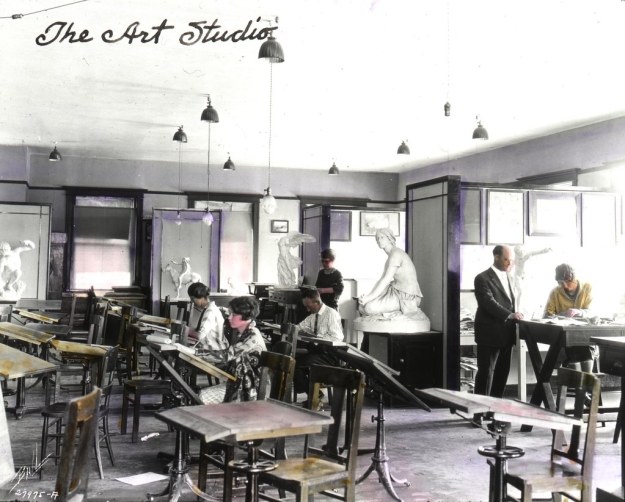
In a recent post, I stated that Scrivener is the closest thing writers have to a digital studio. I firmly believe this. It is so versatile it can accommodate any form of writing and any organizational method. You get to create templates and forms to use for the type of writing you do most. There are preset options that include fiction and non-fiction, as well as a handful of specialty options. It may take me some time, but I am going to relearn Scrivener and start using it on a daily basis again. I owe it to myself. It makes back-end organization that much easier.

Is it worth the initial investment of time and money? For me, the answer is unequivocally yes. I took the time to go through the extensive in-program tutorial: a definite must if you want to make the learning curve a little shorter. Besides, there is humor built in. If you choose not to go through the tutorial, you may miss out on a lot of great features. In fact, I believe that is how people become overwhelmed. Scrivener is truly built for writers by writers. That means that it allows you to slice, dice, organize, and label all materials to your hearts content. Just remember that as a writer, no one is forcing you to use all the features at once. Out of all the writing software I’ve come across over the years, Scrivener continues to stand out. I see no need for anything else.

Then again, there are a lot of fun online platforms out there. At least that is one thing we have going for us as writers: our tools. I love the fact that there are so many great writing tools out there for little or even no cost. In fact, there are so many that it takes time to figure out what works best for the way you work. Only now, after years of trial and error, am I beginning to find a process that works best for me. Hopefully, it will get me where I need to go. It is worth it to take the time to figure out how you work best as a writer. There may be several stops and starts, but each time, it becomes easier than the last. Eventually, your process starts to emerge. No matter what your process may be – or your genre – there is a place for Scrivener.
Writing Quote 3

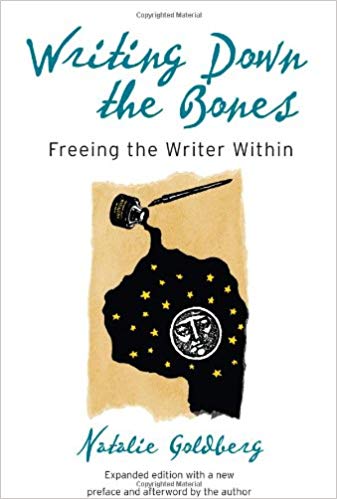
Book Review: “Writing Down the Bones” by Natalie Goldberg

Journals 2.jpg

It isn’t every day that I can say a book fundamentally changed the way I view writing and how I write.  Such is the case with Natalie Goldberg’s Writing Down the Bones. Somehow, I thought I read the book nearly a decade ago.  No. No I didn’t. That became clear when I picked it up recently.  I wish I read it ten years ago! Better late than never, I suppose.

I finished the book several weeks ago at this point, but I couldn’t quite capture the impression it left.  I took my time reading her essays and highlighted (in my Kindle version) what I perceived to be the best writing advice contained in each essay.  That is one feature I love about this book. Her advice is all nice and neatly wrapped up in small essays that make you feel as if you know her. So, how did it change the way I write?

Natalie 1

Well, here are a few changes that I made as a result of her book:

  1.  I finally got journaling right.  Finally.

I may have mentioned this before, but I have had a love/hate relationship with journaling for as long as I can remember.  I love the idea of journaling every day. Better yet is starting a new journal. Add online journals into the mix, and the entire thing is one huge mess.  I collect journals. I hate actually writing in the more beautiful ones at times. Beautiful journals call for beautiful words. No one gets it right the first time.  After a short period of time, I always wanted to start all over again. Repeat.

So, what changed?  Well, I started acknowledging there is a need to get the junk out of the way first.  That is where 750words comes in. By writing daily in this online journal daily – no frills, just the junk that comes to mind – I tend to become much more focused when I write a blog post or in one of my beautiful traditional journals.  I limit what I write in a traditional journal to one short page a day. It is much more focused.

Natalie refers to the “junk” as monkey mind, and that concept deserves its own blog post. The idea is that we all tend to think in circles. We have to write through our wandering thoughts before we can write something meaningful.  She discusses this concept throughout several of her essays.

  1.  Find What Works for You.

This seems so cliche, but she suggests experimenting to find what processes work for you.  No judgement regarding pen versus typing, morning versus evening, and so on. Writers need to write when and where they can.  She provides several wonderful examples of this and how the local atmosphere can seep into writing.

What really made the difference for me was her discussion of what works for her – writing in cheap one subject notebooks until she fills them up.  She goes on to say that the tools truly do not matter. While I knew that wouldn’t work for me, it did get me thinking. It finally hit me. A three-ring binder I could decorate with my favorite writing quotes and fill with tab dividers and loose-leaf notebook paper would work well.  I could plan, write, and revise blog posts without having to worry about destroying bound notebooks. A binder would allow me to reorganize different pieces as I see fit. So far, I love it. I also included some of my favorite blog posts, lists of topics, and writing prompts – anything to keep me writing.

  1.  Don’t Beat Yourself Up.

I would love to write full-time.  The reality is that I substitute teach, spend summers working in the family business, and so much more.  I am trying hard to find time to write everyday, but every once in a while, I don’t. I am learning to just pick up the next day.  I don’t need to stress about it. It is a little thing, but it helps. Creating a simple writing routine helped simplify everything.

I love the fact that she embraces the fact that everyone writes garbage.  We have to work through the garbage to get to the good stuff. Authentic details are everywhere.  Even when not writing, we are still hard at work collecting details, situations, characters, stories, ideas, and so much more.  In fact, that is one reason why I started blogging: I wanted to experiment with and collect different story ideas – to think out loud.

  1.  Write Everywhere and Anywhere.

Write.  Write. Write.  Writers spend so much time avoiding writing.  Plotting, planning, organizing, and even cleaning are all brilliant distractions from the actual writing itself. This is one reason why I head somewhere else when I actually want to get something done.  I can always find something to distract me when I am at home. Natalie goes so far as to offer tips on how to effectively use cafes and coffee shops as places to write. My dream is to have a wonderful coffee shop near my house.  It won’t happen any time soon, but a girl can dream.

Conclusions

Writing Down the Bones may mean different things to different writers, but I would recommend it to anyone who loves to write.  I think there is something in there for everyone. It is a book I will come back to time and time again. Writing Down the Bones already fundamentally changed the way I write.

Writing Down The Bones

Why I Write

hand write open notebook mockup

Why do I write?  There are many reasons, but the best one I can think of is for my own peace of mind.  Over the last month or so, I have finally started writing daily – just for myself.  It grounds me in a way I can’t fully explain.

In addition to journaling daily, I also started using 750 words again.  There are rumors that Margaret Atwood mentioned 750 words in her masterclass on creative writing.  Personally, I love it.  I joined 750 words approximately two years ago, and I am finally starting to use it daily.  I use it to spill everything out onto the page, nothing more.  I let my mind wander and go from topic to topic.

Getting the garbage out of the way helps.  It doesn’t matter if I write in my traditional journal before or after I write my 750 words entry for the day.  I am much more focused.  When I sit down to write a blog post, I am not nearly as distracted by random thoughts.

Journaling, I only write approximately a page a day.  It isn’t 750 words, but I usually have something to say that is focused on my inner life or events going on that grab my attention.  I finally found a type and size of journal that works for me.

There is a difference writing on a laptop versus writing pen on paper.  I do both daily, no matter what type of writing.  For example, I may write a blog post during lunch or conference hour.  I then type, edit, and then post it when I get home.  Allowing myself some flexibility really helped.  I don’t beat myself up if I don’t write in 750 words or my journal every day.  I am beginning to feel “off” if don’t write at least something each day.

Margaret Atwood

It comes down to finding what worked for me.  I am in the middle of reading Writing Down the Bones by Natalie Goldberg.  I love it – and I don’t want to rush it.  So far, I tend to agree with her.  There is a need to process whatever is on one’s mind before writing something for public consumption.  It doesn’t have to be done that way, but it tends to make the entire process easier.  Writing Down the Bones is a collection of essays on writing, and my favorite so far discusses the tools of the trade.  She talks about how we get all too caught up in fancy journals (so guilty, just ask my ex!) and being afraid of writing garbage in something so beautiful.  She makes the case for using cheap one-subject notebooks and just filling them.

This gave me the idea of decorating a binder and filling it with loose-leaf notebook paper.  It works like a charm!  If I completely screw up, I just start over.  I have something with a good aesthetic, but I am not worried about permanently wrecking a notebook.  For me, it is the best of all worlds, and this simple change made me much more productive.  Natalie stresses this principal throughout Writing Down the Bones:  Find what works for you.  I couldn’t agree more.  With my notebook, journal, laptop, Chromebook, and Android phone, I am set.  That isn’t to mention Google Docs, Google Drive, and 750 words.  I never have an excuse not to write or read.  More on Writing Down the Bones to come.

Girl at station

Tools for Writers: A Few of My Favorite Things

stop-comparing-yourself-to-others

Here it is: A few of my favorite writing tools, along with a brief explanation as to how and why I use them.

Mid-Michigan Writers – I am proud to belong to one of the oldest writing groups in Michigan. If you are a writer without a writing group to help you polish your work, I am truly sorry. I’ve learned so much in the last few years I’ve been a member. One of the highlights for me is the annual Gateway to Writing Workshop held in my hometown every September. The friendships and critique process I’ve taken away from this group are invaluable. Once you become a member, dues are $15 annually.

Scrivener – Where do I even begin? This is the writing program I’ve been looking for from the very beginning. It is truly a digital studio for writers. There are so many features in this program, which is designed to be used by any and all writers, that the entire tutorial takes hours to go through. The nice part about the design is that the features you don’t use are not obtrusive, and yet, they are there when you need them. I heard the hype for years before I decided to see what all the fuss is about. I am sorry that I waited so long. It truly is designed by writers for writers. I will never be without it again. You can purchase Scrivener here. There is a one-time cost of $40.

750 Words – I just recently heard about this website and started using it. So far, I love it. The point is to empty your mind of nagging thoughts by just typing them out. It is all about reaching 750 words. There are no requirements, and it is private. The fun part of it all – and why I am considering joining after my free trial – is the analytics provided after you have written your entry for the day. Not only does it show you frequently used words, it tries to interpret your mood as you write and provide you a rating (similar to the movie rating system) for your writing. It is pretty fun, even if meaningless. Membership is $5 per month. Check out the website here to see what else is included for $5. There are many free online journals out there, but none are quite as fun and motivational as this site. You also get a true sense of community. Just getting it down works.

Evernote – I’ve known about Evernote for years, but it always seemed a little too fussy for me. Well, I’ve found it to be useful for jotting down writing ideas, keeping tracks of various lists, and more. There are many features at the basic (free) level of membership. It appears to sync well between PC and Android. I use it for personal notes as well, and I am considering using it to replace ColorNote completely. I tried to use Red Notebook for the same purpose, but Evernote is much better for making lists and taking notes. Red Notebook has better uses.

Red Notebook – If you are looking for a decent digital journal that isn’t online, this is it. You can download it for free (or a donation) here. I’ve used both Digital Expressions and Live Journal in the past. As much as I liked them both, Red Notebook offers a basic digital journal offline. There is no privacy setting to set. The possibility of accidentally sharing a post you did not wish to share is no longer an issue. It is simply a digital journal. Nothing more, nothing less. That said, it has quite a few features for a basic digital journal.

That is pretty much it. It has taken me years to figure out what works best for me, but I finally think I am there – at least until the next best thing comes along.

Oxford Comma.jpg

In Like A Lion

march-1st

The best of intentions don’t always work. I intended to start blogging again in January. It just didn’t happen. Life happened. So far in 2017, Grandma Reid passed away, I’ve finally been matched with a little sister through Big Brothers, Big Sisters, and my exam schedule for my teacher certification tests is set (one down, three more to go!). There is no easy way to write about my life at the moment. I’m not quite ready to write about Grandma Reid yet – although I will one day. I can’t write about all of the wonderful experiences I am having with my little sister – at least not in a way that is true to the whole story. I understand why, certainly, but it could be such a fun topic. As far as my career is concerned, nothing can really change until all of my tests are complete. Instead, I am going to have to focus on blogging about reading and writing for the moment.

I’ve read so many great books lately, thanks to book club and my sister. Reading is becoming a habit again, and I am a better person for it. Finally reading has largely replaced TV and movies in my life. I can’t ask for much more than that. As I have said before, I need to go back to keeping a list of books I’ve read. I want to share them with all of you. By listing the books I read on my blog, I became an intentional reader. I still am. I need to get back to sharing what I read. I plan on eventually sharing book reviews on GoodReads as well.

Writing is another story entirely. I always miss it when I don’t write. I need to write. Even though I’ve owned Scrivener for over a year, I finally took the time to go through the entire tutorial and learn how to use it properly. I don’t think I will be without it ever again. I love it, and it is exactly what every writer needs. The capacity built into Scrivener to meet the needs of almost any type of writer imaginable is mind-boggling. It becomes apparent once you go through the tutorial and start using the program just how customizable it truly is.

At the advice of a friend, I’ve also started using 750words.com. The verdict is still out. I do like the idea of free writing 750 words each and every day without it having to be used for a polished piece of writing. I’ve also been exploring RedNotebook, which I’ve been using as a personal journal. In fact, you can actually create numerous journals. It is basic, but great for creating lists too.

In April I hope to attend at least a couple of writers’ conferences. Nothing is settled yet, but the reality is that I could attend writers’ conferences every weekend in April, with the exception of Easter weekend, if I wanted to do so. I ask myself why I go, and then as soon as it is over, I realize that I always take away something useful. In fact, one of the reasons why I am so excited about these particular conferences is due to a possible opportunity to present on education for writers in an upcoming workshop this fall. If nothing else, I will take away something. There are other things going on behind the scenes as well, as always. So many things to do and never enough time!

As a future teacher, I can only hope to reach a point in my career where I can tell it like it is, only with slightly more tact.

As a future teacher, I can only hope to reach a point in my career where I can tell it like it is, only with slightly more tact.