Tag Archives: documentary

The Beatles – Now and Then (2023)

The Beatles – Now and Then (2023) (Official Video) (Lyrics) (Documentary)

(Written December 4, 2023)
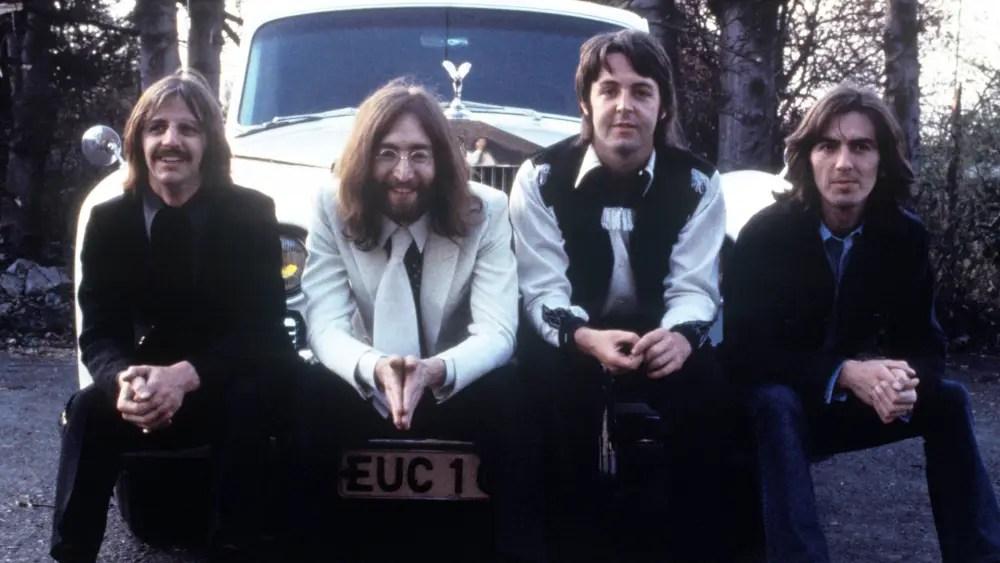
When I started The Mixtapes project on Ramblings of a Misguided Blonde, I knew that I would eventually have to address my love of the Beatles.  Where to begin?  As a result, I let nearly a year go by.  Now, the decision has been made for me.  We will start at the end.

I never dreamed that I would get the opportunity to write about a “new” Beatles release.  Here I am, almost a month after the fact, doing just that.  As a girl born a few days after John Lennon’s untimely death, a fan who witnessed the release of the Anthology Project during her high school years, it feels a fitting conclusion to all that the Beatles have achieved over the decades.  Over the last month, I’ve watched as the reactions to “Now and Then” itself, the music video, and the mini-documentary came rolling in.  Unsurprisingly, there is no consensus.
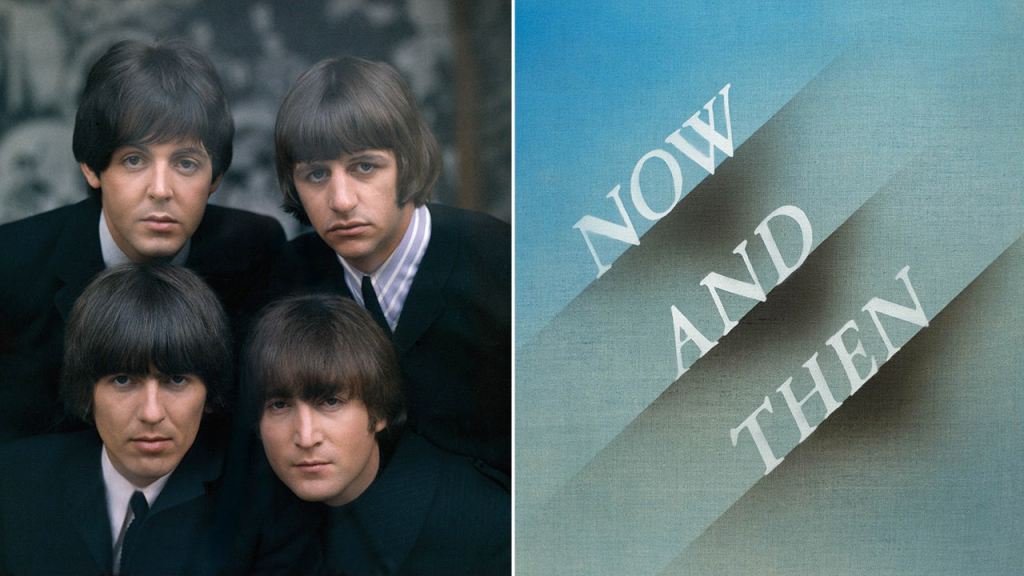
My only criticism of the “Now and Then” project: the lackluster design for the single.
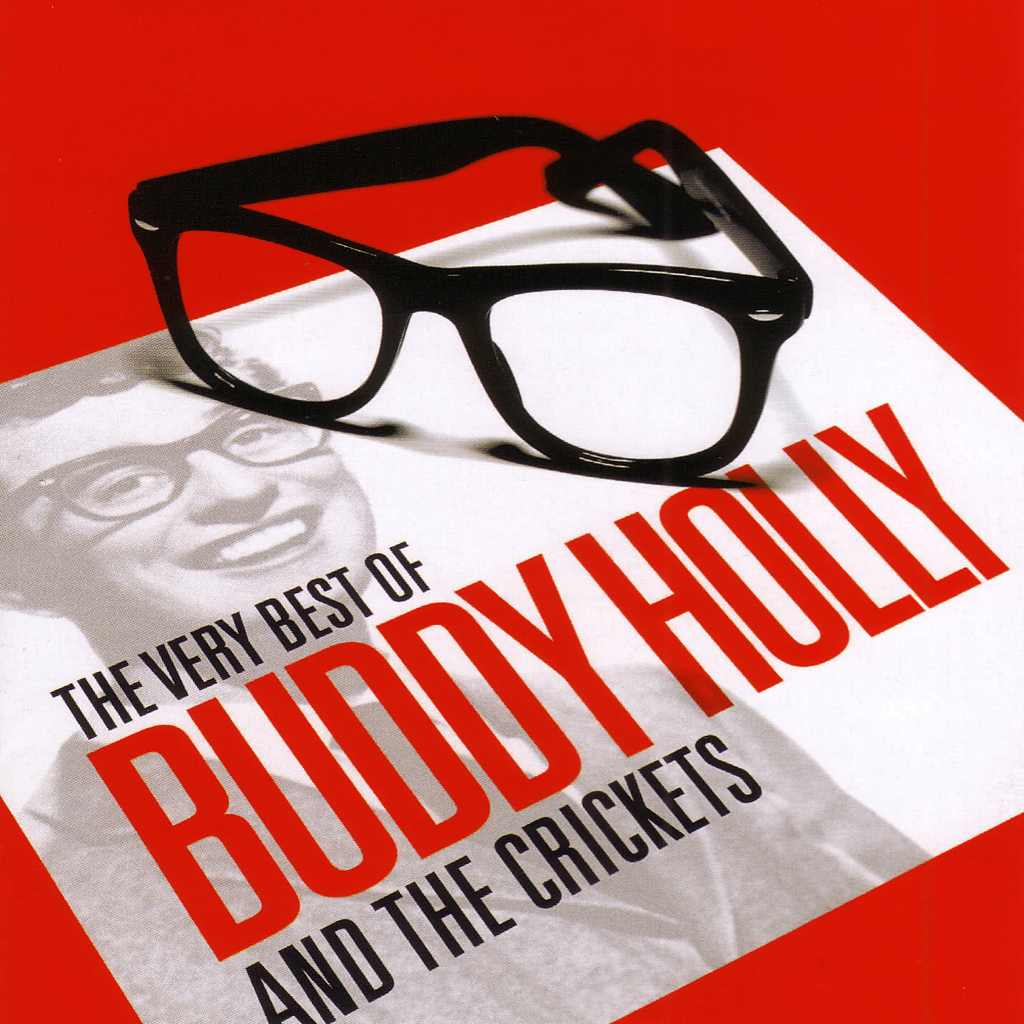
However, considering the rerelease of the “Red” and “Blue” compilation albums,
it somewhat makes sense.

Beatles fans appear to be solidly in two camps.  The first group is dismissive, stating that “Now and Then” will never rank among their greatest hits.  Of course it won’t!  How could it?  That is not the point.  Advances in technology aside, they state that it never should have been made.  I’ve also heard “fans” (I purposely use that term loosely) complain that video clips of John and George used in the official video are too “irreverent.”  I still have a hard time understanding that criticism from self-professed fans.

My response is simply this:  Did you understand the Beatles – the band and the then young men who created it – at all?  Their humor is a huge part of what made them so great.  Their humor still holds up today.  They simply would not have been the Beatles if you took humor out of the equation.  I love that I can laugh at images of two men who are long gone and dearly missed in a newly released music video.

Then there is my favorite:  “Now and Then” sounds too much like John Lennon’s solo work from the late 1970s.  Of course it does.  That is exactly what “Now and Then” represents, if only a demo.  John did record it in the 70s, and as the Beatles disbanded in 1970, he likely meant for it to be a solo effort.  However, that is only part of the story.  

“Now and Then” is also one of a handful of unfinished demos that Yoko Ono gave to Paul McCartney upon John’s death.  During the Anthology Project, Paul, George, and Ringo completed two of the other demos, “Free as a Bird” and “Real Love.”  At the time, both songs climbed the charts and introduced the Beatles to an entirely new generation of fans.  By the way, both songs, along with their music videos, still hold up – even if some fans are now calling for them to be “cleaned up” as well.
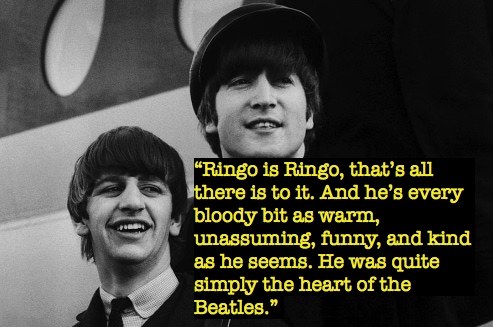
Even though I didn’t think about it at the time, it makes sense that there was supposed to be a third song released with the Anthology Project.  It was released in three parts after all.  That third song?  “Now and Then.”  It just took a few decades, Peter Jackson, and new technology lovingly called “MAL” for it to come to fruition.

Personally, I don’t think that the Beatles could have ended on a better note.  It is nostalgic, almost timeless, and with its humor, the video is even better.  It is a true love letter from Paul and Ringo to George and John – not to mention all of us, the fans.  So, to Sirs Paul and Ringo, thank you!  Once again, the Beatles will be rediscovered by an entirely new generation of music junkies.

On a sidenote, even the 5th Beatle, George Martin, was there in a sense.  In his absence, his son Giles Martin, who just happened to play a huge role in the orchestration of “Love,” helped put those finishing touches on “Now and Then.”

Review:  All Things Must Pass (Documentary)

 “All Things Must Pass” is a documentary that covers the rise and fall of Tower Records during the second half of the 20th century and the first few years of the 21st.  What I love about the documentary is the fact that I experienced a lot of changes that took place in the record industry, particularly in the record stores, during those years.  As a businesswoman, I loved the discussion surrounding the birth and death of Tower Records’ business model.  At the end of the documentary, I left thinking what a great case study it would make.

I can just imagine the beginnings.  Supposedly Tower Records started as Tower Drugs.  After World War II, leading into the 1950s, Tower Drugs began carrying 45s in an effort to tempt their teenage customers hanging out at the soda fountain.  As the granddaughter and great-granddaughter of entrepreneurs who owned a pharmacy in Marshall, Michigan during this same time period, I can picture it.

In fact, my maternal grandparents met at Peck’s Drugstore in Marshall.  My grandfather’s parents were partners in the business, and at the time, before graduating from high school and enlisting in the US Navy during World War II, Grandpa worked there as a soda jerk.  Grandma, who attended then nearby Marshall High School, loved their lemon Cokes.  I’ve visited Marshall and located the corner where Peck Drugs once stood.  Marshall Junior High School, once Marshall High School, is located right across the street.  Even though my grandparents were gone by that time, I could easily envision the circumstances under which they met.

This burgeoning teenage culture in the 40s and 50s led to rock and roll and the astronomical growth of the record industry from the 40s through the end of the century.  I happen to be just old enough to have witnessed the heights of the 1980s, the changes experienced all throughout the 1990s, and the chaos that followed in the first decade of the 21st century.

I lived it.  Madonna and Michael Jackson’s reign as Queen and King of pop were a huge part of my childhood, as were Tina Turner, Whitney Houston, Cyndi Lauper, Wilson Phillips, Paula Abdoul, and so many others.  As grunge exploded in the 1990s, the music industry fractured in the wake of Kurt Cobain’s death and the advent of the internet.  The music industry wasn’t nearly as tightly controlled as it once was and formats were changing yet again.

As a teenager, I understood the frustration.  During the early part of my childhood, vinyl and cassette tapes dominated.  Before long, CDs took over.  WIth each new format, some felt the need to repurchase their music collection yet again.  However, by the late 90s, people had had enough.  During that time, I remember the anger that the equivalent of the 45 didn’t really exist in the CD format.  You might be able to purchase singles, but they were never the hit songs.  In essence, the record industry reached a point where they were pricing teenagers out of the market.  Full CD albums during that time period usually ranged from $15-$20, depending on the artist and popularity.  Today, I spend $8.99 a month for Amazon Music, which includes electronic access to whatever is available via Amazon Music – i.e. pretty much anything and everything.

The sad thing is that rural teenagers in the 90s, like me, mostly had access to the big box music retailers of the time, such as the behemoth Tower Records – or the CD clubs of the era, Columbia House and BMG Music.  Oh, how I wished there were used record stores near me!  When I arrived on campus at Michigan State in 1999, my friends and I made regular visits to The Wazoo, a mom and pop used record/CD store run by an old hippie who truly loved music, or WhereHouse Records, another great used music store.  We could get an entire pile of albums for the price of one new release.

This atmosphere and the business model became a recipe for disaster.  Enter the file sharing frenzy that took place in the early aughts.  Napster and Limewire were king at this time.  Why purchase music at all when you could download your favorite songs for free from a friend of a friend of a friend?  While it wasn’t that simple – mislabeling ran rampant and download times could be excessive – it worked well enough.  If anyone had actually been prosecuted for downloading music illegally, our judicial justice system would have quickly collapsed.  Colleges, universities, and even many high schools would have been empty with students rotting in jail instead of receiving an education.  That may be hyperbole, but not by much.

In the end, it could not last.  Businesses such as Tower Records, so heavily dependent upon real estate and inventory, could not survive once people refused to repurchase their music collection yet again, pay full price for CD albums with only a handful of well-known songs (if lucky), downloaded whatever pirated music they wished via Napster and LimeWire.  The electronic music market, now dominated by Amazon and Spotify, had not yet come into its own.  Today, Tower Records lives on in Japan, a testament to its homegrown slogan – “No Music.  No Life.”

“All Things Must Pass” is entertaining if you are interested in music and the history of the music business at all.  It brought back a lot of memories for me, and frankly, I feel for teens today who do not have the experience of spending time in stores dedicated solely to music.  Creating a Spotify or Amazon Music playlist just isn’t the same.  The title “All Things Must Pass” comes from the sign a former Tower Records employee put on their sign as their original store was closing.  “All Things Must Pass … Thanks Sacramento.”  It is, of course, also the name of George Harrison’s triple solo album and hit, “All Things Must Pass.”

Review: The Day the Music Died (Documentary)

Every so often there comes along a rock documentary that I can recommend to just about everyone.  That is the case with The Day the Music Died, which is currently streaming on, and exclusive to, Paramount +.  If you care about Don McLean’s American Pie at all, or the stories behind it, it is a must-watch.  I adore everything about the song, and clearly, after watching the documentary, I am in great company.

I grew up loving the song, which is a story in and of itself.  Very few songs from the time period steal from so many genres.  Stop and think about it for a minute:  Exactly which genre does it belong to?  It isn’t exactly a folk song, it isn’t entirely a rock song, nor is it a pure pop song.  American Pie is all that and more.  It has been covered by country artists and even Madonna, whose version I’ve had mixed feelings about ever since she released it during the summer of 1999 (it was definitely in heavy rotation the summer before I headed to Michigan State).  In the documentary, Garth Brooks discusses in depth the influence the song had on him and his career.  Yet, I feel it is SO much more.  It is timeless.

Several years ago now, during one of my subbing experiences in a high school Spanish class, I was instructed to show the movie La Bamba, which was, quite frankly, an unforgettable experience in all the best ways.  First, if you know the movie at all, you will easily recognize why showing it to high school students required some careful editing (fastforwarding).  Fortunately, that went well.  What pleasantly surprised me is how much those students loved the story behind La Bamba and the music.  As we had a few minutes left after the end of the movie – thanks to the inappropriate parts I had to skip – I had a moment to explain the term the day the music died and Don McLean’s song.  Most students knew the song American Pie, of course, but I don’t think that most realized that it referenced an actual event.  I loved watching them make the connection!

The documentary itself covers so much.  It dives deep into exactly how Don McLean wrote the song and came up with the lyrics, as well as his childhood.  Of course, one of the best aspects of the song and lyrics is trying to figure out all of those cryptic references – ie the king with his thorny crown, jack flash, etc.  According to McLean, the only one that is truly “correct” is the double reference ”Lenin/Lennon read a book on Marx.”  Yet, I am not entirely convinced.  That is what makes the lyrics great.  Just as with the best poetry, there are layers upon layers.  Definitely a must-watch.

By the way Michiganders, watch for an interesting reference to Grand Rapids.

THE DAY THE MUSIC DIED” by akahawkeyefan is licensed under CC BY-NC-SA 2.0.