Author Archives: lindseyrussell1980

Traditional Books Vs. Kindle Books

Reading 1

I admit I should read more traditional books.  I have several that are begging to be read.  The problem is Kindle books are all too convenient.  As a substitute teacher, I always have my cell phone on me, equipped with my Kindle books app.  Why throw a book in my bag as well when I have perfectly good books to read on my phone?  It is almost a no-brainer.  The ease of use of Kindle books on my Android phone is responsible for an increase in my reading.  I always have a book with me.  I love reading during conference hours and lunch.  As I also use my cell as an alarm clock, I also tend to read Kindle books before falling asleep.  It is all right there.

Despite all that, I understand why some people loathe the rise of e-books.  I get it.  As convenient as e-books are, nothing compares to the smell of traditional books.  Nothing.  Personally, I have a fondness for hardcovers.  There is nothing comparable to searching a bookstore or library for the perfect book to take home.  In my opinion, a home would not be a home without shelves of books of all types.  I particularly value books by local authors, most of which can only be purchased in paperback.  I would severely limit myself and diminish my love of reading if I only read and/or purchased e-books.  In short, I can’t imagine a life without traditional books of all stripes:  hardcovers, paperbacks, and board books.

The issue becomes what do I do if I want to annotate a book.  There are certain books that I plan to read more than once (although rare), or I want to discuss certain topics brought up in the book.  As I adore quotes, there are times I may want to quote from a book, especially if I am writing a book review.  Personally, I dislike writing or highlighting books, even textbooks I own (although I did when necessary).  In Kindle books, it is extremely easy to note and annotate to my heart’s content without defacing a book.  The only drawback is this:  I tend to forget if I happen to have a library Kindle book.  When my library loan is up, I no longer have access to my notes and/or annotations.

By the way, borrowing Kindle books from your local library is usually easy and a lot of fun.  No trip to the library necessary, although I recommend one anyway.  Borrowing e-books via your local library is a great way to stock up on reading material prior to a trip or for any occasion.  Most library systems allow patrons to check out five e-books at one time.  I love spending time browsing my local library’s website to see what e-books are available.  I now have an extensive to-be-read pile on my account.  The best part of borrowing e-books from your local library:  no need to remember due dates.  The titles are simply no longer accessible after two weeks.  They may or may not be able to be able to be renewed, depending on popularity.  It is, once again, all too easy.

Ultimately, I love where readers are right now.  We have the best of both worlds:  e-books and traditional books.  Neither one is going anywhere anytime soon.  I love being able to choose.  If I truly love – and I do mean love – a title, I am free to purchase both.  Choice is a wonderful thing.
reading

Of Reading and Writing: An Overview

Writing 1

My ability to lose sight of my love of reading and writing never ceases to amaze me.  At times, the strength of the connection between the two comes back at me two-fold, and I fall in love all over again.  For example, years ago I read Reading Like a Writer by Francine Prose.  It forever changed the way I read and how I view the time I spend reading.  If I were to make a list of books that profoundly shaped who I am today, it would certainly be at the top of the list.  Currently, I am in the middle of rereading it.  When I read it years ago, I borrowed it from the library and carefully noted its recommended reading list.  Today I purchased the Kindle version for easy annotation (Kindle books versus traditional books is another blog post altogether – one I plan to write soon).  I am picking it apart in hopes of learning why it resonated with me so deeply.  That, in fact, is the entire point of the book.  We learn to write by dissecting what we read.

Recently – as always – I came across the perfect books at the perfect time.  I just finished The Book Whisperer by Donalyn Miller and Reading in the Wild by Donalyn Miller and Susan Kelley.  Of course, there is a story behind my love of these books.  Incidentally, I had the opportunity to hear Donalyn Miller speak at Saginaw Valley State University (SVSU) a few years ago while completing my teaching certificate.  Knowing that she was to speak on encouraging students to read, I eagerly headed to SVSU on a cold, snowy Saturday morning hoping to learn more.  I hoped to learn how to reach students who do not like to read.  The entire concept of not loving – nevermind liking – to read is completely foreign to me.  That day I left inspired to create an extensive classroom library in spite of the fact that I will not be teaching English Language Arts (ELA) classes, along with her latest book, and little else.  She encouraged us all to reach those students who do not see the connection between reading and pleasure.  Her ideas were (and are still) practical; however, I still was not convinced that I could make a difference as a non-ELA secondary teacher.

Reading 2

Fast-forward several years and my sister happens to mention the book The Book Whisperer by Donalyn Miller.  It immediately rings a bell, we discuss it, and I have to read it as soon as possible, along with the sequel.  There is so much to discuss in both of Donalyn Miller’s books.  The ideas she presents should be the focus of reading education, but that would require a fundamental shift in how reading is taught at all levels which is a shame.  Both books deserve their own blog posts, as well as a post tying the two together.  Reading in the Wild by Donalyn Miller and Susan Kelley inspired me to reread Reading Like a Writer by Francine Prose.  It is an example of what Donalyn Miller coins “wild reading” in action and demonstrates how “wild readers” stay inspired, continue reading, and challenge themselves.  I am now convinced that I do indeed have a role to play.

Stay tuned for a series of posts discussing the many angles of all three books, as well as my own take on the importance of reading and writing in my life.  It is taking center stage now for a variety of reasons.  I am still patiently trying to create a writing and reading routine that works for me.  I will not let this go.  It is too important, and I have too much to say.

Writing 2

November is Coming …

Snape

For those who don’t know, November is National Novel Writing Month.  While I may not be participating in NaNoWriMo this year, I know many are preparing for November.  I thought I would share a little inspiration.  Many participating in NaNoWriMo use September and October to plan their writing in November.

You can read my thoughts on Snape here.  He will always be one of my favorite literary characters of all-time.  I do not say that lightly.

Of Witchy Wolves and Writing

wolf

One of my oldest pieces of writing that survives online is my take on the witchy wolves of the Omer plains.  You can find it here over at Michigan’s Other Side.  I wrote it specifically for the website back in 2006-2007.

My dilemma is now this.  I have grown leaps and bounds as a writer since then.  There are many things I would like to correct in the original.  At the same time, people seem to find and enjoy the original – particularly locals.  The witchy wolf legend is going nowhere.  This is exactly why I wrote the piece in the first place.  Currently. It seems to come up every six months or so.  Why fix it?

Even though my every instinct as a writer is to polish the piece and have the website publish that instead, there really is no reason to do so.  I need to learn to leave it be.

Lately, I’ve finally started writing stories from my childhood that need to be told.  They started as blog posts that I planned to share here, but now I am not so sure.  They are evolving into what I’ve always planned to write.  They may have to wait.

Saying Yes

great things

Over the last few years, many plans I made did not come to pass.  For example, last year I didn’t attend the annual Mid-Michigan Writers’ retreat.  I made a point to do so this year.  Last year, when a good friend moved to nearby Gladwin, I suggested we meet up and spend some time in her new town.  A year later, we finally did just that.  I need to do … more.  More of what makes me happy, more of what matters.  A little over a week ago, I made last minute plans to spend the weekend with my mom, aunt,  and my sister and her family to attend a memorial service for one of my great uncles.  I ended up getting to see members of my family that I haven’t seen in years.  I made wonderful memories with my sister, aunt, mom, and nephews. What if I had missed that?  It made me realize that I need to make time for the people that matter in my life.

Every year, I seem to get into the Christmas spirit later and later.  If I am honest, I tend to get depressed right before Christmas.  It always seems to be a combination of things, including the fact that my birthday is the week before.  No matter how hard I try, I tend to fall into a funk.  It is overwhelming, it is emotional, and it tends to highlight just how vastly different my life is from everyone else’s in my family.  The thing is, somehow, I tend to snap out it once the festivities get going around December 23rd.  I am convinced the antidote is simply more:  plan more time with family, start new traditions, get an earlier start on decorations, maybe bake (I can’t believe I just wrote that).  Do it all.

None of this, of course, is an original idea.  Heck, there is an entire book called Year of Yes by Shonda Rhimes (yes, that Shonda Rhimes) that describes what can happen to your life by embracing this idea.  I haven’t read it yet, but I will soon.  I am already taking the idea to heart.  We will see where it goes!  There are many possibilities and many events on the horizon.  Stay tuned!

Saying No

The Stories We Tell

Frontier

“Then I understood that in my own life I represented a whole period of American history.  That the frontier was gone, and agricultural settlements had taken its place when I married a farmer.  It seemed to me that my childhood had been much richer and more interesting than that of children today, even with all the modern inventions and improvements.” – Laura Ingalls Wilder, as referenced in Prairie Fires by Caroline Fraser

Storytelling just seems to be on my mind lately.  Recently, while substitute teaching a high school English class, students were asked to respond to a journal prompt asking them to name the best storyteller in their life and what made that person such a great storyteller.  As students wrote, I responded in my own way.  I thought about what I would write.

Hands down, my dad is the best storyteller I know.  Maybe it is the fact that he is a hunter and storytelling is such a rich part of the hunting tradition or maybe he just likes to gab.  It could be a little of both.  As a young girl, I loved listening to my dad’s stories, no matter what the subject.  Throughout my childhood, he told me local legends, none of which I quite believed.  In fact, my dad has a reputation for making a story more exciting or scary for his children.  When he told me the local legend of the witchy wolves (you can read what I wrote about them here), I truly thought he made it up in an effort to scare me and my sister.  Our family happened to be walking in the Omer plains, the supposed home of the witchy wolves, when he told me this story, which added to the ambiance.  One of many, dad always seemed to have some story to share.

What makes him such a good storyteller?  I am not sure, but I do know that he likes to include elements of truth, humor, and fear in his stories.  His best stories include all three.  Some of his hunting stories, which always contain more of a human element than anything, stick with me after all these years. More than anything, he knows how to keep interest and seems to always have a story for any occasion.

If there is one thing that I hope to inherit from my parents, it is their storytelling abilities.  While children’s love of good storytelling doesn’t seem to be going anywhere, there is a disconnect.  They way we tell stories changed.  If we are looking to encourage kids to engage more with the world around them instead of the digital world, maybe we should encourage them to tell their own stories and develop their own storytelling abilities and style.

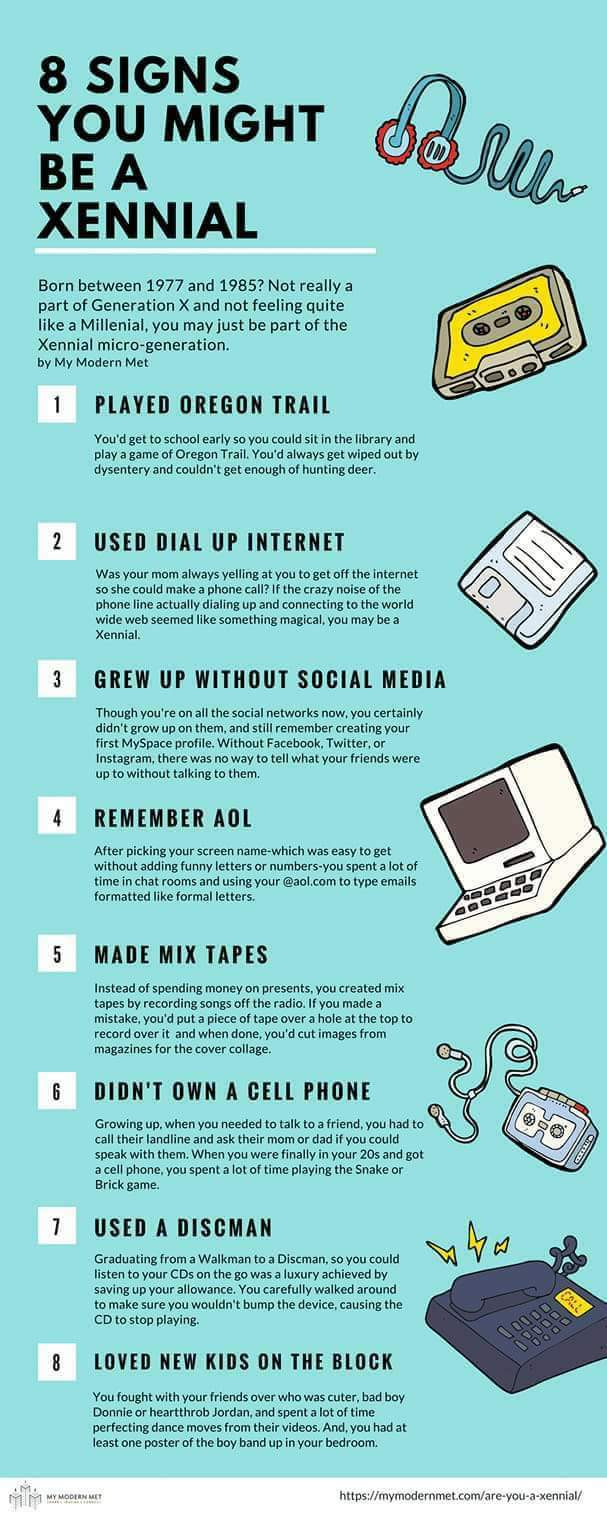
Growing up in the 1980s and 1990s, I am a part of the micro-generation between Gen Xers and Millennials, born between 1977 and 1983, now called Xennials.  Those of us in that microgeneration watched our world transition from analog to digital.  This is one of the main reasons we are considered our own microgeneration.  While Gen Xers largely experienced a largely analog childhood, Millennials are the first true digital natives.  As a Xennial, I experienced the transition firsthand.  This is precisely why I can relate to the Laura Ingalls Wilder quote above.  I may not have experienced the frontier, but I did experience a fundamental change in culture and way of life.  I can only hope to tell my story of that transition.  All I can do is keep trying.

Xennial

Modern Mrs. Darcy

Modern Mrs Darcy 1

It was only a matter of time before I stumbled upon the Modern Mrs. Darcy website.  It contains everything a booklover could want in a website:  reviews, endless reading lists including summaries, podcasts, commentary, and so much more.  My only surprise is that it took me so long to discover this treasure.  Oh, did I mention that there is an online book club as well?  Frankly, I expect the best from a website named after the wife of one of my favorite literary characters of all time:  Fitzwilliam Darcy.  If you are in the mood to dive into all things books, check it out.  Now.  You can thank me later.

By the way, this piece, written about the author’s experience on September 11th was my introduction to the site.  It is insightful and fascinating.  Much more to come from Modern Mrs. Darcy.

Modern Mrs Darcy 2

Book Review: Prairie Fires by Caroline Fraser

Prairie Fires

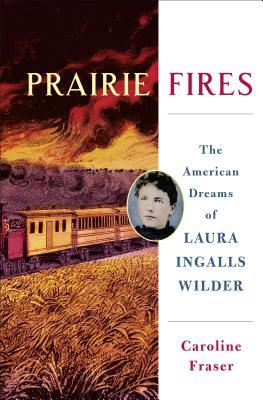
As an avid fan of Laura Ingalls Wilder’s work, I felt I had to read Prairie Fires:  The American Dreams of Laura Ingalls Wilder by Caroline Fraser.  While it is marketed as a new biography and even won the 2018 Pulitzer Prize and National Book Critics Circle Award for biography, it seems to be so much more.  In her work, Caroline Fraser not only takes the time to ground very personal decisions made by Laura and her husband Almanzo into the larger backdrop of American history, she takes it several steps further.  She analyzes decisions made by Charles Ingalls, Laura’s father, and Rose Wilder Lane, Laura’s daughter, against their political leanings and larger political climate.

Frankly, if a book looks at least reasonably well-written (not fan-fic) and promises new insight on anything related to Laura Ingalls Wilder’s life and work, I am likely to pick it up.  However, that doesn’t mean that I agree with everything or there aren’t inherent biases in such work.  As much as I enjoyed Prairie Fires, there is one overarching issue I believe is being overlooked.

Before I get into the issue, which, as with all things controversial relating to Laura Ingalls Wilder and her work, involves her daughter Rose Wilder Lane, some background is needed.  First, I read this book this past spring.  I enjoyed it, and it just fermented for a while.  I couldn’t quite figure out what bothered me about the presentation of politics throughout the book, until I happened to witness another conversation about the book.

A month or two after I read the book, I happened to be having lunch with some friends from Mid-Michigan Writers when two other women came to have a conversation with my friends.  One woman began gushing over Prairie Fires and stated that she would love to have a political conversation around the book. While I do not know this woman well, her politics proceeded her due to several mutual acquaintances.  I didn’t join in the conversation other than to say that I loved the book; however, it finally came to me why I felt something was off.

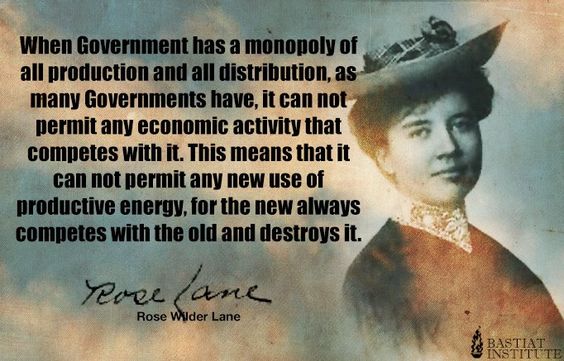
For those who don’t know, Laura’s daughter Rose Wilder Lane is one of the founding members of the modern Libertarian party and all that that entails.  In fact, Rose deserves her own blog post or even series of blog posts.  There is that much material.  Early in the 20th century, Rose was the famous Wilder.  The political legacy she left is messy and quite complex.  While my own personal politics lean more towards that of Laura and Almanzo (center-right), particularly when considering fiscal matters, than Rose, I don’t feel that the Caroline Fraser understood any of the politics completely.  Caroline Fraser seemed to analyze the political tendencies of the Ingalls and Wilder families through a modern liberal lens.

The most glaring example of this bias for me comes when Fraser implies that Laura is perhaps a hypocrite for serving on a local farm loan board near her home in Mansfield, Missouri while not supporting the sweeping federal farm loan programs of Franklin Delano Roosevelt.  Actually, I completely get it.  Laura and Almanzo favored local control of government.  I do as well.  The implication and omission of this distinction stood out to me.

If Fraser didn’t understand the politics of Laura and Almanzo, she didn’t know what to make of Rose Wilder Lane.  In all fairness, I don’t if anyone will ever completely understand her life.  In her life, Lane goes from supporting elements of communism and fascism to standing up for the founding principles of the United States of America.  She did all of this, of course, while helping her mother complete her famous series of children’s books.

Perhaps we will never know where Rose’s influence began and ended when it comes to the Little House books.  It is an enduring debate surrounding the series.  Fraser comes right out and describes the mother and daughter writing relationship as “incestuous.”  I came to a stop for a minute at that description, silently accusing Fraser of sensationalism.  Then I thought about it.  As I stated earlier, there is no way to know precisely what role Rose played in the series.  While I do not believe that Rose largely wrote the books, I do believe that the books would not exist in their current form without her influence.

Ultimately, I enjoyed the book.  Political bias aside, Caroline Fraser extensively researched her material.  Prior to reading Prairie Fires, I found Rose Wilder Lane to be a fascinating character.  After reading the book, I left even more intrigued.  As a fiscal conservative with libertarian tendencies, I can relate to some of Lane’s political ideas.  I love the fact that she promoted individualism, personal liberty, and self-determination.  Those ideas still hold value and are needed today more than ever in the face of increasing collectivism.  Can individualism and self-determination be taken too far?  Absolutely, and so can collectivism.  We need a balance.

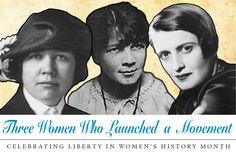
By the way, I find talk surrounding the book to be politically divisive.  You can read a Slate review here (the reviewer really doesn’t get the politics).  In the book, Lane’s political activism is compared with the other two “mothers” of the libertarian movement:  Ayn Rand and Isabel Paterson.  You can read more about them here.  If you are interested in Laura Ingalls Wilder, American history, or politics at all, Prairie Fires is a must-read.

Libertarian

RWL Quote

Book Review: Girl, Wash Your Face by Rachel Hollis

Girl

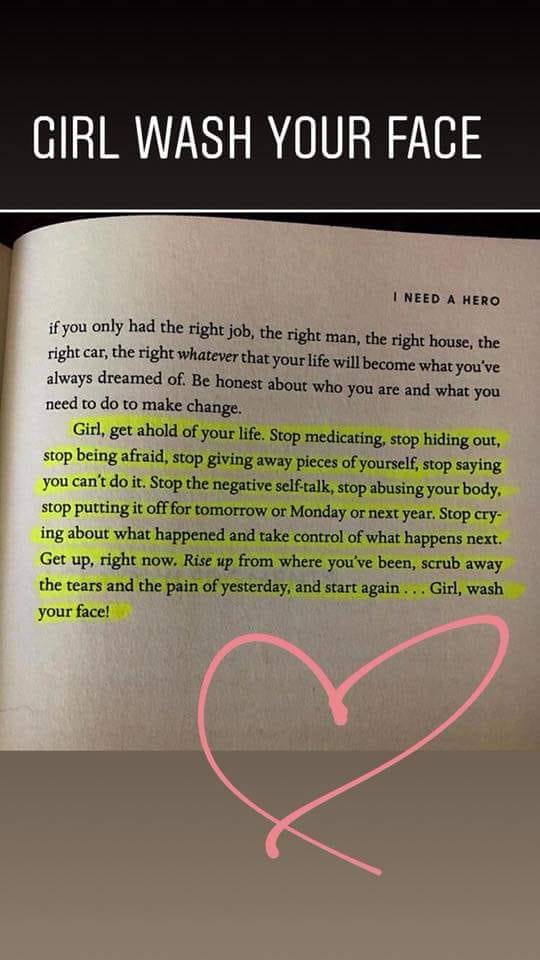
I recently read Girl, Wash Your Face by Rachel Hollis per my sister’s recommendation.  Actually, it all started with the meme above.  I then found out that my sister loved the book.  Of course, it immediately moved to the top of my to be read pile.  I love the fact that I belong to a family that shares and recommends books!

Here are a few gems from the book and my thoughts. There are many more I could share here, but I will leave you to discover them yourself.  I highly recommend the Kindle version of the book as it allows the reader to highlight important passages without defacing a physical book.

Sometimes choosing to walk away, even if it means breaking your own heart, can be the greatest act of self-love you have access to. – Page 53.

This just seems to sum up the process I put myself through this summer.  The sad part is that I should have definitively learned this lesson years ago.  I wish everyone, women and men, knew this before heading off to college – or shortly thereafter.  It ultimately would have saved me so much time and heartache.

I knew I was letting my fear control me, that the worry about giving my heart away again only to have it stomped on kept me from taking a next step.  In the midst of such heartache, it’s hard not to worry.  I cried so many tears, thinking, Lord, why would you put this desire on my heart if it wasn’t ever going to come true?  And, God, if we try again, you’re not actually sending my heart out to be slaughtered, right? – Page 108.

Oh, have I been there!  More than once.  There are times when I still wonder how I will ever be able to trust again.  It is not easy to pick ourselves up and try again.  Yet, we must.

I want you to see someone who kept showing up again and again, even when it was tearing her apart.  I want you to see someone who kept walking in faith because she understood that God’s plan for her life was magnificent – even if it was never easy.  And even if it wasn’t easy, she was bold and courageous and honest even when the truth was hard to share. – Page 173

I admit, lately I have struggled to have faith that God does indeed have a plan for my life.  I am currently slogging through it all to figure out exactly what that plan is.  If I am meant to have a family of my own, why haven’t I been able to make it work yet?  Why is that the big unnegotiable of my life if, indeed, it is impossible?  I ask myself questions similar to this all the time.  Ultimately, it is not my timing, but God’s.  It will eventually work out.  Until then, I just need to be patient and keep working.  It will never be easy.

As you can see, I loved the book.  It is a great example of a book that came into my life at the exact time I needed to read it.  I happened to read it just as I was struggling with these questions.  While I would recommend the book to every young woman I know, it doesn’t mean I think the book is perfect.

If fact, in one sense, the book left me feeling unsettled.  It is a feeling I get whenever I get too involved in anything related to religion.  What no one seems to address in organized religion – and Rachel seems to unintentionally fall into this – is that not all women will end up married and become mothers.  Singles in the church, particularly those no longer in their twenties, seem to get left behind.  Whether explicit or implicit, the focus always seems to be on marriage and family.

While I think Rachel was right to spend much of her book focused on marriage and motherhood – after all, this book shares her life experiences – she doesn’t address what happens if you do end up alone.  She doesn’t even seem to acknowledge the possibility even though she goes out of the way to address situations not her own.  This may not be true, but it appears she assumes everyone will end up married and a mother.  A simple acknowledgement would have served the book well.  Then again, maybe I am reading way too much into this and too sensitive.  It doesn’t matter.  The book itself is great, and I highly recommend it.

By the way, I love how she addresses adoption in this book.  I am so glad I read this book before I started the adoption process.  Her family’s story related to foster care and adoption is not an easy one, but it does have a wonderful outcome.  In the end, that is all that matters.

rh dreams.jpg

Hello Fall

fall

Ah, fall.  Mine is off to a great start.  I am eager to get writing once again.  Lately I’ve given a lot of thought to what I would like to share here and where I would like to take my blog.  I’ve come to a few conclusions.

  1. I would love to once again cultivate a blogging community and share some of my favorite finds here. The issue becomes my favorite blogs seem to become inactive or disappear altogether.  It has happened more than once.  We will see.  I’m not exactly sure where I am going to take this.
  2. I will continue to write about my reading life and books I love and hate. Actually, I can’t think of a book that I hate, but that is beside the point.  I have several books I need to review at the moment, so look for those book reviews soon.
  3. My favorite writings involve music, and sadly, I haven’t written about music in years. I may just have to bring it back.  The easiest money I ever made happened to be from writing articles about my favorite songs (and the memories I attached to them) for a now-defunct online magazine called JamsBio.  I need to revisit this concept.  I am a firm believer in learning about others through playlists and book lists.

Stay tuned!