Category Archives: childhood

My First Love

Roald Dahl

Without a doubt, my first love happened to be books.  A conversation last week made me think of what books I loved as a child and how they shaped the adult I became.  Unfortunately, this list may date me.  The funny thing is, there is no way I could limit it to just one book, one series, one period of my childhood and teenage years.  Instead, I – and by extension you – will have to settle for categories.

Poetry –

Where the Sidewalk Ends – Shel Silverstein

This was the first book of poetry I ever owned, and I absolutely loved it.  It still holds a special place in my heart.

Favorite Children’s Authors –

Roald Dahl

All of Roald Dahl’s books were in vogue with elementary school teachers throughout my childhood, and frankly, elementary school would not have been the same without James and the Giant Peach, The BFG, The Witches, Charlie and the Chocolate Factory, Matilda, among others.  Some of my favorite elementary school memories are tied to his books.  My first grade teacher read James and the Giant Peach, and none of us could get enough.  Even in 5th and 6th grades, the best part of the school day hands down happened to be the half hour after lunch recess when teachers would read to us.  I even know a certain 5th grade teacher who can fake out her students with The Witches.

Laura Ingalls Wilder

The popularity of the TV show, even in reruns, during my early elementary school years ensured that I would discover The Little House on the Prairie series eventually, but my 2nd second grade teacher read The Little House in the Big Woods to our class.  I couldn’t get enough.

Laura Ingalls Wilder’s work is at least part of the reason why I write.  I reread all of The Little House on the Prairie books as an adult, including Farmer Boy and The First Four Years.  I also read collections of her essays and letters, including West from Home.  Reading even more of her work made me admire her even more.

Favorite Series –                                                          

Anne of Green Gables

I read and loved all of the Anne of Green Gables books.  They captured my imagination as few others.  Anne reinforced my love of strong female protagonists.

Little House on the Prairie

See above.

Nancy Drew

I discovered Nancy Drew early in elementary school thanks to my Grandma who let me borrow her collection.  Once I read all of the traditional Nancy Drew novels, I started on the new series.  I could not get enough.  Unfortunately, I loved Nancy Drew so much that I burned out on mysteries.  I tried getting into the Kinsey Millhone mystery series by Sue Grafton as a young teenager, but soon became bored, even though I loved Kinsey.

Choose Your Own Adventure

These books were not great children’s literature, but they were entertaining.  I could not rest until I read every single version of the story.

Favorite Classics –                                                          

Gone With the Wind by Margaret Mitchell

I read this book the summer after 8th grade.  It took me most of the summer, but I lost myself in Civil War era Atlanta and Tara.  It was the perfect antidote to an 8th grade English teacher who spent most of the year on short stories more appropriate for younger students, along with spelling and grammar.

To Kill a Mockingbird by Harper Lee

It saddens me that I didn’t love this novel more when I read it in 10th grade.  I am grateful that I reread it for book club as an adult.  It deserves its revered place in American literature.

Lord of the Flies by William Golding

Another book read as part of the 10th grade English curriculum, this is one that stayed with me long after high school.  Never underestimate teenagers.  Never.

I Know Why the Caged Bird Sings by Maya Angelou

Even though this isn’t an Oprah Book Club pick, I associate it with that era in my life.  I used to rush home from school to watch Oprah, and her book club influenced what I read in my later high school years.  There are many school of thoughts as to whether or not this novel should be taught to teenagers.  I understand both sides, but I did love it.  I am glad that teenagers can find it even if it isn’t taught.

Edgar Allen Poe

I swear I came across one or two of Poe’s stories in an ancient collection of spooky stories in my elementary school library.  I question the memory simply due to the fact that it was an elementary school library.  Then again, the book itself was so old that it could have possibly dated from when there was a high school at the same location.  I like to think that I really did come across Poe in elementary school, and that it was his short stories that fed my love of ghost stories.  I have no idea why today’s high school students hate studying Poe – and they do.  I loved it.

Favorite Historical Fiction –

Christy and Julie by Catherine Marshall

These books introduced me to historical fiction, the Cumberland Gap, and Appalachia.  I loved them, even if I probably wouldn’t pick them up now.  They did spark my love of historical fiction.

Honorable Mentions –

Roll of Thunder Hear My Cry and Let the Circle Be Unbroken by Mildred D. Taylor

These books, depicting racism in the segregated South, made me recognize just how much I took my life for granted.  The children in these books faced so many obstacles on a daily basis just to get to school.

Randall’s Wall by Carol Fenner

The book itself isn’t all that remarkable, even though it does have a good anti-bullying message.  The reason I included it is due to its author.  As part of a young writer’s club in elementary school, I had the opportunity to meet her.  I even had her sign my copy of the book, and I almost missed the bus.  Another favorite elementary school memory tied to books, reading, and writing.

The Cay by Theodore Taylor

My Mom taught this novella as part of the 6th grade social studies curriculum.  She also happened to be my 6th grade social studies teacher.  She was the first teacher I had that used literature to teach social studies.  As a future social studies teacher, I plan to do the same.  My Mom may not know this, but she is largely responsible for my interest in teaching social studies and Latin America in general.  Recently I saw 6th graders carrying around The Cay; it is still taught nearly 25 years later.
Childcraft

The Competitive Edge

test

There is something bothering me in the text of one of my textbooks this semester.  While this particular book doesn’t necessarily suggest that teachers work to try to reduce competition in the classroom, the book explains that that idea is out there.  In many ways, I couldn’t disagree with that idea more.  As competitive as school can be on all levels, I think we get it all wrong as it is now.  At the same time, making high school less competitive is a good recipe for failure.

Let me explain.  Increasingly it seems as though we as a society are intolerant of people who do not fit certain molds.  We expect everyone to perform academically at such a level that they will be well prepared for college.  I keep coming back to the idea that college isn’t for everyone.  I’m not saying that most people aren’t capable of completing the work; I’m saying that not everyone is a good fit.  Instead of trying to force everyone into a certain mold, maybe we can help people, particularly teenagers, figure what their strengths are and what they enjoy doing.  What is wrong with someone pursuing an education at a trade school if that is what he or she enjoys doing?  It isn’t that I don’t believe that everyone needs some type of formal training and/or education after high school.  I do.  It is an economic reality.  What I don’t agree with is trying to get everyone to fit one version of life after high school:  the traditional four year college degree.  Instead, I believe students need more help and support figuring out what they want to do upon graduation, whether or not they decide to pursue a college education.  Students who would rather do physical work or pursue something other than academics should be supported as much as students who can’t get to college soon enough.

What saddens me is that there are only narrow definitions of success in most high schools.  Either you succeed academically or athletically.  If you are extremely talented, you might succeed at both.  What about the students who like to build?  The students who are artistic?  What about the students who like to create?  It may not always be the case, but it does not seem as though their achievements are celebrated enough at most schools.

At many high schools, sport dominate.  That is all fine and good.  Sports are great for the students who are talented enough to compete.  What about the majority of students who can’t compete at that level?  What is out there?  The answer in many cases is nothing.  For example, I have no athletic ability whatsoever.  That doesn’t mean I dislike sports.  I know that I am not alone.  I’m not sure where I came across the idea, but what would be wrong with organized, non-competitive sports too?  In essence, a high school version of the college intramural system.  When I first came across that statement about how high school is too competitive, high school sports came to mind immediately.  Students who aren’t athletically gifted need opportunities to develop physical talents too, outside of a required general gym class.  There should be room for both competitive and non-competitive sports.

My larger point is simply this:  We all need to recognize that all individuals have their own unique strengths and weaknesses.  We can’t expect perfection out of everyone.  At the same time, natural talents need to be encouraged, developed.  Students need some type of competition.  College admissions are more competitive than ever.  No matter what opportunities students pursue after graduation, they will face competition.

society

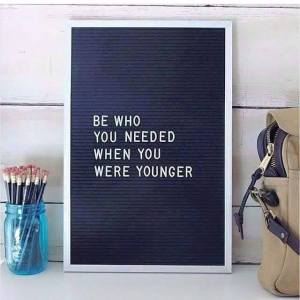
Be Who You Needed When You Were Younger

be you

This meme has stayed with me.  The message “Be Who You Needed When You Were Younger” can mean so many things.  For example, does it mean to be the parent I needed when I was younger, or does it mean to be the teacher that I needed when I was younger?  Does it mean to be the friend I needed when I was younger?  It can mean all of those things.  What I also love about the message is that it means different things for everyone who reads it.  I had wonderful parents, grandparents, teachers, and much more growing up.  I never lacked the adult support I needed as a child and later teen.  That said, no one is perfect.  There are gaps and holes due to the fact that we are all individuals.  If I took a few minutes, I could easily come up with ideas as to what that meme means to me specifically.  I love the idea that by cultivating those areas one will be in a better position to help children and teens like ourselves.  That is largely why I am going back to school to earn my teaching certificate:  I care about teenagers and want to help them succeed.  By taking the time to figure out what we were missing growing up, it is easier to discover what children and teens today might need.

I also can’t help but relate this to a conversation I had with a friend yesterday.  She and I discussed how we tend to box ourselves into the many roles we play in our lives.  For example, when I am at work, I act a certain way.  When I am at home, I act another.  Neither is truly my authentic self.  She asks the question why can’t we be consistent?  What is stopping us?  For her, this means juggling the roles of mom, pastor, wife, and writer.  Oddly enough, this made me realize just how soon my roles will change.  Soon I will be business owner, teacher, and hopefully, mom.  While I will remain a writer, I will no longer primarily identify as a student.

As I thought more about this topic, this appears to be more of an issue for women than men.  Let’s face it:  Our society still expects women to do it all, or at least try to do it all.  There isn’t nearly as much pressure for men to be perfect parents, look a certain way, or create a home.  It is sad, but I still see so many women act surprised when men are wonderful, involved dads to their children.  It should be expected, not treated as something rare.  By the way, I know so many wonderful dads.  It isn’t rare.  What doesn’t exist is a man or a woman who can do everything well all at the same time.  There are, and have to be, trade-offs.  Choose wisely.

I am lucky – damn lucky.  Most people don’t get the opportunity to do it all over again.   Over the last few years, I’ve taken the opportunity to figure out exactly what I want, made decisions on how it will all fit together, and pursued those new goals with everything I have.  I am not there yet, but I am well on my way.  I am grateful that I’ve had such wonderful role models, namely my parents.

Women Need to Just Stop Judging Other Women

mom

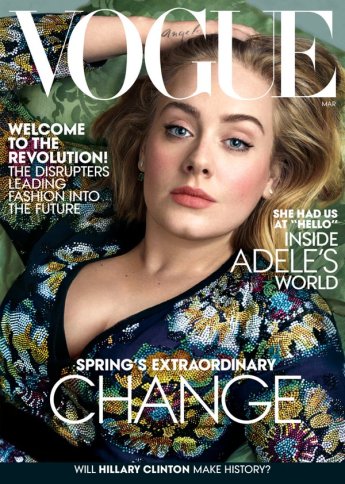
Adele Is Freaking Feminists Out and I Love Her Even More for It – Chicks on the Right

Since when are the decisions individual women make for their lives up for general debate?  It happens every single day as far as I can tell, particularly if said woman happens to be a mother.  Men are not subjected to downright mean spirited questioning of their personal decisions once their children are born.  Women certainly are.  In fact, there is currently a post on BlogHer in which a mother discusses the judgement she faced from other women in the face of a necessary C-section.  You can read the article here.  I am not a mother yet, and I still see the debates and judgements happening every single day.  Breastfeeding, immunizations, working mothers, school choices, C-section versus natural birth, etc.  The list is endless.  Is it anyone else’s business other than the family and individuals affected?  It shouldn’t be.  People make different decisions for a wide variety of reasons.

That is where Adele comes in.  She recently stated that she didn’t fully recognize her purpose in life until she became a mother.  I am paraphrasing, but that is the gist of the idea.  She simply is suggesting that she views motherhood as more important than her singing career.  She isn’t saying that all women need to feel the same way.  She isn’t saying that her singing career isn’t important.  She is merely expressing her personal views on HER own life.  That’s it.  I admit that I haven’t personally seen the backlash that she has received for this interview, but I can easily imagine it.  That sad part is, there is just as much backlash against anyone who suggests that women can be just as good of mothers when they decide not to stay home with their children.  No, I am not joking.  This isn’t the 1950s, and there are people who truly believe that people (let’s be realistic here, mainly women) need to choose between career and being a good parent during the first few years of a child’s life.  In fact, I came across just such a Facebook post by a stay-at-home mom yesterday.

In this post, the author of this Facebook post commented on an article titled The Loudest Silence I Ever Heard by Travis Norwood.  She goes on to state that the article, which discusses severely neglected children in a Kazakhstan orphanage, proves that CIO (cry it out) is harmful to children.  The article, which is disturbing and deserves its own blogpost relating to adoption, isn’t the issue.  The issue is this woman’s reaction to it.  She questions the ability of children raised by working parents to form healthy relationships and basically function well in society.  She truly believes that it is a necessity for one parent or another to stay at home with their child at least until age three.  Excuse me?  What about parents who must work?  What about single parents on every level?  Whether this woman realizes it or not, she just heaped a ton of guilt on parents who simply do not deserve it.  Does she not see that most of these parents have the best interests of their children at heart as well?  Does she not know any successful women who juggled career with raising children?  If not, I feel sorry for her.  I know so many.  In fact, most mothers I know do just that.  Successfully.

When will it stop?  I am sick of women using up so much time and energy to tear down other women who happen to do things differently or make different choices.  It is one thing to discuss why you made the personal choices you made.  It is quite another to suggest that those choices work for everyone.  Can we just stop pretending that everyone is the same and there is only one way to be successful?  It is particularly bad with regards to parenting.  There is more than one way to be a wonderful parent.

mom 2

Adele

The interview that started it all.

Turner Syndrome: My Story

keep-calm-its-only-a-missing-chromosome-4

Those who know me may or may not know that I have Turner Syndrome.  While I am open about Turner Syndrome, it isn’t something that comes up all that often.  I’ve struggled for years to put into words just what Turner Syndrome has meant in my life.  While I certainly wouldn’t be the same person I am today if I did not have Turner Syndrome, it has not defined me.  I admit, Turners has made certain things, such as motherhood, more challenging, but for every young girl with TS reading this, I want to make this as clear as possible:  Turner Syndrome has yet to stop me from achieving anything.  As tomorrow marks the beginning of Turner Syndrome awareness month, I am sharing my story.

My name is Lindsey Russell, and I was diagnosed with Turner Syndrome at 3 years old.  At that age, I fell off the growth charts, and I was fortunate enough to have a concerned pediatrician, Dr. Wright, who had previous experience with Turner Syndrome.  The fact that I have Turner Syndrome was then confirmed by an endocrinologist at Mott Children’s Hospital at the University of Michigan Medical Center.  Even though I attempted to find out if I have classic Turner Syndrome (the entire X chromosome is missing) or mosaic Turner Syndrome (only part of the X chromosome is missing) in my 20s, I never received those copies of my medical records.  Throughout my early childhood, I had yearly check-ups in Ann Abor.  Even though I didn’t know I have Turner Syndrome until I was 10 years old, I could sense that I was somehow different.

Fortunately, I do not have the more serious heart and kidney issues associated with Turner Syndrome.  I do have a large number of moles, short stature, and infertility.  I also had issues with reoccurring ear infections as young child, which resulted in several sets of tubes (I couldn’t even tell you how many) and slight hearing loss.  In fact, I hated seeing the ENT (ear, nose, and throat) specialist, Dr. Stoddard, because I dreaded getting another set of tubes.  For the record, Dr. Stoddard was one of the nicest doctors I ever had, and I feel terrible that I hated him so much as a child.  My fear of tubes stemmed from my memory of my last set of tubes at age four (I think).  I remember throwing up due to the anesthesia, and I was terrified I was going to have to go through that again.  For the record, I have yet to meet a girl or woman with Turner Syndrome who did not have several sets of tubes as a child.

When I was ten years old, everything changed.  In the early 1990s, HGH (human growth hormone) came into use for “treatment” of Turner Syndrome.  In fact, in later years, I met girls slightly older than me who participated in the clinical trials.  At age ten, I started daily injections of HGH.  I stayed on those shots until I was 15 years old.  In fact, the development of HGH treatment for girls with Turner Syndrome is how I found out I have TS.  In order to be considered for HGH treatment, I had to spend a night in the hospital for hourly blood tests.  As I was not sick, my parents were put in a position where they had to explain that I have Turner Syndrome.  I am deeply grateful to my parents for their honesty and their insistence that I could achieve whatever I desired.

Today, I have mixed feelings about the use of HGH for the treatment of Turner Syndrome.  I don’t believe that short stature should be treated as a disease.  It is that simple and that complex.  I completely understand why my parents decided to put me on HGH.  They simply wanted the best for me.  What I do not understand is the medical profession’s singular focus on height in girls with Turner Syndrome.  During my adolescence, there was little if any discussion of infertility, possible learning issues, or anything else.  The focus was almost exclusively on HGH, the timing of puberty and hormone replacement therapy (again, related to height), and, of course, final height.  I felt like a freak of nature.

Adolescence and puberty are hard enough; now imagine it planned, measured, and discussed at length.  Like any other adolescent girl, I just wanted to fit in.  I didn’t, and I never would.  At age 14, I had the opportunity to attend a camp exclusively for girls with Turner Syndrome.  It changed my life.  For the first time in my life, I met other girls with Turner Syndrome.  I finally met others who shared similar body and social issues.  I had the opportunity to travel halfway across the country on my own.  I attended two years, and I credit camp for giving me the confidence to study abroad repeatedly during my years at Michigan State.  By having the opportunity to meet others with TS, I realized that I am not a freak, and I am certainly not alone.

Today, after having earned degrees in supply chain management and Spanish from Michigan State University, I am going back to school to teach Spanish and/or social studies at the middle school and/or high school level.  Once I am established in my new career, I hope to adopt.  Even though the pain of infertility never fully goes away, I do believe that I am meant to adopt.  I am looking forward to the next chapter in my life.

Women and girls with Turner Syndrome face a wide variety of physical, emotional, and social challenges.  They also happen to be one of the most highly educated and determined group of women and girls I have ever met.  Never let a label define you or let anyone underestimate your ability.

New-Logo-for-Camp-10-07-15a

The Enemy Within

this

The Trouble With Bright Girls – Psychology Today

Undoubtedly, I am my own worst enemy.  I continually underestimate my capability, and no matter what I’ve achieved, it is never enough.  I am a perfectionist, and it rears its ugly head just when I need it the least.  The sad thing is, this article left me wondering what I would have accomplished if I felt I could try new things as a child, particularly when it came to sports and anything physical.  Once I entered kindergarten, students went out of their way to never let me forget that my body was different.  Always the last chosen for teams in gym class, I soon stopped caring or trying.  It saddens me that every day, children are told that they are not enough, that they shouldn’t even try.

Right now, I need more courage than ever.  I know I have it within me to create the life I am meant to live.  The issue becomes how to get out of my own way.  I am my own worst enemy, and it needs to stop.  Now.  Those voices of those classmates, so intent on pointing out every single physical flaw, still play in a constant loop in my head from time to time.  It is the nagging little voice that tells me that I am not pretty enough, that if it involves anything physical, I will fail.  It tells me that I am unworthy of love.  It never ends.  I have to constantly prove my own worth to myself.  Enough is enough.

“The Lost Art of Keeping Secrets” By Eva Rice

Book Review:  “The Lost Art of Keeping Secrets” By Eva Rice – Write Meg!

Lost Art

Even though I read The Lost Art of Keeping Secrets by Eva Rice several years ago now, it never really left the back of my mind.  On the surface, it is dishy and a guilty pleasure in the best sense of the term.  As easy as it is to write off as a beach read, there has to be something more there in order for it to stick with me for so long.  That is partly why it stuck with me:  I’ve been trying to figure out exactly what it is about this book that fascinates me.  I finally think I have it figured out.  The book itself is set in post-war, 1950s London.  While there are still vivid memories of World War II and the Blitz, there is a contagious sense of renewal, hope, and general optimism throughout the book.

That atmosphere, used effectively as a backdrop for an interesting group of teenage characters (Penelope and Inigo Wallace, Charlotte Ferris and her cousin Harry), allows them to shine and adds to the excitement of early rock and roll in London.  So much of the novel revolves around the music!  Inigo is obsessed with Elvis, while Penelope and Charlotte adore Johnnie Ray.  In fact, one of the pivotal events in the novel involves a Johnnie Ray concert at the London Palladium.  I can just imagine the excitement and what it meant to be a teenage girl waiting to see your rock and roll idol in concert.

I think that is why I love this novel so much.  It takes place during a period of time that influenced the likes of the Beatles, the Rolling Stones, David Bowie, and countless others.  The music I know and love simply wouldn’t exist without the likes of Elvis, Little Richard, or Johnnie Ray.  Knowing the history of rock and roll and what takes place in the late 1950s and early 1960s makes this book that much sweeter.  I definitely need to reread it.

London Palladium, 1950

London Palladium, 1950

Body and Other Four Letter Words

This is one of the final – and best – blog posts I shared on my old site.  This is still a topic that I think about and struggle with every day.


There are many reasons why I haven’t blogged in well over a year, but today I’m going to address one of the main reasons.  One of the main reasons I decided to blog in the first place was simply to address issues most important to me, and with the issues of body image and infertility, I’ve failed to do just that.  How do you address something that affects every single aspect of your life?  How do you address something so overwhelming that no one, not even those who love you the most, wants to hear it?  The thing is that the longer I let these thoughts fester, let these words go unsaid, the longer I wonder if there is something I could’ve done for girls and women dealing with the same issues.

As a child, I can precisely pinpoint the moment when I was told my body wasn’t good enough; it was the day I entered kindergarten.  Prior to kindergarten, no one called me fat or felt the need to constantly remind me just how short I was.  Sure, I was a “stocky” kid, but I was also active.  I played outside constantly with my little sister, cousins, etc.  I never felt self-conscious in a bathing suit; I was having too much fun swimming.  I never felt the need to compare myself to anyone else.  Did I envy my older cousins?  Of course I did!  I looked up to all four of them (all female), but even as a small child I knew that to compare myself to someone so much older simply didn’t make sense.

Everything changed in kindergarten.  In gym, I was always picked last for teams.  When we had to line up by height (again, in gym), I was inevitably last or next to last.  Sadly, I was compared to a little girl who was much larger than me.  I just remember the anger and outrage of such an unjust comparison, and yet, I felt empathy for the other girl.  Was that really how other kids saw me?  As time wore on, kids started making rhymes about my body.  25 years later, and I still remember it all: “Short, fat, and squatty; got no face, got no body.”

In some ways things got better in junior high.  I went from being bullied to being mostly ignored.  As others paired off and experimented, I just threw myself into my school work and books.  Sports were never much of an option for me, and unfortunately, sports at the junior high/high school I attended were the key to popularity, especially if you were a girl.  I wasted my time on crushes who couldn’t be bothered to even talk to me, much less date me.  Once my little sister joined me at the same school, I was bombarded with comments such as: “I can’t believe you two are sisters! Your sister is so pretty and popular!”  The implication, of course, being that I was the exact opposite: ugly and unpopular.

As an adolescent, I would’ve given anything to look like my Mom and sister, both of whom I considered relatively thin (though they would both fight me on that one), beautiful, and popular.  At the time, I wanted blonde hair and blue eyes if it meant acceptance.  I remember driving with my Mom in her new red Grand Prix as a young teenager.  GM had completely redesigned the Grand Prix, and my Mom had one of the first redesigned models in the area.  My Mom had lost a lot of weight, and frankly, looked great.  Every time I went somewhere with my Mom, it seemed as though we would get stares, mainly from men.  I couldn’t help but wish I was the one making heads turn, not my Mom.  Despite all of the disparaging remarks my Mom would make about her own weight, I never saw her as anything but beautiful.

Adolescence is hard, but it is even harder if you are short and fat.  At the time, I thought I was huge, and that there was no chance I’d ever lose the weight.  Today, I’d love to weigh what I did in high school.  In college, I proved myself wrong and lost a lot of weight due to walking Michigan State’s campus and walking all over Spain during my semester there.  What I wasn’t prepared for was how I would be treated differently.  People were interested in me, in my life – even a few men.

After college, after moving to Houston, Texas for my first “real” job, things changed.  I took all of the stress of that job, the joy of being in a relationship, and the loneliness I felt before Brian joined me in Houston, and I did what I do best: I used it as a license to eat.  The desk job didn’t help either.  Not only did I gain back all of the weight I lost, I kept gaining more too.  It got to the point that my Dad and Grandma were shocked when I returned to Michigan.  They couldn’t even hide it as I’d gained that much weight.

Today I’m at a point in my life where I’d love to lose the weight again.  I’m single, and frankly, happier than I’ve been in a very long time.  The thing is that I’d be kidding myself if I didn’t admit that I’m scared: I’m scared of all of the attention I’d receive if I did lose the weight.  The experience of having lived through that once left me angry.  Am I really that much more of an interesting person if I am relatively thin?  As I thought through all of that, I realized that losing weight would only be temporary (again) if I didn’t deal with my own body issues.  I’m left wondering how I am supposed to do that when everything in our society states, quite bluntly, that my body, even at its best, will never be good enough on account of my height alone.

If there is anything I want girls and women to take from this, it is this: 

We should not feel we have to be a certain weight to feel loved and accepted for who we are, society be damned.  Never let anyone tell you differently.

We as a society need to come to accept the simple fact that people come in all shapes, sizes, and colors.  Words hurt much more than most people realize.

girl 2

Is this what we want for girls?

Through all of this over-thinking of body image as of late, I came to realize that I’ve never truly even liked my body, and much of the reason stems from infertility.  The first thing I ever remember wanting out of life was to be a mom.  At no point in my life did I ever not want a family of my own.  Unfortunately, biologically, it just isn’t going to happen.  Fortunately, I came to terms with the fact adoption is a wonderful alternative a long time ago.  And yet, I’ve never quite forgiven my body for so fundamentally betraying me.

If I resemble anyone on either side of my family, it would be my Great-Grandma Suszko, my Dad’s maternal grandmother. At nineteen, I was working with my Grandma (her daughter) when she opened a package from a niece containing her parents’ wedding photo, newly redone.  My Grandma kept staring at the photo and then back at me.  It was clear she thought I looked like her Mom, although the fact that I was the same age as the girl in the photograph probably helped.  As someone deeply interested in family history, I have a copy of Great-Grandma Suszko’s naturalization papers.  Her physical description could fit me perfectly, with one exception: she was two inches taller than I am.  My Great-Grandma Suszko had ten children, all but one of whom lived well into their 70s.  Add in the fact that my Mom has four sisters, and I came up with one conclusion: My body should be built to bear children.  It just isn’t.

What people who don’t have infertility fail to realize is that dealing with it is an on-going process, not a one-time deal.  Just when you feel you are fine with it, accepted it fully, and have moved on, something happens that forces you to deal with it all over again.  For me, one of the hardest things to deal with was the day I realized that I fully met the medical definition of infertile (I’ll spare you the details).  There just wasn’t anyone I could share that deep sense of loss with at the time, even my boyfriend.  I’ve talked a lot about my experiences with body image, but it just wasn’t complete without discussing infertility as well.  There was a time in my life that dealing with infertility was so painful that I downplayed my desire for a family of my own.  I downplayed it to the point that my own sister never realized that I wanted children.  It saddens me that those I love most can never fully understand due to the simple fact that they are parents.

What Losing 100 Lbs. Taught Me About How We Treat Overweight People

14 Things Every Fat Girl Absolutely Needs to Hear

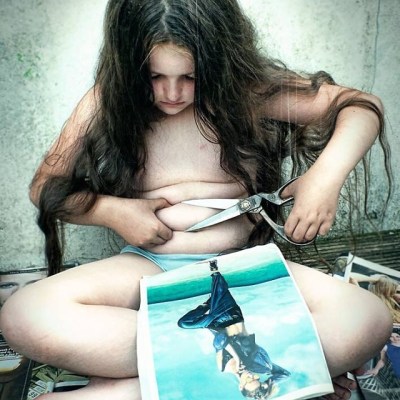
Daughter of Body Image Advocate Slams Brand for Her ‘Drastically Altered’ Modeling Photos

Middle Grades Versus Young Adult Fiction

LIW Quote 2

The topic of young adult literature fascinates me.   As part of her MOOCs discussing the life and work of Laura Ingalls Wilder, Pamela Smith Hill, an author herself, explores the development of the YA genre, as well as the ever-shifting boundary between middle grade and young adult literature.  As a writer who intends to eventually write in both genres and as a future middle school/high school teacher, her explanations of both genres left me wanting to learn more.  It also left me feeling as though there are no hard and fast rules.  Pamela Smith Hill credits authors such as Mark Twain, Louisa May Alcott, and Laura Ingalls Wilder with creating the young adult genre, even though the modern classification didn’t formally come into use until the 1950s.

Until I watched this series of videos, I never thought of the Little House series as divided into middle grades and young adult fiction.  I classified it all as middle grades, even though I reread the entire series, including The First Four Years, as an adult.  However, throughout her series of videos, Pamela Smith Hill makes a compelling case for considering On the Shores of Silver Lake, The Long Winter, Little Town on the Prairie, and These Happy Golden Years among the first young adult novels.  While I always knew that The First Four Years could not rightly be considered a part of the Little House series, I now have a much better understanding as to why.

According to Pamela Smith Hill, the book was Wilder’s attempt to write for an adult audience.  Indeed, it does deal with adult themes such as marriage, choosing a vocation, and economic hardship.  Interestingly, the book only came to the attention of Rose Wilder Lane, Wilder’s only child and literary heir, upon her mother’s death.  There are several theories as to why, but what I find interesting as a reader is that The First Four Years just feels different.  There is a different tone, and in many ways, it is sparse where other novels in the series are not.  As a writer, I understand why it was not published in Wilder’s lifetime, even though it is a good book.  It simply did not fit her literary legacy.

All of this leads me to a few conclusions.  First, it is possible to allow a series of books to grow with the reader.  As a child, this is what left me disappointed with mystery series.  The main characters never seemed to grow.  This is also why the Anne of Green Gables series and the Little House books remain among my childhood favorites.  Second, rules in publishing can be broken.  What it is important is to tell the truth, even if it isn’t the whole truth.  Dealing with difficult issues honestly is particularly important in YA literature.  Laura Ingalls Wilder did this well, even if she did fictionalize some aspects of her story to conceal identities or to simply make a better story.  Finally, it is important to control one’s literary legacy, even if only during one’s lifetime.  As a child of the ‘80s, I am completely conflicted when it comes to the Little House on the Prairie TV series.  I loved it as a child.  As an adult, I question the liberties taken with the source material, among many other things.  That leads to an overarching question:  How much control can a writer exert over his or writing from the grave?  If nothing else, it is an interesting topic.

The Most Important Thing I Learned from My Dad

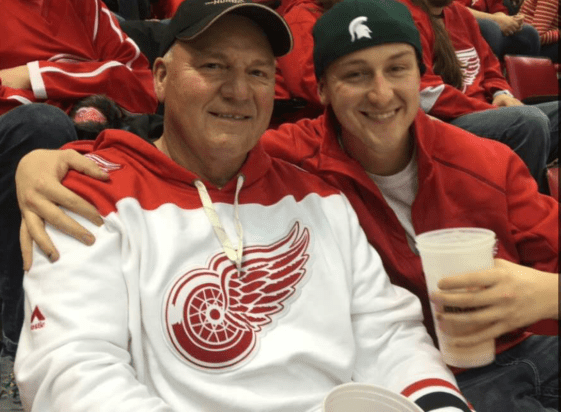
My Dad and my brother - Red Wing's Game, Joe Louis Arena - December 2015

My Dad and my brother, two of the most important men in my life – Red Wing’s Game, Joe Louis Arena – December 2015

Today is my Dad’s 63rd birthday.  As he and my Mom celebrate at their cabin in Canada with friends, I can’t help but think of all he has taught me over the years.  So, as tribute to my Dad, I am going to answer the one question he asked me several times as a child (and maybe once or twice as an adult).  I will also share the one thing he taught me that will always stay with me and is clearly now a part of who I am.

First, the question.  As child, he asked me all too often “Lindsey, why do you always have to do things the hard way?”  Well Dad, I would certainly like to know too.  The thing is, I always have to discover things for myself, and unfortunately, I am incredibly stubborn, just like my Dad and his Mom, my Grandma Reid.  I can’t help it.  When it comes to my Dad dispensing advice that goes against what I feel is best, I am going to do what I feel is best at the time.  He and my Mom gave me plenty of opportunities to make my own choices even as a teenager.  Over the years, of course, I’ve grown up and made better decisions, but every now and then, I still go rogue and disregard my Dad’s advice, usually at my peril.  So, Dad, if you are reading, the reason why I have to “do things the hard way” is because I am too much like you.

The biggest lesson I learned from my Dad is undoubtedly to go after whatever it is you want out of life.  My Dad may not fully understand why I love the things I do or why I want certain things out of life, but he has always supported me in chasing my dreams.  I watched my entire childhood as he went after his dreams.  There was never any doubt that I was expected to do the same.  There were times when I wished my Dad more fully understood why I love the things I love and why I chase the things I do, but I know deep down he understands more than most.

Happy birthday, Dad!  I love you.  Lonzo.