
My supply chain management education will always color the way I view things. At times, I wish it didn’t. In education, I like to believe that most students will find their way, eventually. Most will find their purpose. I feel for those who don’t, but it is a reality of life. There are always those who remain lost, and sadly, I’ve known a few. I can help, but I can’t be everything to everyone.
With supply chain issues, there is a solution. There is always a solution. We just need the resolve to follow through and make necessary changes. We learned so many supply chain and economic lessons from the Greatest Generation and World War II, but as that generation passed away, I fear that we have lost those lessons or even ignored them completely.
Let me start at the beginning. I am deeply proud to come from a long line of entrepreneurs. I long idolized my dad and Grandpa Buttrick. Both owned and ran their own companies and were self-employed, as different as their companies were and still are. My dad developed Russell Canoe Livery around our family and our lifestyle. He had no desire to build it beyond what it is now, even if we had the opportunity.
Grandpa, on the other hand, loved to build. He expanded his convenience store business into screen printing, Subway franchises, propane, hotels, and more. He even loved to compete against himself from time to time. As a child who loved to build, I took notice. In having the opportunity to manage one of his convenience stores for a few years, I am grateful to have learned just why Grandpa loved the c-store business so much. Ultimately, it helped me become a better manager at the canoe livery and a more empathetic boss.
No WI-Fi in the 80s and 90s!
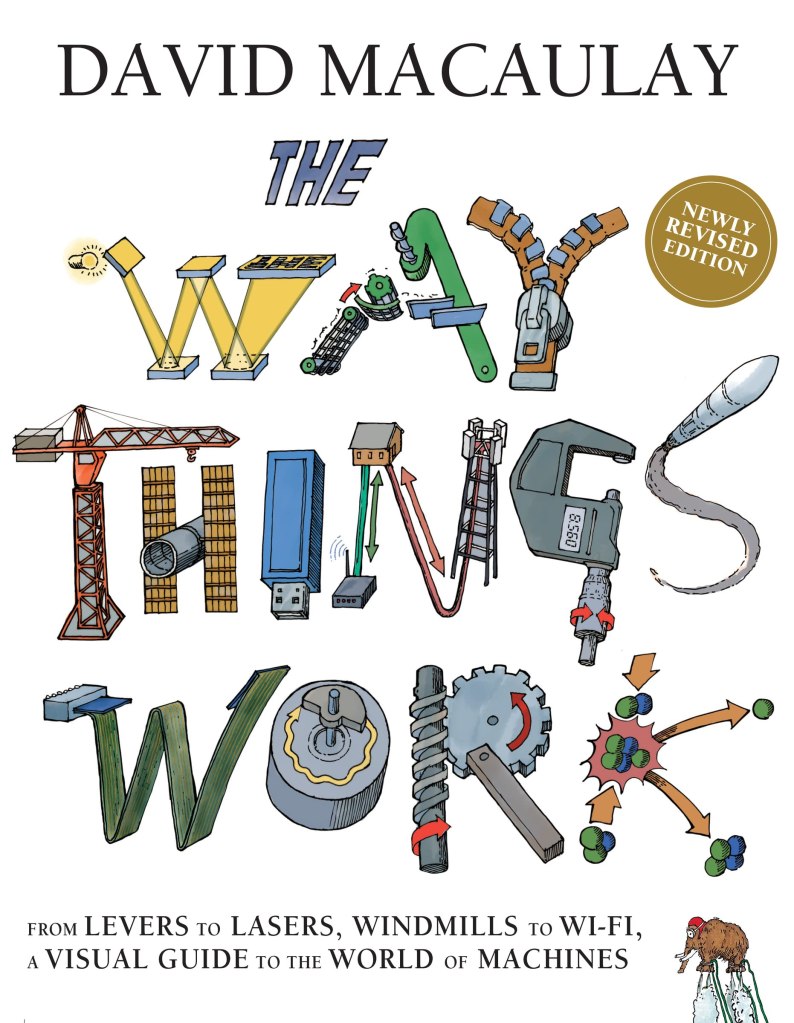
As a child, one of the most fascinating books I owned was The Way Things Work by David Macaulay. I wanted to know how and why things worked. Looking back, this helps explain why I chose supply chain. It fit the bill. I knew I didn’t want to study management. I wanted to know exactly how value was added, and not just become increasingly removed from day-to-day operations that actually pay the bills. Accounting and finance never even entered the picture. In fact, my mom and I joke that we would starve if we had to try and make a living as accountants. I am decent at math, but I make errors far too often, and it is not my thing.

I do have two older cousins who earned supply chain degrees from Michigan State and blazed the trail, but as my older cousin Emily tried to sell me on supply chain, it made me look at the program more critically. Instead, my experiences at the Broad Business Student Camp (BBSC) after my junior year of high school sold me on Michigan State and supply chain management. During that week attending BBSC, I had the opportunity to explore State’s incomparable campus, everything the Eli Broad College of Business had to offer, as well as all things supply chain. In short, I had the opportunity to preview what my life would be like as a Michigan State business student with one of my best friends. What was not to like? By the time my parents dropped me off at MSU in August of 1999, I had to kick them out of my dorm room as I had already connected with student groups in the business school, and I was not going to be late for the first meeting.
Now you know why I never wavered in my pursuit of my supply chain degree, in spite of the fact that, deep down, I knew that I wanted to be a teacher as well. As for the deeper lessons that stayed with me and kept me up at night, it all started with a business history class I took during the winter of 2000, the very heights of the dot.com bubble. In fact, the bubble burst that consumed that spring forced me to pay attention. My history professor, in fact, predicted the fall of the stock market (the dot.com bubble) publicly almost as soon as classes started in January. When it finally happened in March, as a 19 year old, it left a deep impression. However, as memorable as that experience was, this is not primarily why I remember this class 25 years later.
Instead, my professor’s description and explanation of how Detroit became the “arsenal of democracy” still sends shivers down my spine. He made the case that the United States and the Allies would not have won World War II without Detroit. While I knew Detroit played an important part in the war, I didn’t realize just how important. Supposedly, when Hitler received intelligence of manufacturing totals coming out of Detroit, he didn’t believe it. Those who had gained manufacturing experience in cities like Detroit, especially Detroit, would turn their focus to the war effort.
When you think of the manufacturing capability we had during that time, the early 20th century, it makes sense. We were able to help supply Great Britain long before we officially entered the war after Pearl Harbor. Thanks to FDR, we switched from manufacturing consumer goods to munitions. We went from cars and refrigerators to tanks and aircraft. This is the question that keeps me up at night: Would we be able to do so again if faced with such a crisis? I don’t know.
Actually, I doubt it, as the way things are now. Born at the end of 1980, I’ve watched my entire life as Michigan lived up to its “rust belt” image. Most of the business professionals I graduated with in 2004, me included, had to relocate to states such as Texas and California to find jobs. When my parents graduated from college in the late 70s, there were still good manufacturing jobs to be had right out of high school, although that would soon come to an end. I grew up hearing of plant closures, manufacturing outsourcing, and general loss of manufacturing capability in the United States. It is all I knew. By the time I sought to start my career, little remained. Instead, less secure positions with multinationals outsourcing much of their labor to places like China, Mexico, and India took their place, particularly in the shadow of the first dot.com bust.
By the time I interned with IBM out in Rochester, Minnesota during the summer of 2001, not only did they not have enough for their interns to do, their full-time, permanent employees didn’t either. Instead, they were focusing on their garage bands and updating their resumes. In 2003, as part of a tour of a GM factory in Mexico near the border, I vividly remember seeing rows upon rows upon rows of brand new Pontiac Azteks and Buick Rendezvous awaiting shipment as our chartered bus slowly approached the plant. Looking back, it foreshadowed Pontiacs epic downfall several years later. Tragically, Pontiac would never recover from the monstrosity that was the Pontiac Aztek.
My last semester at Michigan State in 2004 brought the Eli Broad College of Business’s first Chinese Supply Chain Symposium. Of course, it focused on all of the wonderful benefits of outsourcing manufacturing to China. I left wondering if I was the only one asking just how long before we were outsourcing our own jobs? Where and when would it end? Was I the only one seeing the connection between outsourcing and both unemployment and underemployment in the United States?

one with its own set of challenges and setbacks.
I will leave you with this summary. We desperately need to bring manufacturing back to this country. If you think the supply chain interruptions during the COVID 19 pandemic were bad (and I followed them closely), what would happen in the case of an even worse global crisis? Good manufacturing jobs helped finance the growth of the middle class throughout most of the 20th century, particularly after World War II. Why can’t we get back there? We’ve learned so much during that time, and we have the workforce, if given a chance. I hope I live to see it. By the way, this doesn’t mean becoming isolationist. It is simply expanding beyond the pharmaceutical, technology, and service industries. Supporting local farms wouldn’t hurt either! Cheap is good, but it is not always best in the long-run. We’ve remained far too short-sighted and complacent for far too long.



Tower Guard Induction – Beaumont Tower, Michigan State University




 Ramblings of a Misguided Blonde