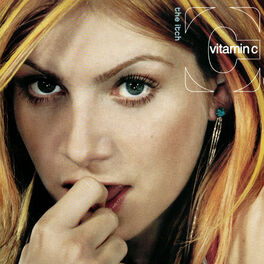
Vitamin C – Graduation (Friends Forever) (1999) (Video)(Lyrics)
(Written February 12, 2024)
I came across the video for “Graduation (Friends Forever)” by accident this past weekend. Sometimes nostalgia slaps you so hard in the face that it cannot be ignored. While I can’t say that “Graduation (Friends Forever)” was ever a favorite, it did leave an impression when it first came out during the spring of 1999. How could it not? I graduated from high school in 1999, and quite frankly, the target audience.
In the midst of watching classic videos from the 80s and 90s, YouTube saw fit to suggest “Graduation.” Thinking “why not?,” I found myself transported back 25 years. What struck me most about the video wasn’t the song at all. Frankly, I still find it way too saccharine. Instead, I thought about how I could have guessed the year from any still photo from the video. Not a cell phone in sight.
It cracked me up. The video definitely fit the late 90s aesthetic that we all thought so bleeding edge at the time. In fact, the girl’s outfit in the video, the layered yellow tank top with the orange/yellow slip skirt, reminded me of one of my go-to outfits in 2001. The only difference? I didn’t layer tank tops. Instead, I wore a jean jacket over a yellow tank top. I remember it vividly because I loved that outfit and that look so much at the time. Maybe it is time to bring it back.
While I can’t say that I loved or even liked high school (I couldn’t wait to graduate and move on), it is fun to look back from time to time. After watching the video, it hit me that this June will mark 25 years since I graduated from high school. How? Just how? Interestingly, “Wear Sunscreen,” a spoken-word release based upon an essay, became popular during the spring of 1999 as well, even though it dates to 1997. See below.
Toby Keith – Beer for My Horses (Featuring Willie Nelson) (2003) (Video)(Lyrics)
Written February 10, 2024
Toby Keith. I can’t help but feel that his death is the end of an era. The lyrics to “Beer for My Horses” have been running through my head ever since I learned of his untimely death early Monday morning. Even though I’ve never truly been a full-fledged country music fan, I loved most of his music. What I don’t love, I simply haven’t discovered yet. While my heart will always belong to pop/rock, alternative, classic rock, etc., Toby Keith will always remain one of my favorite country artists. Songs such as “I Love This Bar,” “Courtesy of the Red, White, and Blue,” “Should’ve Been A Cowboy,” “Whiskey Girl,” “American Soldier,” and so, so much more were always a part of the soundtrack to my college years and early 20s. I don’t think it is possible to even discuss popular music in the early 2000s without mentioning Toby Keith in some form, and that isn’t even considering his lasting impact on country music.
So, what is it that made him so popular and memorable? Personally, he always reminded me of the older brothers of classmates. The ones that were either too cool or cautionary tales, depending on your perspective. Those with just a hint enough of danger to make them attractive. He never cared what others thought, and he never shied away from his rural upbringing. In fact, he celebrated it, and we loved him for it. In spite of everything, he remained true to himself and wasn’t afraid to celebrate his love for his country. All of that resonated with me and so many others.
By the way, if you haven’t watched the video to “Beer for My Horses,” check it out. It is even better than I remember.
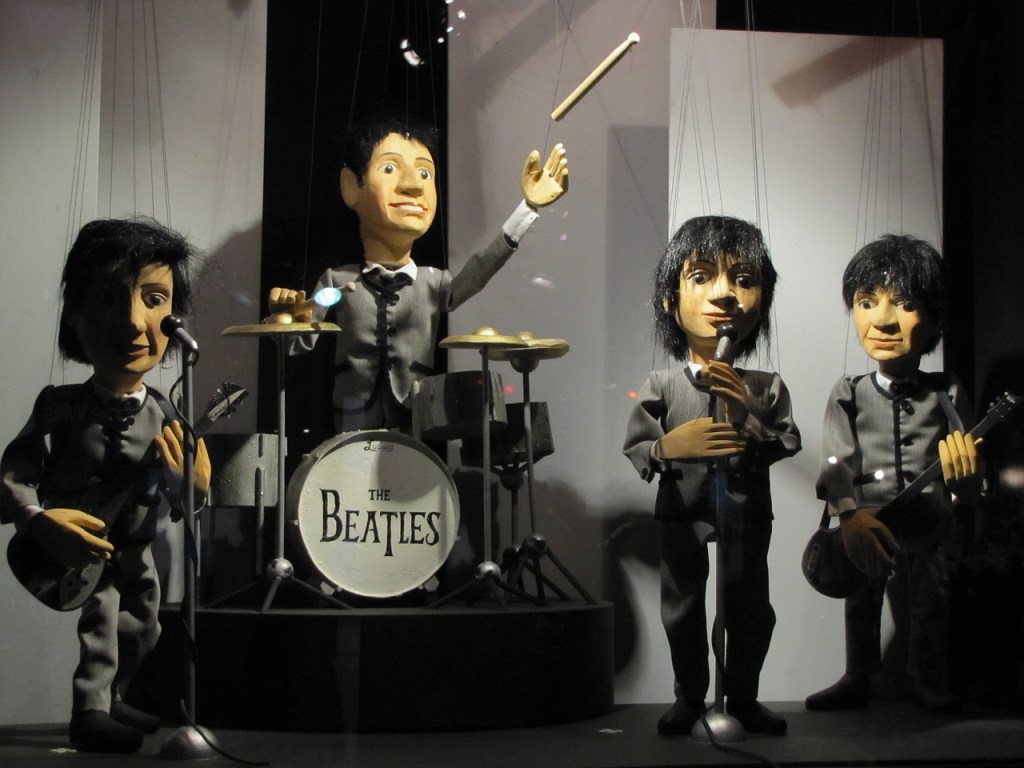
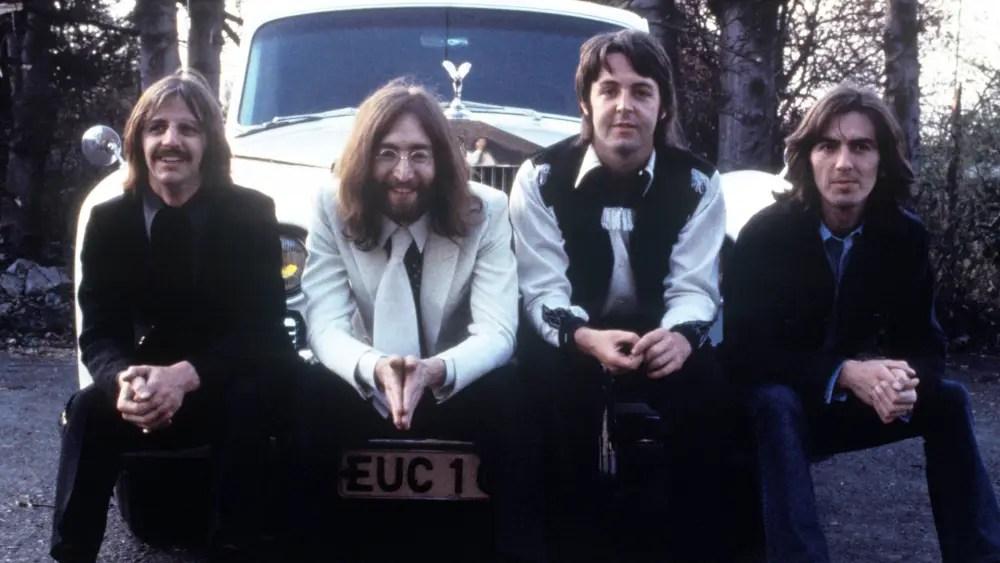
When I started The Mixtapes project on Ramblings of a Misguided Blonde, I knew that I would eventually have to address my love of the Beatles. Where to begin? As a result, I let nearly a year go by. Now, the decision has been made for me. We will start at the end.
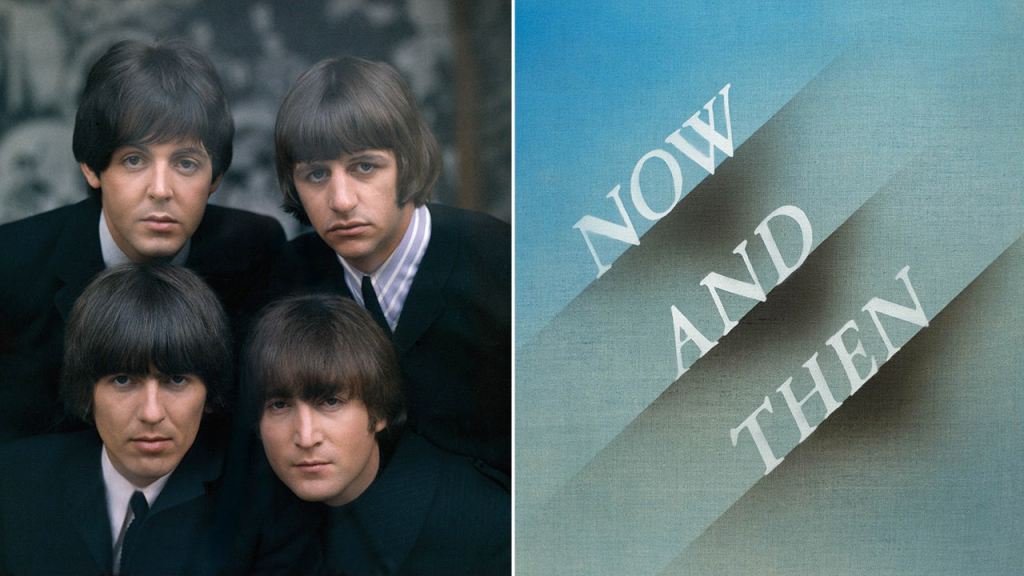
I never dreamed that I would get the opportunity to write about a “new” Beatles release. Here I am, almost a month after the fact, doing just that. As a girl born a few days after John Lennon’s untimely death, a fan who witnessed the release of the Anthology Project during her high school years, it feels a fitting conclusion to all that the Beatles have achieved over the decades. Over the last month, I’ve watched as the reactions to “Now and Then” itself, the music video, and the mini-documentary came rolling in. Unsurprisingly, there is no consensus.
My only criticism of the “Now and Then” project: the lackluster design for the single. However, considering the rerelease of the “Red” and “Blue” compilation albums, it somewhat makes sense.
Beatles fans appear to be solidly in two camps. The first group is dismissive, stating that “Now and Then” will never rank among their greatest hits. Of course it won’t! How could it? That is not the point. Advances in technology aside, they state that it never should have been made. I’ve also heard “fans” (I purposely use that term loosely) complain that video clips of John and George used in the official video are too “irreverent.” I still have a hard time understanding that criticism from self-professed fans.
My response is simply this: Did you understand the Beatles – the band and the then young men who created it – at all? Their humor is a huge part of what made them so great. Their humor still holds up today. They simply would not have been the Beatles if you took humor out of the equation. I love that I can laugh at images of two men who are long gone and dearly missed in a newly released music video.
Then there is my favorite: “Now and Then” sounds too much like John Lennon’s solo work from the late 1970s. Of course it does. That is exactly what “Now and Then” represents, if only a demo. John did record it in the 70s, and as the Beatles disbanded in 1970, he likely meant for it to be a solo effort. However, that is only part of the story.
“Now and Then” is also one of a handful of unfinished demos that Yoko Ono gave to Paul McCartney upon John’s death. During the Anthology Project, Paul, George, and Ringo completed two of the other demos, “Free as a Bird” and “Real Love.” At the time, both songs climbed the charts and introduced the Beatles to an entirely new generation of fans. By the way, both songs, along with their music videos, still hold up – even if some fans are now calling for them to be “cleaned up” as well.
Even though I didn’t think about it at the time, it makes sense that there was supposed to be a third song released with the Anthology Project. It was released in three parts after all. That third song? “Now and Then.” It just took a few decades, Peter Jackson, and new technology lovingly called “MAL” for it to come to fruition.
Personally, I don’t think that the Beatles could have ended on a better note. It is nostalgic, almost timeless, and with its humor, the video is even better. It is a true love letter from Paul and Ringo to George and John – not to mention all of us, the fans. So, to Sirs Paul and Ringo, thank you! Once again, the Beatles will be rediscovered by an entirely new generation of music junkies.
On a sidenote, even the 5th Beatle, George Martin, was there in a sense. In his absence, his son Giles Martin, who just happened to play a huge role in the orchestration of “Love,” helped put those finishing touches on “Now and Then.”
“All Things Must Pass” is a documentary that covers the rise and fall of Tower Records during the second half of the 20th century and the first few years of the 21st. What I love about the documentary is the fact that I experienced a lot of changes that took place in the record industry, particularly in the record stores, during those years. As a businesswoman, I loved the discussion surrounding the birth and death of Tower Records’ business model. At the end of the documentary, I left thinking what a great case study it would make.
I can just imagine the beginnings. Supposedly Tower Records started as Tower Drugs. After World War II, leading into the 1950s, Tower Drugs began carrying 45s in an effort to tempt their teenage customers hanging out at the soda fountain. As the granddaughter and great-granddaughter of entrepreneurs who owned a pharmacy in Marshall, Michigan during this same time period, I can picture it.
In fact, my maternal grandparents met at Peck’s Drugstore in Marshall. My grandfather’s parents were partners in the business, and at the time, before graduating from high school and enlisting in the US Navy during World War II, Grandpa worked there as a soda jerk. Grandma, who attended then nearby Marshall High School, loved their lemon Cokes. I’ve visited Marshall and located the corner where Peck Drugs once stood. Marshall Junior High School, once Marshall High School, is located right across the street. Even though my grandparents were gone by that time, I could easily envision the circumstances under which they met.
This burgeoning teenage culture in the 40s and 50s led to rock and roll and the astronomical growth of the record industry from the 40s through the end of the century. I happen to be just old enough to have witnessed the heights of the 1980s, the changes experienced all throughout the 1990s, and the chaos that followed in the first decade of the 21st century.
I lived it. Madonna and Michael Jackson’s reign as Queen and King of pop were a huge part of my childhood, as were Tina Turner, Whitney Houston, Cyndi Lauper, Wilson Phillips, Paula Abdoul, and so many others. As grunge exploded in the 1990s, the music industry fractured in the wake of Kurt Cobain’s death and the advent of the internet. The music industry wasn’t nearly as tightly controlled as it once was and formats were changing yet again.
As a teenager, I understood the frustration. During the early part of my childhood, vinyl and cassette tapes dominated. Before long, CDs took over. WIth each new format, some felt the need to repurchase their music collection yet again. However, by the late 90s, people had had enough. During that time, I remember the anger that the equivalent of the 45 didn’t really exist in the CD format. You might be able to purchase singles, but they were never the hit songs. In essence, the record industry reached a point where they were pricing teenagers out of the market. Full CD albums during that time period usually ranged from $15-$20, depending on the artist and popularity. Today, I spend $8.99 a month for Amazon Music, which includes electronic access to whatever is available via Amazon Music – i.e. pretty much anything and everything.
The sad thing is that rural teenagers in the 90s, like me, mostly had access to the big box music retailers of the time, such as the behemoth Tower Records – or the CD clubs of the era, Columbia House and BMG Music. Oh, how I wished there were used record stores near me! When I arrived on campus at Michigan State in 1999, my friends and I made regular visits to The Wazoo, a mom and pop used record/CD store run by an old hippie who truly loved music, or WhereHouse Records, another great used music store. We could get an entire pile of albums for the price of one new release.
This atmosphere and the business model became a recipe for disaster. Enter the file sharing frenzy that took place in the early aughts. Napster and Limewire were king at this time. Why purchase music at all when you could download your favorite songs for free from a friend of a friend of a friend? While it wasn’t that simple – mislabeling ran rampant and download times could be excessive – it worked well enough. If anyone had actually been prosecuted for downloading music illegally, our judicial justice system would have quickly collapsed. Colleges, universities, and even many high schools would have been empty with students rotting in jail instead of receiving an education. That may be hyperbole, but not by much.
In the end, it could not last. Businesses such as Tower Records, so heavily dependent upon real estate and inventory, could not survive once people refused to repurchase their music collection yet again, pay full price for CD albums with only a handful of well-known songs (if lucky), downloaded whatever pirated music they wished via Napster and LimeWire. The electronic music market, now dominated by Amazon and Spotify, had not yet come into its own. Today, Tower Records lives on in Japan, a testament to its homegrown slogan – “No Music. No Life.”
“All Things Must Pass” is entertaining if you are interested in music and the history of the music business at all. It brought back a lot of memories for me, and frankly, I feel for teens today who do not have the experience of spending time in stores dedicated solely to music. Creating a Spotify or Amazon Music playlist just isn’t the same. The title “All Things Must Pass” comes from the sign a former Tower Records employee put on their sign as their original store was closing. “All Things Must Pass … Thanks Sacramento.” It is, of course, also the name of George Harrison’s triple solo album and hit, “All Things Must Pass.”
Gordon Lightfoot – The Wreck of the Edmund Fitzgerald (1976) (Video)(Lyrics)
(Written May 7, 2023)
“The legend lives on from the Chippewa on down
Of the big lake they called ‘Gitche Gumee’ …” (Gordon Lightfoot 1976)
There is probably no more iconic opening lyric in modern music history. Sadly, Gordon Lightfoot died on May 1st, 2023 at age 84. In capturing the story of the tragedy of the Edmund Fitzgerald in song, he immortalized the iron ore carrier, its crew, and its disputed demise for generations to come. In a sense, it has become an elegy for all those lost on the Great Lakes over the centuries.
Growing up in Michigan throughout the 1980s and 1990s, we learned about the wreck of the Edmund Fitzgerald through Lightfoot’s lyrics. Personally, I’ve been fascinated ever since. It is easy to see why so many are still drawn to the story. First, it is a fairly “modern” shipwreck. The Fitzgerald sank on Lake Superior on November 10, 1975. They had enough lifeboats, modern radar, and radio communication. In fact, Captain McSorley’s last radio communication with a nearby ship, the Arthur M. Anderson, was “we are holding our own.” That chilling fact alone sends my imagination reeling.
Next, there are lingering questions as to exactly how the Edmund Fitzgerald sank. Some say that she ran aground on Six Fathoms Shoal, while others believe that the hatchways were not properly secured. Then, there are those who believe one of the Three SIsters – a reference to gigantic waves developing on Lake Superior in the wake of incredible fall storms – doomed the ship.
In fact, the subject of the Edmund Fitzgerald still garners a lot of local interest in Michigan. In September 2022, former reporter and Edmund Fitzgerald researcher Ric Mixter presented information on the wreck at the old court house in Omer. I happened to attend his presentation, and for such a small community, there was standing room only. Ric Mixter, a former reporter for local WNEM TV5, went on to present in Bay City and other nearby communities as well. What’s great about his presentation is the depth of his research, his respect for those who died in the tragedy, and his obvious love for the subject matter. He lets his audience decide for themselves the ultimate cause of the wreck. After I attended Ric Mixter’s presentation, I compiled some of his resources in the post All Things Michigan.
Finally, Gordon Lightfoot’s master songwriting draws one into the tragedy. WIth lyrics like “ice water mansion” and “Does anyone know where the love of God goes,When the waves turn the minutes to hours?,” it becomes a timeless folk song dedicated to the power of the Great Lakes. By telling the story in a basic timeline format, he immortalizes the old cook and Captain McSorley, along with the rest of the crew, for all time. I can’t think of a better tribute to the 29 men that lost their lives that fateful November day. It is one of the most haunting songs I’ve ever heard and fully deserves its rightful place in the history of timeless American folk songs.
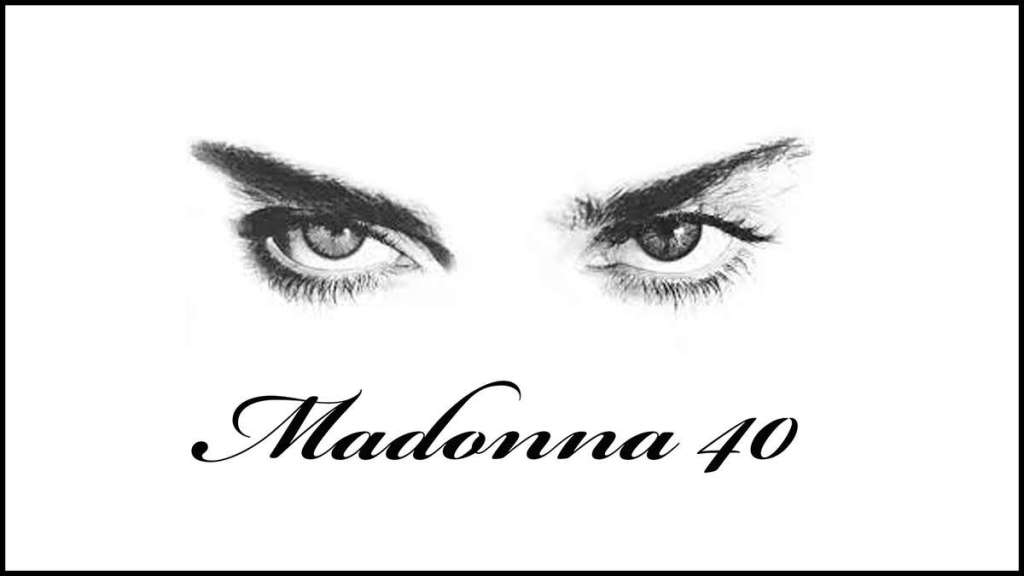
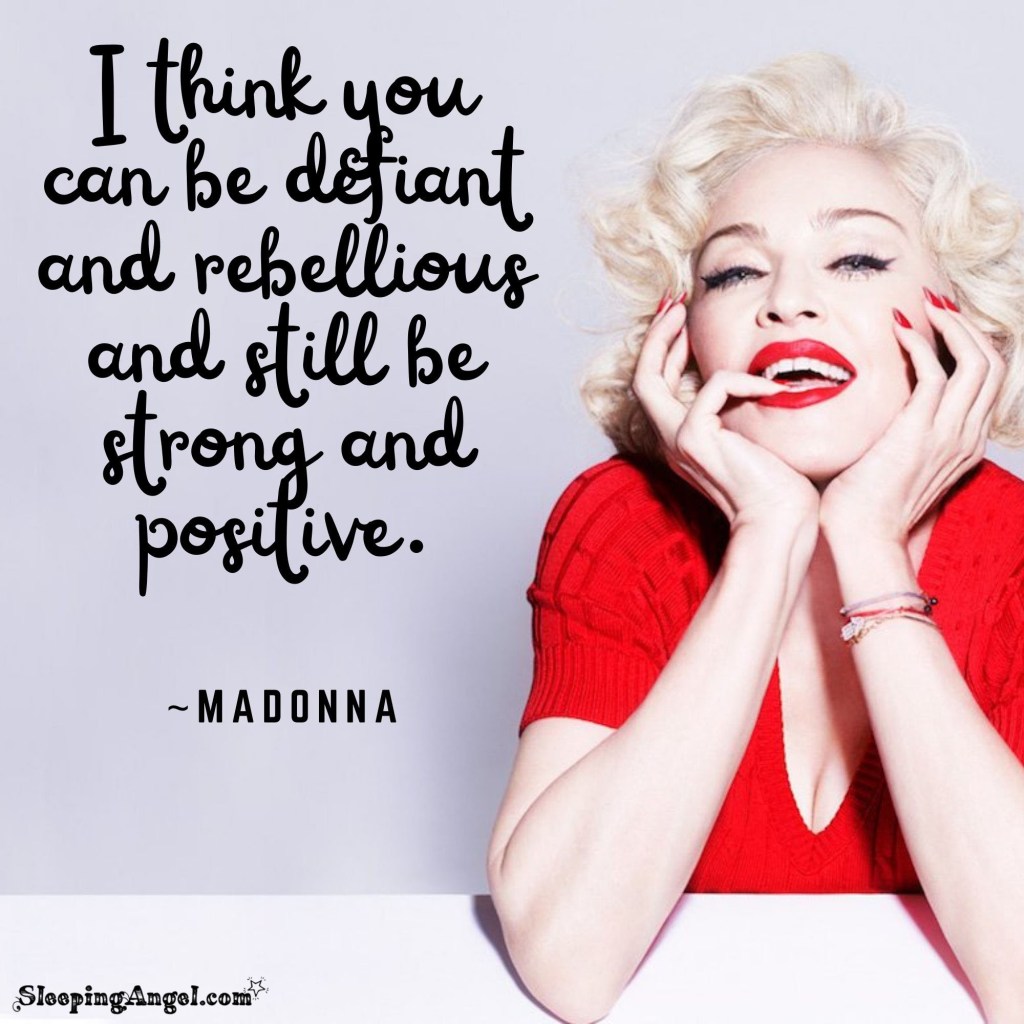
On Friday evening March 31st, 2023, I joined scores of others to attend “Madonna 40” at the Delta College Planetarium. A sold out show, it was incredible – and a lot of fun! Designed to honor Madonna’s 40th anniversary of her first hit single “Holiday” and her always controversial place in Bay City history, it did not disappoint. My only wish: I would have thoroughly enjoyed another hour of her classic music videos and would have gladly paid accordingly. There is nothing quite like watching the music videos that made Madonna a superstar and an inspiration to a generation of girls and women, for better or worse, on the big screen. It is an experience I will never forget. Her early music will always be a part of the soundtrack to my early childhood memories. In designing the program, the following original, unedited music videos were shown in all of their ‘80s and early ‘90s glory:
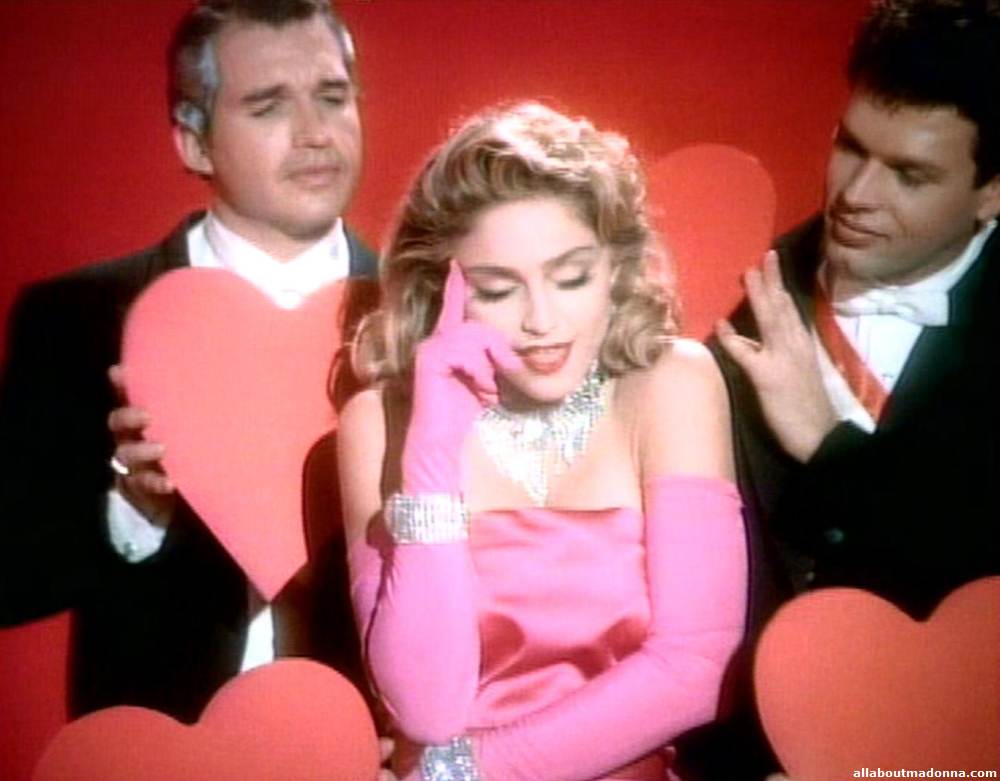
A still from arguably Madonna’s most iconic music video, Material Girl (1984).
Frankly, the music video portion of the program outshone everything else. The videos have held up over nearly four decades. What struck me most in the vintage videos was Madonna herself. Definitely not model thin or “fat,” she exuded old-school glamor in “Material Girl,” “Vogue,” and “Like A Prayer” with the dance moves that made her famous. As for “Papa Don’t Preach,” she looks like any fresh-faced midwestern high school or college girl.
Personally, I felt that the organizers/designers missed a huge opportunity by not including at least the videos for both “Promise to Try” (1989), which was largely filmed at her mother’s gravesite in Kawkawlin, Michigan (just north of Bay City), and “This Used to Be My Playground” (1992), which was included on the A League of Their Own soundtrack and supposedly written about Bay City becoming her refuge after her mother’s untimely death. The only actual footage of Madonna in or near Bay City was not included in the program. How?
The next segment of the program, “Smelly Little Town,” is originally why I wanted to attend the event and even moved around my schedule to do so. Debuting as part of the Hell’s Half Mile Film and Music Festival in Bay City in 2021, I doubted I would ever have another opportunity to see it. Growing up with the controversy, knowing Bay City a little too well, and having been born in Bay City myself, I had to check it out.
First and foremost, it is quite possibly the most Bay City thing I’ve ever seen in my life. Let me just say this: It began and ended with scenes of people polka dancing at the St. Stan’s Polish festival to the Steve Drzewicki Band, both Bay City institutions. I half expected to see my ex’s parents go dancing on by. In general, the film did a decent job describing Bay City, covering all aspects of the “smelly little town” controversy with Madonna, and explaining how ever-corrupt Bay City small town politics is the answer as to why Bay City has never really been able to capitalize on the fact that it is the birthplace of Madonna.
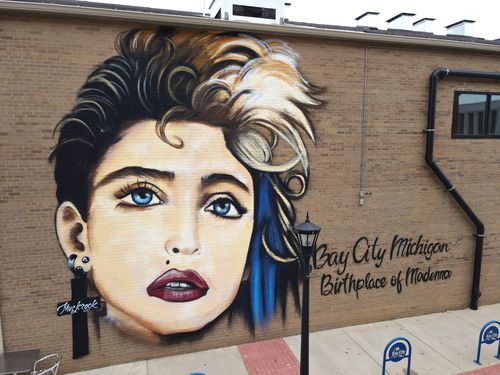
This mural in downtown Bay City was privately funded and tucked away on a small side street.
For those who don’t know, Madonna Louise Ciccone was born at the former Mercy Hospital in Bay City, Michigan on August 16th, 1958. Madonna is her actual given name as she was named after her mother. Upon her mother’s tragic death in 1963, Madonna spent time in Bay City with her grandmother, who lived in the Banks area, then home to a nearby oil refinery (hence the “smelly little town” comment that caused such an uproar). To this day, there is very little commemorating Madonna in Bay City. Then again, this is the same city that passed on becoming home to a casino and a minor league ballpark, both of which went to nearby communities.
If something wonderful is planning on coming to Bay City, one can be sure that public outrage will ensue in some way, shape, or form. I am speaking from experience. When I moved back to Michigan with my ex, a Bay City native, in 2005, the controversy over the then new Wirt Public Library – a gorgeous new anchor for downtown Bay City – had yet to wane. While I agree it doesn’t have the history of the historic Sage Library in Bay City, people were genuinely upset over a beautiful new library downtown. I will never understand the mentality.
Then again, back in 2005, Michigan experienced a one-state recession which was about to turn into the Great Recession. 2008 is covered well in the documentary. It is rightfully called one of the darkest times in Bay City history, and frankly, I consider my life in Bay City (2005-2012) one of the darkest periods in my life as well. Yet, while Bay City is almost unrecognizable from that dark hour, there is still nothing formal honoring Madonna in the city.
As much as I wanted to see “Smelly Little Town,” I doubt it would have been half as entertaining if not for my own experiences with Bay City and my early love of Madonna’s music. In fact, much of it is forgettable. However, it did a good job highlighting the ridiculousness of the entire situation and Bay City politics. I actually understand the controversy now. A little explanation and context behind Madonna’s comments would have changed everything. In the same infamous 1985 interview with Jane Pauly, Madonna goes on to say that she has “great affection” for Bay City.
By the way, Bay City still is a “smelly little town.” In a hilarious coincidence, I happened to drive by the Michigan Sugar plant on Friday on my way to see “Madonna 40.” For those who don’t know, processing sugar beets can smell like hot garbage on a good day. Friday, as I drove by, it never smelled worse.
Clearly, Madonna’s relationship with Bay City remains complicated. I fully understand why. My love/hate relationship with Madonna – I will always love Madonna’s music, but question her methods of self-promotion – mirrors my love/hate relationship with Bay City itself. I do hope that she is commemorated in Bay City at some point. Not every small town can claim to be the birthplace of the best-selling female musical artist of all time.
By the way, if you want a quick, accurate outline of Madonna’s complex history with Bay City, the article below does a wonderful job of doing just that.
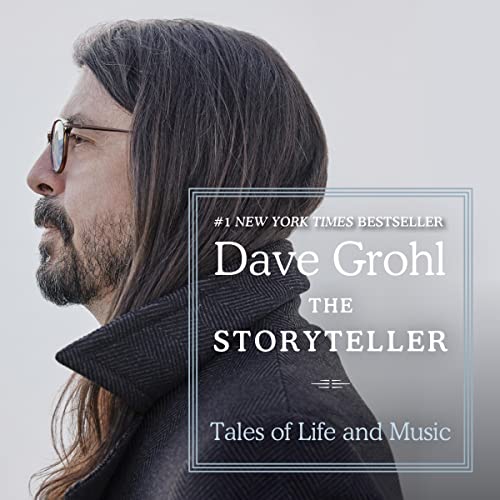
I admit, it took me a little longer than usual to get throughStoryteller: Stories of Life and Music by Dave Grohl, but it certainly didn’t disappoint. It is one of the best memoirs I’ve read. Considering his current stature in the world of pop rock/alternative, whatever you want to call it, as a drummer, his humble nature shines through. It all started with his pure love of pop rock, namely the Beatles, moving on to the punk scene of the late 70s and early 80s, and making it big with Nirvana and grunge. Today, it seems as though Dave Grohl has settled in as drummer and girl dad extraordinaire. If planning on reading the book, I highly recommend the audiobook version as he reads his own memoir. There is nothing quite like hearing about Nirvana’s early days and the danger of their exploding fan base from the drummer himself. Then there are the well-placed expletives in his internal monologue as he meets his musical heroes and juggles world tours with daddy-daughter dances and musical projects with Joan Jett.
There is so much that stands out that it is hard to know where to even begin. First, the unwavering support of his teacher mother is undoubtedly one of several keys to his success. She supported – or put with – his love of music and his decision to drop out of high school in order to tour the United States with a band. Dave’s description of his discovery of punk rock at the hands of a formerly “preppy” family friend is memorable, as is his realization that she was in a punk band herself. It sets the stage for what is to come.
His description of his life between dropping out of high school and eventually joining Nirvana is as hazy and transient as his life at that time. It’s great and easy to imagine. Opportunities to fill in and drum with his idols Iggy Pop and Tom Petty standout as it is clear that Dave was as star-struck as can be at the time.
Frankly, the section in Seattle with Nirvana is just sad as we all know how it ended. Dave’s descriptions of Nirvana’s meteoric rise to infamy is gut-wrenching to read and full of danger. He describes in spectacular detail playing venues far too small for how big Nirvana had grown in such a short amount of time thanks to MTV and “Smells like Teen Spirit.” After Kurt Cobain’s death, Dave understandably took some time to process everything and ground himself once again.
Given the timeline, it appears that Dave developed Foo Fighters and started his family at roughly the same time, both growing together. For me, the best part of the book involves Dave’s descriptions of juggling life with his three daughters and superstardom. Stories involve things such as Paul McCartney giving his eldest daughter her first piano lesson and Joan Jett reading his daughters bedtime stories.
The Joan Jett story is one of my favorites. It starts with Dave in the Barbie aisle helping his daughters pick out a doll and coming across a Joan Jett doll. His girls didn’t realize that Joan Jett was a real person. Soon, Joan herself was over to their house working on some musical project with Dave, when his oldest daughter asked her if she would read them a bedtime story. She did .. in her pjs.
Then there is the story of the daddy-daughter dance. It involves a whirlwind trip to Australia and back to make the dance, the Australian tour itself, and a horrific bout of food poisoning. Yet, he made it and didn’t break his little girls’ hearts.
Above all, it is a series of stories about following your dreams, hard work, fame (or infamy), family, and music. Dave’s descriptions of conversations with his dad are touching in the end. In the beginning, it seemed as though Dave hated his dad due to his conservative politics and his parents’ divorce. While much of Dave’s relationship with his dad remained complicated prior to his fame, it does seem as though they made up in the years before his father passed away. It also appears that Dave took his dad’s financial and career advice.
While I didn’t outline it here, there are plenty of rock star stories from the road in the book as well. They are just as good. Dave appears to have found a balance between his career and family both in the memoir and in real life. If you love music at all or just enjoy memoir, check it out.
Picture used as the album cover of Wildlife (1971), Wings’ first album. Photo Credit: Barry Lategan
Paul McCartney and Wings – Give Ireland Back to the Irish (1971) (Video)(Lyrics)
(Written March 19, 2023)
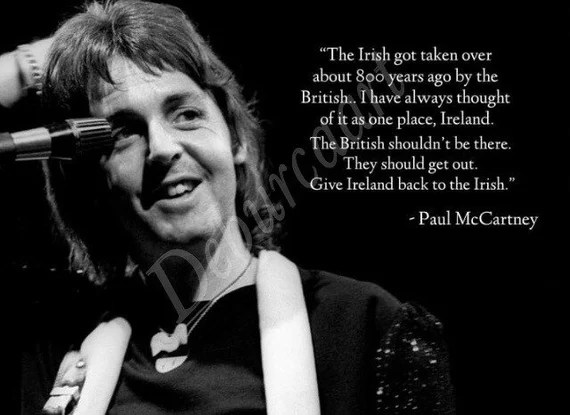
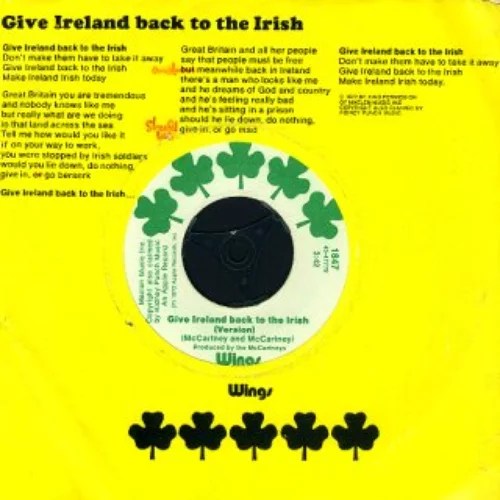
Paul McCartney never disappoints, and “Give Ireland Back to the Irish” can be considered a perfect demonstration of the breadth and depth of his talents. This past winter, December 2022 to be exact, The 7” Single Box Set hit stores. This monster encompasses 80 seven-inch vinyl singles dating from his Wings and solo careers, spanning over 50 years of musical history (1971-2022). Easily retailing for hundreds of dollars, the idea works as vinyl continues to come roaring back thanks to collectors and the lack of a better medium. What could be better than listening to music the way it was originally intended? As I have no vinyl collection and my days of collecting physical music (my CD collection in the 90s, early 00s) are long over, it never occurred to me to find the collection digitally. Fortunately, that is precisely what I did, and for that, I am grateful. “Give Ireland Back to the Irish” shines in the collection as the gem it is.
Rediscovering my favorite Wings hits, along with Paul McCartney’s extensive back catalog of solo work, made listening to The 7” Single Box Set a guilty pleasure. “Give Ireland Back to the Irish” definitely caught my attention. First, I had forgotten how much I love the song. It also hit me how easy it is to forget that Paul McCartney can actually rock all on his own, silly love songs aside. I still consider it among the best protest songs of all time.
Then there is the significance of the song. Growing up in the 80s and 90s, I devoured the news daily. I learned about “the Troubles” at a young age, and it is still something I will never understand. Hatred between Catholics and Protestants? It didn’t make sense. Differences of opinion and belief? Yes. Hatred? No. It went against not only everything I had experienced as a child in my daily life, it also went against everything I had been taught to believe.
First, my father’s extended family is roughly half Catholic and half various Protestant denominations. While my family and I belong to the Methodist church, my paternal first cousins were raised in the Catholic Church. As a toddler, I attended cousin Nicole’s first Communion. When my Russell grandparents married in 1943, my Protestant great grandmother, Dad’s Grandma Russell, supposedly didn’t originally like the idea of her youngest son marrying a Catholic.
Next, Standish, Michigan, the site of my entire K-12 education, is largely Catholic. I spent my early childhood watching my classmates attend Catechism on Wednesday evenings. My Catholic classmates knew my beloved Joyce – my neighbor, babysitter extraordinaire, and adopted grandmother – from 3rd grade Catechism as she taught Catechism for nearly three decades. I watched in envy that spring as the Catholic girls dressed up as miniature brides to make their first Communion. Later, as an adult, Mom shared with me that she’d felt the same way watching her Catholic best friends make their first Communions decades before.
Finally, our neighbors were Catholic. Not only were they Catholic, they were the most devote Catholics I’ve ever known. It is no secret that my brother, sister, and I adored Joyce and Carl. On Saturday afternoons, Joyce could often be found ironing all of the linens about to be used in Mass later that evening. Earlier in my childhood, my parents actually used to go out from time to time on Saturday evenings. Joyce could babysit, but there was one catch: my sister Erica and I would be attending Mass with her family, as would our brother Garrett years later.
Much to my Methodist grandmother’s amusement, her Catholic friends would comment on seeing my sister and I, dressed up and on our best behavior, in Mass with Joyce and her family, looking cherubic. Erica and I may have attended the local Catholic church more than our Methodist church in our earliest years. Those Saturday evenings are among some of my best memories of time spent with Joyce, Carl, Karla, and Joelle.
Even as a young child, I recognized the cognitive dissonance required for me to hate Catholics. It would have meant hating many of the very people closest to me throughout my childhood – friends, family, teachers, etc. – solely based on religion. Considering my paternal grandmother’s Ukrainian/Polish heritage, it would almost demand some level of self-hatred. I will never even begin to understand.
Supposedly Paul McCartney’s family was a mixture of Catholic and Protestant as well, which would explain “Give Ireland Back to the Irish.” Even given his level of fame, the song took a certain amount of courage to write and record, particularly in the aftermath of the Beatles and the formation of Wings. The lyrics say it all:
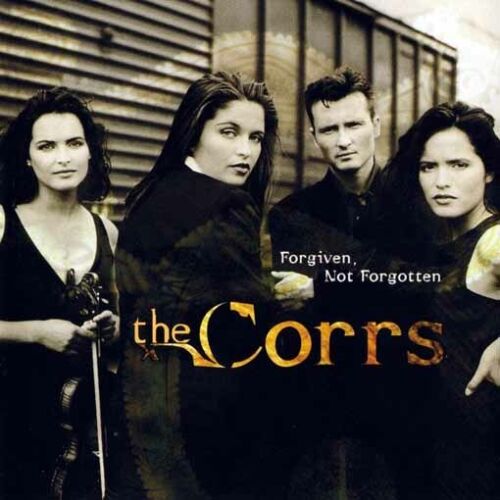
It seemed appropriate to share a beautiful song by an Irish band on St. Patrick’s Day. I fell in love with the entire album when it first came out, even though it wasn’t exactly the music I was into at the time. It certainly has held up.
I hope to revisit Ireland one day. I only spent a long weekend in Dublin while studying abroad in the United Kingdom, and yet, it left a deep impression on me. I have yet to travel anywhere where I felt so at home.
Happy St. Patrick’s Day! More to come on Ireland in the week ahead.














 Ramblings of a Misguided Blonde