
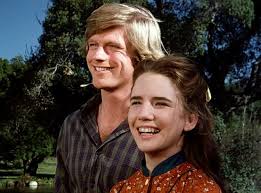
in Little House on the Priarie
This year, the TV show Little House on the Prairie celebrates 50 years since its television debut. Oh, and does that show still have a following. To celebrate, several events were held at various locations throughout the country, including most of the homesites of the Ingalls and Wilder families. They even recreated several of the sets at Big Sky Movie Ranch in Simi Valley, California, where most of the series was filmed. Infamously, the last installment of the series saw the original set of the town literally destroyed as part of the plot. Under the terms of filming, the producers of Little House on the Prairie contractually had to return the land to its original condition.
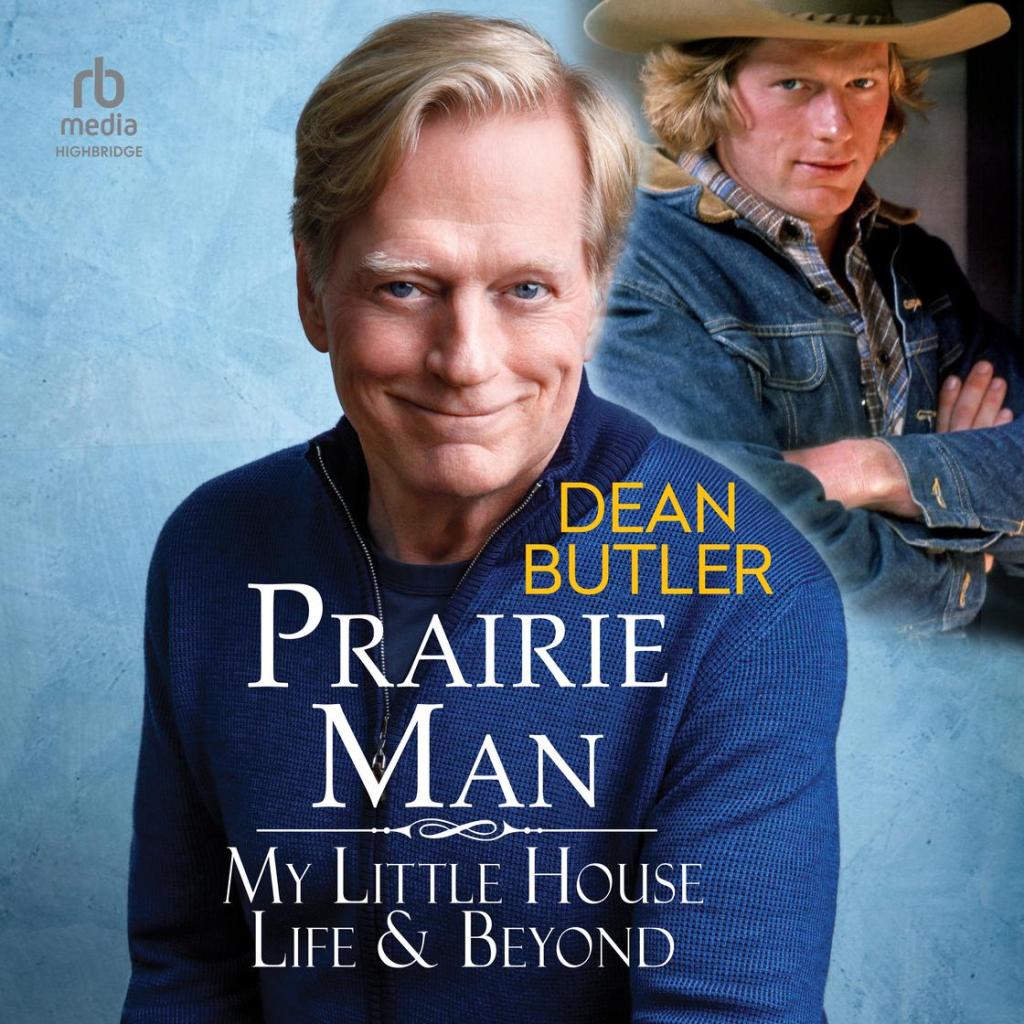
So, where does Prairie Man by Dean Butler come in? First, the book debuted this summer in the midst of all of the events. Second, and most importantly, Dean Butler, who played Almanzo Wilder in the last years of the series, and Alison Arngrim, the one and only Nellie Oleson, who famously penned Confessions of a Prairie B*tch, have worked tirelessly to keep the legacy of the TV show alive. In fact, this entire year, they decided to host a podcast dedicated to all things relating to the 50th anniversary of the Little House on the Prairie TV show.
Prairie Man stands out for a couple of reasons. First, I may not be technically correct on this, but I believe that Dean Butler is the oldest surviving male cast member. Several actors that played young boys on the series survive, but the grown men, including Michael Landon, Victor French, Richard Bull, and Dabs Greer, just to name a few, are long gone. While there are several memoirs written by female cast members, including two alone written by Melissa Gilbert, Prairie Man is the only one written by a man.
While I’ve only read Confessions of a Prairie B*tch by Alison Arngrim (you can read my review here) and Prairie Man by Dean Butler, they could not be more different. I loved both, but I enjoyed Butler’s sense of history, not to mention his diplomatic handling of tensions between fans of the books and fans of the TV show. He addressed all of the controversies surrounding both series well.
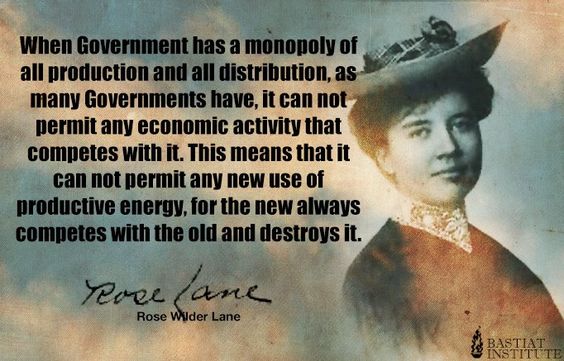
I learned a lot. While I knew that Rose Wilder Lane’s “adopted” grandson, Roger Lea McBride, ended up with the television rights to the novels, I did not know the full story. The real story is included in Prairie Man. In the early 70s, Ed Friendly purchased the rights from McBride due to his wife’s and daughter’s love of the books. Only when Michael Landon became involved as executive producer, taking the TV show further and further from the original books, did trouble occur. According to Butler, Roger Lea McBride became horrified when realized what he had done. Like Friendly, he envisioned a TV series much more faithful to the books.
Eventually, all of this grew tension between Landon and Friendly. Landon’s vision, of course, ultimately prevailed. It may have been for the best. Ask yourself, how many children and adults were introduced to the books via the TV show? Alison Arngrim even admitted that she didn’t read the books until after being cast as quite possibly the best child villain ever portrayed on television, Nellie Oleson. Michael Landon may have taken extreme creative license, but love it or hate it, Little House on the Prairie, the television show, is still shown all over the world in syndication 50 years later. It will not die.
The funny thing is that I used to blame Roger Lea McBride for selling the rights to the television series and Michael Landon for what it became. I used to view the Little House series of books as a cautionary tale as to what can happen if an author’s legacy isn’t well-guarded or just ends up in the hands of attorneys. For those who don’t know, Rose Wilder Lane never had children (she never formally adopted Lea), and thus, with her death in 1968, Laura Ingalls Wilder and Almanzo Wilder no longer had any direct descendents. I see it differently today. I suppose I now subscribe to the old saying “any publicity is good publicity.”
While I probably would have discovered all of the books on my own, especially after my 2nd grade teacher, Mrs. Butz, read Little House in the Big Woods to our class, I doubt any of it would have left such a lasting impression without the TV show. Early elementary school would not have been the same without it. I distinctly remember jumping off the bus after school, pigtails flying behind me, eager to catch the 4 PM reruns. Funny note: Due to the fact that I grew up on the reruns, I thought Dean Butler was significantly younger, by at least a decade, than he actually is. His book, of course, made this clear.
Today, I am not necessarily a fan of the TV show, although I do greatly admire what Dean Butler and Alison Arngrim have done for all Little House on the Prairie fans. I suppose I am not a typical fan. Normally, most people are devoted fans of the books or the TV show, not necessarily both. More than anything, I am a huge fan of the real person, the writer herself, the real Laura. Her true story is far more fascinating than just the books. She lived an incredibly full additional 70 years after the life she described in all of her books. When you add in all of the drama surrounding her only daughter, Rose Wilder Lane, it justifies all of the relatively new scholarly work surrounding the Ingalls and Wilder families. There are still so many questions left to answer.
If you are interested in the Little House series at all, whether book or TV show, Prairie Man is well worth reading. Butler makes the case that he feels he was born to play Almanzo. Growing up on a ranch in California, he describes in detail how his entire career has been shaped by that one role. As he grew older, he decided to lean into it and run with it, much as Alison Arngrim has over the last few decades. Fortunately for Little House fans, its incredible legacy is in good hands for the time being.
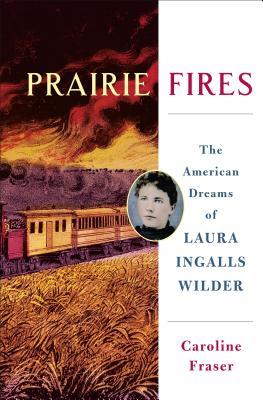
You can also check my review of Prairie Fires by Caroline Fraser here.

 Ramblings of a Misguided Blonde