Category Archives: society

Libraries

Library.jpg

Palaces for the People – 99% Invisible

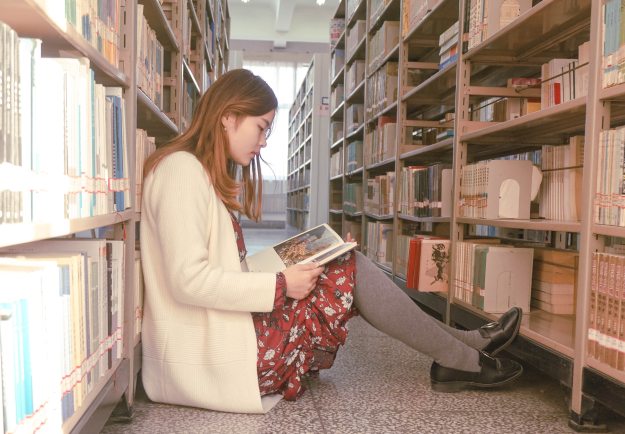
If you love libraries and haven’t checked out this podcast yet, you need to do so.  Personally, I believe libraries are more important than ever.

I’m not quite sure when I first fell in love with libraries, but it did happen at an early age. In kindergarten and first grade, I remember Mrs. Mosley, the Sterling Elementary librarian with a wonderful British accent and the personality of everyone’s favorite grandmother, reading books such as Alexander and the Terrible, Horrible, No Good, Very Bad Day aloud.  What’s not to like?

As I grew older, I devoured mysteries, especially the Nancy Drew series.  In second and third grade, I scoured the shelves for ghost stories and the latest Choose Your Own Adventure book.  Time spent browsing the library shelves are among my favorite memories of my years at Sterling Elementary.

My love of libraries and reading grew as I grew.  In junior high and high school, I started my day off in the library readying myself for the day or reading.  Later in high school, that same school library served as workplace as I tutored younger students after school.  Now as a teacher, I still believe that school libraries are a crucial part of the fabric of any school.
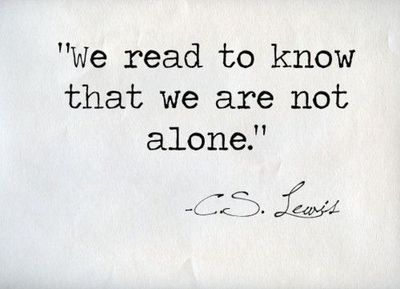
Reading Quote

Of course, the same is true – or maybe even more true – of community libraries.  Whenever I need a quiet place to work without the distraction of everything I need to do at home, I head to the library.  College libraries such as the library at Delta College or Saginaw Valley State University are among my favorites.  Smaller community libraries have so much to offer.  For example, Mid-Michigan Writers, Inc. meets in the community room of the West Branch Public LibraryHuron Shores Genealogical Society (HSGS) has its own room at the Robert J. Parks Library in Oscoda.  In fact, HSGS hosts their fall and spring programs at the library too.  Where else could such groups meet publicly?

In rural communities, libraries, and to a certain extent schools, are often the only places where people can come together freely.  Personally, I love reading and writing in independent coffee shops and cafes, but I always order something.  Even book stores eventually expect you to purchase something.  Businesses count on it.  Libraries are one place where everyone is welcome and there is space to just be.

There is a great case to be made that libraries are an important part of our social infrastructure.  The idea didn’t even cross my mind until I discovered this podcast.  You can listen here.

Not long ago, many felt that libraries were becoming obsolete.  I understand the thinking behind that statement; however, just a simple glimpse beneath the surface would prove the exact opposite.  Libraries are needed now more than ever.
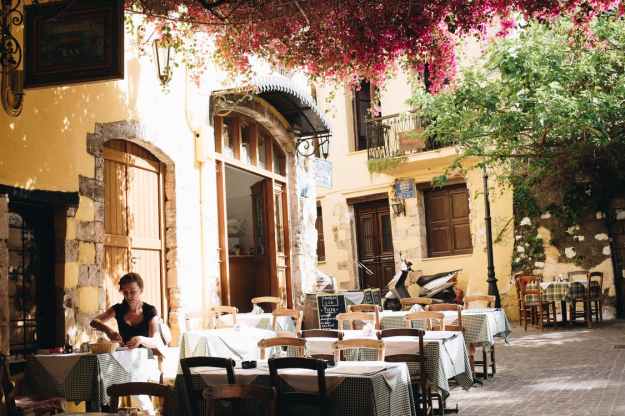
Belle Books.jpg

Place

suitcase

There is no escaping it.  This topic keeps rearing its ugly head.  Last night, we discussed it in book club.  Are people meant to be in a certain place?  You can find my take on the topic here. That question keeps haunting me.  What if somehow I missed my chance to be wherever it is I am supposed to be?

Am I supposed to live in Omer the rest of my life?  I wish there were a simple answer.  The reality is that there isn’t.  I love my family, I’ve always wanted to be a part of the canoe livery, and I enjoy spending my summers working there.  Yet, do I have what I need?  Frankly, the answer is no.  There are few people my age around, and those who are around are in a different stage of life.  With one notable exception, all are married and/or have families of their own.  It would be nice to at least have the possibility of dating in my future.

What are my alternatives?  None of them are good.  Either I deal with the issues before me and continue on this path, or I start over someplace new.  If I stay, a part of me will always be someplace else.  If I go, I would miss my family and the canoe livery.  At least in Omer I am needed and loved.

The truth is I am going nowhere.  The canoe livery and the Rifle River itself are too much a part of who I am.  I want to watch my niece and nephews grow up firsthand, and I want to be there for my parents as they get older.  None of that means that there aren’t sacrifices and complications that come with that decision.  None of it changes the love/hate relationship I have with Omer and Arenac County in general.

What saddens me is the reality of where I live.  Over the last two decades, so many people left not only Arenac County, but Michigan as well.  Many were left with no choice thanks to a one-state recession followed by the Great Recession.  I graduated in 1999, and due to the fact that so many classmates moved out of state, I doubt we will ever have a true class reunion.  Most Michigan State business students I graduated with in 2004 headed to Arizona or Texas, including me.  No one seems to care.  Few planned on helping their children create a life for themselves here during that time frame and the years that followed.

While we may be on the path to recovery, we are not there yet.  What bothers me is a general aura of denial that stubbornly resists any change.  Yes, I agree we need change, but we also need to keep what is working – and there are things that are working.  Unfortunately, we do not support those things.  So many people seem to want to change nothing or change everything at once.  Neither approach will work, but no one seems to address this.

What about businesses?  What are we doing to attract new ones?  Absolutely nothing I can see.  No, instead we keep piling on more unnecessary regulations that do nothing except add costs. Instead of making it easier for those just starting out to get started in a career, we make it next to impossible.  Today, we still tell high school seniors that a four year college degree should be the norm when we are setting them up for tens of thousands of dollars of debt before they even start their career.  It is wrong and needs to stop.  We need to attract more businesses and encourage trades. What about entrepreneurship?  Again, we do little to support those who wish to start their own business.  New businesses and new growth are exactly what we need, but they cannot survive if not supported.

I am angry.  I want to believe in my hometown and live here, but many times, it feels next to impossible.  If it weren’t for my family, I would have never looked back.  I am tired of feeling torn, and I am fed up with everything else about the area pushing me away.

cafe

Projects Old and New

School

Over the last several weeks and months, I have finally recognized how important writing and reading is to my quality of life and my sheer happiness.  No joke.  If I have a writing project, I am happy.  As a student, I loved writing assignments.  Even if I didn’t love the subject, the book, or whatever it may be, I could always count on myself to do well. 

Some of my earliest and best memories of elementary school are of creating “stories.”  As I learned to write, my “stories” became less picture/drawing based and included more writing.  I love the fact that writing plays such a prominent role in my earliest educational memories.  By the way, I still can’t draw.

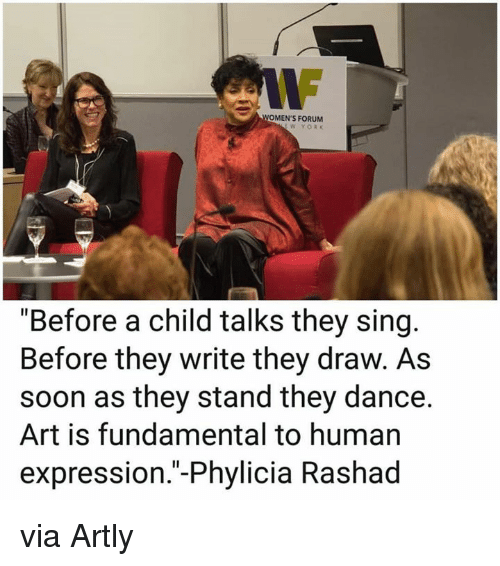
Human Expression.png

What I’ve come to realize over the last week or so is that I didn’t value my early writing much. When I say early writing, I am not talking about childhood or even adolescent writing.  Those journals are safely tucked away never to see the light of day.  No, I am talking about the writing I did from 2005-2012.  During that time frame, I published dozens of throw-away articles for a now-defunct website called Associated Content.  As a writer for Associated Content, I wrote articles on all kinds of topics – reviews, how-to, and more – for a small upfront payment and then residuals.  Page views mattered!  After a couple of years, the site sold out to Yahoo!, which eventually shut it down.  Even though I had ample warning and could have saved my hundreds of articles, I didn’t.  I didn’t care enough.  The content just didn’t interest me enough.

While I don’t regret not putting in the time and effort to save my work with Associated Content, I do regret not saving my JamsBio work.  Unfortunately, I didn’t have much notice.  JamsBio, a now defunct online magazine, paid writers to discuss their memories as it related to music.  I only wrote ten blog posts, but it was the most fun I ever had “working.”  Even though I wish I had those articles, the ideas planted by writing those pieces live on.  I will eventually write something similar here.

The reason why all of this came to mind lately is due to different projects I am currently working on.  I just wrote my first piece for the Macbeth Post and had my first podcast published on Spartans Helping Spartans.  In fact, I am in the middle of writing a series of posts on study abroad for Spartans Helping Spartans as we speak. All wonderful stuff that I will share here.  

That’s just it.  I need to share some of my other work here.  There is an infamous piece I wrote on the Witchy Wolves of the Omer Plains for Michigan’s Otherside.  It is probably the earliest writing I did online or close to it.  I’ve toyed with the idea of a rewrite, but people keep finding it and sharing on Facebook.  Then there are a handful of articles I’ve written for the Huron Shores Genealogical Society Genogram. I’ve long meant to share them here permanently.  I just haven’t taken the time to do it yet.

As writers, we need to take care of our work and not let it become lost to time.  I wish were better at taking care of my own work. On a fun note, I came across an old online journal dating back to 2003.  Interesting doesn’t begin to describe it.  It brought back memories long since forgotten.  It is time for me to take better care of my own work.

School 2.jpg

The Lost Generation

Lost.jpg

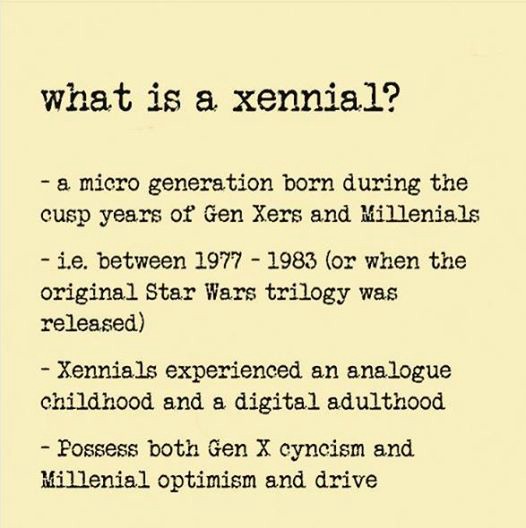
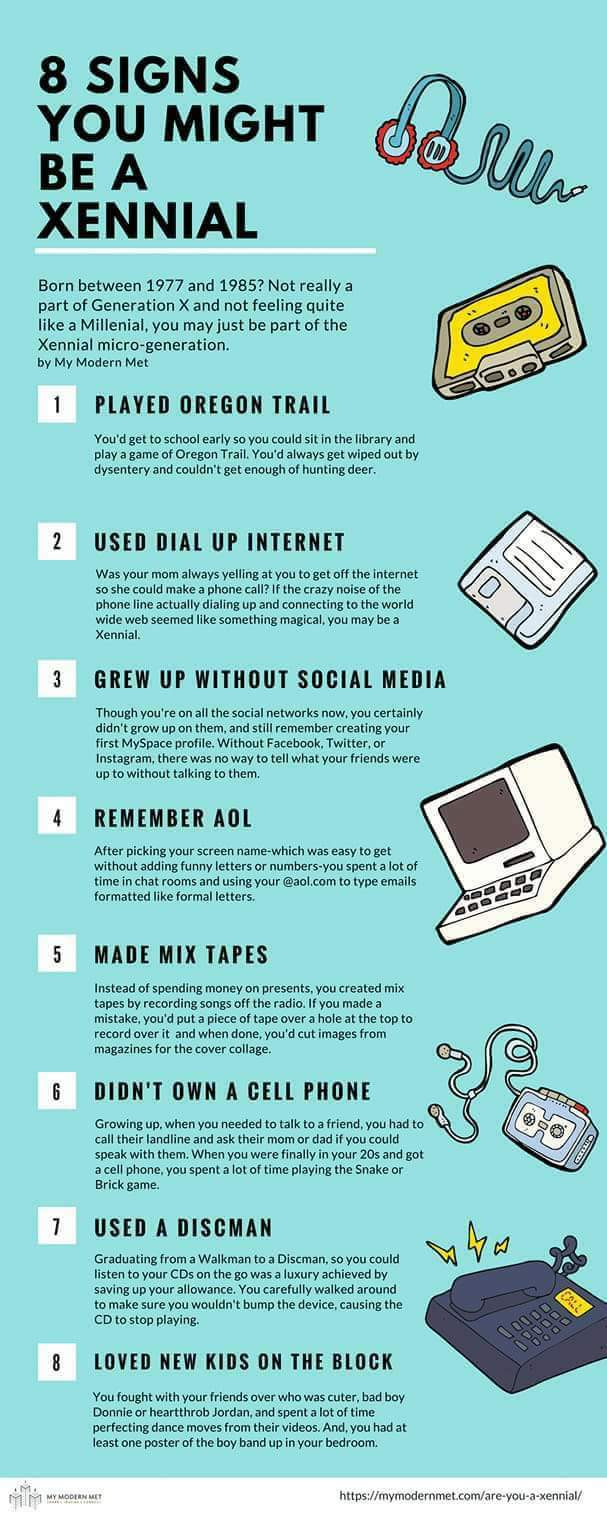
No, I am not talking about the generation that came of age during World War I, although we share many characteristics with that generation.  I am talking about my own generation, those of use who came of age in the aftermath of September 11th, 2001.  Specifically, I am talking about the Xennial microgeneration born roughly between 1977 and 1983 (1980 here).  In my opinion, we are indeed a lost generation.

There are efforts to do away with this microgeneration altogether.  It is needed.  I don’t fully identify with Gen Xers or Millennials.  I have characteristics of both and want to be associated with neither.  Many people in my age bracket agree.

Zennial

So much of it has to do with technology and economics.  Most Gen Xers didn’t experience much if anything that the internet and cell phones had to offer until adulthood.  They largely had an analog childhood.  Millennials don’t remember life without either.  Xennials, on the other hand, grew up right along with the changes.  Millennials, by and large, had a digital experience growing up.

Economically, Gen Xers didn’t have it easy coming on the heels of Baby Boomers.  Eventually most were able to take their place at the table, even if they rebelled at first.  Millennials were still young enough during the tech boom and bust cycle, as well as the recession that followed September 11th, that they were able to use those experiences, often felt by parents, to make different economic and career choices.  We Xennials were caught in the crossfire just as we were preparing for and beginning our careers.  Just as we were trying to recover and establish ourselves, the Great Recession of 2008 hit.  Many of us have never fully recovered.  My story is a great example of this.  Unfortunately, I have always known that I am far from alone.

Nothing prepared Xennials for any of it.  We grew up in a time of great economic expansion during the 1980s and 1990s.  Of course we did!  Baby Boomers were just coming into their careers and purchasing power.  They were raising young families:  the kids that would eventually make up Gen X, Xennials, and even some older Millennials.  In the end, it would not last – and our parents, mainly Baby Boomers, often didn’t have the experience to help us.

Baby Boomers are an odd group.  I say that with love and affection because my parents, aunts, uncles, and countless friends are all Boomers.  That doesn’t mean that they aren’t a quirky bunch, especially when it comes to money.  For example, even though most Boomers found some measure of economic and career success, they are thrifty almost to a fault.  They think nothing of spending thousands of dollars on vacations, renovations, and more, but quibble over the price of off-brand ketchup.

When it comes down to it, they can’t help it.  They were by and large raised by the Greatest Generation, which experienced most if not all the Great Depression and then the sacrifices of World War II.  It may seem ridiculous to us Xennials, but those penny-pinching habits of our grandparents became a part of our parents’ DNA, no matter the economic circumstances they experienced themselves.

I often think about how my own parents started their adult lives, and I can’t help but think of how different the times were.  I wonder if my generation could replicate it.  That’s largely the problem.  We haven’t been afforded the opportunity to truly take our place at the economic and career tables.  Our careers and economic lives remain on hold, although that is slowly changing.

Instead, retirement for our parents keeps getting pushed back.  We faced absurd college tuition costs while being told that a traditional four-year degree (at least) is the only way forward when it isn’t the answer for everyone.  The housing and stock markets crashed just as many of us were about to get our careers going and buy our first homes.  Instead, we put off marriage and starting families of our own.  In some cases, our lives are still on hold.

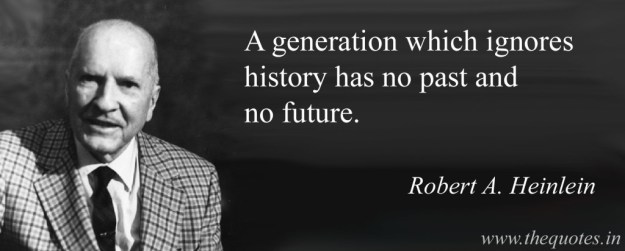
Heinlein Quote.jpg

Younger Millennials and the generation after all had the opportunity to adjust to new circumstances and realities.  We Xennials did not.  We seemed to be perpetually at the wrong place at the absolute worst time.  That is why we continue to struggle.  The rules appeared to change just as we adjusted to the last set.  I hope we aren’t completely overshadowed by our parents and Millennials, much in the same way the Silent Generation was largely eclipsed by the Greatest Generation and the Baby Boomers.

While I still consider us a “lost” generation, I don’t think we need to wander forever.  But oh, how I wish we still had the guidance and wisdom of the Greatest Generation!  There were so many lessons yet to be learned.

Lost

“The Great Alone” by Kristin Hannah

Robert Service
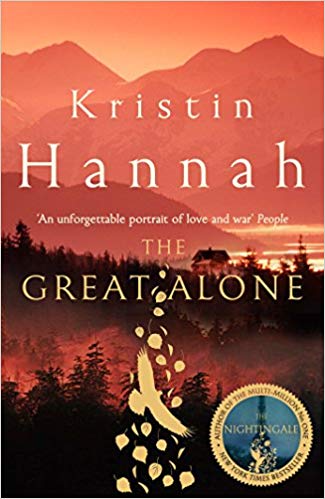
Sometimes a novel ends up giving me the worst case of wanderlust. That is precisely what happened with The Great Alone by Kristin Hannah. I thoroughly enjoyed the novel. The Alaskan wilderness itself comes across loud and clear as a distinctive character. I particularly enjoyed descriptions of how Alaska changed from the 1970s to the 1980s. These descriptions were normally accomplished through Leni’s observations. It is this Alaska in all of its forms that I plan to visit one day.

It just so happens that I read the novel in the midst of a severe winter weather crisis that affected most of Michigan. Something about being housebound for a few days added to my enjoyment of The Great Alone. I kept telling myself “at least it isn’t as bad as winter in Alaska. At least I have power and indoor plumbing.” It made me feel better about my circumstances and helped me to empathize with the characters to some extent.
The characters throughout are wonderful. I particularly enjoyed Leni’s view of the world, her love of Matthew, and the protectiveness she exhibits towards her mother Cora. Ernst, Leni’s father, is, of course, a complex character designed to make us uncomfortable and question what we know about family dynamics. He largely drives the plot, and he is the reason why the Allbright moved to the Alaskan wilderness from Seattle in the first place.

Great Alone 2
Secondary characters that I particularly enjoyed were Large Marge, Mr. Walker, Geneva Walker, and Matthew. Even though Geneva Walker does not play a large role in the novel, her presence is felt until the end. Matthew’s tenacity, dedication, and love for the women in his life is exemplary. Mr. Walker seems to try to hold it all together under the worst circumstances. He even expands his business in the process. I admire his entrepreneurial spirit.

Then there is Large Marge. She makes it her business to know all that goes on in Kaneq. What may seem to be simple nosiness elsewhere may just save a life in wild Alaska. Her steady presence tends to help make everything right, even in the face of the worst situations. She knows how to handle just about anything. In many ways, I want to be like Large Marge when I grow up.

I largely focused on the characterization in this novel simply because I don’t want to give away much. The novel is definitely action driven. I will leave it at that. If you are looking for a solid adventure novel, this is it. In my opinion, it has the right balance of description and action. In the end, I truly cared about the characters – or at least most of them. I would recommend The Great Alone by Kristin Hannah.

Warning: The discussion questions include spoilers!

As a side note, I read this for the Standish-Sterling Book Club. This is very much the type of book I would hope I’d discover on my own eventually. You can find discussion questions for The Great Alone here.

Great Alone

Of Witchy Wolves and Writing

wolf

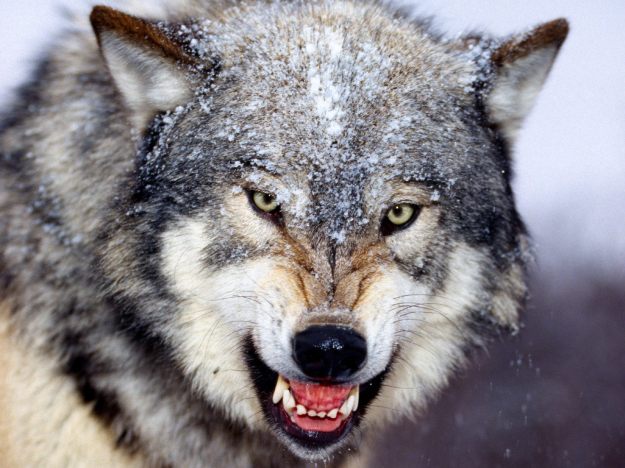
One of my oldest pieces of writing that survives online is my take on the witchy wolves of the Omer plains.  You can find it here over at Michigan’s Other Side.  I wrote it specifically for the website back in 2006-2007.

My dilemma is now this.  I have grown leaps and bounds as a writer since then.  There are many things I would like to correct in the original.  At the same time, people seem to find and enjoy the original – particularly locals.  The witchy wolf legend is going nowhere.  This is exactly why I wrote the piece in the first place.  Currently. It seems to come up every six months or so.  Why fix it?

Even though my every instinct as a writer is to polish the piece and have the website publish that instead, there really is no reason to do so.  I need to learn to leave it be.

Lately, I’ve finally started writing stories from my childhood that need to be told.  They started as blog posts that I planned to share here, but now I am not so sure.  They are evolving into what I’ve always planned to write.  They may have to wait.

The Stories We Tell

Frontier

“Then I understood that in my own life I represented a whole period of American history.  That the frontier was gone, and agricultural settlements had taken its place when I married a farmer.  It seemed to me that my childhood had been much richer and more interesting than that of children today, even with all the modern inventions and improvements.” – Laura Ingalls Wilder, as referenced in Prairie Fires by Caroline Fraser

Storytelling just seems to be on my mind lately.  Recently, while substitute teaching a high school English class, students were asked to respond to a journal prompt asking them to name the best storyteller in their life and what made that person such a great storyteller.  As students wrote, I responded in my own way.  I thought about what I would write.

Hands down, my dad is the best storyteller I know.  Maybe it is the fact that he is a hunter and storytelling is such a rich part of the hunting tradition or maybe he just likes to gab.  It could be a little of both.  As a young girl, I loved listening to my dad’s stories, no matter what the subject.  Throughout my childhood, he told me local legends, none of which I quite believed.  In fact, my dad has a reputation for making a story more exciting or scary for his children.  When he told me the local legend of the witchy wolves (you can read what I wrote about them here), I truly thought he made it up in an effort to scare me and my sister.  Our family happened to be walking in the Omer plains, the supposed home of the witchy wolves, when he told me this story, which added to the ambiance.  One of many, dad always seemed to have some story to share.

What makes him such a good storyteller?  I am not sure, but I do know that he likes to include elements of truth, humor, and fear in his stories.  His best stories include all three.  Some of his hunting stories, which always contain more of a human element than anything, stick with me after all these years. More than anything, he knows how to keep interest and seems to always have a story for any occasion.

If there is one thing that I hope to inherit from my parents, it is their storytelling abilities.  While children’s love of good storytelling doesn’t seem to be going anywhere, there is a disconnect.  They way we tell stories changed.  If we are looking to encourage kids to engage more with the world around them instead of the digital world, maybe we should encourage them to tell their own stories and develop their own storytelling abilities and style.

Growing up in the 1980s and 1990s, I am a part of the micro-generation between Gen Xers and Millennials, born between 1977 and 1983, now called Xennials.  Those of us in that microgeneration watched our world transition from analog to digital.  This is one of the main reasons we are considered our own microgeneration.  While Gen Xers largely experienced a largely analog childhood, Millennials are the first true digital natives.  As a Xennial, I experienced the transition firsthand.  This is precisely why I can relate to the Laura Ingalls Wilder quote above.  I may not have experienced the frontier, but I did experience a fundamental change in culture and way of life.  I can only hope to tell my story of that transition.  All I can do is keep trying.

Xennial

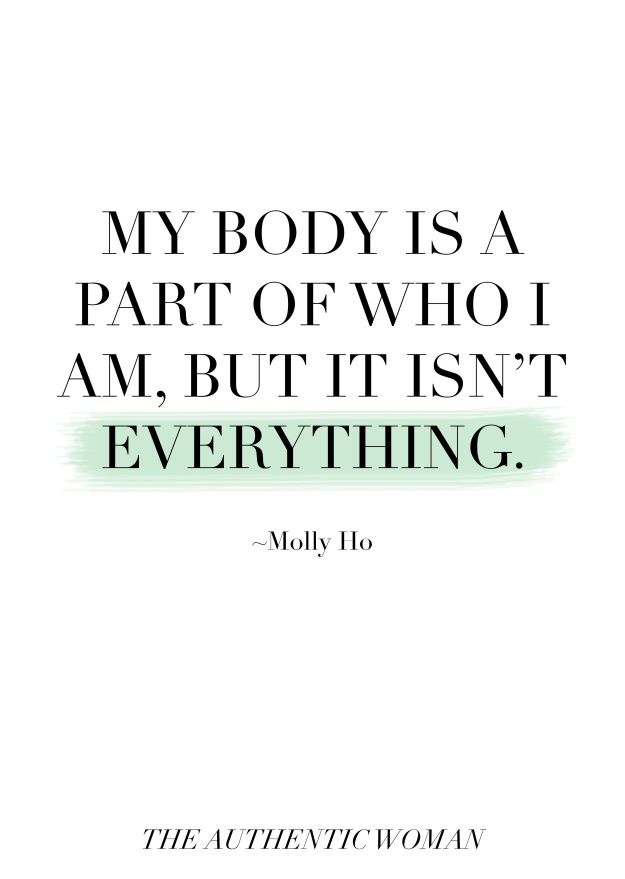
Body and Other Four Letter Words Revisited

girl-2

Body 2

Body and Other Four Letter Words

Due to a variety of circumstances over the last few weeks, this subject continues to be in my thoughts.  It is so disturbing to me how it is permissible in our society to treat others so differently based on something so arbitrary as height and weight.  Why is this acceptable?  I am so sick and tired of people not realizing that there are many complicated factors that play into eating disorders such as anorexia, bulimia, and obesity.  There isn’t a quick fix.  Food can be an addiction just as powerful as drugs, sex, alcohol, or gambling.  Bullying just makes things infinitely worse.

I’ve discussed it before, but I was relentlessly bullied about my weight and height early in elementary school – grades K-3 – particularly in gym class and at recess.  At age 5, classmates commented daily on how short, fat, and ugly I was.  The funny thing is that while I may have been a stocky child, I was not fat at the time.  At some point, I started to believe them.  How was I ever supposed to feel good about my body?

Later in elementary school, I learned that I would never have children naturally.  I refuse to say children of my own.  When I do adopt, my child (or children) will most certainly be mine.  At age 10, it devastated me.  To make matters worse, one boy in my class found out about my diagnosis of Turner Syndrome and what it meant.  He proceeded to call me a deeply disturbing name as a result, making it clear to me that he knew what I perceived at the time to be private.

It changed me.  I vividly remember balling as soon as I came home, refusing for a time to even tell my parents what had happened it upset me so badly.  Today, looking back at what he called me, it is almost funny – at least from an adult perspective.  After that incident, I owned the fact that I had Turner Syndrome.  While I didn’t go around telling everyone, I did explain when asked what it meant.  I didn’t hide from it anymore, even though I had only recently learned of the diagnosis myself.  Unfortunately, it reinforced the shame I felt towards my body.

As an adult, I find it difficult to deal with my body image issues while dealing with the emotions that come with infertility as well.  I can’t deny it:  I don’t know when I will ever be at peace with my body when, in my mind, it has fundamentally failed me in what should be a basic function.  Somehow, I will have to come to terms with it.  I just don’t know how.

In the meantime, I am done.  I am done trying to please anyone other than myself.  I continue to refuse to play the games society demands of women young and old.  There are way too many young girls today who feel as if they are not enough, that their worth is determined by their weight (and/or height).  That is why I am sharing something so deeply personal.  I want anyone struggling with body image to know that he or she is not alone.  Weight and diet are not as simple as we make them out to be.

It breaks my heart to see my Facebook feed full of beautiful women struggling with body image and eating disorders and mothers at a loss on how to help their child rebuild self-esteem through bullying.  I see it daily.  Frankly, this topic scares me the most about parenthood.Body 1

Bring Pretty Back

If you haven’t checked out Bring Pretty Back yet, you need to do so now.  Kristen is such a positive person, and her message of encouragement for all women is what we all need.  You can find episodes of Pretty Coffee with Kristen here.

The reason I wanted to talk about Bring Pretty Back today is because I can relate.  I know exactly what it feels like to feel ugly and to lose self-confidence.  I’ve struggled with self-confidence my entire life.  I have never felt beautiful or felt that society has ever accepted the way that I look.  When Kristen talks about feeling pretty, I understand what she is trying to say, but I can’t help wondering when I ever felt beautiful.  I would love to provide an example, but I truly can’t think of one.

My entire life I’ve found it difficult to find clothes that fit correctly thanks to my short stature and my Turners body.  There is a reason why women with Turner Syndrome joke about starting their own clothing lines.  The fact that women with bodies like mine are not normally represented anywhere in popular culture just adds to the feeling that my body is and always will be “wrong.”

I’ve struggled with my weight my entire life, but even when I was within 15 lbs. of what I “should” weigh, I still felt fat and ugly.  Looking back at that time, I was pretty, or at least cute.  Even then, I couldn’t enjoy it because all I could still see were my imperfections.  With those imperfections, according to popular culture and my childhood peers, I was unworthy of notice.


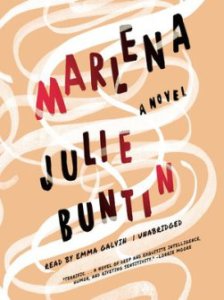
Book Review: Marlena: A Novel by Julie Buntin

I enjoyed reading Marlena.  While it contains components of a YA (young adult) novel, I would classify it as emerging adult.  Fair warning:  Lots of drugs and sex involved.  The good news is that the drugs, and to a lesser extent, sex, drive the plot.  They are necessary to the plot, and fortunately, do not glamorize the consequences of either.  By the way, when I mention drugs here, I am including alcohol.

I didn’t read Marlena with a set purpose in mind.  It wasn’t a book club pick or anything.  In fact, I discovered it by browsing a selection of online books available through my library’s website.  It just sounded good.  It is ultimately a tale of two best friends growing up in a dull northern Michigan town.  It took a while for me to get into the book.  The protagonist, Cat, isn’t the easiest person to get to know.  Also, in the beginning, I didn’t get the fixation on drugs.  She clearly understands right from wrong, but she is fixated on her new best friend Marlena and making the worst possible choices for her life.  By approximately a quarter of the way through the book, I was hooked and found it difficult to put down.

Cat, at least the older, wiser version in the novel, nails what it is like to grow up, to love and lose.  There are so many powerful lines I found myself highlighting them in my Kindle copy, forgetting that it is a library book.  Below are a few of what I consider to be the most powerful lines in the novel.

Close enough to being a writer, isn’t it, working at a library? – Page 45

As an aspiring writer, I loved this quote.  Ultimately, Cat is a writer, but it took her a while to find her voice.  Her empathy for other young women is clearly demonstrated later in the novel in her approach to difficult young library patrons.

For so many women, the process of becoming requires two.  It’s not hard to make out the marks the other one left. – Page 96

This passage really made me think.  I thought of the friends, male and female, in both high school and college, who helped to shape the woman I became.  It made me think of what I wrote about W.M here in particular.  There is something to be said for reconnecting with old friends after years apart and seemingly nothing (and everything) has changed.

I think it’s pretty common for teenagers to fantasize about dying young.  We knew that time would force us into sacrifices – we wanted to flame out before making the choices that would determine who we became.  When you were an adult, all the promise of your life was foreclosed upon, every day just a series of compromises mitigated by little pleasures that distracted you from your former wildness, from your truth. – Pages 129-130

This struck a nerve with me as well.  First, I vividly remember being terrified of dying young as a teenager.  Both of my parents lost close relatives as teenagers, and those stories stayed with me.  Second, the fact that “time would force us into sacrifices” continues to be at the forefront of my mind.  I have always tried to find a way to leave as many doors open as possible.  There is just too much I want to do in life.

I was always aware, in some buried place, that girls my age had just entered their peak prettiness, and that once my pretty years were spent my value would begin leaking away.  I saw it on TV and in magazines, in the faces of my teachers and women in the grocery store, women who were no longer looked at … – Page 143

I so desperately want this not to be true, but it is true.  I loathe this fact about our culture.  Hopefully I will live long enough to see it change, permanently.

Before that year I was nothing but a soft, formless girl, waiting for someone to come along and tell me who to be. – Page 250

Thinking back to what I was like at ages 15-16, I like to think I was somehow stronger than Cat.  Unfortunately, that just isn’t the case; I could closely identify with Cat in the novel.  It makes the novel much darker.  There is a fine line between the successful teenage Cat and the degenerate.

I would recommend the book, especially if you love to write or like reading about love and loss (or even friendship in general).  Is the story sad?  Yes, but it is also full of hope.  It does seem that Cat is at least trying to deal with her loss, with varying degrees of success.

I know I have talked about this before, but I am convinced the right books find me at exactly the right time.  While I certainly wouldn’t call Marlena great literature, it addresses certain topics I would like to cover in my own writing.  I will be rereading this novel.