Tag Archives: faith

Ghosts of Christmases Past

It never seems to fail.  Come the first week in December, I get overwhelmed with everything that needs to get done before Christmas – decorating, shopping, cards, planning, and so much more.  As a teacher, that doesn’t even include everything that needs to be wrapped up before winter break.  December, and Christmas in particular, are such a whirlwind of emotion and activity.  Don’t get me wrong, I love Christmas.  In fact, I adore it.  My December 18th birthday just adds to it all.  The reality that I am another year older doesn’t always help.  I am old enough to miss several people who are no longer with us, particularly my grandparents, all of whom loom large in my Christmas childhood memories.  Somewhere in the first week of December, I hit a wall, and frankly, I don’t want Christmas to come at all.  Yet, it always does, and somehow, everything gets done on time.  New memories are made.  I just wish that it wasn’t such a messy process.

As with anything else in my life, I have to get over my idea of “perfection.”  Who cares if I decorate later?  I am decorating just for myself.  Who cares if I leave up my Christmas a little longer?  I still want to enjoy it once the craziness is over.  It is time to move on and continue not caring what others think.  It will all work out in the end.  I will get plenty of time to spend with family and friends over break, and maybe even a chance to rest.

What is it about the Christmases of our childhood that bring back such vivid memories that we long to recreate?  The thing is, it is in my blood.  My mom adores Christmas.  When mom and dad were newlyweds, she started playing Christmas music in October.  After spending nearly a week in the hospital after I was born (yes, I am that old, and my mom was sick when I was born), my parents brought me “home” on Christmas Eve.  In fact, they didn’t take me home.  They took me directly to Grandma Buttrick’s for the Christmas Eve festivities.  I don’t believe we arrived home until the next day.

I often wonder what that Christmas Eve 1980 at Grandma and Grandpa Buttrick’s was like.  The only evidence I have that I was there are pictures of my parents holding me as I was decked out as Santa in a Christmas sleeper with a Santa beard bib.  I wasn’t even the only one celebrating her first Christmas.  My cousin Abby would turn one year old a few months later.  It is fitting that we shared a first Christmas, just as we shared so many other childhood memories and fears.  Christmas would not be the same without cousins.

As if two babies at Christmas wasn’t enough, 1980 represented the first Christmas in Standish.  Earlier that year, Great, my great grandma, moved from Marshall, Michigan to Standish in order to be closer to her sons, grandchildren, and great-grandchildren.  I grew up hearing about all of the epic Christmases in Marshall at Great’s house.  My mom and her sisters still marvel at how their mother packed everything for Christmas for five girls and then hauled it all across half the state.  I imagine I get the same look in my eyes when I talk about Christmas Eve at Grandma Buttrick’s – or our entire itinerary – that my mom and her sisters get when they talk about Christmas in Marshall.

I can envision a time when my nieces and nephews will reminisce about the Christmases in Omer at Grandma Lala’s and Papa Chocolate Mik’s house, the house in which I grew up.  I love to see how much they enjoy spending time together, even if it is absolute chaos.  I just hope that I help to create a little bit of Christmas magic for them all.

Living History

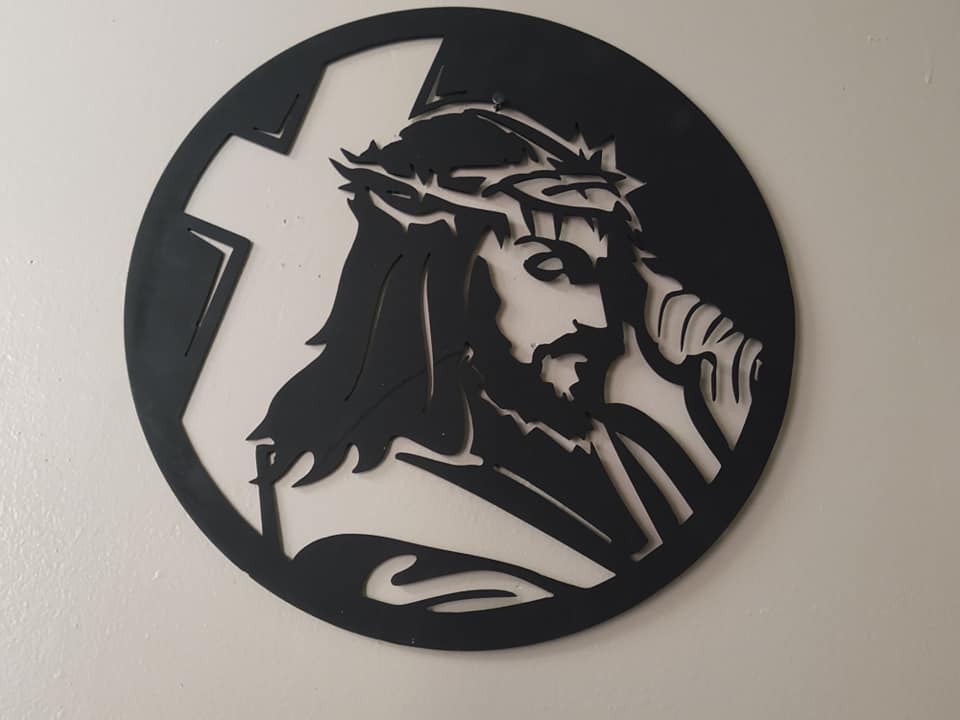
In March 2020, during Lent, this piece of art featured prominently outside my classroom door.
When we left school that fate Friday, March 13th, no one realized that we wouldn’t see each other in person for months.

A Journal of a Plague Year

Growing up, I always wanted to live through a historic event.  Unfortunately, little did I know what life had in store for me.  Now in my early 40s, I am amazed when I stop to think about what historic events I have lived through already – and how different the world is from when I grew up.  I vividly remember the Cold War; the fall of the Berlin Wall; both the first and second Gulf Wars; September 11th, 2001; the War in Afghanistan; and of course, the COVID 19 pandemic.

A year after September 11th, 2001, that somber anniversary inspired me to write about my experiences on that fateful day.  That entire morning is etched in my memory.  At the time, I had just started my semester studying abroad in Quito, Ecuador a couple of weeks before.  I was still learning my routine and adjusting to my new host family.  September 11th colored that entire experience as there was no way it could not.  While I didn’t write much for the 9/11 digital archive, what I did write sets the scene and provides a glimpse into what US exchange students were dealing with all over the world.  My full story can be found at The September 11 Digital Archive, story6757.xml.

This past spring, a conversation with a fellow writer made me realize that I could do the same with my experiences throughout the pandemic.  I found a place to archive all of my writing relating to the pandemic, past and future – A Journal of a Plague Year.  I may include some videos I have from that time frame as well.  It may become a cool little side project.  I’m definitely looking forward to it.  Maybe I’ll be able to finally put all that the pandemic disturbed and disrupted behind me.

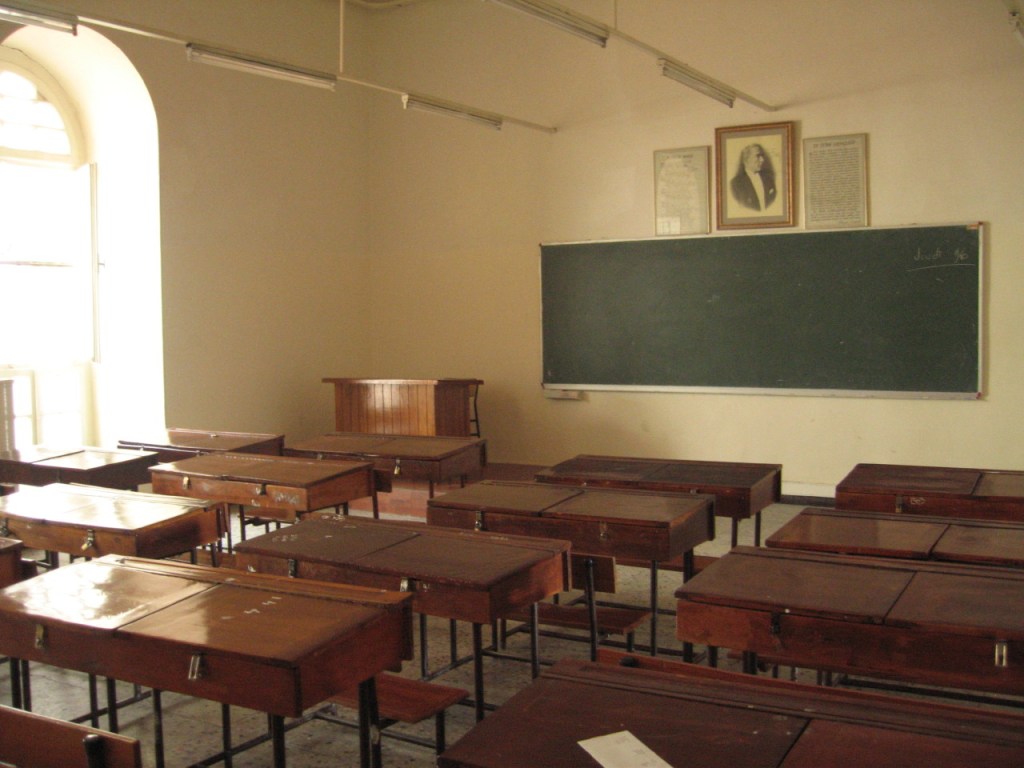
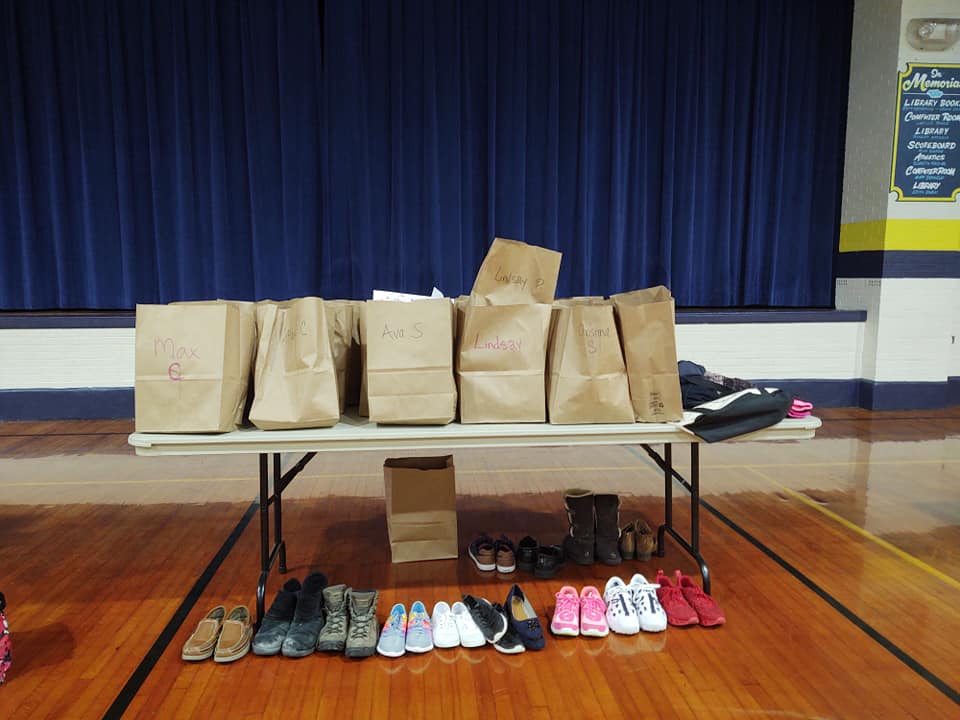
There are SO many things that stand out.  That first awful week of the shutdown during which I had to go to school, alone, and pack up all of my 6th graders belongings (pictured below).  The conversation that I had with Norma and Ashley as school dismissed that awful Friday, March 13th of Lent, not realizing that we would not see each other in person for months, will always be remembered.

In the weeks following our last in-person day of school (March 13th, 2020), as a teacher, I had to pack up my students belongings and prepare them for pickup by parents. Each teacher had an assigned time to be in the building. Doing so in the middle of the stay at home order, not knowing when I would see students, teachers, and staff again, was nothing less than surreal.

That weekend, my mom had had several old high school friends over for a get-together.  The venue changed from a friend’s house to my mom’s in order to limit contact with her friend’s disabled and susceptible son.  All so very strange and new.  Keep in mind that this is just before the stay at home order was issued for Michigan. 

After I learned that we would not be going back to school the following Monday, I just packed clothes and headed to my parents’ house.  I didn’t know what else to do.  I would stay there with them well into May/June.  What I remember most is that I happened to catch some of my mom’s friends, some of my favorite people, before they left.  It would be the last time I would see them for several months.

I could easily keep going.  The spring of 2020 also represented the end of my first full year of teaching, my first 6th grade class.  Definitely not the way I wanted to start off my teaching career.  Personally, I believe the education system is still reeling from the shutdown.  Students and teachers are still trying to pick up the pieces.

This is just a glimpse of what I plan to share and document.  I hope that I inspire others to do the same.

Gordon Lightfoot – The Wreck of the Edmund Fitzgerald (1976)

Gordon Lightfoot – The Wreck of the Edmund Fitzgerald (1976) (Video) (Lyrics)

(Written May 7, 2023)

“The legend lives on from the Chippewa on down

Of the big lake they called ‘Gitche Gumee’ …” (Gordon Lightfoot 1976)

There is probably no more iconic opening lyric in modern music history.  Sadly, Gordon Lightfoot died on May 1st, 2023 at age 84.  In capturing the story of the tragedy of the Edmund Fitzgerald in song, he immortalized the iron ore carrier, its crew, and its disputed demise for generations to come.  In a sense, it has become an elegy for all those lost on the Great Lakes over the centuries.

Growing up in Michigan throughout the 1980s and 1990s, we learned about the wreck of the Edmund Fitzgerald through Lightfoot’s lyrics.  Personally, I’ve been fascinated ever since.  It is easy to see why so many are still drawn to the story.  First, it is a fairly “modern” shipwreck.  The Fitzgerald sank on Lake Superior on November 10, 1975.  They had enough lifeboats, modern radar, and radio communication.  In fact, Captain McSorley’s last radio communication with a nearby ship, the Arthur M. Anderson, was “we are holding our own.”  That chilling fact alone sends my imagination reeling.

Next, there are lingering questions as to exactly how the Edmund Fitzgerald sank.  Some say that she ran aground on Six Fathoms Shoal, while others believe that the hatchways were not properly secured.  Then, there are those who believe one of the Three SIsters – a reference to gigantic waves developing on Lake Superior in the wake of incredible fall storms – doomed the ship.

In fact, the subject of the Edmund Fitzgerald still garners a lot of local interest in Michigan.  In September 2022, former reporter and Edmund Fitzgerald researcher Ric Mixter presented information on the wreck at the old court house in Omer.  I happened to attend his presentation, and for such a small community, there was standing room only.  Ric Mixter, a former reporter for local WNEM TV5, went on to present in Bay City and other nearby communities as well.  What’s great about his presentation is the depth of his research, his respect for those who died in the tragedy, and his obvious love for the subject matter.  He lets his audience decide for themselves the ultimate cause of the wreck.  After I attended Ric Mixter’s presentation, I compiled some of his resources in the post All Things Michigan.

Finally, Gordon Lightfoot’s master songwriting draws one into the tragedy.  WIth lyrics like “ice water mansion” and “Does anyone know where the love of God goes, When the waves turn the minutes to hours?,” it becomes a timeless folk song dedicated to the power of the Great Lakes.  By telling the story in a basic timeline format, he immortalizes the old cook and Captain McSorley, along with the rest of the crew, for all time.  I can’t think of a better tribute to the 29 men that lost their lives that fateful November day.  It is one of the most haunting songs I’ve ever heard and fully deserves its rightful place in the history of timeless American folk songs.

Faith Over Fear

Below are my thoughts after one year teaching through the pandemic.  As a writing exercise, we were asked as teachers what we had learned through the experience.  In my opinion, two years later, it sill holds up and summarizes nicely how I felt and continue to feel.  Originally published on the Saginaw Bay Writing Project (SBWP) website, you can find a link to the original piece below.  I’ve only corrected minor errors here.

Our Teachers Write – SBWP

What did I learn about myself as a teacher over the past year?  First, I clearly understood just how fragile our everyday lives are – students, teachers, and administrators alike.  Most people seem to have underestimated the power of their daily routine, their “normal.”  I certainly did.  Second, I learned just how much I continue to not know.  I am still learning how to teach effectively online.  Finally, I learned how to focus on what truly matters.

As 2019-2020 was my first full-year teaching, I continue to feel robbed.  Plans for March is Reading Month, field trips, and so much more – all gone.  Memories with my first 6th grade class never made.  The little things still haunt me.  I am a big believer in class read-alouds, and when we shut down for the school year in March 2020, I was in the middle of the first Percy Jackson book:  Percy Jackson and the Olympians: The Lightning Thief by Rick Riordan.  My 6th graders adored the book, and I still regret the fact that I was unable to finish the book with them in-person – or continue the series.

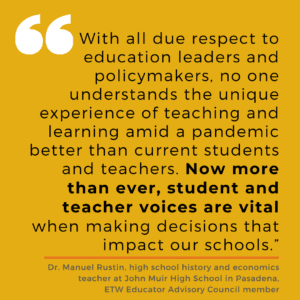
If I still feel this way a year later, I can only imagine how my middle school students felt and continue to feel.  There appears to be little to no concern regarding the impact prolonged shutdowns can have on emotional, social, and academic well-being.  It just doesn’t seem to matter to anyone.  Somewhere along the way, we  lost our humanity.  We, educators and students alike, are not alright.

As we entered the Lenten season this year, memories of last year came flooding back.  On Friday, March 13th, 2020, as I participated in the Stations of the Cross with my students, we learned that we would not be coming back to school.  Little did we know that we would not finish the year.  The uncertainty, the miscommunication, and the worry will always stay with me.  At the time, no one had any answers, only an endless list of questions.

During the lockdown, I worried about every single one of my students.  Would they fall behind?  How would they survive without seeing friends on a daily basis – or ever?  I also learned what I didn’t know.  No one taught me how to teach online.  Yet, that is exactly what I did. I was not prepared last spring.  When my class was quarantined this fall, I was still not fully prepared.  Only now, in a virtual week built in after spring break, am I now beginning to feel as though I can somehow teach online.  It took over a year.

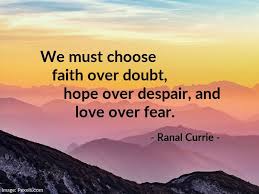
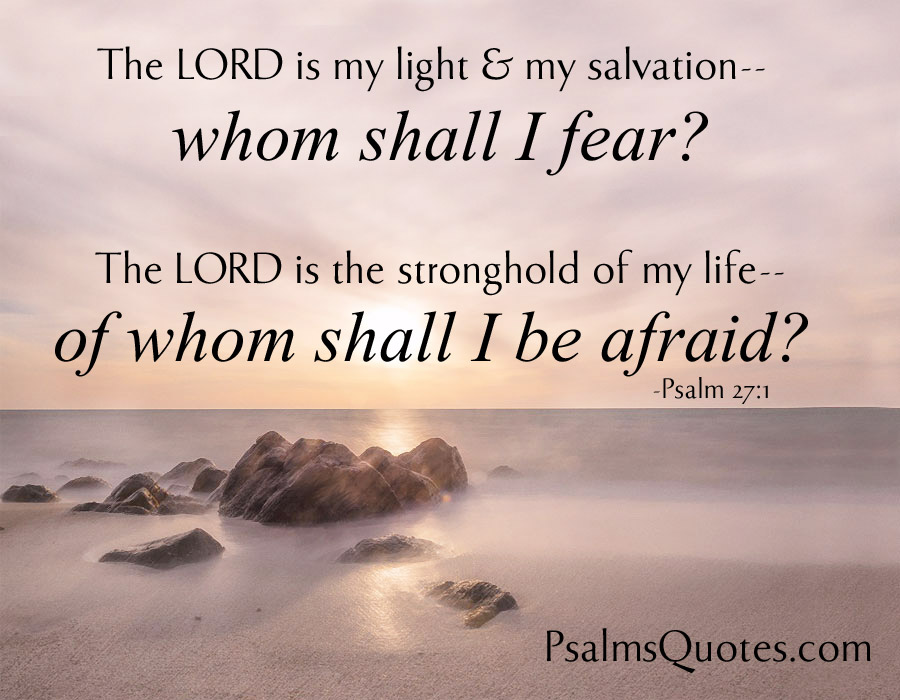
I can’t imagine trying to navigate it all without faith.  When I talk about faith, yes, I am referencing a higher power, but I am also referring to a general faith that everything will work out in the end.  No matter where we are today as educators and students, there is hope for tomorrow.  All hope is not lost.  We can and should do better.  We will.  If given the choice between faith and fear, I choose faith.

Finding Your Faith

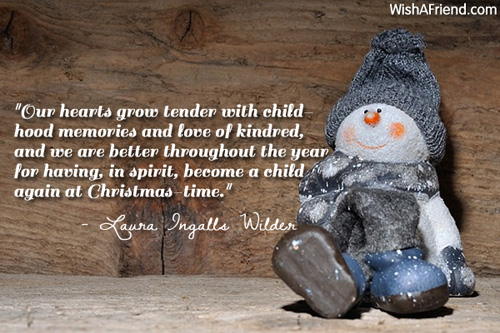
LIW Quote

Religion, Family and Letting Your Kids Find Their Faith – BlogHer

The idea behind this article intrigues me.  I love the idea of allowing children to choose their own faith (or lack thereof).  One of the biggest issues I’ve had with organized religion throughout my life is the idea that there is only one true religion.  This idea is passed down from generation to generation without children really having the opportunity to explore other religions.  They simply grow up with the same faith as their parents without really exploring their own beliefs.  As a Protestant Christian, with all of its varieties and peculiarities, this never made sense to me.

On the other hand, there is something to be said for religious education during childhood and early adolescence.  How else can one truly learn about religion?  Throughout that process, how do you help your child be open to learning about other religions and exploring their faith while learning yours?  It is a tough question, and one that parents should discuss with their kids.  Even if parents don’t explicitly talk about religion with their children often, children will still pick up on their parents’ attitudes toward different religions.

In all of this, I was incredibly lucky as a child.  Even though my parents’ weren’t overly religious, my Mom insisted that my siblings and I had what she called a “religious education.”  We were baptized and confirmed.  We attended Sunday school and church camp.  I even spent some time as part of MYF.  My Mom had had all of these experiences growing up and wanted the same for her children.

At the same time, we were raised to respect different religions.  In fact, as a small child, I attended Mass with my Catholic neighbors almost as often as I attended church with my parents.  My neighbor and babysitter taught Catechism for decades, and thanks to my parents’ openness, I even attended her class a time or two.  Growing up in a predominately Catholic community, I am grateful that I had those experiences.  When you have a better understanding of other religions, conditions such as those that existed in Ireland during the 1970s and 1980s – Catholics versus Protestants, neighbor against neighbor – become incomprehensible.  To this day, I cannot imagine judging anyone based on religion alone.

The funny thing is that until fairly recently, I was highly skeptical of organized religion.  While I did believe in God, I did not necessarily see the need for organized religion.  Discussing all of this with my Mom, she blames herself for passing that skepticism on to me.  Personally, I’m glad I questioned my faith and organized religion.  Now that I see its intrinsic value, I knew what to look for in a church, and ultimately, I am that much stronger in my beliefs.