Gordon Lightfoot – The Wreck of the Edmund Fitzgerald (1976) (Video)(Lyrics)
(Written May 7, 2023)
“The legend lives on from the Chippewa on down
Of the big lake they called ‘Gitche Gumee’ …” (Gordon Lightfoot 1976)
There is probably no more iconic opening lyric in modern music history. Sadly, Gordon Lightfoot died on May 1st, 2023 at age 84. In capturing the story of the tragedy of the Edmund Fitzgerald in song, he immortalized the iron ore carrier, its crew, and its disputed demise for generations to come. In a sense, it has become an elegy for all those lost on the Great Lakes over the centuries.
Growing up in Michigan throughout the 1980s and 1990s, we learned about the wreck of the Edmund Fitzgerald through Lightfoot’s lyrics. Personally, I’ve been fascinated ever since. It is easy to see why so many are still drawn to the story. First, it is a fairly “modern” shipwreck. The Fitzgerald sank on Lake Superior on November 10, 1975. They had enough lifeboats, modern radar, and radio communication. In fact, Captain McSorley’s last radio communication with a nearby ship, the Arthur M. Anderson, was “we are holding our own.” That chilling fact alone sends my imagination reeling.
Next, there are lingering questions as to exactly how the Edmund Fitzgerald sank. Some say that she ran aground on Six Fathoms Shoal, while others believe that the hatchways were not properly secured. Then, there are those who believe one of the Three SIsters – a reference to gigantic waves developing on Lake Superior in the wake of incredible fall storms – doomed the ship.
In fact, the subject of the Edmund Fitzgerald still garners a lot of local interest in Michigan. In September 2022, former reporter and Edmund Fitzgerald researcher Ric Mixter presented information on the wreck at the old court house in Omer. I happened to attend his presentation, and for such a small community, there was standing room only. Ric Mixter, a former reporter for local WNEM TV5, went on to present in Bay City and other nearby communities as well. What’s great about his presentation is the depth of his research, his respect for those who died in the tragedy, and his obvious love for the subject matter. He lets his audience decide for themselves the ultimate cause of the wreck. After I attended Ric Mixter’s presentation, I compiled some of his resources in the post All Things Michigan.
Finally, Gordon Lightfoot’s master songwriting draws one into the tragedy. WIth lyrics like “ice water mansion” and “Does anyone know where the love of God goes,When the waves turn the minutes to hours?,” it becomes a timeless folk song dedicated to the power of the Great Lakes. By telling the story in a basic timeline format, he immortalizes the old cook and Captain McSorley, along with the rest of the crew, for all time. I can’t think of a better tribute to the 29 men that lost their lives that fateful November day. It is one of the most haunting songs I’ve ever heard and fully deserves its rightful place in the history of timeless American folk songs.
Below are my thoughts after one year teaching through the pandemic. As a writing exercise, we were asked as teachers what we had learned through the experience. In my opinion, two years later, it sill holds up and summarizes nicely how I felt and continue to feel. Originally published on the Saginaw Bay Writing Project (SBWP) website, you can find a link to the original piece below. I’ve only corrected minor errors here.
What did I learn about myself as a teacher over the past year? First, I clearly understood just how fragile our everyday lives are – students, teachers, and administrators alike. Most people seem to have underestimated the power of their daily routine, their “normal.” I certainly did. Second, I learned just how much I continue to not know. I am still learning how to teach effectively online. Finally, I learned how to focus on what truly matters.
As 2019-2020 was my first full-year teaching, I continue to feel robbed. Plans for March is Reading Month, field trips, and so much more – all gone. Memories with my first 6th grade class never made. The little things still haunt me. I am a big believer in class read-alouds, and when we shut down for the school year in March 2020, I was in the middle of the first Percy Jackson book: Percy Jackson and the Olympians: The Lightning Thief by Rick Riordan. My 6th graders adored the book, and I still regret the fact that I was unable to finish the book with them in-person – or continue the series.
If I still feel this way a year later, I can only imagine how my middle school students felt and continue to feel. There appears to be little to no concern regarding the impact prolonged shutdowns can have on emotional, social, and academic well-being. It just doesn’t seem to matter to anyone. Somewhere along the way, we lost our humanity. We, educators and students alike, are not alright.
As we entered the Lenten season this year, memories of last year came flooding back. On Friday, March 13th, 2020, as I participated in the Stations of the Cross with my students, we learned that we would not be coming back to school. Little did we know that we would not finish the year. The uncertainty, the miscommunication, and the worry will always stay with me. At the time, no one had any answers, only an endless list of questions.
During the lockdown, I worried about every single one of my students. Would they fall behind? How would they survive without seeing friends on a daily basis – or ever? I also learned what I didn’t know. No one taught me how to teach online. Yet, that is exactly what I did. I was not prepared last spring. When my class was quarantined this fall, I was still not fully prepared. Only now, in a virtual week built in after spring break, am I now beginning to feel as though I can somehow teach online. It took over a year.
I can’t imagine trying to navigate it all without faith. When I talk about faith, yes, I am referencing a higher power, but I am also referring to a general faith that everything will work out in the end. No matter where we are today as educators and students, there is hope for tomorrow. All hope is not lost. We can and should do better. We will. If given the choice between faith and fear, I choose faith.
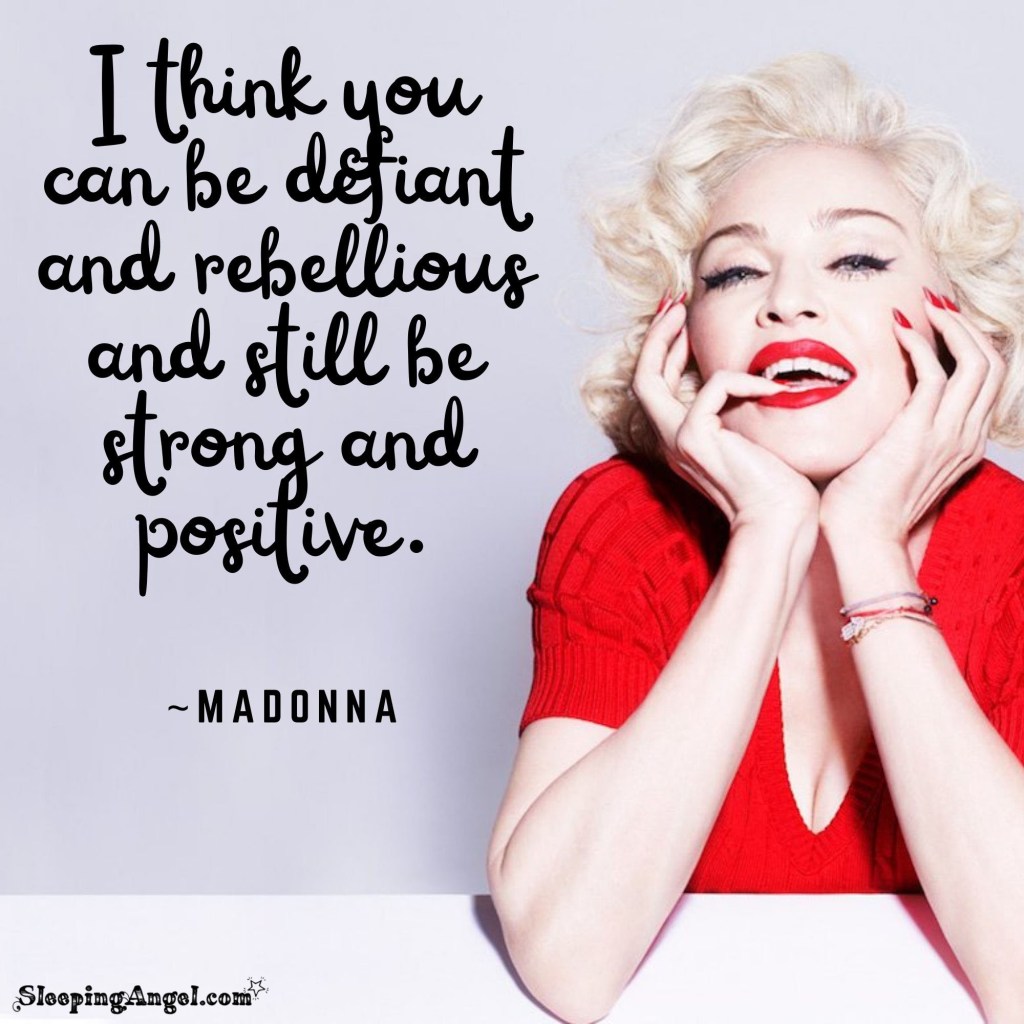
On Friday evening March 31st, 2023, I joined scores of others to attend “Madonna 40” at the Delta College Planetarium. A sold out show, it was incredible – and a lot of fun! Designed to honor Madonna’s 40th anniversary of her first hit single “Holiday” and her always controversial place in Bay City history, it did not disappoint. My only wish: I would have thoroughly enjoyed another hour of her classic music videos and would have gladly paid accordingly. There is nothing quite like watching the music videos that made Madonna a superstar and an inspiration to a generation of girls and women, for better or worse, on the big screen. It is an experience I will never forget. Her early music will always be a part of the soundtrack to my early childhood memories. In designing the program, the following original, unedited music videos were shown in all of their ‘80s and early ‘90s glory:
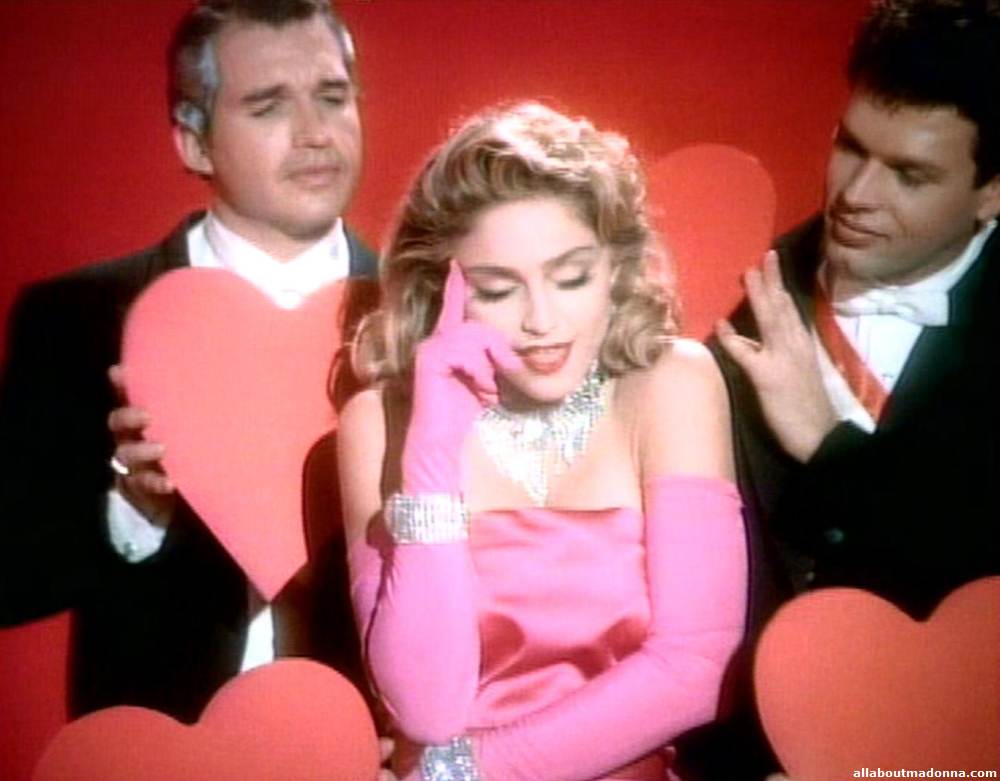
A still from arguably Madonna’s most iconic music video, Material Girl (1984).
Frankly, the music video portion of the program outshone everything else. The videos have held up over nearly four decades. What struck me most in the vintage videos was Madonna herself. Definitely not model thin or “fat,” she exuded old-school glamor in “Material Girl,” “Vogue,” and “Like A Prayer” with the dance moves that made her famous. As for “Papa Don’t Preach,” she looks like any fresh-faced midwestern high school or college girl.
Personally, I felt that the organizers/designers missed a huge opportunity by not including at least the videos for both “Promise to Try” (1989), which was largely filmed at her mother’s gravesite in Kawkawlin, Michigan (just north of Bay City), and “This Used to Be My Playground” (1992), which was included on the A League of Their Own soundtrack and supposedly written about Bay City becoming her refuge after her mother’s untimely death. The only actual footage of Madonna in or near Bay City was not included in the program. How?
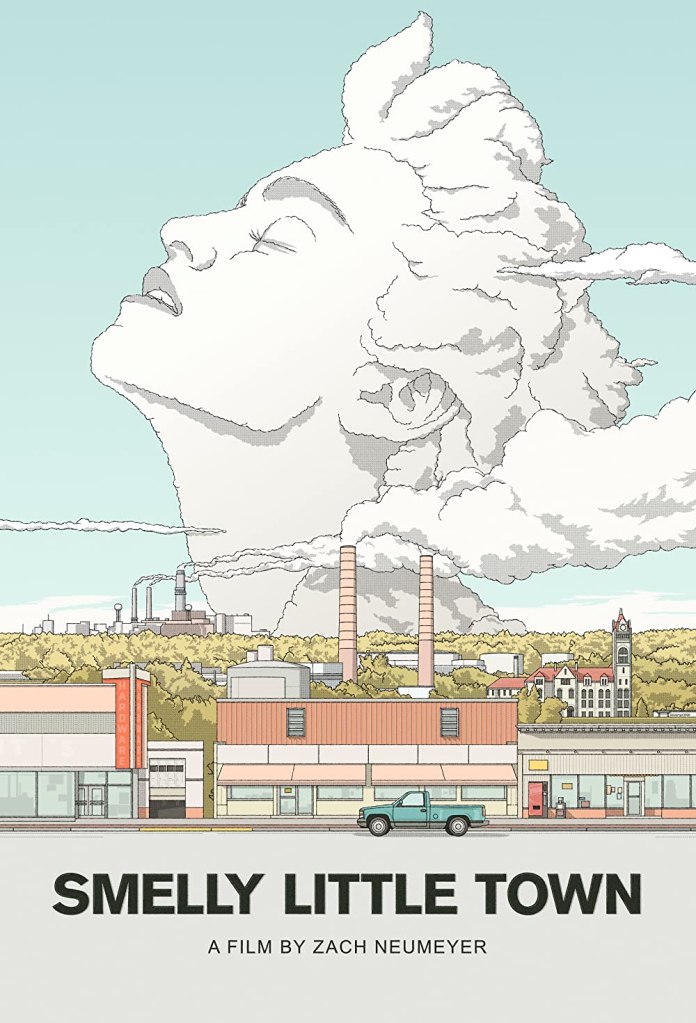
The next segment of the program, “Smelly Little Town,” is originally why I wanted to attend the event and even moved around my schedule to do so. Debuting as part of the Hell’s Half Mile Film and Music Festival in Bay City in 2021, I doubted I would ever have another opportunity to see it. Growing up with the controversy, knowing Bay City a little too well, and having been born in Bay City myself, I had to check it out.
First and foremost, it is quite possibly the most Bay City thing I’ve ever seen in my life. Let me just say this: It began and ended with scenes of people polka dancing at the St. Stan’s Polish festival to the Steve Drzewicki Band, both Bay City institutions. I half expected to see my ex’s parents go dancing on by. In general, the film did a decent job describing Bay City, covering all aspects of the “smelly little town” controversy with Madonna, and explaining how ever-corrupt Bay City small town politics is the answer as to why Bay City has never really been able to capitalize on the fact that it is the birthplace of Madonna.
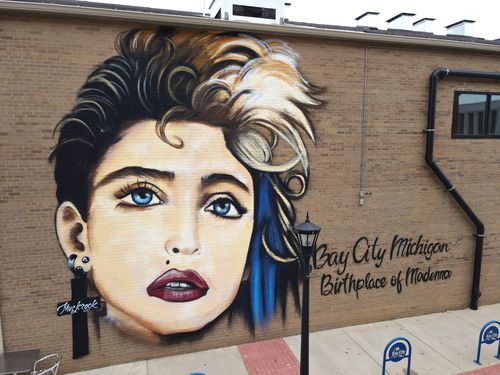
This mural in downtown Bay City was privately funded and tucked away on a small side street.
For those who don’t know, Madonna Louise Ciccone was born at the former Mercy Hospital in Bay City, Michigan on August 16th, 1958. Madonna is her actual given name as she was named after her mother. Upon her mother’s tragic death in 1963, Madonna spent time in Bay City with her grandmother, who lived in the Banks area, then home to a nearby oil refinery (hence the “smelly little town” comment that caused such an uproar). To this day, there is very little commemorating Madonna in Bay City. Then again, this is the same city that passed on becoming home to a casino and a minor league ballpark, both of which went to nearby communities.
If something wonderful is planning on coming to Bay City, one can be sure that public outrage will ensue in some way, shape, or form. I am speaking from experience. When I moved back to Michigan with my ex, a Bay City native, in 2005, the controversy over the then new Wirt Public Library – a gorgeous new anchor for downtown Bay City – had yet to wane. While I agree it doesn’t have the history of the historic Sage Library in Bay City, people were genuinely upset over a beautiful new library downtown. I will never understand the mentality.
Then again, back in 2005, Michigan experienced a one-state recession which was about to turn into the Great Recession. 2008 is covered well in the documentary. It is rightfully called one of the darkest times in Bay City history, and frankly, I consider my life in Bay City (2005-2012) one of the darkest periods in my life as well. Yet, while Bay City is almost unrecognizable from that dark hour, there is still nothing formal honoring Madonna in the city.
As much as I wanted to see “Smelly Little Town,” I doubt it would have been half as entertaining if not for my own experiences with Bay City and my early love of Madonna’s music. In fact, much of it is forgettable. However, it did a good job highlighting the ridiculousness of the entire situation and Bay City politics. I actually understand the controversy now. A little explanation and context behind Madonna’s comments would have changed everything. In the same infamous 1985 interview with Jane Pauly, Madonna goes on to say that she has “great affection” for Bay City.
By the way, Bay City still is a “smelly little town.” In a hilarious coincidence, I happened to drive by the Michigan Sugar plant on Friday on my way to see “Madonna 40.” For those who don’t know, processing sugar beets can smell like hot garbage on a good day. Friday, as I drove by, it never smelled worse.
Clearly, Madonna’s relationship with Bay City remains complicated. I fully understand why. My love/hate relationship with Madonna – I will always love Madonna’s music, but question her methods of self-promotion – mirrors my love/hate relationship with Bay City itself. I do hope that she is commemorated in Bay City at some point. Not every small town can claim to be the birthplace of the best-selling female musical artist of all time.
By the way, if you want a quick, accurate outline of Madonna’s complex history with Bay City, the article below does a wonderful job of doing just that.
What can I say about Don McLean’s American Pie that hasn’t already been said? Not much, actually. Yet, that song is so ingrained in my love of music, my childhood, and more. It can safely be called Americana at this point – a modern American folk song in the best sense of the term.
I couldn’t tell you the first time I heard the song, but I have always loved it and could deeply visualize the lyrics. For whatever reason, I imagined the high school gym as the same high school gym where I’d watched my dad play old man basketball countless times as a preschooler – his alma mater – Arenac Eastern High School in Twining, MI. I think it has something to do with how rural the setting appears to be in the song. Sadly, Arenac Eastern High School no longer exists. The building, now a community center, still sits among acres of farm land and a tiny village. When I think of the quintessential rural American high school, Arenac Eastern immediately comes to mind. It has always felt like stepping back in time and into my family history.
Whatever the case may be, I do know that I had the lyrics practically memorized by 4th grade. Mrs. Currie, my 4th grade teacher and my first teacher at Standish Elementary, used the lyrics to teach us the terms “levee” and “dirge.” In fact, at this point, I can’t listen to the song without thinking about 4th grade and Mrs. Currie. None of the kids were getting it. She then began to sing the song, basically saying “Come on! You know the song.” Except, they didn’t. As I remember it, I was the only kid who knew the song and lyrics – at least well enough for the purposes of her vocabulary lesson. It was funny, irrelevant, and frankly, kind of summed up that school year.
Years later, as a substitute teacher, I had the opportunity, with a bit of caution and specific directions from the regular classroom teacher, to show high school Spanish students the movie La Bamba. After the movie, I had just enough time to explain the term “the day the music died” and the lyrics to American Pie. They left singing Oh Donna, moved by the true story, which completely took me by surprise. It also happened to cement it in my memory.
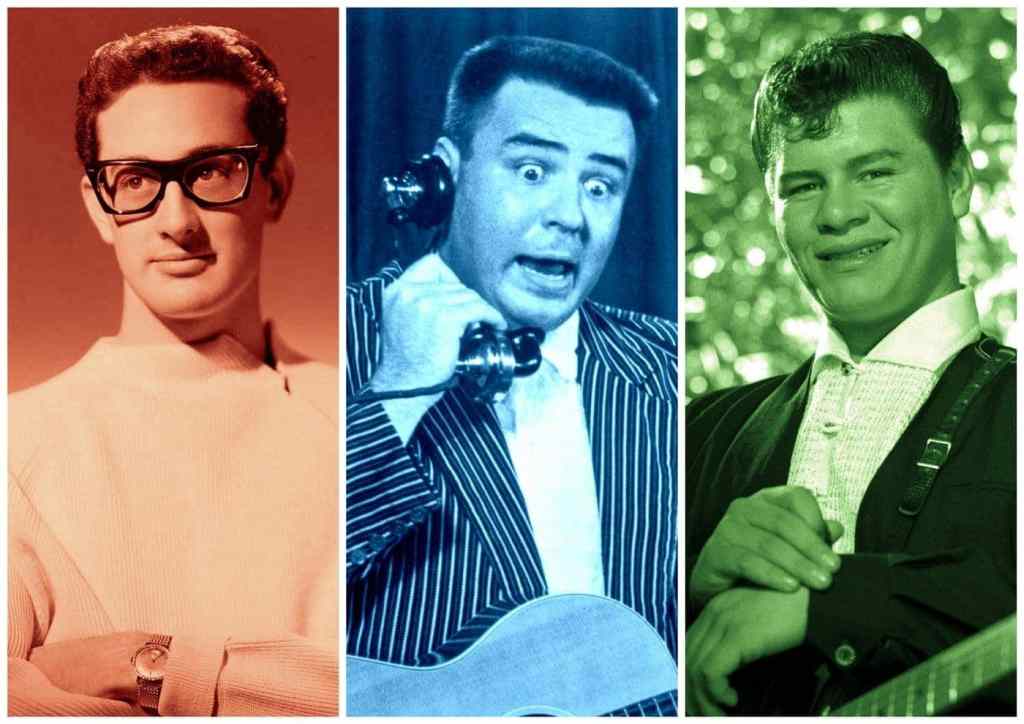
February 3rd, 1959 – “The day the music died” – (L to R) Buddy Holly, JP Richardson (the Big Bopper), and Ritchie Valens died in an airplane accident, traveling over Iowa as part of the Winter Dance Party Tour.
I’m glad that I had the opportunity to explain the lyrics to American Pie and help them make the connection. I may have known the song longer than I care to remember, but it wasn’t all that long ago that I learned that the lyrics referenced a true tragedy, much less the death of Buddy Holly, JP Richardson (the Big Bopper), and Ritchie Valens. I suppose that is the true tragedy of American Pie: What if they had lived?
The musical legacy of Buddy Holly, of course, is staggering. Modern pop and rock music would not have evolved in quite the same way without him and the Crickets. He inspired the Beatles to write their own music, among countless others. In fact, it could be said that Buddy Holly was one of the main influences of what became known as the British invasion. JP Richardson (the Big Bopper) and Ritchie Valens were just getting started. Again, what if?
If nothing else, American Pie taught me that lyrics can indeed be a form of poetry.
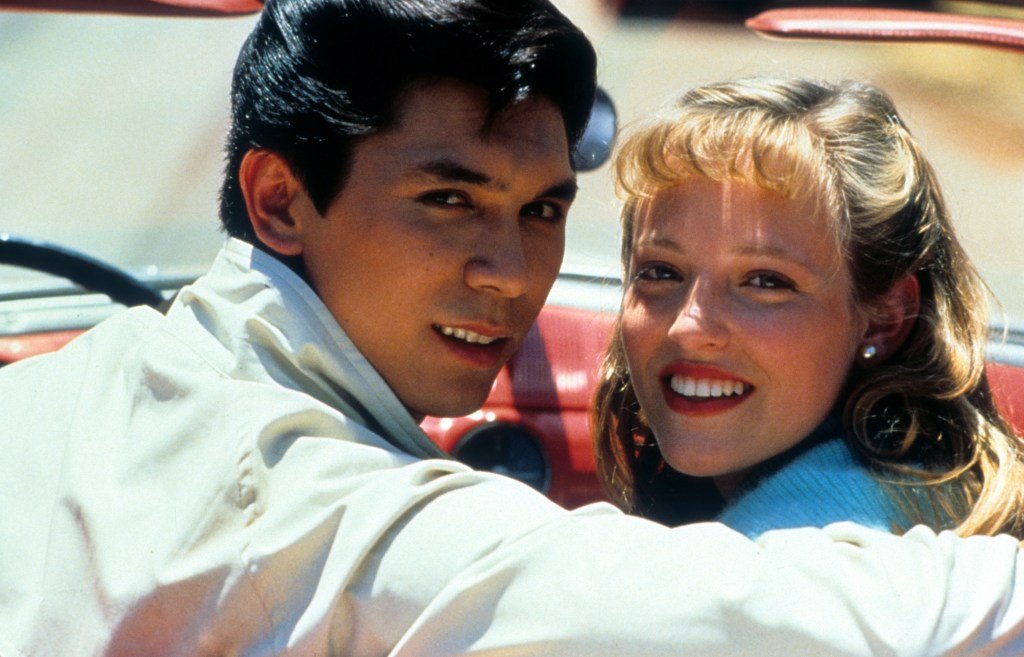
Lou Diamond Phillips (Ritchie Valens) and Danielle von Zerneck (Donna Ludwig) in a car in a scene from the film ‘La Bamba’, 1987. (Photo by Columbia Pictures/Getty Images)
The Personal Librarianby Marie Benedict and Victoria Christopher Murray is one of the more memorable books I’ve read lately. As historical fiction, it hits all of the right notes. A tribute to its authors – one Caucasian, one African-American – I personally love how race and all the issues surrounding Belle, a mixed woman from a prominent African American family from Washington, DC “passing” as white in the Gilded Age, are treated in the book. Nothing is held back.
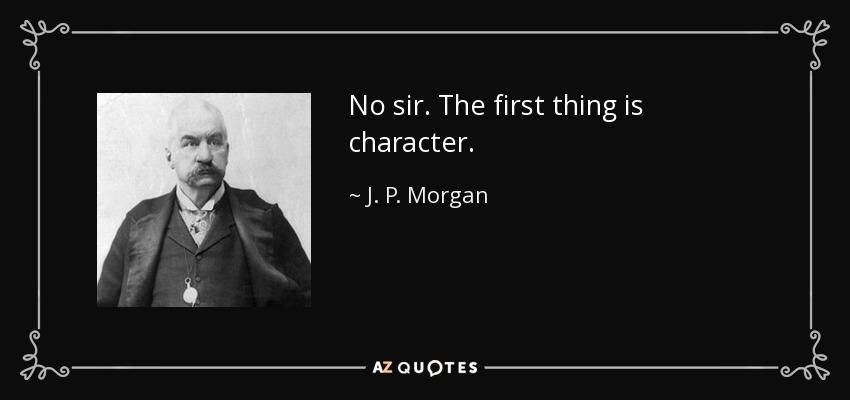
It is clear what Belle “da Costa” Greene is forced to give up as she becomes personal librarian to JP Morgan. By permanently passing as white, she is forced to sever ties to her extended family in Washington, DC, eventually loses hope of ever marrying or having children, and lives in constant fear of her secret being discovered. The family decision to “pass” tears it apart.
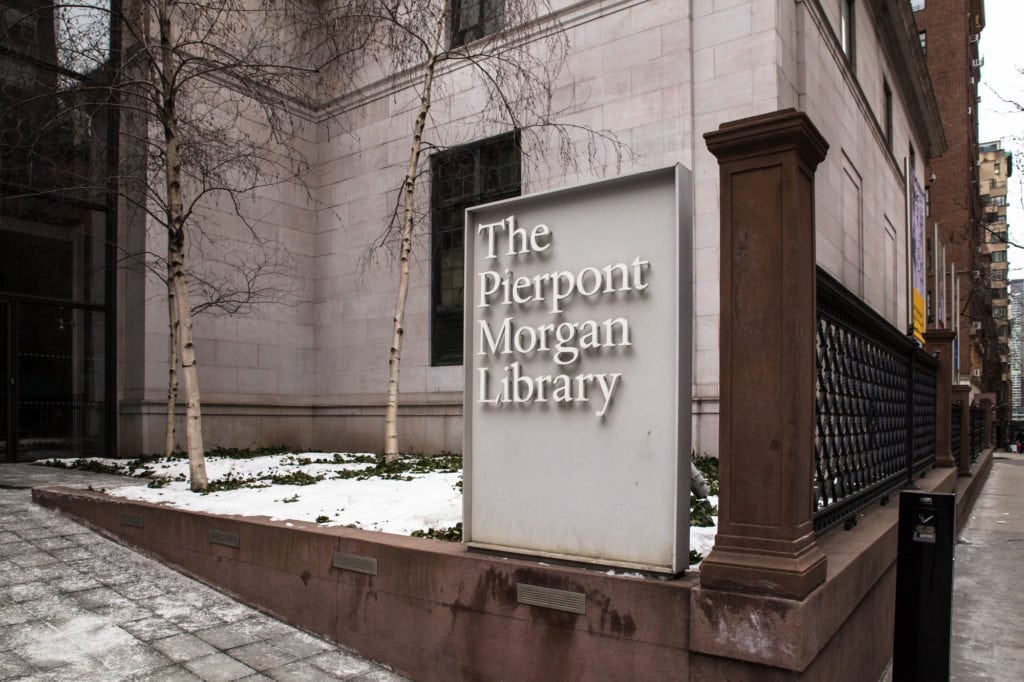
In return, Belle is hired as JP Morgan’s personal librarian. She secures a financial future not only for herself, but members of her family as well. She also becomes witness to history. By becoming JP Morgan’s personal librarian, she enters the rarified world of high-end manuscript and art actions – a realm dominated by men at the time. Working together for decades, Belle and JP Morgan build one of the finest personal libraries and art collections in the world. It is her perseverance that eventually helps to open the JP Morgan library to the public.
There are a few things that I adore about this book. First, Belle is a likable protagonist. One can’t help but wish her the best. That said, she is not perfect. We are treated to all of the tricks and coping mechanisms Belle uses to cause a sensation in a world of men. We are privy to all of her hopes and dreams, wins and losses. For me, this is what makes the book. We all have secrets, and we get to know Belle’s intimately.
Then there is just plain envy. Can you imagine being charged with securing some of the most rare manuscripts and artwork in the world for JP Morgan, helping him create a first-class institution from the ground up? That is exactly what Belle accomplished. I am in awe that Belle is a real historical figure. Her story deserves to be told in full. While certain details are fictionalized, The Personal Librarian is rooted in many historical truths. I cannot recommend it enough, particularly if you are a lover of books and history.
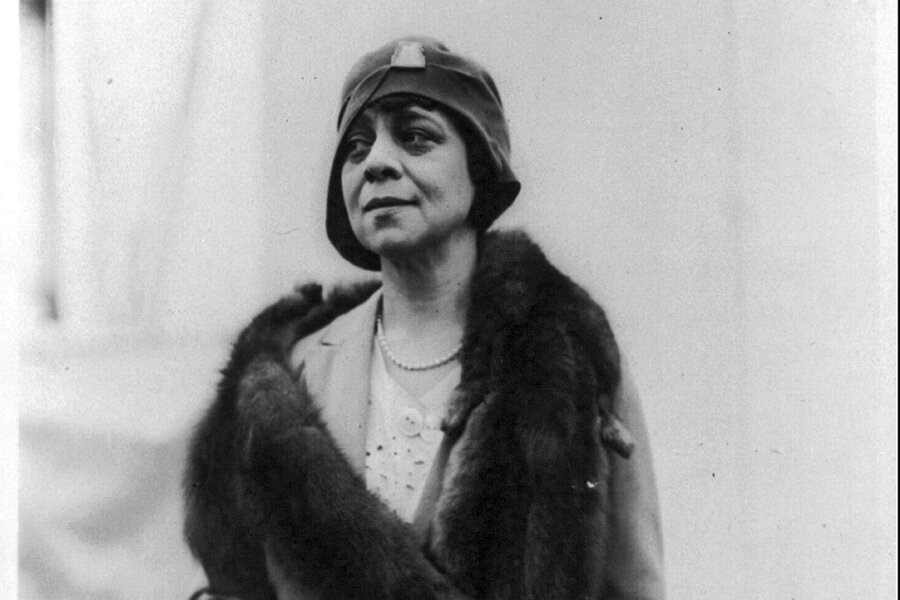
The real Belle. Her true given name was Belle Marion Greener.
In designing The Mixtapes, several things inspired me. First up, JamsBio, which I’ve discussed a little here. Back in 2006/2007, I had the opportunity to write a series of articles for JamsBio, an online magazine celebrating the love of music, outlining my favorite songs/artists and what music meant to me. I only wrote ten articles and JamsBio didn’t last, but it was the most fun I have ever had working, not to mention the easiest money I’ve ever made. While I still wish I had thought to save those original articles, with The Mixtapes, I have the opportunity to start anew and build it correctly this time.
JamsBio isn’t the only inspiration. As a teenager, I religiously watched Ali McBealwith my mom. The show began each episode with Vonda Shephard playing a song that highlighted something on Ali’s mind. It popularized the idea of a soundtrack to one’s life, and frankly, that idea never really left me. Consider this that soundtrack.
Then there is Paul McCartney. It is no secret that I am a huge Beatles, Wings, and Paul McCartney fan. Do I love everything the man has ever done? Not exactly. Yet, he (and all of the Beatles) will always be in a category of their own. Anyway, Paul McCartney published The Lyrics: 1956 to the Present in 2022. While I have yet to read it (I know, I know …), the idea is incredible to me. Essentially, Paul McCartney wrote a memoir that consists of the stories behind 154 of the songs he wrote. It covers songs from all parts of his career – Beatles, Wings, solo, etc. I can’t imagine a better gift to fans. Even better, there is a Spotify playlist that covers all of the songs in The Lyrics in the order they appear in the book (alphabetically by song title). When I finally do read it, I will be able to listen along as well.
So there you have it, the inspiration behind The Mixtapes. Enjoy and feel free to share your own memories.
I’ve always loved traveling, no matter how short or long the trip. This wanderlust has taken me on so many wonderful adventures over the years, and fortunately for me, so many of my best childhood memories were made hitting the road with Grandma Reid. The woman just loved to go. She rarely spent time at home, at least until age caught up with her. In fact, she spent over forty years selling women’s clothing from a variety of catalog companies. So many of her customers were housewives who lived out in Michigan’s Thumb. She’d drive to her customers, bags and bags of clothing samples in tow. She quit selling in the early/mid-1990s only due to the fact that she could no longer find a quality company to represent. The last company she carried sold more home goods than clothing. Unfortunately, the quality was nothing compared to the companies she worked for during the 1950s-1980s. Even as a teenager, I loved to go clothes shopping with Grandma. She had a way of helping you find the right fit and could be brutally honest if need be. I learned to love the road and basics of business, at least in part, at my grandmother’s knee.
During my preschool years, Grandma would pick me up from time to time. At the time, I was used to her late ‘70s/early ‘80s blue Chysler station wagon, the same one that I tried to make Grandpa Reid promise to take care of as it was now his. If you knew Grandpa Owen, it was a futile effort, even if asked by his adorable granddaughter. I can still envision the station wagon parked underneath the old apple tree at the canoe livery – or as we always called it, the park – Grandpa napping in the backseat in the heat of a Michigan summer.
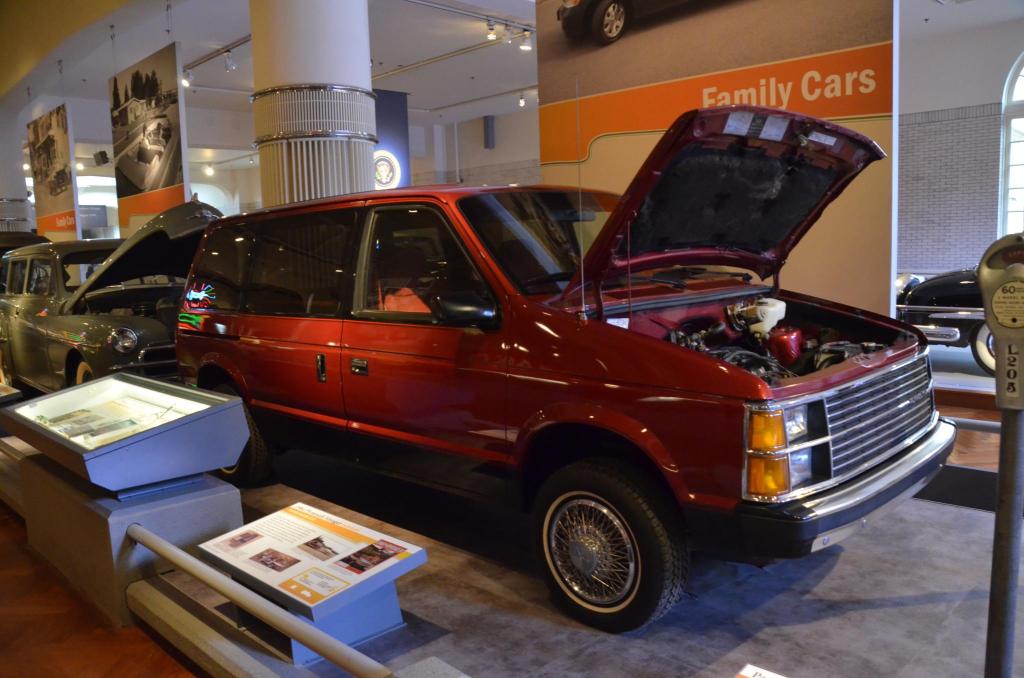
The Chrysler minivan on display at the Henry Ford.
Then one day, I couldn’t find Grandma’s station wagon in the preschool parking lot. Grandma’s new vehicle was one for the books. She purchased one of the first Chrysler minivans, and what a vehicle it was! I have no idea how many miles she put on the thing, but I do know that she replaced the engine at one point. She finally totaled it in the early 90s in an accident on her way to one of my sister’s softball games. That iconic tan minivan, when it was finally put to rest, represented the passing of an era.
What makes certain vehicles from our childhood so damn memorable? I wrote a piece about my first car, which my mom drove for a large chunk of my childhood. I could write something similar about my dad’s ‘77 Freewheelin’ Ford Bronco, his green Jeep Grand Cherokee that my sister inherited as her first vehicle, or even the lemon fullsize blue Ford van with the squealing fan belt that hung around the canoe livery forever – the one we drove to Florida to Walt Disney World. It isn’t the vehicles so much as the journeys and times they represent.
Last spring, touring the Henry Ford Museum for the first time with my middle school students, I was taken back by a veritable wave of nostalgia seeing one of first Chrysler minivans (in this case, a Plymouth Voyager – almost identical to the first Dodge Caravans) at the end of a long line of evolving family vehicles. It stopped me for a moment. All it needed was a tan paint job/interior and Dodge badging to be Grandma’s minivan of my childhood.
More than anything, that minivan represents, at least to me, countless trips to the movies, Lutz’s Funland in Au Gres, putt-putt golf in Tawas, ice cream runs, and the Bear Track. I think of the infamous trip to Kings Island in Ohio where Mom and Grandma tried to remain calm as we were caught in an awful storm. We were parked, Grandma had her foot on the brake, and the van was still shaking. How many trips to weddings, family reunions, and showers did I take with her in that van? Last, but not least, we took Grandma’s van to the airport on our infamous trip to Aruba with Dad, Erica, Emily Lammy, Grandma, and Dean Gillette (Mom was too pregnant with Garrett to fly) for New Year 1991. On the way home, something was wrong with the van, and we could only travel in 15 minute spurts. I thought we’d never get home, but eventually, we arrived.
Grandma knew how to make any trip fun. It wouldn’t be a summer adventure if we didn’t stop for ice cream. On one such occasion, we’d stopped for ice cream after hitting a local amusement park for putt-putt and go-karts. Per usual, Grandma had a van full. In addition to my sister and I, cousins Michael and Linda were there as well, and I may even be forgetting someone. As we are enjoying ice cream on the way home, suddenly my sister’s ice cream falls off of its cone squarely into Michael’s hand. We had to pull over we were laughing so hard, especially Grandma. Now well into our 30s and 40s, the ice cream incident is still mentioned from time to time. Something about it was so incredibly funny, or as Grandma would say, comical.
Now, I’m the one who is rarely home. I’m the one “running the roads” as my dad would say. I hope to make the same kind of road memories with my niece and nephews as they grow up, but that is more my mom’s territory, for now. I normally tag along in her car, playing navigator if need be. Maybe one day they will reminisce about all the Buick Enclaves in our family at the moment (3 and counting) or Uncle Garrett’s Avalanche.
At this point, I doubt my love of the road will ever die. Thank you, Grandma.
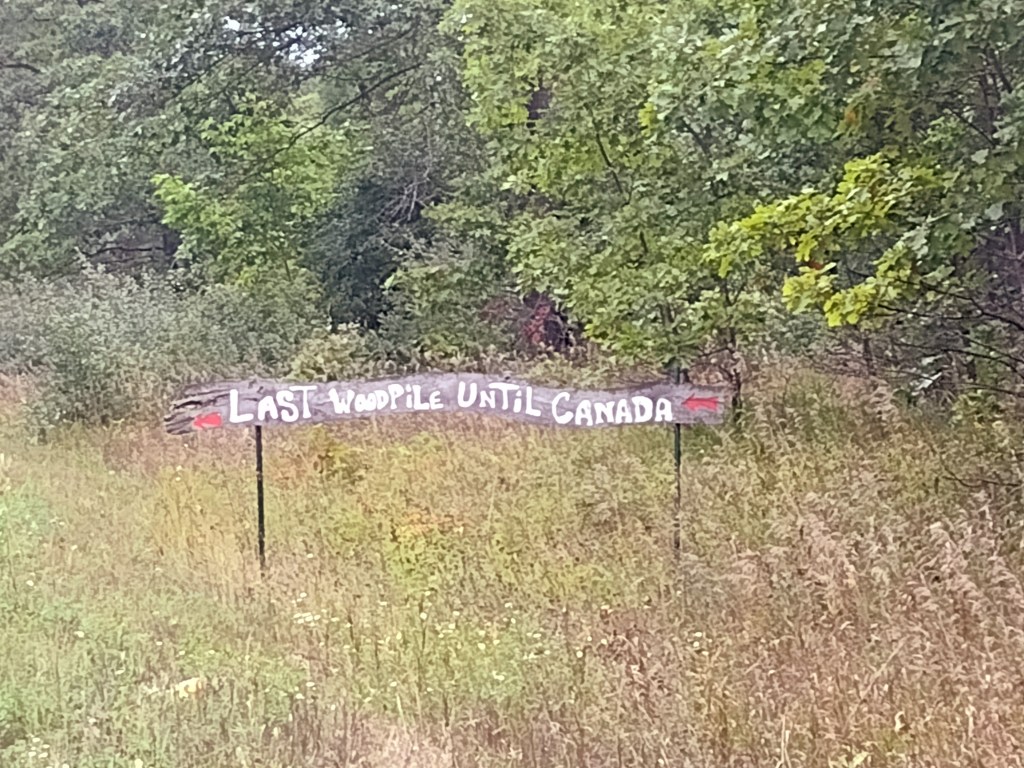
Fun sign on Grove Road, just before Crystal Creek Campground Photo Credit: Lindsey Russell
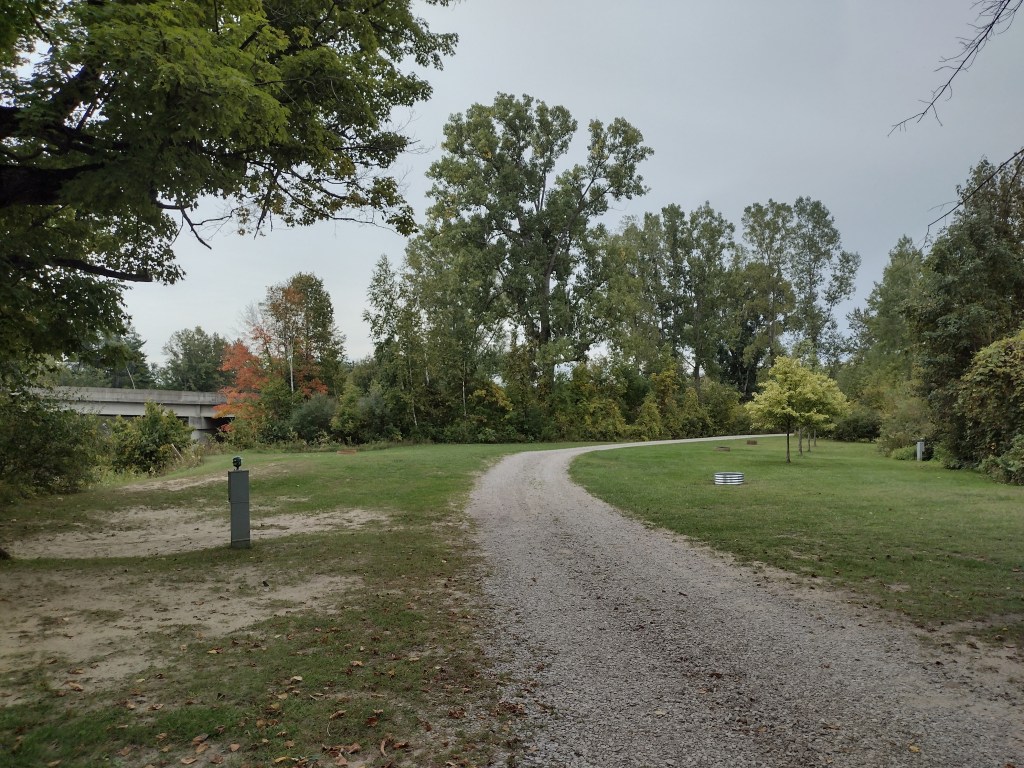
These last few weeks have been eventful, and frankly, fun. While my parents were in Ireland, I house sat for them. First, I love my parents’ house. It is comfortable and, next to my own house, is a space where I can just be myself. Housesitting for my parents during the early part of the fall means checking our Crystal Creek Campground as well. Crystal Creek is adjacent to my parents’ house. In fact, the house – my home from ages 3 to 18 – sits behind our store. It is hard to separate the two.
My favorite part of Crystal Creek Campground Photo Credit: Lindsey Russell
There is something about the empty campground, with the promise of fall in the air, that gets me every time. It is gorgeous and my favorite time of year. I can’t help but think of all the time I spent playing in the campground as a child after the campers left for the season. The land itself is forever a part of me.
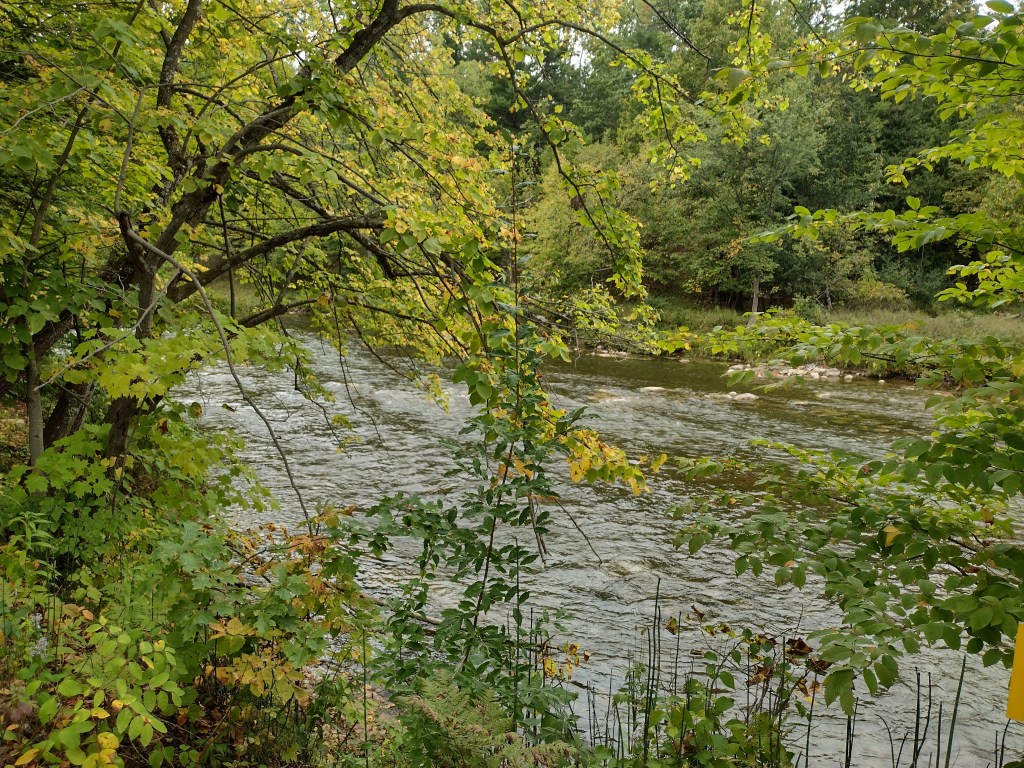
Another view of my favorite part of Crystal Creek Campground Photo Credit: Lindsey Russell
During the great shutdown of 2020, I lived with my parents. It didn’t make sense for me to live alone at a time when no one knew how long it would last. Those days were largely a challenge for a variety of reasons, but the campground helped. Even though we had no idea when would be able to open up for Summer 2020, my parents and I spent time getting the campground ready. It was something tangible we could do. Mom and I picked up sticks and garbage daily while my dad and brother took care of most of the brush. It gave me a new appreciation for the land and the river, especially after we had the 500 year flood in May 2020 and rebuilt to open in mid-June.
Crystal Creek Landing Photo Credit: Lindsey Russell
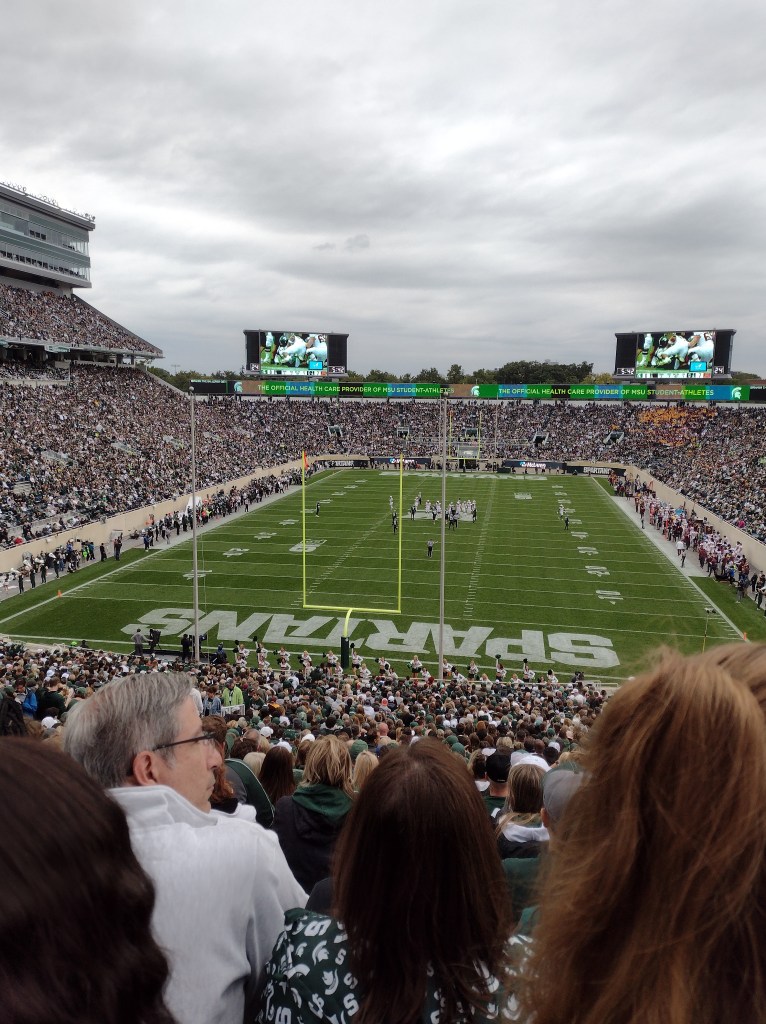
But, home is so much more than just my parents’ or my home. Last weekend, I had the opportunity to return to Michigan State’s unrivaled campus – the home of some of my best memories. My brother, sister, sister-in-law, and I made sure my nephews and niece had a great first experience at Spartan Stadium. While wonderful in many ways, unfortunately my niblings didn’t get to see the Spartans win. Still, just being on campus brought back so many memories – the kind of memories that can only be relived when you’re home.
The view from Spartan Staduium, Saturday, September 24th, 2022 Photo Credit: Lindsey Russell
Every so often there comes along a rock documentary that I can recommend to just about everyone. That is the case with The Day the Music Died, which is currently streaming on, and exclusive to, Paramount +. If you care about Don McLean’s American Pie at all, or the stories behind it, it is a must-watch. I adore everything about the song, and clearly, after watching the documentary, I am in great company.
I grew up loving the song, which is a story in and of itself. Very few songs from the time period steal from so many genres. Stop and think about it for a minute: Exactly which genre does it belong to? It isn’t exactly a folk song, it isn’t entirely a rock song, nor is it a pure pop song. American Pie is all that and more. It has been covered by country artists and even Madonna, whose version I’ve had mixed feelings about ever since she released it during the summer of 1999 (it was definitely in heavy rotation the summer before I headed to Michigan State). In the documentary, Garth Brooks discusses in depth the influence the song had on him and his career. Yet, I feel it is SO much more. It is timeless.
Several years ago now, during one of my subbing experiences in a high school Spanish class, I was instructed to show the movie La Bamba, which was, quite frankly, an unforgettable experience in all the best ways. First, if you know the movie at all, you will easily recognize why showing it to high school students required some careful editing (fastforwarding). Fortunately, that went well. What pleasantly surprised me is how much those students loved the story behind La Bamba and the music. As we had a few minutes left after the end of the movie – thanks to the inappropriate parts I had to skip – I had a moment to explain the term the day the music died and Don McLean’s song. Most students knew the song American Pie, of course, but I don’t think that most realized that it referenced an actual event. I loved watching them make the connection!
The documentary itself covers so much. It dives deep into exactly how Don McLean wrote the song and came up with the lyrics, as well as his childhood. Of course, one of the best aspects of the song and lyrics is trying to figure out all of those cryptic references – ie the king with his thorny crown, jack flash, etc. According to McLean, the only one that is truly “correct” is the double reference ”Lenin/Lennon read a book on Marx.” Yet, I am not entirely convinced. That is what makes the lyrics great. Just as with the best poetry, there are layers upon layers. Definitely a must-watch.
By the way Michiganders, watch for an interesting reference to Grand Rapids.
By mid-June, things were starting to come together at the canoe livery … but would our customers return? Boy, did they! We had a wedding at our main location in Omer towards the end of June. After the wedding, with one more weekend in June left, we became increasingly busy, experiencing volume rivaling what we normally experience mid-to-late July or even early August. True to form, we remained busy right up until the mid-August.
Normally, this would be welcomed and wouldn’t have been an issue. However, this year, thanks to COVID, we didn’t have adequate time to properly prepare. During a “normal” year, we have much of June to prepare for the crowds. Things ramp up during June until it becomes crazy from the 4th of July until mid-August. Well, we lost that time to hire and train. We had a week, maybe two, before we started to become that busy. Add in the pressure of new safety precautions, difficulty in getting merchandise, and rebuilding from the flood, and one gets a sense of why it became so stressful. I feel as though I have been running a marathon since May.
Please don’t get me wrong. I am eternally grateful that our business not only survived but grew during COVID. I refrain from saving thrive because it would not be sustainable long-term. Simply too many hours and too much work in such a short period of time. Still, it haunts me that so many small businesses didn’t survive or are in danger of closing permanently. All I could think of this spring is the decades of work the canoe livery represents – my family history and my personal history. It would not exist if not for the hard work, dedication, foresight, and planning of my parents, my grandparents, and now my brother and I, along with countless others over the years. So much in my life simply would not have been possible without the canoe livery. In it, I see my future. Whether I like it or not, the canoe livery and the Rifle River is a part of me. The very idea of it no longer existing is unimaginable.
If nothing else, I do hope that I have turned the corner and truly have a fresh start this fall. It feels that way. I could use some routine and consistency in my life – along with a healthy dose of “normal” – whatever that is now. It is time to figure out exactly what it is that I want. I know that I have returned to that theme dozens of times here over the years. Yet, I still don’t know.
Who is to say that I will be content to spend the rest of my life alone? If I met the right man – and I repeat here, the right man – I can see myself in a relationship again. Yet, I have a difficult time seeing how I would meet him. Same goes for children. I would love to be a mother. I know I would nail it. Yet just the mere thought of the foster and/or adoption processes is enough to make me want to break out in hives. I know what can go wrong all too well. Maybe it will be time to “jump” sooner rather than later. I do know that I do not want to regret what I didn’t do in my life. Until then …