Tag Archives: planning

Faster. Better. Cheaper.

Little known fact: The US military is the largest supply chain in the world.

My supply chain management education will always color the way I view things.  At times, I wish it didn’t.  In education, I like to believe that most students will find their way, eventually.  Most will find their purpose.  I feel for those who don’t, but it is a reality of life.  There are always those who remain lost, and sadly, I’ve known a few.  I can help, but I can’t be everything to everyone.

With supply chain issues, there is a solution.  There is always a solution.  We just need the resolve to follow through and make necessary changes.  We learned so many supply chain and economic lessons from the Greatest Generation and World War II, but as that generation passed away, I fear that we have lost those lessons or even ignored them completely.

Let me start at the beginning.  I am deeply proud to come from a long line of entrepreneurs.  I long idolized my dad and Grandpa Buttrick.  Both owned and ran their own companies and were self-employed, as different as their companies were and still are.  My dad developed Russell Canoe Livery around our family and our lifestyle.  He had no desire to build it beyond what it is now, even if we had the opportunity.  

Grandpa, on the other hand, loved to build.  He expanded his convenience store business into screen printing, Subway franchises, propane, hotels, and more.  He even loved to compete against himself from time to time.  As a child who loved to build, I took notice.  In having the opportunity to manage one of his convenience stores for a few years, I am grateful to have learned just why Grandpa loved the c-store business so much.  Ultimately, it helped me become a better manager at the canoe livery and a more empathetic boss.
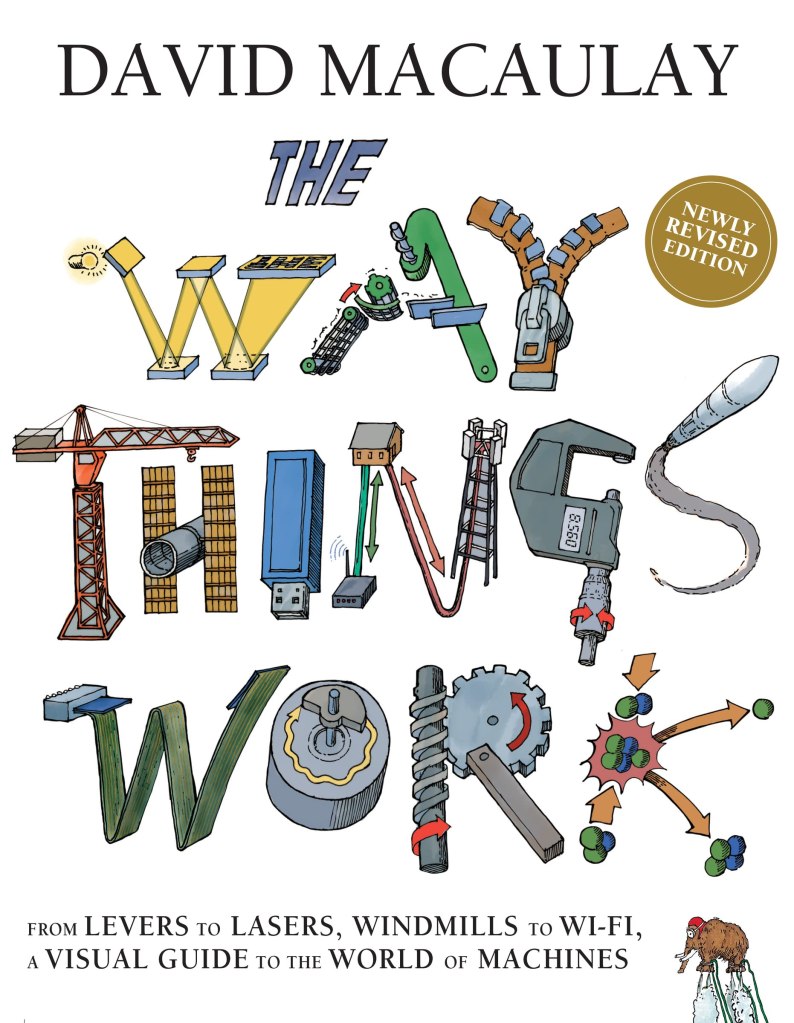
While this cover is exactly how I remember it, it must be an updated version!
No WI-Fi in the 80s and 90s!

As a child, one of the most fascinating books I owned was The Way Things Work by David Macaulay.  I wanted to know how and why things worked.  Looking back, this helps explain why I chose supply chain.  It fit the bill.  I knew I didn’t want to study management.  I wanted to know exactly how value was added, and not just become increasingly removed from day-to-day operations that actually pay the bills.  Accounting and finance never even entered the picture.  In fact, my mom and I joke that we would starve if we had to try and make a living as accountants.  I am decent at math, but I make errors far too often, and it is not my thing.

I do have two older cousins who earned supply chain degrees from Michigan State and blazed the trail, but as my older cousin Emily tried to sell me on supply chain, it made me look at the program more critically.  Instead, my experiences at the Broad Business Student Camp (BBSC) after my junior year of high school sold me on Michigan State and supply chain management.  During that week attending BBSC, I had the opportunity to explore State’s incomparable campus, everything the Eli Broad College of Business had to offer, as well as all things supply chain.  In short, I had the opportunity to preview what my life would be like as a Michigan State business student with one of my best friends.  What was not to like?  By the time my parents dropped me off at MSU in August of 1999, I had to kick them out of my dorm room as I had already connected with student groups in the business school, and I was not going to be late for the first meeting.

Now you know why I never wavered in my pursuit of my supply chain degree, in spite of the fact that, deep down, I knew that I wanted to be a teacher as well.  As for the deeper lessons that stayed with me and kept me up at night, it all started with a business history class I took during the winter of 2000, the very heights of the dot.com bubble.  In fact, the bubble burst that consumed that spring forced me to pay attention.  My history professor, in fact, predicted the fall of the stock market (the dot.com bubble) publicly almost as soon as classes started in January.  When it finally happened in March, as a 19 year old, it left a deep impression.  However, as memorable as that experience was, this is not primarily why I remember this class 25 years later.

Instead, my professor’s description and explanation of how Detroit became the “arsenal of democracy” still sends shivers down my spine.  He made the case that the United States and the Allies would not have won World War II without Detroit.  While I knew Detroit played an important part in the war, I didn’t realize just how important.  Supposedly, when Hitler received intelligence of manufacturing totals coming out of Detroit, he didn’t believe it.  Those who had gained manufacturing experience in cities like Detroit, especially Detroit, would turn their focus to the war effort.

When you think of the manufacturing capability we had during that time, the early 20th century, it makes sense. We were able to help supply Great Britain long before we officially entered the war after Pearl Harbor.  Thanks to FDR, we switched from manufacturing consumer goods to munitions.  We went from cars and refrigerators to tanks and aircraft.  This is the question that keeps me up at night:  Would we be able to do so again if faced with such a crisis?  I don’t know.

Actually, I doubt it, as the way things are now.  Born at the end of 1980, I’ve watched my entire life as Michigan lived up to its “rust belt” image.  Most of the business professionals I graduated with in 2004, me included, had to relocate to states such as Texas and California to find jobs.  When my parents graduated from college in the late 70s, there were still good manufacturing jobs to be had right out of high school, although that would soon come to an end.  I grew up hearing of plant closures, manufacturing outsourcing, and general loss of manufacturing capability in the United States.  It is all I knew. By the time I sought to start my career, little remained.  Instead, less secure positions with multinationals outsourcing much of their labor to places like China, Mexico, and India took their place, particularly in the shadow of the first dot.com bust.

By the time I interned with IBM out in Rochester, Minnesota during the summer of 2001, not only did they not have enough for their interns to do, their full-time, permanent employees didn’t either.  Instead, they were focusing on their garage bands and updating their resumes.  In 2003, as part of a tour of a GM factory in Mexico near the border, I vividly remember seeing rows upon rows upon rows of brand new Pontiac Azteks and Buick Rendezvous awaiting shipment as our chartered bus slowly approached the plant.  Looking back, it foreshadowed Pontiacs epic downfall several years later. Tragically, Pontiac would never recover from the monstrosity that was the Pontiac Aztek.

My last semester at Michigan State in 2004 brought the Eli Broad College of Business’s first Chinese Supply Chain Symposium.  Of course, it focused on all of the wonderful benefits of outsourcing manufacturing to China.  I left wondering if I was the only one asking just how long before we were outsourcing our own jobs?  Where and when would it end?  Was I the only one seeing the connection between outsourcing and both unemployment and underemployment in the United States?

Even Russell Canoe Livery has a supply chain,
one with its own set of challenges and setbacks.

I will leave you with this summary.  We desperately need to bring manufacturing back to this country.  If you think the supply chain interruptions during the COVID 19 pandemic were bad (and I followed them closely), what would happen in the case of an even worse global crisis?  Good manufacturing jobs helped finance the growth of the middle class throughout most of the 20th century, particularly after World War II.  Why can’t we get back there?  We’ve learned so much during that time, and we have the workforce, if given a chance.  I hope I live to see it.  By the way, this doesn’t mean becoming isolationist.  It is simply expanding beyond the pharmaceutical, technology, and service industries.  Supporting local farms wouldn’t hurt either!  Cheap is good, but it is not always best in the long-run.  We’ve remained far too short-sighted and complacent for far too long.
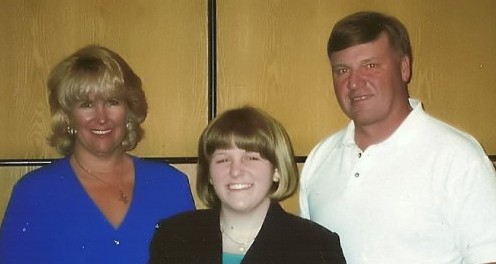
Mom, Dad, and I – Spring 2001
Tower Guard Induction – Beaumont Tower, Michigan State University

In honor of Grandma Reid, who worked as a riveter in both Hamtramck, MI and Fort Worth, TX during the World War II era, all before the age of 20.

Becoming Ms. Russell

I did not set out to become a teacher, I left that to my younger sister Erica.  As her older sister, I’ve never known her to want to be anything other than a teacher and a mother.  I envied the fact that she was so certain about her desired profession, not to mention her dedication to her love of children.  When we played school – and we did often – I ended up being the school librarian while she insisted on being the teacher.  Until our younger brother was born when I was age 10 and Erica age 7, we didn’t have a single pupil.  By the time he was two, Erica made our toddler brother a series of report cards, grading him on things like “listening” and “sitting still.”  But, this isn’t my sister’s story.  It is mine.

My story of pursuing a career as a secondary teacher is by no means conventional.  In fact, it is so unconventional and challenging that I would recommend it to no one.  If it weren’t for the facts that teaching is in my DNA and I am meant to be a teacher, I would have given up long, long ago.  Instead, I doubled-down when I was faced with what at the time seemed to be insurmountable obstacles.  I even went back to substitute teaching when needed while deciding what my next step would be.  I am a better person, and teacher, for it.

Every story needs to start somewhere, and mine starts with the statement that teaching is in my blood.  It truly is.  As a genealogist, as far as I can tell, the teaching tradition goes back at least five generations on my mom’s side of the family.  It likely goes back even further.  Both of Mom’s grandmothers taught, and one of her grandfathers served as principal of his daughters’ elementary school, as well as coach.   

Interestingly, the teaching careers of my great-grandmothers could not have been more different.  I knew both Grammy Bea (Beatrice Williams), who taught kindergarten and first grade for decades at the height of the baby boom, and Great (Leona Buttrick), who taught in a one-room schoolhouse and quit teaching once she married my great-grandfather Hatley.  Although these are stories for another time, their careers illustrate massive changes in public education.

Funnily enough, the teaching tradition isn’t exactly confined to mom’s side of the family.  Even though neither of my dad’s parents had the opportunity to further their education, they highly encouraged their children to do so.  Both did, and even though my dad and his sister didn’t necessarily see eye-to-eye on much of anything, I find it telling that they both married teachers.  On the Suszko side of Dad’s family, there are several special education and agricultural teachers.  In fact, my cousin Kristy, a woman with whom I attended school at all levels from kindergarten to college, now teaches dairy science at the university level.

As much as I did not want to admit it, I am a teacher.  It took me far too long to make peace with that fact.  Something inside me would not let it go.  As soon as I graduated from Michigan State in 2004 with degrees in supply chain management and Spanish, my entire world shifted.  It would not be made right again until I went back to school in 2013.

It all started during the Great Recession with a casual conversation with my ex’s mom Cindy.  We were invited to dinner as usual, and Cindy and I struck up a conversation.  She told me that she wished that she’d gone back to school to become a nurse.  All I could think at the time was that I did not want to be in my 50s and regret not pursuing an interest.  During the Christmas shopping season of 2008, I worked at Best Buy in   Saginaw.  As I lived in the South End of Bay City at the time, I drove by Saginaw Valley State University (SVSU) every day on my way to work.  Slowly, I started to wonder what would happen if I did decide to go back to school to become a teacher.  The idea excited me and fed my imagination. How could I make it happen?  How would I adjust?  Online classes, in their infancy back in 2004, intimidated me.

Eventually, I had the ability to make it happen in 2013.  I largely enjoyed my time at Saginaw Valley State University (SVSU), although I would advise commuter students to do their homework.  For example, if I had not followed up with my advisor, I would have stressed out about the math portion of the general MTTC exam necessary to even apply to the College of Education.  I didn’t necessarily doubt my ability to do higher-level math likely trigonometry and low-level calculus, but I had not remotely touched those subjects in well over a decade.  The thought terrified me. Much to my relief, my counselor informed me that I scored high enough on the ACT test I took in high school that I did not need to take the general MTTC at all.  I then questioned why I wasn’t informed earlier.  She simply stated that it likely stemmed from the fact that I was a commuter and a non-traditional student.  While I would highly recommend SVSU to traditional college students coming right from high school, I’m not so sure in other situations.

I enjoyed most of my classes and professors at both Delta College and SVSU, but I can’t say that I didn’t have any bad experiences.  In fact, one professor and class at SVSU stands out for all of the wrong reasons.  This particular professor taught a class that focused on diversity.  However, somehow, throughout the entire semester, he managed to offend nearly everyone in the class.  Horribly.  He supposedly hated coaches.  When I ran into a former classmate in a school setting years later, we naturally discussed this infamous class and professor.  This man, who happened to coach as well as teach, informed me that this professor tried to get him removed from the College of Education program, likely because he planned to coach.

Somehow, this professor appeared to have no issue with me or one of my good friends, even though he had long ago deeply offended us both.  As we paired up to complete our main teaching project for the course, things fell apart.  When it came time to “teach” our project, our professor respected my teaching time and even seemed pleased.  Then, he proceeded to continually interrupt my friend and teaching partner for her entire portion of the project.  He made it exceedingly difficult for her to even finish.  Already extraordinarily introverted, I have no idea how she made it through.  Disrespectful doesn’t even begin to cover it.  Unfortunately, she never did become a teacher, although she would have been wonderful.  Instead, she became a librarian.  To this day, I still believe that the world needs introverted teachers too.  There are too many people like this professor that discourage future teachers every step of the way before they even get started.

Stay tuned … There is much more to this story.

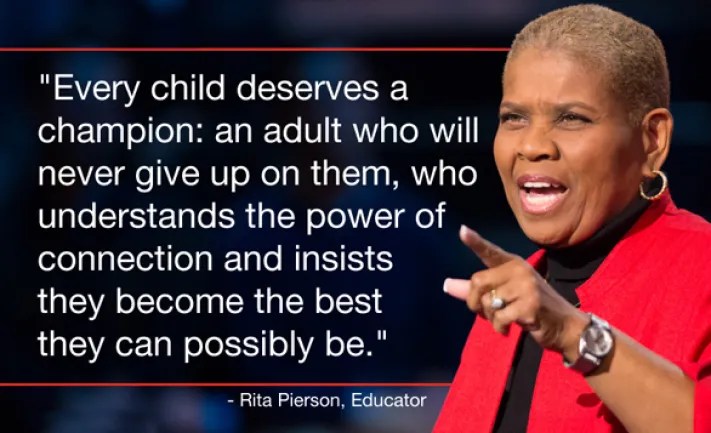
Not just my favorite TED Talk on education and teaching, my favorite TED Talk period.

Rita Pierson’s famous Ted Talk on Education – Well worth watching!

Welcome December!

Ah!  It is finally here.  I adore December.  Yes, there is my birthday and Christmas, but I love advent.  There is always so much to do in the lead-up to Christmas.  My instinct is to want to do it all, but I am so very glad when I don’t.  What really matters is spending time with all the people I love.  For me, all of the traditions and planning are half the fun!

This year, I am grateful for all I have in my life.  Is my life perfect?  No, but that said, I am far from where I once was.  I have a job I truly adore, and I didn’t give up on teaching, although it would have been so easy to do so.  I also have a man in my life I love and am deeply loved in return.  John and I both agree that we would not have done nearly as much over the past few years if not for each other.  I am grateful that I get along so well with my siblings and their families.  As frustrated as I can get with my parents at times, I am acutely aware of how lucky I am to still have them both in good health.  I could go on, but just know that I am well aware of how truly blessed I am.

As I move into 2025, I’ve been thinking about writing, blogging, podcasting, and so much more.  My issue here at Ramblings of a Misguided Blonde is not that I don’t have enough material, it is that I have too much.  I have a notebook full of ideas.  Right now, I am trying to decide which songs to write about next, which books to review and when, not to mention how to write a long piece on supply chain and its place in geopolitics, which is probably a series.  I’m not exactly sure how it fits here, but it explains so much as to who I am and what I believe.  How do I put all of this together?

I experimented with podcasting in 2020, and it remains something I am interested in. The issue is this:  How do I settle on a topic?  As far as I am concerned, the best podcasts are highly focused.  I have too many interests that would make for great podcast content.

I do know this:  I intend to write more in 2025.  I am not getting any younger.  I have more to say, not less.  It is a matter of establishing good habits.  I am happier when I write!  I am not one to get bored – at least not when I have a book to read or access to my writing materials.

So, once again, welcome December!  Happy Advent!  I hope that your holiday season is off to a great start.  2025 will be here soon enough.

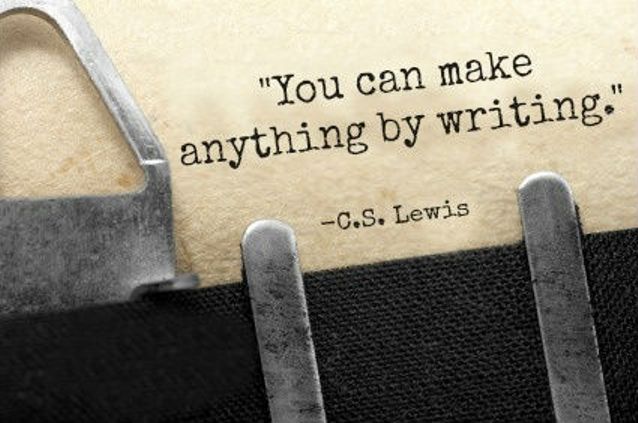
November 1st – Happy National Author’s Day!

I just found out today is National Author’s Day. How appropriate!  The creative writing club I started at school met this afternoon at the end of the school day.  There is never a dull meeting.  They are so passionate about their interests, including but not limited to writing.  I’ve watched as members have bonded over music and other media.  It is inspiring how they support one another, too.

In the online school environment, there aren’t quite as many opportunities to strike up friendships with classmates as in brick and mortar.  Personally, I think that is why school clubs are so vital in an online school environment.  Last year, my first year teaching online, I watched as students planned for weeks and even months for the in-person prom held at the Lansing Center.  Students attended from all over Michigan. The pictures, conversations, and friendships made that evening were discussed repeatedly as the school year came to a close.  I can only hope that that same can be said when I reflect on the creative writing club at the end of the school year.

In my first year as mentor and creator of the club, I sought to find the best possible resources for aspiring high school writers.  Luckily, my online classroom set aside for our new club allowed me to do just that.  It is now a place where students can collaborate, offer one another and seek encouragement, as well as find resources and inspiration.  I can only imagine if I had had such a resource in high school.  I admit, I’ve had too much fun setting things up.  So far, my entire experience with the creative writing club has underscored the importance of community as a writer.

Face it:  Writing can be lonely work.  Over the years, I’ve always enjoyed meeting other writers.  I can’t imagine where I’d be as a writer without Mid-Michigan Writers.  I’ve learned so much from other members over the years, and I would not have discovered Delta College’s general writing certificate program if I hadn’t attended MMW’s Gateway to Writing workshop with other writers who raved about the experience.  If my students take away anything from our creative writing club, I do hope that they realize the importance of community for writers.  Brainstorming works best with others!  At some point, we could all use a second opinion.  We all have to learn from someone.  I can’t imagine not having my very own community of writers and readers. Happy National Author’s Day!

Oh, and happy first day of NaNoWriMo. IYKYK.

18

I LOVE all of the items on this list! Check it out if you have a few minutes.

What is it about being 18 that makes it so special?  My best guess is that 18 represents a sweet spot.  While childhood is largely behind you at 18, you are legally an adult.  There are few things that one is not old enough to do at 18 – with the exception of legally drinking, renting a car, or reserving a hotel room.  Yet, there are plenty of youthful years left.  At the same time, high school is now behind you – or about to be.  It is time to look ahead.  Many 18 year olds have yet to figure out exactly what they want to do when it comes to a career or post-secondary education.  The possibilities are endless.

I distinctly remember 18 and being so excited to move on from high school and my hometown.  I could not get to Michigan State fast enough.  A lot of time, preparation, and hard work made my years at Michigan State a success.  My wish for all 18 year olds and all members of the class of 2024 is for them to experience that sense of wonder and endless possibility for themselves.

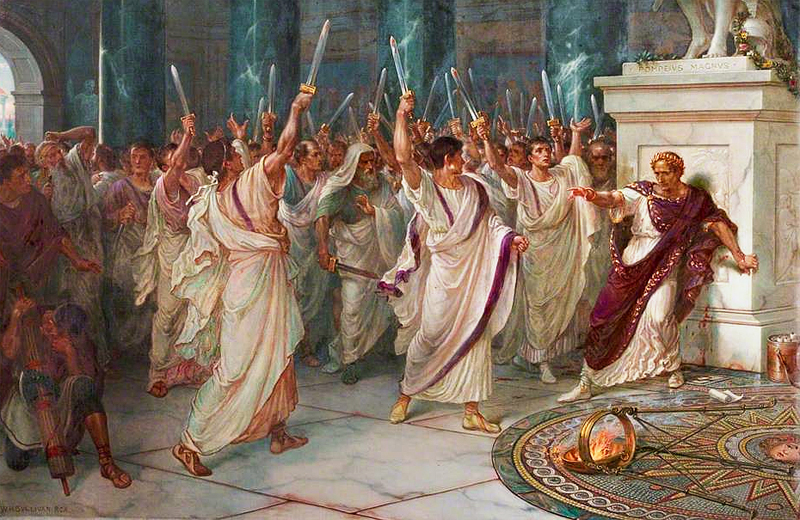
The Ides of March

The middle of March will always bring memories of long family weekends in Grayling, MI.  Every year, we would attend the annual Michigan Recreational Canoeing Association meeting.  For my parents, it meant meetings, ordering merchandise for the summer ahead, and sharing ideas with other canoe livery owners.  As a child, it meant a long weekend swimming in the hotel pool, interspersed with time in the arcade and ordering pizza at least once.  Above all, I counted it as a sure sign of spring and the long summer to come.  Throughout my childhood, I considered it the first sign of spring – right up there with the return of the robins,

I loved going to the Holidome for the weekend.  My immediate family all attended, of course, but the entire conference took on the atmosphere of a family reunion at times.  When my aunt married, she and her then husband Kevin purchased a canoe livery on the AuSable.  We spent lots of time with Aunt Amy during RCA weekends.  In fact, when Aunt Amy later helped my mom and I place orders for the upcoming summer during the pandemic – an experience I hope to never repeat – it sparked a bit of nostalgia between sisters.  As Mom and Aunt Amy said, we were the association before the association.  They reminisced about the old meetings and some of the more memorable owners.  At one point, my dad even served as president.

Other liveries on the Rifle attended too.  One of my dad’s best friends at the time, Phil, owned Cedar Springs.  His wife and daughter, both named Connie, attended as well.  Both were family favorites.  Phil’s daughter taught with my mom for years, while his wife watched us while we were in the pool from time to time.  Every time we passed Cedar Springs on our annual overnight canoe trips with our dad, my sister Erica and I were treated to ice cream cones as we headed home on the river.

The White family attended as well.  White’s Canoe Livery happened to be the first canoe livery on the Rifle.  In fact, there would be no Russell Canoe Livery without White’s.  My grandfather got the idea from Don White and then started Russell Rent-a-Canoe out of what is now my home.  It all started in 1959 with a Ford pickup and a six haul of canoes.  To this day, the only person I know who knows the Rifle River as well as my dad is Ladd White, Don’s son and current owner.  I hate to think of the knowledge that will be lost when my dad and Ladd are no longer around.

Canoeing near the park in Omer ~ early 20th century.  The site of the former Omer park is just downriver from our main location in Omer.

For some reason, I seem to remember that there would be a March canoe trip as part of the meetings.  At one point, it may have been referred to as the Ides of March trip.  As a child, that fascinated me.  I could not understand why anyone would want to canoe in the winter.  In my child’s mind, canoeing and tubing meant one thing and one thing only:  swimming.  What was the point of canoeing if you couldn’t get wet?  That happened to be my biggest gripe about March.  March supposedly brings spring, and yet, it would be months before I could swim the river again.  It didn’t seem fair.

The Rifle River and Russell Canoe Livery will always be a part of me.  My first home happened to be near our main location in Omer.  One day, hopefully decades in the future, it will also be my last.  March is when it all starts to spring to life once again.  Reservations start rolling in, plans are made, and merchandise is ordered.  I love it all, especially our customers.  Here is to a wonderful summer 2024!

Not The End, The Beginning – Part 3

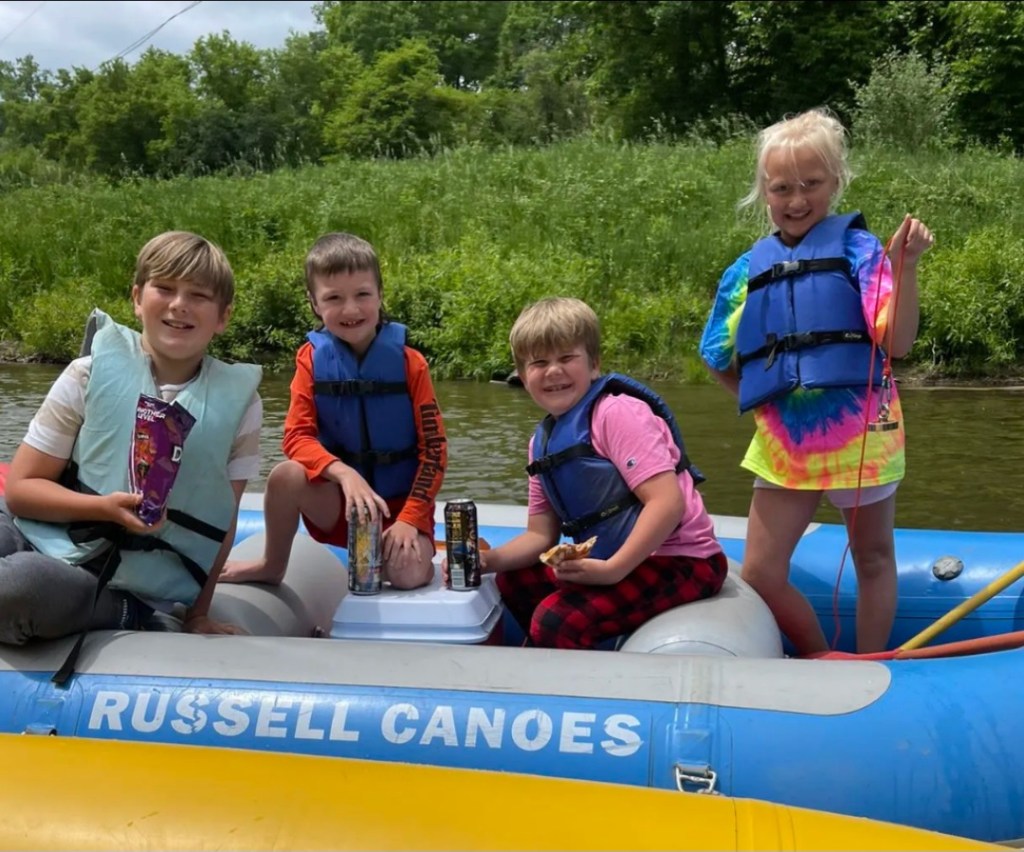
Cousin fun on the Rifle River, Omer, Michigan.June 2023

Part 1

Part 2

This year will mark my 12th year back working at Russell Canoe Livery.  Each year, I love it even more and appreciate what my parents and grandparents built.  Without the canoe livery, pursuing my teaching career, and student teaching in particular, would not have been possible.  None of it would have been an option.  Only when I returned to the family business in 2013 did I fully understand just how much my mom contributed to the canoe livery.  After retiring from teaching in 2010, Mom became more involved in the business.  Only in 2013 did I begin to take over some of her responsibilities.  I had to reconsider what I wanted and the narrative I had created for myself.

Growing up, I always looked up to my dad and Grandpa Buttrick.  Both businessmen, I saw how both had created a life for themselves using family businesses.  In Dad’s case, the seasonal nature of the canoe livery allowed him to pursue other interests and provide us with a great quality of life.  As his sidekick, I grew up watching Dad making decisions about the business.  Prior to building the Crystal Creek shower house in 1992, I went with him to check out similar showerhouses.  One of my earliest memories is going with Dad in his truck to unclog the artesian well across the road in Crystal Creek Campground.  I used to argue with him when Erica and I would catch the bus from our house behind Crystal Creek to our main location in Omer.  He, of course, wanted us to ride in his bus.  Knowing that he wouldn’t let me bounce around in the back of the bus, I wanted to ride with anyone else.  Dad often won.

Grandpa Buttrick, on other hand, moved his young family from Marshall, Michigan to Standish, Michigan to take over his grandfather’s business:  Forward Corporation.  On our yearly trip to the Upper Peninsula with my Buttrick grandparents and cousins, we always had to stop in Gaylord to check on his convenience stores.  He loved the business, and due to a unique set of circumstances, I managed one of his convenience stores for a few years.  Through that experience, I learned just why he loved that business so much.  If I hadn’t moved back to Michigan in 2005, I would not have had the opportunity to get to know Grandpa Buttrick so well before he passed away in 2007.  Like teaching, business runs deep in my blood.

Late 90s at Russell Canoe Livery.
Hard at work!

When I graduated in 1999, I attended Michigan State University to pursue a business degree in supply chain management.  I quickly decided to pursue a Spanish degree too.  I couldn’t give it up.  Both of my older cousins earned degrees in supply chain management from MSU as well.  I knew the program, and frankly, the subject still fascinates me.  Even though I didn’t end up with a long career in supply chain, those experiences during my years at MSU made a deep impression on me and still shape how I view the world.

The processes of working so closely with my parents on all things relating to the canoe livery and establishing my teaching career gave me a whole new appreciation for my mom.  I will never understand how she taught kindergarten for 15 years.  Two half-days substitute teaching in kindergarten were more than enough for me.

As time went on, I slowly realized that the canoe livery would not have been nearly as successful without Mom and Grandma Reid.  Dad may have had the vision and made it happen, but it would not have been possible without great customer service provided by us all.  I may have grown up wanting to follow in Dad and Grandpa Buttrick’s footsteps, but I followed in my mom’s instead.  I just faced a different set of circumstances.

Not The End, The Beginning – Part 2

Not The End, The Beginning – Part 1

When I went back to school in January 2014, just over 10 years ago, I admit, the idea of being an older student intimidated me, especially online courses.  When I graduated from Michigan State University (MSU) in 2004, online courses were not nearly as developed as they are now.  Due to a combination of landing a full-time position in Houston, Texas within a week of graduation, moving across the country, my stubbornness, and adjusting to working in corporate America full-time, my first experience with online classes did not go well.  That early negative experience stayed with me.  Fortunately, I adapted.

During the academic year, I planned to attend class and work on coursework two to three days a week while substitute teaching as much as possible.  To add insult to injury, I didn’t just take classes at Saginaw Valley State University (SVSU).  No, I decided to enroll at Delta College too.
There were two reasons why I enrolled at Delta.  First, realistically, I could save money when compared to SVSU.  Second, I decided to complete a writing certificate while working towards my teaching certificate.  In the end, I had a wonderful experience at Delta College.  My history and writing classes, all taken at Delta, are among my most treasured.

My decision to complete the general writing program at Delta College stemmed from my involvement with Mid-Michigan Writers.  I attended their Gateway to Writing workshop in the fall of 2013.  That day, I happened to hear a group of Jeff Vande Zande’s students talking about how much they enjoyed his class and the wonderful writing program at Delta.  Vande Zande, who happened to be the keynote speaker that day, taught a screenwriting class at the time.  A few years later, his screenwriting class changed the way I look at movies forever.

At SVSU, I had to decide which secondary endorsements I planned to pursue.  In addition to Spanish, I had to choose between social studies and English.  Social studies won.  In 2019, I started a new position as a middle school teacher at St. Michael School and began taking classes to earn my English endorsement.  As with so many things in my life, I didn’t want to have to decide between two great options, so I didn’t.  I did both.  In spite of a pandemic, scheduling conflicts, and other considerations, I finally completed my English endorsement in May 2023.

In the end, I resigned my position in order to finally complete my English endorsement.  As incredible as it seems, SVSU, even in the aftermath of a global pandemic, offered no online or evening options for the two classes I still needed.  It wasn’t the only reason I left St. Mike’s, but I knew if I didn’t, I’d never be able to finish.  It ended up being for the best.

Sadly, that summer, approximately a month after I resigned, the assistant principal at St. Mike’s – and so, so much more – passed away.  It is safe to say that my life would be very different without Norma Vallad.  I certainly would not have landed at St. Mike’s without her involvement.  So much of our school culture revolved around her down to every last detail.  I still can’t imagine St. Mike’s without her.  Fortunately, I didn’t have to face that prospect in the fall.

By the time I finished my English endorsement last May, I felt such a deep sense of closure.  After all these years, no more educational pursuits to chase – unless, of course, someone would like to pay for a masters degree or PhD.  As far as I am concerned, I have nothing left to prove.

Teaching left me conflicted.  On one hand, I had come way too far to give up on teaching.  Yet, my first full year of teaching coincided with the Covid 19 pandemic.  I saw first hand how the pandemic affected teachers, students, parents, administrators, and everyone else.  The apathy I saw and experienced still haunts me.  As I reconsidered my role and future in education, little did I know that the best was yet to come.

Stay tuned for Part 3 …

Reading Inspiration for Writers – Part 2

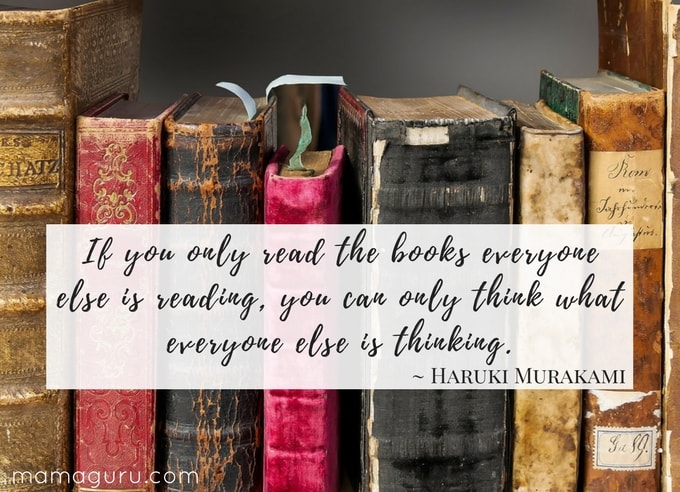
As with so many writers, I fell in love with reading first.  Over the years, I have found my reading life crucial to my continuing education as a writer.  The best writing advice I’ve ever received is to read as widely as possible.  The best part:  Most of the tips, resources, and suggestions I am sharing here are little to no cost.  One crucial requirement:  a library card.

The following is a continuation of the list I started in Part 1.  You can find it below.

Reading Inspiration for Writers – Part 1

Join Book Clubs

I currently belong to three book clubs, and all three serve different roles in my reading life.  First, as a writer, I would encourage you to join a book club similar to Mid Michigan Writers’ own Scribblers and Scholars.  We meet every-other month to discuss books from the point of view of writers.  Lately, we’ve been working on comparing Educated by Tara Westover to The Glass Castle by Jeanette Walls.  Scribblers and Scholars aims to provide writers with a book club focused on dissecting the craft of writing, although we tend to discuss just about anything related to the books.

I’ve also belonged to the Standish-Sterling Book Club for years.  It is the first formal book club I’ve joined, and while we certainly discuss the books we picked, there is an in-person social aspect to the club that I love.  In fact, two of my former teachers also belong to the club, both of whom have had a profound impact on who I am today.  We meet monthly, and there is truly no judgment if you don’t quite finish a book that is less than thrilling or if you can’t make a meeting.

Last but not least, I’ve also joined the Spartan Book Club, which resides entirely online, as an alumni of Michigan State University.  In fact, it has its own forum and much more.  Books are selected quarterly, and once again, members are free to participate as much or as little as you’d like.  I’ve met some wonderful people online and have thoroughly enjoyed the book selections.  I’ve also used the Spartan Book Club for reading suggestions, as there are also several wonderful books mentioned not chosen as a book club selection.

I mention all of my book club experiences because they demonstrate that there is one out there for every type of reader.  As a writer, all of my book club experiences led me to books I would not have picked up otherwise.  I am a better writer for it, and it provides yet another outlet in which to discuss books.  Think about what you would like out of a book club, and with a little research, you will find it.


Embrace eBooks

If you haven’t discovered the benefits of ebooks yet, here are a few things I’ve noticed as a writer.  First, I tend to be a collector.  I intentionally collect certain books, hopefully to be read more than once.  While there is nothing quite like the smell of a good book, collecting hundreds of ebooks takes up a lot less space in my home.  Second, with Kindle, my preferred ereader and type of ebook, I can have my entire ebook library not only on my phone, but on my Chromebook and Kindle Paperwhite as well.  Last but not least, I have a hard time highlighting or writing in traditional books.  Ebooks allow me to highlight and make notes to my heart’s content without marking up a traditional book.  My notes and highlights are waiting for me when I return.

Ebooks tend to be more cost effective as well.  Often, the Kindle version is less expensive than either paperback or hardcover.  While the prices of Kindle books are rising in some cases, there are also several websites and offers for free or low-cost Kindle books.  BookBub is one of the best.  I actually had to quit because I found too many great free books.  It became overwhelming.  Of course, libraries are increasing their access to ebooks as well.  The beauty of ebooks from the library is that, not only is there no cost, you don’t need to physically visit the library or remember to return the book either.

Research and Read Book Reviews

There are countless places to find good book reviews and research book suggestions.  Goodreads has everything and provides access to all kinds of reviews.  Personally, I enjoy book blogs.  My favorite is Modern Mrs. Darcy.  She has it all:  endless book lists, audiobook recommendations, her own book club, a podcast, and so much more.  If you are into the reading life, you need to check it out.  It might take some research, but once again, there are book blogs and review sites aimed at every type of reader.  It is a matter of finding your niche.

Take a Class

I admit, pursuing my English Language Arts (ELA) endorsement in secondary education (grades 6-12) forced me to branch out as a reader.  I’ve learned so much from my formal writing and literature courses.  Yet, it isn’t necessary to spend hundreds or even thousands of dollars on tuition to take a literature class.

Two trusted, established sites I’ve used in the past are Coursera and Canvas.  While I haven’t taken writing or literature courses specifically on either site, I do know that they are readily available at little or no cost.  Other courses I’ve taken on those sites, mainly on educational technology, have been wonderful.  On the clearinghouse site ClassCentral, a quick search under literature resulted in free survey courses offered by the likes of Harvard and the University of Pennsylvania on a wide variety of subjects relating to all aspects of literature.  You can find my search result here.  There is also The Great Courses Video BingePass available on Hoopla that allows patrons access to the The Great Courses Video Collection for free for a week.  The possibilities are endless.
Curate Your Own Lists of Books/Literature

Of course, there is always the DIY approach.  Take the time to make your own lists of books and other forms of literature that interest you.  I’ve made several of these lists over the years, and it helps me keep track of things that I came across years ago.  I’ve found creating lists of authors and major works to be helpful.  Make the list you are seeking if it doesn’t quite exist yet – and have fun.

Reading Inspiration for Writers – Part 1

As with so many writers, I fell in love with reading first.  Over the years, I have found my reading life crucial to my continuing education as a writer.  The best writing advice I’ve ever received is to read as widely as possible.  The best part:  Most of the tips, resources, and suggestions I am sharing here are little to no cost.  One crucial requirement:  a library card.

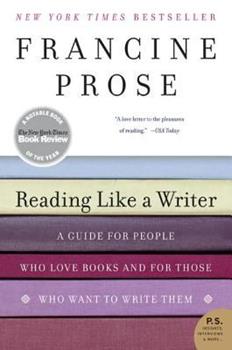
Read Reading Like A Writer by Francine Prose

I read Reading Like A Writer well over a decade ago, but it is one of those books that never left me.  I can’t recommend it enough for any writer.  Prose makes the case for reading widely and for looking carefully at the literature you love most.  Ask yourself:  Why do I love this particular author?  Why do I keep coming back to this particular genre, series, or author?  What techniques is the author employing to keep readers interested?

There are endless opportunities to learn the craft of writing by reading if we know what questions to ask.  Bonus:  The reading list Prose includes for writers is wonderful.

Make Use of Your Local Library and Get to Know Your Local Librarians

A library card is a no brainer.  These days, I tend to use mine to discover and borrow audiobooks via the service Hoopla, as well as borrow ebooks for my Kindle.  Yes, I still checkout traditional books from time to time.  The advantage to ebooks, including Kindle books, and anything from Hoopla is the simple fact that it isn’t necessary to visit the library at all.  It is easy to borrow them online.  Once they are due to be “returned,” the borrower simply no longer has access to the book.  If not quite finished, readers may be able to renew online, depending on the popularity of the book.

Over the years, librarians have been extremely helpful.  As an English teacher during the COVID 19 pandemic, I was fortunate to have local dedicated librarians who were willing to Zoom with my English classes in order to teach students how to borrow books digitally.  Once restrictions were lifted, those same librarians helped me prepare a “book tasting” for my classes in an effort to help students figure out what genres they might enjoy.  As a patron, if you ask, a librarian will nearly always be able to at least point you in the right direction.  They, indeed, should run the world.

As a writer, if you find yourself in a rut in your reading life, there is no better place to seek inspiration than the library.  I’ve been known to take pictures of the covers of books I find interesting in order to add them to my to-be-read pile later.  At times, just the creative grouping or display of books at the library is enough to spark ideas.  If nothing else, pick up a copy of the magazine BookPage to find out what’s new.

Utilize Audiobooks to Energize and Expand Your Reading Life

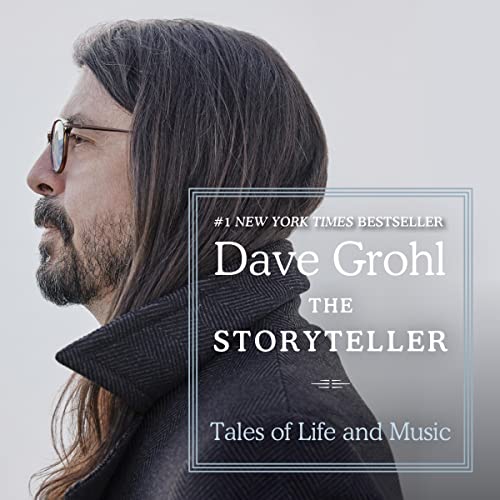
Sometimes, a book is just better via audiobook.  I admit, I was skeptical.  It felt like cheating.  Frankly, the book Confessions of a Prairie Bitch by Alison Arngrim changed all that.  As a fan of both The LIttle House on the Prairie book series and TV show, I knew that I didn’t want to miss Nellie Oleson herself reading her memoir.  I was not disappointed.  Currently, I am listening to The Storyteller by Dave Grohl.  It is another example of the audiobook format being well worth it.  Right now, with audiobooks, I am focusing on memoirs read by their authors.  It seems a natural fit.

Personally, between work and school, I drive quite a bit.  As much as I love listening to the radio and music, audiobooks are a great way to make the most of my time in the car.  It gives me more time to devote to books, which is always a good thing.

Catalog – and Share – Your Reading Life

Before there was Goodreads, there was LibraryThing.  While I have used other benefits of LibraryThing over the years (I am a lifetime member), it offers a way to easily catalog your collection of books or simply track your reading.  Similar to Goodreads, LibraryThing also connects communities of readers.

Sadly, I don’t use either website to track my reading as I am trying to come up with a good system that I will continue to use.  However, both Goodreads and LibraryThing are both excellent ways to find new titles, connect with other readers, read book reviews, and so much more.

Personally, one of my favorite annual features of LibraryThing is SantaThing during the Christmas season.  After choosing a participation level between $20-$50, someone else in the LibraryThing community is tasked with finding books for you to enjoy within that dollar amount.  As a participant, you get to pick for others.  Fortunately, there is a form to fill out that helps avoid duplicates, detail favorite genres/authors, and more.  It is fun to both pick out books for someone you don’t know and see what others have selected for you.  I have participated for several years at this point, and I have yet to be disappointed.  I view it as an annual birthday/Christmas present to myself.  It is yet another way in which I’ve come across wonderful books I would have never picked up otherwise.

Sharing books is equally important.  Frankly, I can’t imagine my reading life without having opportunities to share what I’ve read with others.  I’m fortunate to have grown up in a family that shared and discussed books.  Today, I share book reviews on my blog, Ramblings of a Misguided Blonde, and I still share my favorites with family and friends.  Beware, I tend to review books I love.  I rarely write a negative book review as I can think of only one exception.

Stay tuned for Part 2!