Tag Archives: writing

Politically Incorrect

overshare

Is There Such A Thing As Oversharing? – Blog Her

This.  All of this!  I could have easily written this blog post.  Fortunately, this past year in particular, I’ve tried to be more discrete when it comes to what I share online.  There is always – and I do mean always – so much more I would love to say.  In fact, it ended up biting me in the butt once or twice.  The funny thing is that in one case, one side of my family thought I was referring to them when in reality, it happened to be about something else entirely.  In the other case, the blog post in question was over five years old.  Five years!  It is the only blog post I’ve ever taken down.  I took it down more for personal reasons than any other concern.  It was definitely a case where I wrote out of raw emotion more than anything else.  The bottom line is this:  Aside from close family and friends, I really don’t care what people think about me.  Life is too short.

I’m struggling with this issue again.  February is Turner syndrome awareness month.  As a result, I want to write about my personal experiences with Turner syndrome.  Whether I acknowledge it or not, it has a profound impact on who I am.  The piece will be shared via a Facebook Page for a non-profit organization called A Walk for Ferrial.  I have so much to say, and not everyone will want to hear it.  In the past, I’ve actually left Facebook groups designed for women and girls with Turner syndrome due to conflicting issues.  How do I manage not to be misunderstood?  I’ll have to tread lightly, but if just one girl or young woman with Turner syndrome comes across my writing and recognizes that she is not alone, that there is someone else out there who has had to deal with the exact same issues, it will have all been worth it.  I am fed up with political correctness and not discussing issues that need to be discussed.

My Life in Books – Back to Square One

read-writer

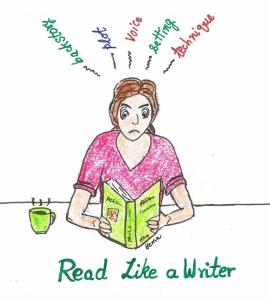
As part of my original blog, I religiously kept a log of books I read.  When I began keeping track, my reading life took off, particularly after I read Reading Like a Writer by Francine Pose.  I finally recognized that what I read is just as important as what I write if I am ever to be a successful writer.  It is still true.  Unfortunately, as I became so focused on my classes, I simply didn’t read quite as much.  Fortunately, I still read to keep up with book club and a few of my writing courses.

Even though I did keep reading over the last couple of years, I do feel as though I’m starting over as an intentional reader.  I used to plan my reading.  There was a method, although I wouldn’t be able to fully describe it.  I wish I had kept better track of what I read over these last few years, although I may attempt to recreate the list (thanks to my book club lists and an old syllabus or two).  It will be interesting to see how well I succeed.

There is another component to all of this though relating to my theme of “home.”  I have a fairly large personal library that needs to be cataloged and organized.  I need to somehow manage working my way through my personal library, both traditional books and e-books, with discovering new authors and titles.  So many books, so little time.

books

Middle Grades Versus Young Adult Fiction

LIW Quote 2

The topic of young adult literature fascinates me.   As part of her MOOCs discussing the life and work of Laura Ingalls Wilder, Pamela Smith Hill, an author herself, explores the development of the YA genre, as well as the ever-shifting boundary between middle grade and young adult literature.  As a writer who intends to eventually write in both genres and as a future middle school/high school teacher, her explanations of both genres left me wanting to learn more.  It also left me feeling as though there are no hard and fast rules.  Pamela Smith Hill credits authors such as Mark Twain, Louisa May Alcott, and Laura Ingalls Wilder with creating the young adult genre, even though the modern classification didn’t formally come into use until the 1950s.

Until I watched this series of videos, I never thought of the Little House series as divided into middle grades and young adult fiction.  I classified it all as middle grades, even though I reread the entire series, including The First Four Years, as an adult.  However, throughout her series of videos, Pamela Smith Hill makes a compelling case for considering On the Shores of Silver Lake, The Long Winter, Little Town on the Prairie, and These Happy Golden Years among the first young adult novels.  While I always knew that The First Four Years could not rightly be considered a part of the Little House series, I now have a much better understanding as to why.

According to Pamela Smith Hill, the book was Wilder’s attempt to write for an adult audience.  Indeed, it does deal with adult themes such as marriage, choosing a vocation, and economic hardship.  Interestingly, the book only came to the attention of Rose Wilder Lane, Wilder’s only child and literary heir, upon her mother’s death.  There are several theories as to why, but what I find interesting as a reader is that The First Four Years just feels different.  There is a different tone, and in many ways, it is sparse where other novels in the series are not.  As a writer, I understand why it was not published in Wilder’s lifetime, even though it is a good book.  It simply did not fit her literary legacy.

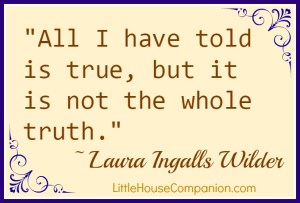
All of this leads me to a few conclusions.  First, it is possible to allow a series of books to grow with the reader.  As a child, this is what left me disappointed with mystery series.  The main characters never seemed to grow.  This is also why the Anne of Green Gables series and the Little House books remain among my childhood favorites.  Second, rules in publishing can be broken.  What it is important is to tell the truth, even if it isn’t the whole truth.  Dealing with difficult issues honestly is particularly important in YA literature.  Laura Ingalls Wilder did this well, even if she did fictionalize some aspects of her story to conceal identities or to simply make a better story.  Finally, it is important to control one’s literary legacy, even if only during one’s lifetime.  As a child of the ‘80s, I am completely conflicted when it comes to the Little House on the Prairie TV series.  I loved it as a child.  As an adult, I question the liberties taken with the source material, among many other things.  That leads to an overarching question:  How much control can a writer exert over his or writing from the grave?  If nothing else, it is an interesting topic.

Refining My Creative Process

art love

Cultivating the Creative Process – Ellen Vrana

If you happen to be a writer, you are missing out if you are not reading Ellen Vrana’s blog.  It is simply beautiful, and yet relatable.  In other words, it makes me want to run off to London.  In this particular post, she addresses an issue that I’ve thought about quite a bit lately:  How place affects the creative process.  After Christmas, I had the pleasure of meeting up with one of my local writer friends for lunch.  Our conversation made me realize that I am in a place where I need to seek out new places to write.  One’s surroundings affect the writing process, and I need to do something new.

As a student, I seemed to naturally seek out places to study that both feed my creativity and allow me to focus on the tasks at hand.  As an undergrad at Michigan State, I absolutely had the best of both worlds.  When I needed creativity and wanted to dream, I could head over to the women’s resource room in the MSU Union.  It is simply a large, beautiful room set aside for women to study in silence.  Occupying one corner of the Union building, its windows overlook the approach to Beaumont Tower and some of the most beautiful parts of MSU’s gorgeous campus.  Best of all, if I needed a change, the energy of the rest of the building was just outside the door, the type of energy that can only be found on a bustling college campus.  If I needed to concentrate on simply getting a project completed, there was always the business library.  No distracting beautiful views, just a quiet cubicle that allowed me to shut out the rest of the world while I worked, without all of the social aspects of MSU’s main library.

Today, as I finish up my second experience as an undergraduate student, I find myself doing the same thing.  There are places on both SVSU and Delta College’s campuses, their libraries, where I know I can go when I need to concentrate wholeheartedly on the task at hand.  What is lacking is a writing space where I can feed off of the energy.  This is precisely why I would feel right at home living near a college or university.  Instead, I live in the smallest city in Michigan.  There are no true coffee shops where I could spend an afternoon just watching people and maybe write a word or two.  There are no places to really just spend time alone in public.  In my quest to find such a space, I’ve tried two small local libraries.  Unfortunately, they are too quiet for my taste, and they are not particularly comfortable.  If I want that much silence, I might as well be comfortable at home.

As I spend this year concentrating on the very idea of home, developing my own creative writing process is just as much part of my concept of home as my bedroom.  If I am ever going to succeed as a writer, I need to explore my creative process and how physical space affects it.  Given that I live in such a rural area, I may have to get creative.  Without internet access, such a task would become much more difficult.  Fortunately, I also draw a lot of my inspiration from music as well.  I would be lost without my playlists.

What Ellen does so well in her blog post is explain the difference between inspiration as a writer and the actual physical task of writing.  Maybe it is because of our shared heritage (her father and my mother are first cousins), but I can imagine her writing process working well for me too.  I can relate to drawing inspiration from experiences in the city and writing in the country.  This is why I renewed my passport this summer even though I have no plans to travel at the moment.  Much of my inspiration has always been drawn from the very idea of travel, of being able to reinvent oneself and start over.  The idea of having my passport handy is enough.  Throughout all of my study abroad experiences at Michigan State, I wanted desperately to capture it all in writing.  Unfortunately, it didn’t work out as I planned, although there were a few exceptions during my time in Spain.  Quite simply, there was too much to take in, too much going on to capture it well.  Now that I have the desire, time, and space to write, the inspiration isn’t as immediate.  Hopefully I’ll be able to find what works for me in 2016. untold story


You Are What You Share

365day1

What You Share Is Who You Are Online – BlogHer

Every so often I come across a pile of meaningful content all at once.  That happened this morning.  While visiting BlogHer this morning in order to locate the article above, I came across several other posts that all apply to me – where I am in life, my writing, etc.  I will be sharing them, along with my thoughts and ideas, this weekend.  Now on to the post that started it all …

In What You Share Is Who You Are Online – BlogHer, Gaby Dalkin discusses the idea of creating your own brand on your blog.  This is largely why I felt compelled to redo my entire blog.  I had too much scattered content and too many projects started but never finished.  I needed to rally around a concept, an idea, or two – not 20.  I may not have found my focus quite yet, but I am working on it.

What attracted me to this post is the idea that the blog posts you share and/or discuss on your blog ultimately becomes a part of your brand.  I couldn’t agree more.  When I first decided to restart my blog, I was unsure as to whether or not I wanted to share as many outside blogposts as I have in the past.  Well, I think I will.  I just want to make sure that I actually take the time to write about those blogposts and fully explain why I am sharing them instead of using them as filler.  I have a feeling that I will be sharing several BlogHer posts in the months and years to come.

One thing that I hope I can revive with my blog is the sense of community I created with my old one.  It took some time, but I came across several likeminded bloggers who supported my endeavors.  I hope it is not too late to reestablish those relationships.  If these past few weeks have taught me anything, it is that I missed blogging.  I like reflecting on things happening in my life, articles and blogposts I come across online, and how I’ve grown over the years, even if few people read it.  I understand why I stopped when I did, but I hope to make it a permanent habit, not something I just do occasionally.  I sincerely hope that I do eventually find my voice and my audience.  I do have a lot to offer to the point where I get overwhelmed as to where to begin.

Creative Non-Fiction: Real Life, Only Better

CNF

This past semester, I spent the last three weeks of my creative writing class studying creative non-fiction.  I looked forward to this part of the course from the beginning.  Even though I didn’t necessarily know the term per se prior to my class, the idea and technique long fascinated me.  It is one of many reasons why I am so intrigued with Laura Ingalls Wilder’s work.  As an adult, I learned that many scenes and even characters in the Little House on the Prairie series were compiled from various people and events from Wilder’s childhood.  For example, Nellie Oleson is actually a compilation of three of Laura Ingalls Wilder’s classmates.  Combining traits to create a more threatening character and condensing the chronology of events just makes for a better story.  This is largely what we do with the stories we tell ourselves anyway.

LIW 2LIW 3

I view creative non-fiction as simply getting those stories, the stories we tell ourselves about our past and our world, in writing.  Both of my parents are wonderful storytellers and have this process down, but they rarely commit their stories to writing.  Without adding fictional elements, a straight non-fiction approach to family and personal stories would not have the same impact.  It is an art to get it just right.  The true story cannot be lost in the fiction; at the same time, there are people, places, and events that may need to be stressed or rearranged to make a compelling story.

One of the most surprising ideas that came out of three weeks of studying creative non-fiction is the sheer variety of writing that can fall under the creative non-fiction umbrella.  It can include works addressing personal memories; essays on people, places, and ideas that inspire or fascinate the writer; or exploration of a real event through creative writing.  That is just the beginning.  A writer can take a real event from his or her personal history and explore it through the eyes of someone else.  I’ve also taken a piece of fiction I wrote earlier and expanded on it, explaining what really happened and what inspired the story in the first place.

I now have a home – a label as a writer.  I could never fully say that I write fiction or non-fiction.  Neither label fit.  I now have a name for what I’ve long known:  In order to write about real life well, writing must contain all or most of the elements of fiction.  It is as simple and as complicated as that.  I am ready to explore it all.

LIW 1

Creating A Daily Writing Routine

I am finally at a point with my writing where I need to establish a daily writing routine and invest in some software to keep everything organized and running smoothly.  Over the last few years, I’ve heard so many wonderful things about Scrivener that I am finally going to take the plunge.  I plan to use it to organize most of my writing intended for future publication.  I have several pieces already that could easily stand alone or become an integral part of much larger projects.  Unfortunately, much of my work is scattered all over my computer.  It is time to organize it all.  It is my hope that Scrivener will help me do just that.

In my quest to make writing a part of my daily routine, I am also testing Freedom.to, which is a program that will block social media or any internet access for a designated period of time.  It is designed to help writers concentrate on writing itself.  We’ll see just how helpful it will be.  While my first instinct is to say it is silly there is a need for an application that will temporarily disable internet access, I also recognize just how distracting social media – Facebook in particular – can be.  There is a time and place to use social media as a writer.  I’m hoping that Freedom.to can help me firmly establish those boundaries.

The final piece of software I plan to use in my attempt to organize my writing and create a routine is RedNotebook.  It is a simple journal interface that includes several templates for various types of journals.  I originally downloaded the program thinking I would use it as an electronic personal journal.  It can be used as so much more.  I can see how useful it may be in tracking my writing efforts and simply entering ideas.  The possibilities are endless.  I admit:  When I first viewed the program, I was a bit disappointed.  It is fairly plain.  However, it has so many features and is customizable.  You can truly create what you would like in an electronic journal.

What my routine will ultimately look like may take some time.  The best part is that thanks to several creative writing courses I’ve completed over the last few semesters, I have hundreds of writing ideas waiting for me.  If I finally run out, I have even more writing prompts.  No more excuses!

I also thought I would include a couple of lists of highly rated writing software and resources.

Literature and Latte – Links for Writers

This is an extensive list of resources for writers.  It is divided into several different categories, including by operating system.  Check out Literature and Latte for Scrivener as well.

Best Free Software for Writing – 10 Programs to Unleash Your Creativity (Techradar.com)

This list includes 10 free programs for writers.  Check here before you decide to pay for writing software.  Often the free alternative is just as good as the expensive option (and sometimes even better).

The 10 Best Creative Writing Programs for 2016

If you are looking for paid creative writing software beyond Scrivener, this list is your best bet.  It provides the consumer with details comparing and contrasting different aspects of a creative writing software package.  Know before you buy.

Happy writing in 2016!

hemingway quote


What’s Next?

no one

Even though I didn’t get as much time as I would like to write this fall, I did grow as a writer and I did learn.  The creative writing course I took this fall left me with a notebook full of writing material.  The entire process brought back so many memories – bad and good.  It also made me take a fresh look at old memories, particularly memories related to some of the best times of my life, my life in Austin.  My quest now is to get into the writing habit, which is one of the main reasons why I decided to blog again.

There were so many days, particularly in September and October, when all I wanted to do is spend the day writing, exploring all of the writing prompts I completed in class.  The more I wrote, the more ideas came flooding in.  The problem became getting them all down on paper in time, before they vanished.  Throughout the semester, we spent five weeks on poetry, five weeks on fiction, and three weeks on creative non-fiction.  Our final project involved compiling a portfolio of pieces from each genre.  As I decided to complete an honors project as well, I took a short story I struggled with for quite some time and decided to write the backstory, what really happened.  The rest of the story, along with a little tweaking of the fiction, came together to create something unique.  I am also happy with some of the poetry I created.  Until this past semester, I never really felt as though I understood poetry.  At least now I get the basics.

The big question now is:  Where do I want to go next?  The next obvious step is to create a daily writing routine.  It may be difficult, but there is no mystery there.  I know what needs to be done.  The real question is what do I want to write:  Fiction, non-fiction, creative non-fiction, screenplay, or something else?  I am torn between working on pieces of a long-term project I have had in the back of my mind for years and working on shorter pieces to send out for potential publication.  Do I focus on my blog or do I polish several pieces that have potential for great short stories?  I also took a screenwriting class this past semester.  As a result, I have the first twenty pages of a script I love.  Do I take the time to finish it?  If I finish it, what then?  Then there are all the memories I associate with particular songs.  Thanks to my experience writing for an online magazine called JamsBio several years ago, I still want to write a series of short pieces discussing some of my favorite songs and the memories I associate with them.  Where does that fit in?  Should it be a series here on my blog or should it stand alone, whether in its own blog or another format?  There are so many questions at the moment.  I need to take some time over the next couple of weeks to come up with a plan.

I am grateful.  There are so many worse issues than too many options.  I call the shots.  I make the decisions.  It is both a blessing and a curse.  It is simply a question of how I choose to spend my time and talents.  We will see what 2016 brings.

Starting Over

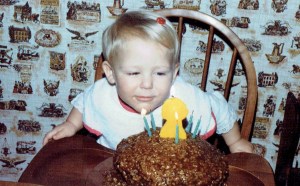
German Chocolate Cake!

German Chocolate Cake!

Today is my 35th birthday.  Over the past several weeks I’ve worked on creating a new blog in the hopes of restarting it today:  December 18th.  Birthdays and holidays have a way of making me reflect on how my life has changed.  When I first moved back to my hometown at the beginning of November 2012, I simply knew that my life needed to change.  I didn’t yet realize how profoundly it would change so quickly.

Over the last few years, blogging took a backseat to dealing with the reality of creating a new life for myself.  After we almost lost my grandma during the winter of 2013, she ended up in a skilled nursing facility nearby.  Unfortunately, she needed much more care than I could give her at that point.  For the first time since 2004, I found myself once again living on my own.

In retrospect, my relationship with Brian should have ended when I moved from Bay City to Omer – or even several years earlier.  Yet, I don’t think either of us were quite ready then.  To this day, we are both too stubborn to admit defeat easily.  In May 2014, we finally faced the inevitable.  While I won’t go into details, it ended in such a way that it was impossible for me to remain friends with him.  I am still working on forgiveness.  The worst part of it all is that I continue to miss his family.  I love his family.  In May it will be two years, and I have yet to date again.  As much as I wish it would at times, a relationship spanning ten years doesn’t just disappear.  You don’t just get that time back.

In 2014, just prior to breaking up with Brian, I lost my Grandma B.  As much as I miss her and love her, I know that she is in a much better place and hopefully with the love of her life, Grandpa.  Out of all of my wonderful grandparents, just my Grandma R. is left.  I still visit her several times a week at the skilled nursing facility where she lives.  It is never easy when in the back of your mind, you still carry around the vision of how things used to be and you are faced with the reality of eventually losing one of the most important people in your life.

One of the biggest changes in my life has to do with my career.  At the end of 2013, at age 33, I made the decision to go back to school to earn my teaching certificate.  Once I complete the program in December 2016, I will be certified to teach middle school and/or high school Spanish and social studies.  The opportunity to go back to school continues to mean the world to me.  In addition to earning my teaching certificate, I decided to earn my writing certificate at a local community college as well.  I just completed my last writing class, and I’ve never enjoyed classes more.

At the end of 2012, my parents decided that they were open to the possibility of my brother and me purchasing their seasonal business, Russell Canoe Livery.  I am happy to say that I’ve spent the last three summers working at the canoe livery and reacquainting myself with a business I’ve loved for as long as I can remember.  It has now reclaimed its rightful place in my life.  I wouldn’t have it any other way.

Looking ahead, 2016 holds so much promise.  In May, my brother and his girlfriend are expecting their second child, a boy who will be name after my grandfathers.  My Dad is finally going to retire and make things official.  After all of these years, I will become a business owner.  Fall 2016 will bring student teaching and an end to my second college career.  I can finally see the end in sight!  It is time that I start to focus on creating the family that I’ve wanted since I was a child.  If that means that I have to adopt as a single woman, so be it.  There is so much that needs to be done before I become a mom.  I’m just glad that nothing is standing in my way after all of these years.

So, what can you expect here?  I’m not quite sure yet, although I doubt most of my new posts will be as personal as this one.  I also plan to focus more on actual writing instead of discussing other websites and blogs, although I may highlight them from time to time.

Merry Christmas and Happy New Year!

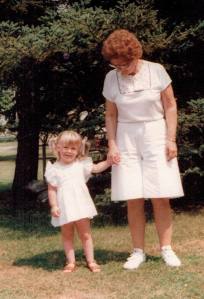
Me and Grandma