I do not want to turn this into a political discussion, but world events over the last several weeks have only served to underscore how we are watching history unfold daily at this point. First, Venezuela. A young Venezuelan business student became one of the first students I met in the Eli Broad College of Business at Michigan State. In fact, I may have met her at the Broad Business Student Camp I attended the summer before my senior year of high school. Sadly, after all of these decades, I cannot remember her name. Prior to meeting her, I didn’t know or realize that in the late 1990s, Venezuela had one of the most developed economies in all of Latin America. All thanks to oil, of course. I do remember that she was about to graduate and head home. As Venezuela fell under Chavez’s dictatorship and became a Communist country, I often thought of her and the Venezuelan people. What happened to the future she planned during her time at Michigan State?
After Maduro’s downfall a few weeks ago, I can’t help but continue to watch Facebook Reels and Tiktoks of the Venezuelan people celebrating and praying for a bright future for Venezuela. So many left years ago. So many families separated for decades. I can’t begin to understand what they have been through the last 25 years. I pray that it will soon come to an end.
And now, Iran. To put things into perspective, Iran has been under the control of Ayatollah Khomeini since before I was born. Even though the hostages were taken nearly a year before I was born, they were still in the news when I finally arrived. It would take another month for them to finally be freed. Most people don’t realize what Iran was like before it became a brutal theocracy oppressing all until its control, especially women. Research it for yourself. It is eye-opening. Some seem to forget this, but A Handmaid’s Tale is partly inspired by the oppression of women in Iran (much more to come on that topic at a later date). Prior to the revolution, women were not segregated from men in public. They were not in theory or legally property of their husbands or nearest male relatives. There were no requirements to wear a hijab or simply fade into the background of society. Women fully participated in society.
Over the last couple of days, I’ve been watching Reels and TikToks, impassioned pleas from Iranian-Americans, extremely grateful for the fall of Kholmeini. The descriptions of what their relatives have endured in recent history, particularly over the last few months, is heart wrenching. I’ve watched an Iranian-American woman describe how their mom group chats here in the US detail the logistics of school and sporting events, while their sister mothers in Iran debate the risk and daily terror of sending their children to school at all. Another woman described how she wished her grandmother was alive to see this. In 1980, her grandmother was jailed, raped, and tortured by the regime, all for being an artist. I never dreamed that I would see the day when Iranian-Americans would take to the streets of Los Angeles to celebrate the fall of the Iranian government. Think about that and what a powerful statement that is.
I will never understand how people can condemn these actions. Do they not see the decades of suffering? Do they not see the oppression? Do they not see how governments such as Iran destabilize everything? If you don’t believe me, take a look at how much support the US has from other countries in the Middle East. This isn’t Vietnam. This isn’t Iraq.
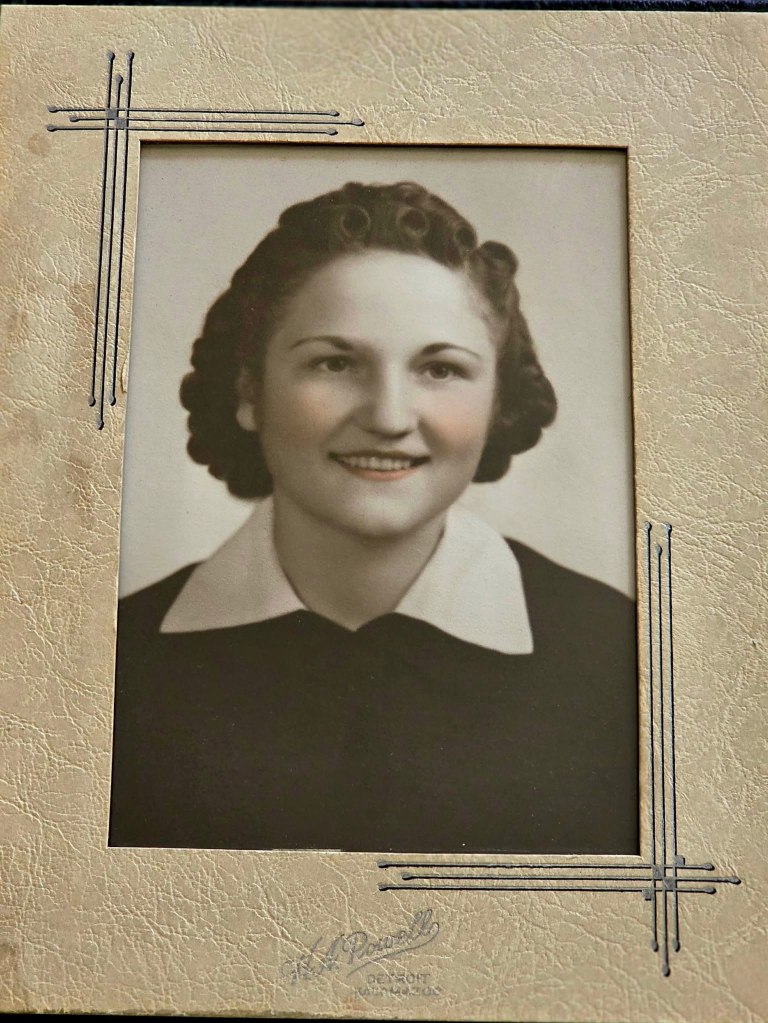
Julia Suszko’s senior portait. She graduated from Sterling High School in 1942.
(Originally Written February 20, 2026)
In all honesty, most of my favorite possessions aren’t worth much on the surface. I value sentimentality, nostalgia, and family connections. One of my prized possessions is actually a framed copy of Grandma Reid’s senior picture. More than anything, as someone interested in genealogy, I love the story behind it.
Let me set the stage: First, Grandma and I were always close. I’m not exactly sure why; we just were. We were always going somewhere. She took my siblings, cousins, friends, and I on all sorts of adventures, and I’ve always cherished those times. I am so grateful that she was such a huge part of my childhood, and quite frankly, along with my parents, one of my first teachers.
Coincidentally, one of my dad’s first cousins, Lugene, became obsessed with genealogy. In fact, it rubbed off on me. Thanks to Lugene, I know so much about the Suszko side of my dad’s family, Grandma Reid’s family of origin. Whenever I had a genealogical question, I called Lugene. We even served on the board for the Huron Shores Genealogy Society together for several years.
I’m not exactly sure when it happened, but once Grandma’s older sister Kay (Polenz) passed away, Lugene obtained a pristine copy of Grandma’s senior portrait. It looks brand new, even though it dates to 1941 or 1942. It even has a 1940s, artdeco-esque frame. Well, Lugene felt that I should be its rightful owner. She gave me that framed portrait, which I cherish. It now sits in my curio cabinet with a vintage methods textbook and figurine of a small girl bundled up for winter waiting at a school bus stop, both given to me by my sister Erica, a fellow teacher. It is fitting considering my grandmother’s love of school; even in her last days, her school stories remained. I like to think that she’d love the fact that I now teach virtually from her home.
Sadly, Lugene passed away in September 2016, while Grandma Reid passed away in January of 2017. They were two of my absolute favorite people, and now I own one simple item that will always hold memories of them both.
I can thank the Stranger Things effect and my niece Ellie Mae’s love of Belinda Carlisle’s Heaven is a Place on Earth (1987) for rediscovering this gem. The day after watching the controversial ending to Stranger Things as a family out in my dad’s man cave on New Year’s Eve, I let Ellie give me a manicure using her new gel nail set. As she did my nails, I had her tell me about the 80s/Stranger Things-inspired songs she liked. Tiffany’s versions of I Think We’re Alone Now (1987) and Belinda Carlisle’s Heaven is a Place on Earth (1987) topped her list. I couldn’t help but see so much of myself in her at that age that I made a list of similar 80s songs for her to check out if she’d like. She’d discovered the girly pop music I’d grown up with: Madonna, Whitney Houston, Paula Abdoul, Janet Jackson, the Bangles, Wilson Phillips, and of course, the GoGos and Belinda Carlisle. All topped the charts and made up a huge part of the soundtrack of my childhood. Embarrassingly, I can probably still remember every word to Paula Abdoul’s Coldhearted Snake (1988) and Janet Jackson’s Escapade (1989) over 35 years later if asked.
The fun part is that I have a sneaking suspicion that Ellie loves music just as much as I do. A few years ago now, her mom caught the cutest video clip of Ellie cleaning her room singing her heart out to Katy Perry’s Roar (2013). It could have been me at age 8 or 9. The realization that kids today have all music at their finger tips is both terrifying and incredible for someone who grew up transitioning from records, tapes, CDs, MP3s, and finally, streaming services.
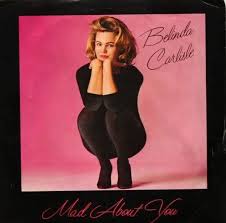
If it hadn’t been for that discussion of Belinda Carlisle with my niece, who knows when I would have rediscovered Mad About You (1986), along with the video. In fact, there are a few things I need to mention about the video. First, I do not remember it at all. Yet, it has quickly become one of my favorites from the 80s. It is right up there with Material Girl (1984) – Madonna. Mad About You (1986) has the same 80s does 50s Hollywood glamor vibe, but, if I am honest, there is just something I love about that video. I can see why it became a hit, and I am left wondering just how much coverage it had on MTV. I do hope that younger generations discover and appreciate the iconic music videos of the 80s-00s. I do hope that they live on. Happy Valentine’s Day!
One of the absolute highlights of the chaos that was 2025 happened to be seeing Ghost in Grand Rapids in July. The only live performance I’ve ever seen that even came close to Tobias Forge and company was Ringo Starr and his All-Star Band. I left Van Andel Arena in absolute awe. I would gladly go see Ghost again.
The funny thing is that when John and I bought tickets early in 2025, I really only knew their song Little Miss Sunshine. I wanted to check out something new. By the time John and I drove all over northern Michigan on our way to the concert (another story altogether), I’d become a full-fledged fan and knew half of their setlist. Even that didn’t prepare me for what I was about to experience. Tobias Forge’s stage presence is on an entirely different level.
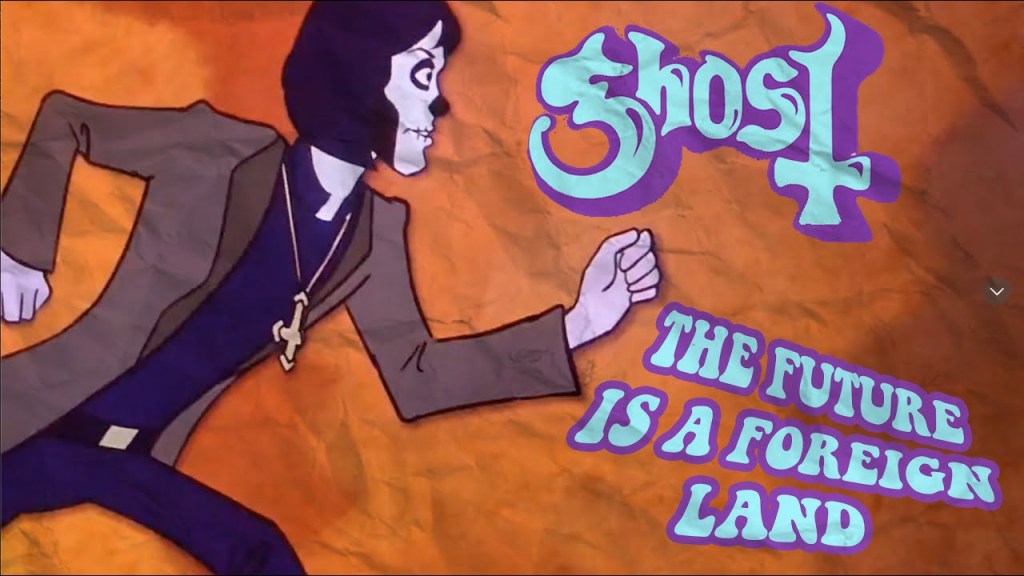
Somewhere along the line, I couldn’t get the Ghost song The Future is a Foreign Land out of my head. I blame my love of storytelling. Add in a solid literary reference (Orwell’s 1984) mixed with historical references (brownshirts, Kennedys, etc.), how could I resist? Then there is the video. In my opinion, the animation is perfect. The 60s/70s eve of destruction vibe works well. Their animated videos tend to be among my favorites. The Future is a Foreign Land, however, almost manages to romanticize the end of it all, and asks us all to become better people for it.
After the concert, I asked myself why The Future is a Foreign Land looms so large in my imagination. Then I thought about what it means Gen X, or in my case, Xennial. In the world we were born into, it has always been one minute to midnight. The threat of nuclear war is a constant that’s never going away. As a generation, we seem to have a fatalist streak, and it is no coincidence that my peers’ children grew up on series like The Hunger Games and Divergent. In fact, The Future is a Foreign Land can be added to a dystopian playlist, which could include:
Eve of Destruction – Barry McQuire (1965)
99 Luftballons – Nena (1983) (I prefer the German language version)
It Is the End of the World as We Know It (And I Feel Fine) – R.E.M (1987)
We Didn’t Start the Fire– Billy Joel (1989)
Zombie – The Cranberries (1994) (or Rock Orchestra)
If you grew up on 80s rock and/or metal, you need to check out Ghost if you haven’t already. Definite 80s vibes in the best possible way.
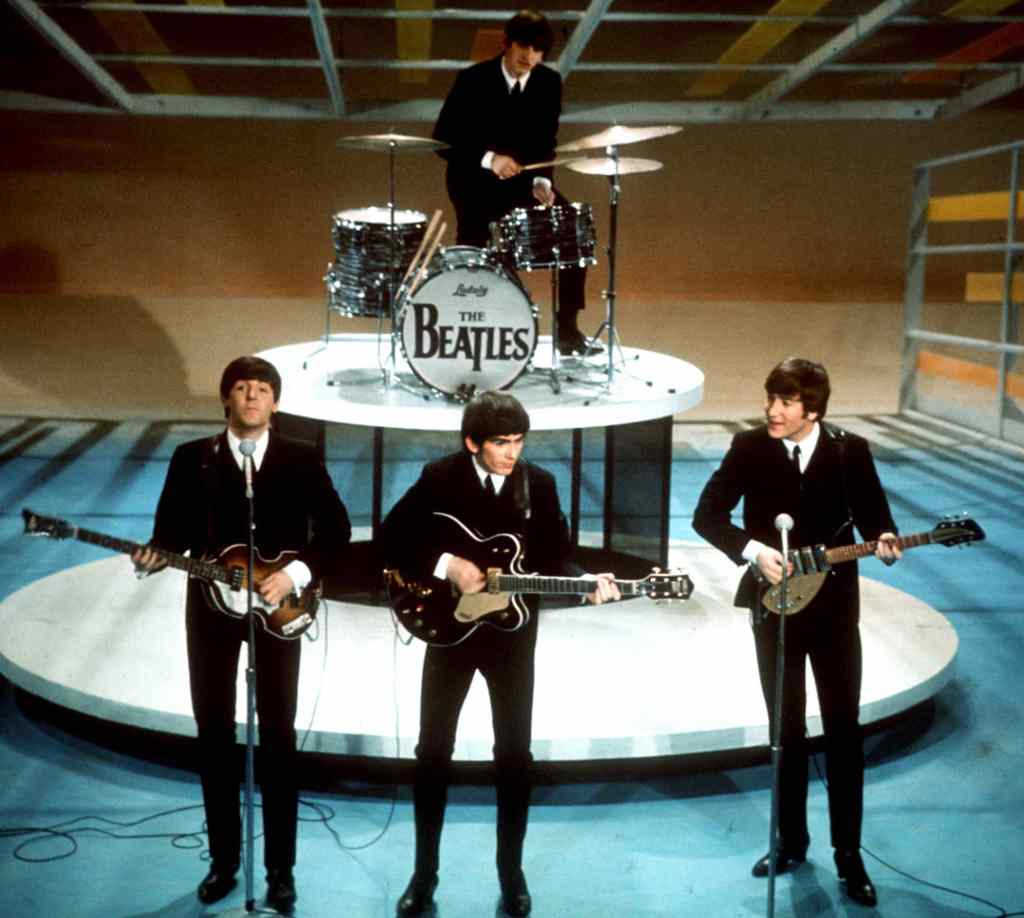
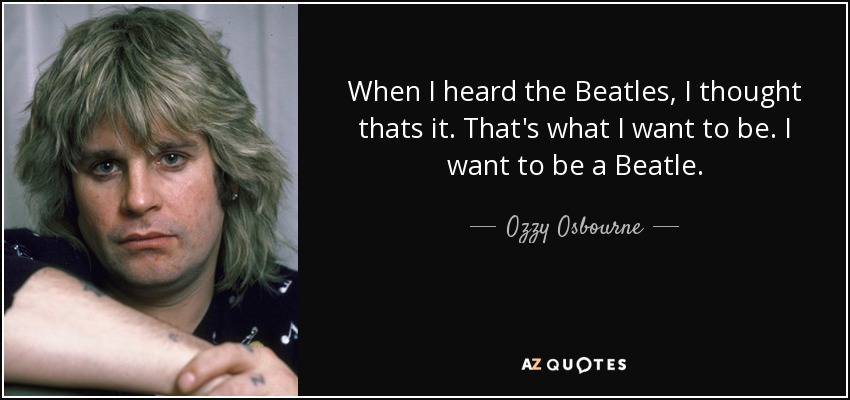
February 9th, 1964, 62 years ago today, the Beatles first appeared on “The Ed Sullivan Show” kicking off what later became known as the British invasion. Over the years, I’ve heard so many musicians state that their dream of becoming a rock star began that cold February night. Ozzy stands out. I believe it, too. I’ve heard it described as everything going from black and white to technicolor. So I thought today would be it. Today I’ll discuss my favorite Beatles song of all time.
For decades, I could not tell you which Beatles song was my favorite. There are several Beatles songs that remind me of my childhood and my mom. All of The Beatles (better known as The White Album) reminds me of my semester bumming around Spain. Then there were the Anthologies during my high school years with new music! Real Love and Free as a Bird definitely fit in the ‘90s with the likes of Oasis and Blur. In fact, I once read a comment that stated Oasis’s entire career could be summed up by Revolver. Adoring Oasis before the egos took over, I can’t unsee that comment or disagree with it. Let’s face it: Most of the music I adore would simply not exist without the Beatles’ example. This is especially true of 90’s alternative, although 90’s artists seemed to take themselves just a bit too seriously. Regardless, the Beatles will always remain a revelation and inspiration.
So why A Day in the Life? Well, first, it is the final track on my favorite Beatles album: Sgt. Pepper’s Lonely Hearts Club Band. I consider it my favorite Beatles album for one reason and one reason only: Every time I listen to it, I have to listen to every. single. track. No skipping. I know of no other album, Beatles or otherwise, that is that good beginning to end. Of course, it is considered the first concept album, too.
Also, A Day in the Life is a perfect example of why I love the Beatles music so much. First, it tells a story. One can get lost in the lyrics and the story. Second, it is pure Lennon/McCartney magic. Not too hard, not too sweet – just right! It is really two songs in one with a memorable bridge in between. There are plenty of examples of Beatles songs structured like this, but it is the Wings songs that come to mind. Some of my favorites, Band on the Run, Live and Let Die, and Uncle Albert/Admiral Halsey, just to name a few. What’s not to love? So, let’s take a minute today to appreciate all the amazing music we’ve enjoyed over the last several decades.
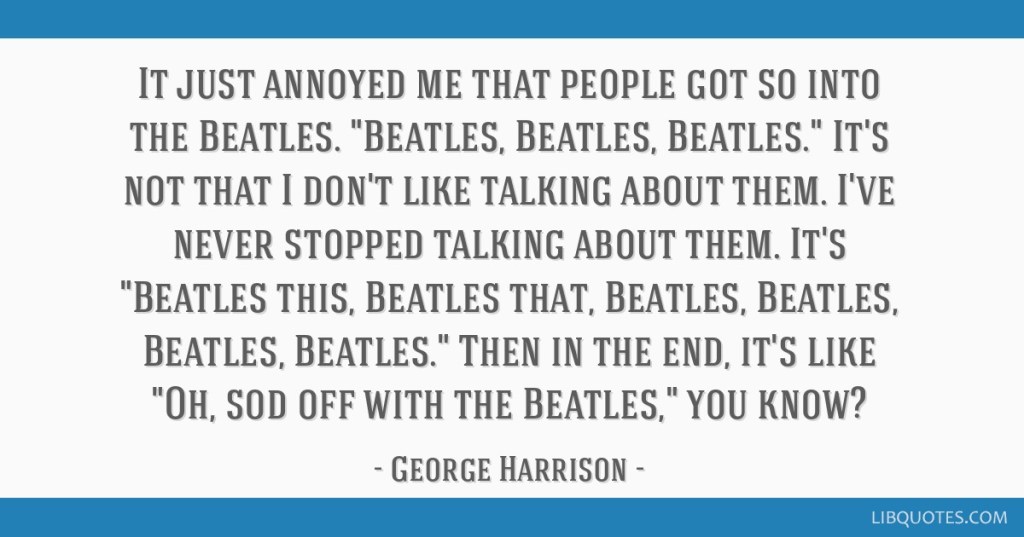
Ladies and gentleman, quite possibly the best Beatles quote by a Beatle.
Little known fact: The US military is the largest supply chain in the world.
My supply chain management education will always color the way I view things. At times, I wish it didn’t. In education, I like to believe that most students will find their way, eventually. Most will find their purpose. I feel for those who don’t, but it is a reality of life. There are always those who remain lost, and sadly, I’ve known a few. I can help, but I can’t be everything to everyone.
With supply chain issues, there is a solution. There is always a solution. We just need the resolve to follow through and make necessary changes. We learned so many supply chain and economic lessons from the Greatest Generation and World War II, but as that generation passed away, I fear that we have lost those lessons or even ignored them completely.
Let me start at the beginning. I am deeply proud to come from a long line of entrepreneurs. I long idolized my dad and Grandpa Buttrick. Both owned and ran their own companies and were self-employed, as different as their companies were and still are. My dad developed Russell Canoe Livery around our family and our lifestyle. He had no desire to build it beyond what it is now, even if we had the opportunity.
Grandpa, on the other hand, loved to build. He expanded his convenience store business into screen printing, Subway franchises, propane, hotels, and more. He even loved to compete against himself from time to time. As a child who loved to build, I took notice. In having the opportunity to manage one of his convenience stores for a few years, I am grateful to have learned just why Grandpa loved the c-store business so much. Ultimately, it helped me become a better manager at the canoe livery and a more empathetic boss.
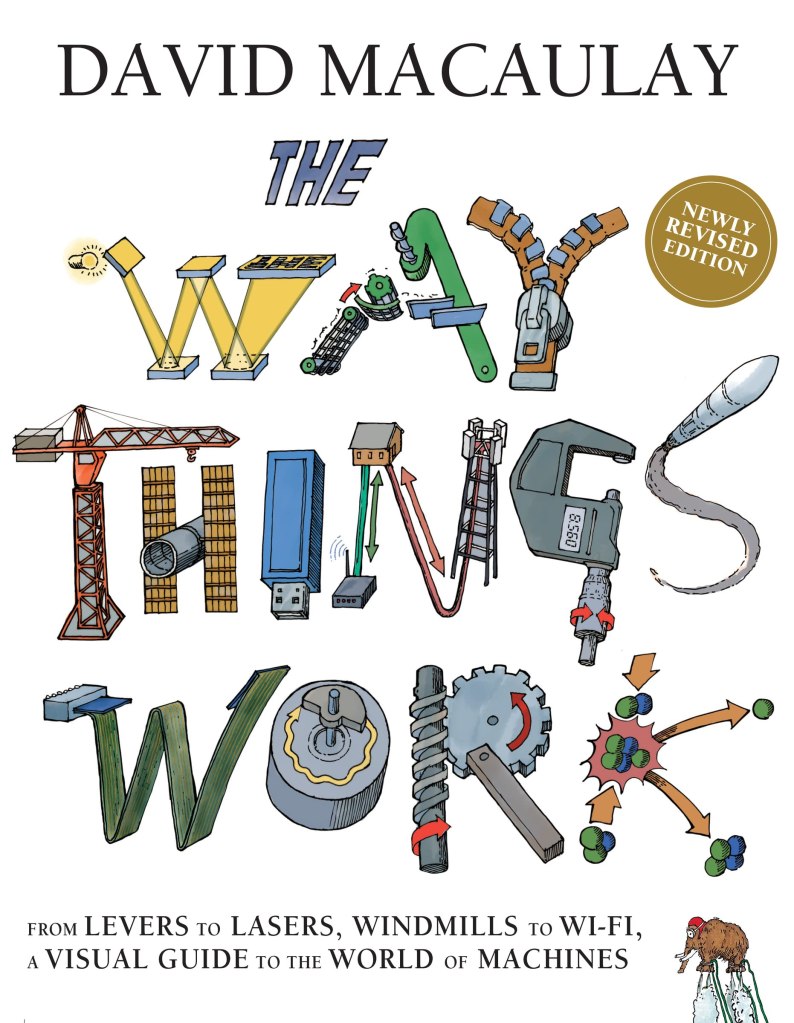
While this cover is exactly how I remember it, it must be an updated version! No WI-Fi in the 80s and 90s!
As a child, one of the most fascinating books I owned was The Way Things Work by David Macaulay. I wanted to know how and why things worked. Looking back, this helps explain why I chose supply chain. It fit the bill. I knew I didn’t want to study management. I wanted to know exactly how value was added, and not just become increasingly removed from day-to-day operations that actually pay the bills. Accounting and finance never even entered the picture. In fact, my mom and I joke that we would starve if we had to try and make a living as accountants. I am decent at math, but I make errors far too often, and it is not my thing.
I do have two older cousins who earned supply chain degrees from Michigan State and blazed the trail, but as my older cousin Emily tried to sell me on supply chain, it made me look at the program more critically. Instead, my experiences at the Broad Business Student Camp (BBSC) after my junior year of high school sold me on Michigan State and supply chain management. During that week attending BBSC, I had the opportunity to explore State’s incomparable campus, everything the Eli Broad College of Business had to offer, as well as all things supply chain. In short, I had the opportunity to preview what my life would be like as a Michigan State business student with one of my best friends. What was not to like? By the time my parents dropped me off at MSU in August of 1999, I had to kick them out of my dorm room as I had already connected with student groups in the business school, and I was not going to be late for the first meeting.
Now you know why I never wavered in my pursuit of my supply chain degree, in spite of the fact that, deep down, I knew that I wanted to be a teacher as well. As for the deeper lessons that stayed with me and kept me up at night, it all started with a business history class I took during the winter of 2000, the very heights of the dot.com bubble. In fact, the bubble burst that consumed that spring forced me to pay attention. My history professor, in fact, predicted the fall of the stock market (the dot.com bubble) publicly almost as soon as classes started in January. When it finally happened in March, as a 19 year old, it left a deep impression. However, as memorable as that experience was, this is not primarily why I remember this class 25 years later.
Instead, my professor’s description and explanation of how Detroit became the “arsenal of democracy” still sends shivers down my spine. He made the case that the United States and the Allies would not have won World War II without Detroit. While I knew Detroit played an important part in the war, I didn’t realize just how important. Supposedly, when Hitler received intelligence of manufacturing totals coming out of Detroit, he didn’t believe it. Those who had gained manufacturing experience in cities like Detroit, especially Detroit, would turn their focus to the war effort.
When you think of the manufacturing capability we had during that time, the early 20th century, it makes sense. We were able to help supply Great Britain long before we officially entered the war after Pearl Harbor. Thanks to FDR, we switched from manufacturing consumer goods to munitions. We went from cars and refrigerators to tanks and aircraft. This is the question that keeps me up at night: Would we be able to do so again if faced with such a crisis? I don’t know.
Actually, I doubt it, as the way things are now. Born at the end of 1980, I’ve watched my entire life as Michigan lived up to its “rust belt” image. Most of the business professionals I graduated with in 2004, me included, had to relocate to states such as Texas and California to find jobs. When my parents graduated from college in the late 70s, there were still good manufacturing jobs to be had right out of high school, although that would soon come to an end. I grew up hearing of plant closures, manufacturing outsourcing, and general loss of manufacturing capability in the United States. It is all I knew. By the time I sought to start my career, little remained. Instead, less secure positions with multinationals outsourcing much of their labor to places like China, Mexico, and India took their place, particularly in the shadow of the first dot.com bust.
By the time I interned with IBM out in Rochester, Minnesota during the summer of 2001, not only did they not have enough for their interns to do, their full-time, permanent employees didn’t either. Instead, they were focusing on their garage bands and updating their resumes. In 2003, as part of a tour of a GM factory in Mexico near the border, I vividly remember seeing rows upon rows upon rows of brand new Pontiac Azteks and Buick Rendezvous awaiting shipment as our chartered bus slowly approached the plant. Looking back, it foreshadowed Pontiacs epic downfall several years later. Tragically, Pontiac would never recover from the monstrosity that was the Pontiac Aztek.
My last semester at Michigan State in 2004 brought the Eli Broad College of Business’s first Chinese Supply Chain Symposium. Of course, it focused on all of the wonderful benefits of outsourcing manufacturing to China. I left wondering if I was the only one asking just how long before we were outsourcing our own jobs? Where and when would it end? Was I the only one seeing the connection between outsourcing and both unemployment and underemployment in the United States?
Even Russell Canoe Livery has a supply chain, one with its own set of challenges and setbacks.
I will leave you with this summary. We desperately need to bring manufacturing back to this country. If you think the supply chain interruptions during the COVID 19 pandemic were bad (and I followed them closely), what would happen in the case of an even worse global crisis? Good manufacturing jobs helped finance the growth of the middle class throughout most of the 20th century, particularly after World War II. Why can’t we get back there? We’ve learned so much during that time, and we have the workforce, if given a chance. I hope I live to see it. By the way, this doesn’t mean becoming isolationist. It is simply expanding beyond the pharmaceutical, technology, and service industries. Supporting local farms wouldn’t hurt either! Cheap is good, but it is not always best in the long-run. We’ve remained far too short-sighted and complacent for far too long.
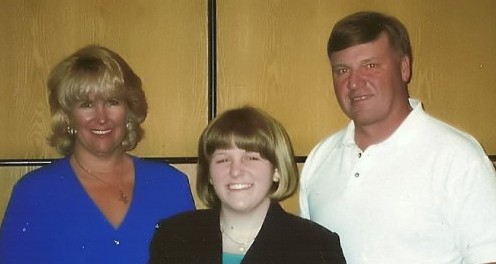
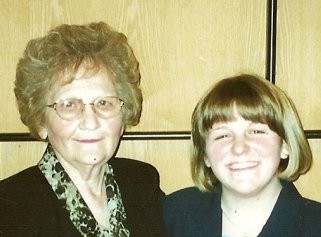
Mom, Dad, and I – MSU Spring 2001Grandma Reid and I – MSU Spring 2001 – One of the best business women I’ve ever known!
Mom, Dad, and I – Spring 2001 Tower Guard Induction – Beaumont Tower, Michigan State University
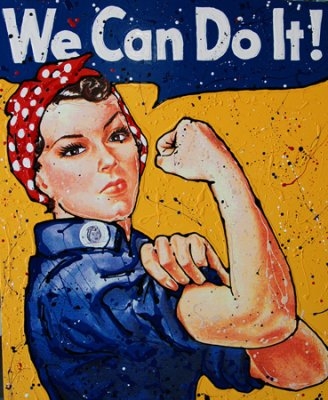
In honor of Grandma Reid, who worked as a riveter in both Hamtramck, MI and Fort Worth, TX during the World War II era, all before the age of 20.
I did not set out to become a teacher, I left that to my younger sister Erica. As her older sister, I’ve never known her to want to be anything other than a teacher and a mother. I envied the fact that she was so certain about her desired profession, not to mention her dedication to her love of children. When we played school – and we did often – I ended up being the school librarian while she insisted on being the teacher. Until our younger brother was born when I was age 10 and Erica age 7, we didn’t have a single pupil. By the time he was two, Erica made our toddler brother a series of report cards, grading him on things like “listening” and “sitting still.” But, this isn’t my sister’s story. It is mine.
My story of pursuing a career as a secondary teacher is by no means conventional. In fact, it is so unconventional and challenging that I would recommend it to no one. If it weren’t for the facts that teaching is in my DNA and I am meant to be a teacher, I would have given up long, long ago. Instead, I doubled-down when I was faced with what at the time seemed to be insurmountable obstacles. I even went back to substitute teaching when needed while deciding what my next step would be. I am a better person, and teacher, for it.
Every story needs to start somewhere, and mine starts with the statement that teaching is in my blood. It truly is. As a genealogist, as far as I can tell, the teaching tradition goes back at least five generations on my mom’s side of the family. It likely goes back even further. Both of Mom’s grandmothers taught, and one of her grandfathers served as principal of his daughters’ elementary school, as well as coach.
Interestingly, the teaching careers of my great-grandmothers could not have been more different. I knew both Grammy Bea (Beatrice Williams), who taught kindergarten and first grade for decades at the height of the baby boom, and Great (Leona Buttrick), who taught in a one-room schoolhouse and quit teaching once she married my great-grandfather Hatley. Although these are stories for another time, their careers illustrate massive changes in public education.
Funnily enough, the teaching tradition isn’t exactly confined to mom’s side of the family. Even though neither of my dad’s parents had the opportunity to further their education, they highly encouraged their children to do so. Both did, and even though my dad and his sister didn’t necessarily see eye-to-eye on much of anything, I find it telling that they both married teachers. On the Suszko side of Dad’s family, there are several special education and agricultural teachers. In fact, my cousin Kristy, a woman with whom I attended school at all levels from kindergarten to college, now teaches dairy science at the university level.
As much as I did not want to admit it, I am a teacher. It took me far too long to make peace with that fact. Something inside me would not let it go. As soon as I graduated from Michigan State in 2004 with degrees in supply chain management and Spanish, my entire world shifted. It would not be made right again until I went back to school in 2013.
It all started during the Great Recession with a casual conversation with my ex’s mom Cindy. We were invited to dinner as usual, and Cindy and I struck up a conversation. She told me that she wished that she’d gone back to school to become a nurse. All I could think at the time was that I did not want to be in my 50s and regret not pursuing an interest. During the Christmas shopping season of 2008, I worked at Best Buy in Saginaw. As I lived in the South End of Bay City at the time, I drove by Saginaw Valley State University (SVSU) every day on my way to work. Slowly, I started to wonder what would happen if I did decide to go back to school to become a teacher. The idea excited me and fed my imagination. How could I make it happen? How would I adjust? Online classes, in their infancy back in 2004, intimidated me.
Eventually, I had the ability to make it happen in 2013. I largely enjoyed my time at Saginaw Valley State University (SVSU), although I would advise commuter students to do their homework. For example, if I had not followed up with my advisor, I would have stressed out about the math portion of the general MTTC exam necessary to even apply to the College of Education. I didn’t necessarily doubt my ability to do higher-level math likely trigonometry and low-level calculus, but I had not remotely touched those subjects in well over a decade. The thought terrified me. Much to my relief, my counselor informed me that I scored high enough on the ACT test I took in high school that I did not need to take the general MTTC at all. I then questioned why I wasn’t informed earlier. She simply stated that it likely stemmed from the fact that I was a commuter and a non-traditional student. While I would highly recommend SVSU to traditional college students coming right from high school, I’m not so sure in other situations.
I enjoyed most of my classes and professors at both Delta College and SVSU, but I can’t say that I didn’t have any bad experiences. In fact, one professor and class at SVSU stands out for all of the wrong reasons. This particular professor taught a class that focused on diversity. However, somehow, throughout the entire semester, he managed to offend nearly everyone in the class. Horribly. He supposedly hated coaches. When I ran into a former classmate in a school setting years later, we naturally discussed this infamous class and professor. This man, who happened to coach as well as teach, informed me that this professor tried to get him removed from the College of Education program, likely because he planned to coach.
Somehow, this professor appeared to have no issue with me or one of my good friends, even though he had long ago deeply offended us both. As we paired up to complete our main teaching project for the course, things fell apart. When it came time to “teach” our project, our professor respected my teaching time and even seemed pleased. Then, he proceeded to continually interrupt my friend and teaching partner for her entire portion of the project. He made it exceedingly difficult for her to even finish. Already extraordinarily introverted, I have no idea how she made it through. Disrespectful doesn’t even begin to cover it. Unfortunately, she never did become a teacher, although she would have been wonderful. Instead, she became a librarian. To this day, I still believe that the world needs introverted teachers too. There are too many people like this professor that discourage future teachers every step of the way before they even get started.
Stay tuned … There is much more to this story.
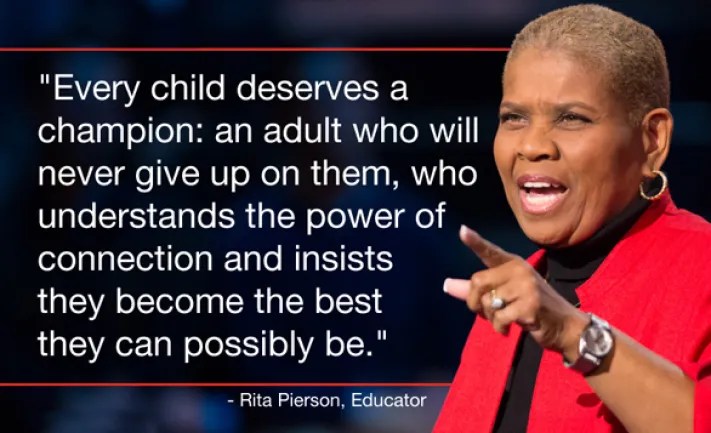
Not just my favorite TED Talk on education and teaching, my favorite TED Talk period.
2025 started off pretty well, but I’m just getting started. There is so much more I wanted to accomplish, but days rush by, especially when fighting off the January “ick.” My writing really took a nosedive and a backseat. Fortunately, it is NOT for a lack of ideas. In fact, it is quite the opposite. I have too many. I need to prioritize and mix it up. Here are a few things to look forward to in 2025.
Gen X
I’ve been floating around this idea for months. It gets right to the heart of my best and deepest childhood memories. Between belonging to a fun Xennial Facebook group (NOT SFW) and discovering hysterical Gen X content creators discussing everything from the 70s-90s, I can relate. Aside from the childhood nostalgia, they are discussing the perils of becoming the default mediators between Baby Boomers and Millennials, perimenopause (or just menopause), and the weirdness of some being the parents of grown children while others have toddlers or even infants. There is something for everyone.
My favorites so far:
The “virtual” dodgeball game between some of the more well-known Gen X content creators.
The elaborate storylines, complete with 80s costumes, of some of the creators. There are two in particular who created an entire world of characters just using their imaginations, along with costuming and makeup techniques. Both are incredibly talented!
Frankly, my childhood would not have been the same without Gen X. They were always the “cool” older kids – namely my cousins (all girls) and the teens who worked at the canoe livery every summer – all of whom introduced me to the best music, slang, and fashions of the ‘80s. I distinctly remember wanting to replicate some of my cousins’ outfits and being so eager to grow up.
As much as I can relate to Gen X, I am definitely not strictly Gen X. While technically Gen X ends in 1980, I was born December 18th, 1980, just two weeks away shy of 1981 and being classified a Millennial. If anyone is on the cusp of those two generations, it is me. As a result, I am a Xennial (1977-1983), with characteristics of both generations.
Grandma Reid @ 100
January 22nd, 2025 would have been Grandma Reid’s 100th birthday. She always told my sister and me that she’d live to be 100 to “haunt you girls.” Then, she’d laugh as only she could. Gratefully, she lived a long, full life, passing away the day before her 92nd birthday in 2017. Still, I am left with so many memories and lessons, especially now that I am well into my 40s. It all deserves to be mentioned.
1925
1925 played a pivotal role in my family history. Two of my grandparents were born in 1925, Grandma Reid and Grandpa Buttrick, and my second great-grandfather, A.G. Forward, started Forward Corporation, which would become the reason why my maternal grandparents eventually moved to Standish. My parents would have likely never met otherwise.
Grandpa Buttrick @ 100
Born on April 1st, 1925, he definitely needs to be commemorated as well. He taught me a lot, and if I hadn’t moved back to Michigan in 2005, I would not have known him nearly as well as an adult. He, along with my dad, are the original inspirations for my decision to study business. It has served me well! Sometimes I think I learned just as much from them, and the companies they headed for so many years, as I did from my formal education.
Music
Not only are there dozens of songs I need to add to my mixtape, I have much to say about Oasis’s recent attempt to join the 90s nostalgia craze in concerts, not to mention the fact that Ringo, now well into his 80s, recently released a #1 album, country no less. Also, I didn’t fully realize this until fairly recently, but I belong to a generation that closely associated music videos with the music we love. That just doesn’t happen much anymore. There is a reason why there are jokes stating that MTV only provided approximately 15 years of music. We still want our MTV!
Book Reviews
Book reviews consistently get the most traffic, and I adore writing them. I am way behind. In fact, The Women by Kristin Hannah still haunts me, and it will continue to haunt me until I write a review. I loved that book, and I consider it one of the best pieces of historical fiction I’ve ever read. Then there is The Frozen River by Ariel Lawhon, another great piece of historical fiction. Of course, there are others I need to review as well.
The Supply Chain Lens
In light of all that has transpired over the last several years, I feel compelled to share what keeps me awake at night. It all involves supply chains and our manufacturing capability. It is far more interesting that it sounds, I promise. Also, I plan to keep it as non-political as possible, even though I feel we have all been fooled. Even though I did not necessarily pursue a career in supply chain management, my business education forever colored how I see the world.
As you can see, lots of great things to come! Welcome February!
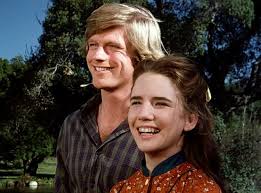
Dean Butler as Almanzo Wilder in Little House on the Priarie
This year, the TV show Little House on the Prairie celebrates 50 years since its television debut. Oh, and does that show still have a following. To celebrate, several events were held at various locations throughout the country, including most of the homesites of the Ingalls and Wilder families. They even recreated several of the sets at Big Sky Movie Ranch in Simi Valley, California, where most of the series was filmed. Infamously, the last installment of the series saw the original set of the town literally destroyed as part of the plot. Under the terms of filming, the producers of Little House on the Prairie contractually had to return the land to its original condition.
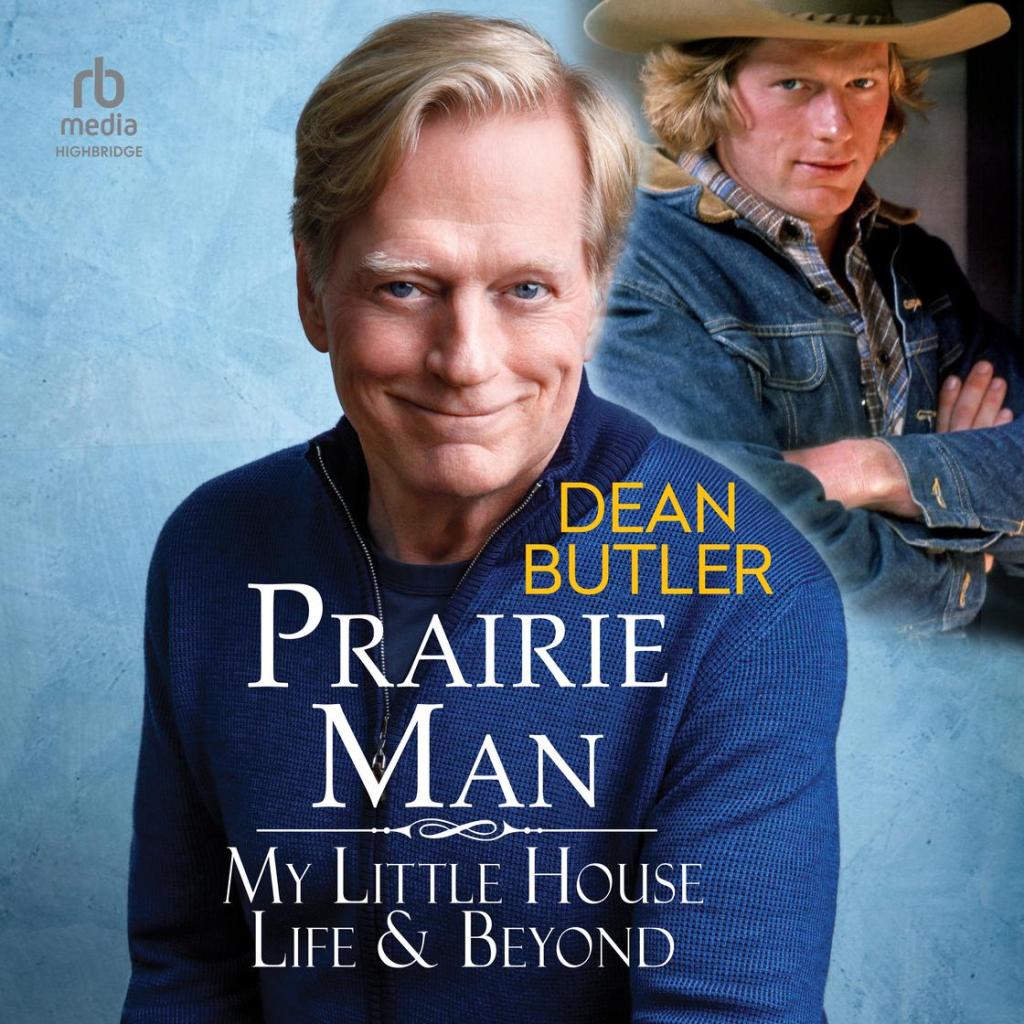
So, where does Prairie Man by Dean Butler come in? First, the book debuted this summer in the midst of all of the events. Second, and most importantly, Dean Butler, who played Almanzo Wilder in the last years of the series, and Alison Arngrim, the one and only Nellie Oleson, who famously penned Confessions of a Prairie B*tch, have worked tirelessly to keep the legacy of the TV show alive. In fact, this entire year, they decided to host a podcast dedicated to all things relating to the 50th anniversary of the Little House on the Prairie TV show.
Prairie Man stands out for a couple of reasons. First, I may not be technically correct on this, but I believe that Dean Butler is the oldest surviving male cast member. Several actors that played young boys on the series survive, but the grown men, including Michael Landon, Victor French, Richard Bull, and Dabs Greer, just to name a few, are long gone. While there are several memoirs written by female cast members, including two alone written by Melissa Gilbert, Prairie Man is the only one written by a man.
While I’ve only read Confessions of a Prairie B*tch by Alison Arngrim (you can read my review here) and Prairie Man by Dean Butler, they could not be more different. I loved both, but I enjoyed Butler’s sense of history, not to mention his diplomatic handling of tensions between fans of the books and fans of the TV show. He addressed all of the controversies surrounding both series well.
I learned a lot. While I knew that Rose Wilder Lane’s “adopted” grandson, Roger Lea McBride, ended up with the television rights to the novels, I did not know the full story. The real story is included in Prairie Man. In the early 70s, Ed Friendly purchased the rights from McBride due to his wife’s and daughter’s love of the books. Only when Michael Landon became involved as executive producer, taking the TV show further and further from the original books, did trouble occur. According to Butler, Roger Lea McBride became horrified when realized what he had done. Like Friendly, he envisioned a TV series much more faithful to the books.
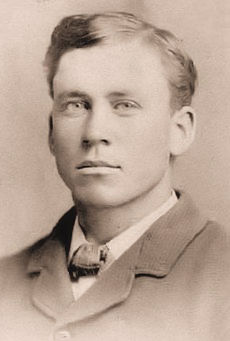
The real Almanzo Wilder, subject of Farmer Boy by Laura Ingalls Wilder
Eventually, all of this grew tension between Landon and Friendly. Landon’s vision, of course, ultimately prevailed. It may have been for the best. Ask yourself, how many children and adults were introduced to the books via the TV show? Alison Arngrim even admitted that she didn’t read the books until after being cast as quite possibly the best child villain ever portrayed on television, Nellie Oleson. Michael Landon may have taken extreme creative license, but love it or hate it, Little House on the Prairie, the television show, is still shown all over the world in syndication 50 years later. It will not die.
The funny thing is that I used to blame Roger Lea McBride for selling the rights to the television series and Michael Landon for what it became. I used to view the Little House series of books as a cautionary tale as to what can happen if an author’s legacy isn’t well-guarded or just ends up in the hands of attorneys. For those who don’t know, Rose Wilder Lane never had children (she never formally adopted Lea), and thus, with her death in 1968, Laura Ingalls Wilder and Almanzo Wilder no longer had any direct descendents. I see it differently today. I suppose I now subscribe to the old saying “any publicity is good publicity.”
While I probably would have discovered all of the books on my own, especially after my 2nd grade teacher, Mrs. Butz, read Little House in the Big Woods to our class, I doubt any of it would have left such a lasting impression without the TV show. Early elementary school would not have been the same without it. I distinctly remember jumping off the bus after school, pigtails flying behind me, eager to catch the 4 PM reruns. Funny note: Due to the fact that I grew up on the reruns, I thought Dean Butler was significantly younger, by at least a decade, than he actually is. His book, of course, made this clear.
Today, I am not necessarily a fan of the TV show, although I do greatly admire what Dean Butler and Alison Arngrim have done for all Little House on the Prairie fans. I suppose I am not a typical fan. Normally, most people are devoted fans of the books or the TV show, not necessarily both. More than anything, I am a huge fan of the real person, the writer herself, the real Laura. Her true story is far more fascinating than just the books. She lived an incredibly full additional 70 years after the life she described in all of her books. When you add in all of the drama surrounding her only daughter, Rose Wilder Lane, it justifies all of the relatively new scholarly work surrounding the Ingalls and Wilder families. There are still so many questions left to answer.
If you are interested in the Little House series at all, whether book or TV show, Prairie Man is well worth reading. Butler makes the case that he feels he was born to play Almanzo. Growing up on a ranch in California, he describes in detail how his entire career has been shaped by that one role. As he grew older, he decided to lean into it and run with it, much as Alison Arngrim has over the last few decades. Fortunately for Little House fans, its incredible legacy is in good hands for the time being.
You can also check my review of Prairie Fires by Caroline Fraser here.
Written during the pandemic as an example for a poetry project I assigned my middle school students. They needed to take a line from a favorite song and then use that line to begin a poem.
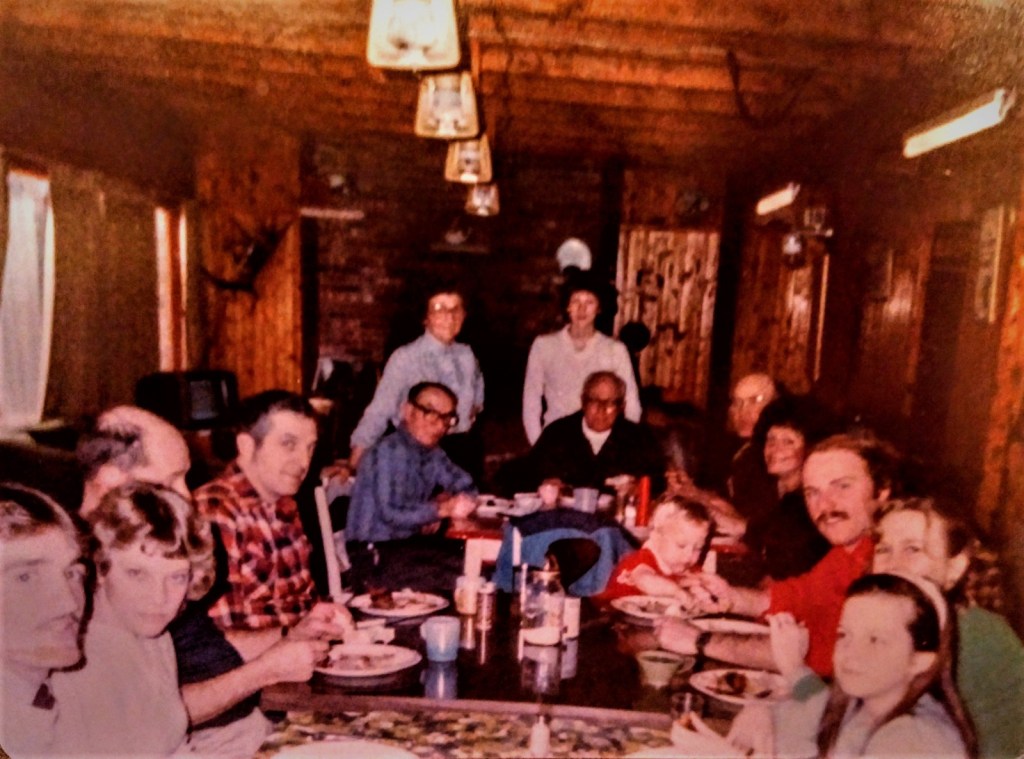
There are places I remember Places that hold memories long forgotten Long shadows, witnesses to the past Smells that immediately transport me back
Back to a simpler time when we could gather freely Children could be kids Adults accepted responsibility A time when freedom reigned and the republic lived
A black and white portrait here, Kerosene lanterns afixed to the wall Polished glass overlooking the cedar swamp The coziness of a Franklin stove
My sister and I, in curls, smocked dressed, and bows Polished patent leather shoes and all smiles Helping mom and grandma prepare Thanksgiving Waiting for hunters to return and string a buck up on the pole
Living as pioneers until nightfall, the generator roaring to life The bustle and business of extended family Cards, laughter, and love Cousins, forts, and leaves
Memories long buried, decades past Rising each fall with the smoke from burning leaves











 Ramblings of a Misguided Blonde