Category Archives: inspiration

Book Review: Prairie Fires by Caroline Fraser

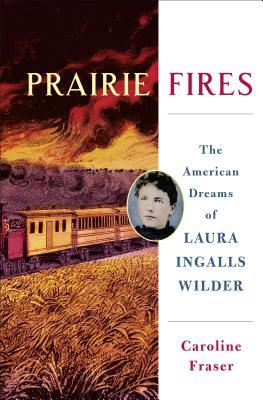
Prairie Fires

As an avid fan of Laura Ingalls Wilder’s work, I felt I had to read Prairie Fires:  The American Dreams of Laura Ingalls Wilder by Caroline Fraser.  While it is marketed as a new biography and even won the 2018 Pulitzer Prize and National Book Critics Circle Award for biography, it seems to be so much more.  In her work, Caroline Fraser not only takes the time to ground very personal decisions made by Laura and her husband Almanzo into the larger backdrop of American history, she takes it several steps further.  She analyzes decisions made by Charles Ingalls, Laura’s father, and Rose Wilder Lane, Laura’s daughter, against their political leanings and larger political climate.

Frankly, if a book looks at least reasonably well-written (not fan-fic) and promises new insight on anything related to Laura Ingalls Wilder’s life and work, I am likely to pick it up.  However, that doesn’t mean that I agree with everything or there aren’t inherent biases in such work.  As much as I enjoyed Prairie Fires, there is one overarching issue I believe is being overlooked.

Before I get into the issue, which, as with all things controversial relating to Laura Ingalls Wilder and her work, involves her daughter Rose Wilder Lane, some background is needed.  First, I read this book this past spring.  I enjoyed it, and it just fermented for a while.  I couldn’t quite figure out what bothered me about the presentation of politics throughout the book, until I happened to witness another conversation about the book.

A month or two after I read the book, I happened to be having lunch with some friends from Mid-Michigan Writers when two other women came to have a conversation with my friends.  One woman began gushing over Prairie Fires and stated that she would love to have a political conversation around the book. While I do not know this woman well, her politics proceeded her due to several mutual acquaintances.  I didn’t join in the conversation other than to say that I loved the book; however, it finally came to me why I felt something was off.

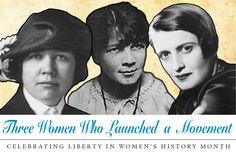
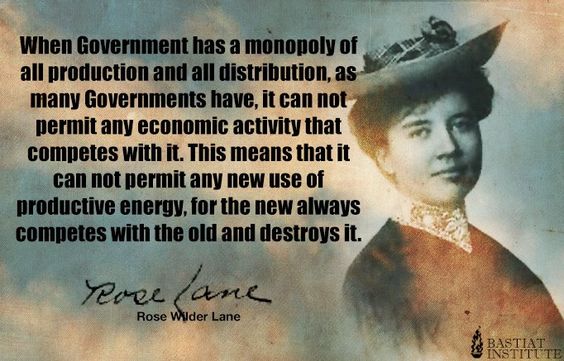
For those who don’t know, Laura’s daughter Rose Wilder Lane is one of the founding members of the modern Libertarian party and all that that entails.  In fact, Rose deserves her own blog post or even series of blog posts.  There is that much material.  Early in the 20th century, Rose was the famous Wilder.  The political legacy she left is messy and quite complex.  While my own personal politics lean more towards that of Laura and Almanzo (center-right), particularly when considering fiscal matters, than Rose, I don’t feel that the Caroline Fraser understood any of the politics completely.  Caroline Fraser seemed to analyze the political tendencies of the Ingalls and Wilder families through a modern liberal lens.

The most glaring example of this bias for me comes when Fraser implies that Laura is perhaps a hypocrite for serving on a local farm loan board near her home in Mansfield, Missouri while not supporting the sweeping federal farm loan programs of Franklin Delano Roosevelt.  Actually, I completely get it.  Laura and Almanzo favored local control of government.  I do as well.  The implication and omission of this distinction stood out to me.

If Fraser didn’t understand the politics of Laura and Almanzo, she didn’t know what to make of Rose Wilder Lane.  In all fairness, I don’t if anyone will ever completely understand her life.  In her life, Lane goes from supporting elements of communism and fascism to standing up for the founding principles of the United States of America.  She did all of this, of course, while helping her mother complete her famous series of children’s books.

Perhaps we will never know where Rose’s influence began and ended when it comes to the Little House books.  It is an enduring debate surrounding the series.  Fraser comes right out and describes the mother and daughter writing relationship as “incestuous.”  I came to a stop for a minute at that description, silently accusing Fraser of sensationalism.  Then I thought about it.  As I stated earlier, there is no way to know precisely what role Rose played in the series.  While I do not believe that Rose largely wrote the books, I do believe that the books would not exist in their current form without her influence.

Ultimately, I enjoyed the book.  Political bias aside, Caroline Fraser extensively researched her material.  Prior to reading Prairie Fires, I found Rose Wilder Lane to be a fascinating character.  After reading the book, I left even more intrigued.  As a fiscal conservative with libertarian tendencies, I can relate to some of Lane’s political ideas.  I love the fact that she promoted individualism, personal liberty, and self-determination.  Those ideas still hold value and are needed today more than ever in the face of increasing collectivism.  Can individualism and self-determination be taken too far?  Absolutely, and so can collectivism.  We need a balance.

By the way, I find talk surrounding the book to be politically divisive.  You can read a Slate review here (the reviewer really doesn’t get the politics).  In the book, Lane’s political activism is compared with the other two “mothers” of the libertarian movement:  Ayn Rand and Isabel Paterson.  You can read more about them here.  If you are interested in Laura Ingalls Wilder, American history, or politics at all, Prairie Fires is a must-read.
Libertarian

RWL Quote

Book Review: Girl, Wash Your Face by Rachel Hollis

Girl

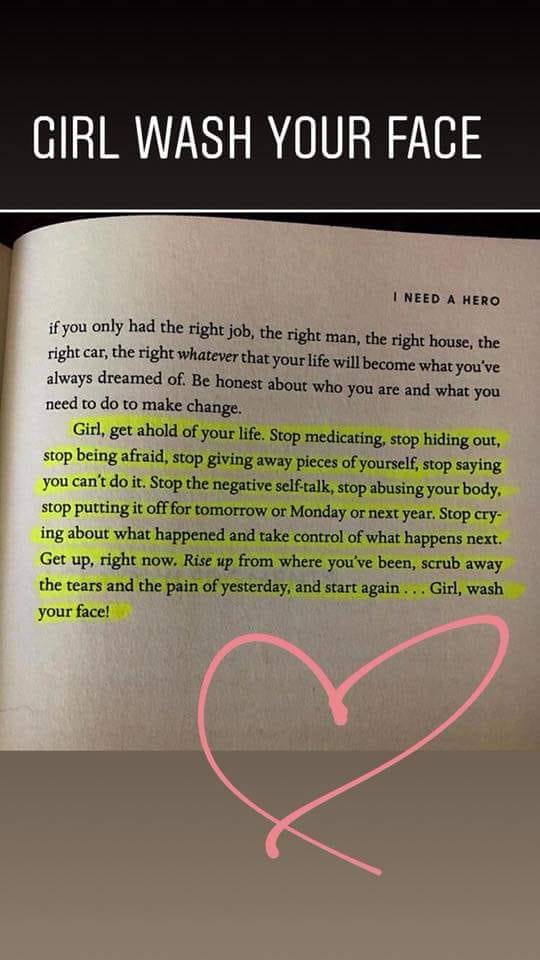
I recently read Girl, Wash Your Face by Rachel Hollis per my sister’s recommendation.  Actually, it all started with the meme above.  I then found out that my sister loved the book.  Of course, it immediately moved to the top of my to be read pile.  I love the fact that I belong to a family that shares and recommends books!

Here are a few gems from the book and my thoughts. There are many more I could share here, but I will leave you to discover them yourself.  I highly recommend the Kindle version of the book as it allows the reader to highlight important passages without defacing a physical book.

Sometimes choosing to walk away, even if it means breaking your own heart, can be the greatest act of self-love you have access to. – Page 53.

This just seems to sum up the process I put myself through this summer.  The sad part is that I should have definitively learned this lesson years ago.  I wish everyone, women and men, knew this before heading off to college – or shortly thereafter.  It ultimately would have saved me so much time and heartache.

I knew I was letting my fear control me, that the worry about giving my heart away again only to have it stomped on kept me from taking a next step.  In the midst of such heartache, it’s hard not to worry.  I cried so many tears, thinking, Lord, why would you put this desire on my heart if it wasn’t ever going to come true?  And, God, if we try again, you’re not actually sending my heart out to be slaughtered, right? – Page 108.

Oh, have I been there!  More than once.  There are times when I still wonder how I will ever be able to trust again.  It is not easy to pick ourselves up and try again.  Yet, we must.

I want you to see someone who kept showing up again and again, even when it was tearing her apart.  I want you to see someone who kept walking in faith because she understood that God’s plan for her life was magnificent – even if it was never easy.  And even if it wasn’t easy, she was bold and courageous and honest even when the truth was hard to share. – Page 173

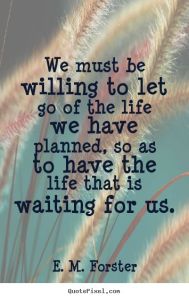
I admit, lately I have struggled to have faith that God does indeed have a plan for my life.  I am currently slogging through it all to figure out exactly what that plan is.  If I am meant to have a family of my own, why haven’t I been able to make it work yet?  Why is that the big unnegotiable of my life if, indeed, it is impossible?  I ask myself questions similar to this all the time.  Ultimately, it is not my timing, but God’s.  It will eventually work out.  Until then, I just need to be patient and keep working.  It will never be easy.

As you can see, I loved the book.  It is a great example of a book that came into my life at the exact time I needed to read it.  I happened to read it just as I was struggling with these questions.  While I would recommend the book to every young woman I know, it doesn’t mean I think the book is perfect.

If fact, in one sense, the book left me feeling unsettled.  It is a feeling I get whenever I get too involved in anything related to religion.  What no one seems to address in organized religion – and Rachel seems to unintentionally fall into this – is that not all women will end up married and become mothers.  Singles in the church, particularly those no longer in their twenties, seem to get left behind.  Whether explicit or implicit, the focus always seems to be on marriage and family.

While I think Rachel was right to spend much of her book focused on marriage and motherhood – after all, this book shares her life experiences – she doesn’t address what happens if you do end up alone.  She doesn’t even seem to acknowledge the possibility even though she goes out of the way to address situations not her own.  This may not be true, but it appears she assumes everyone will end up married and a mother.  A simple acknowledgement would have served the book well.  Then again, maybe I am reading way too much into this and too sensitive.  It doesn’t matter.  The book itself is great, and I highly recommend it.

By the way, I love how she addresses adoption in this book.  I am so glad I read this book before I started the adoption process.  Her family’s story related to foster care and adoption is not an easy one, but it does have a wonderful outcome.  In the end, that is all that matters.

rh dreams.jpg

Hello Fall

fall

Ah, fall.  Mine is off to a great start.  I am eager to get writing once again.  Lately I’ve given a lot of thought to what I would like to share here and where I would like to take my blog.  I’ve come to a few conclusions.

  1. I would love to once again cultivate a blogging community and share some of my favorite finds here. The issue becomes my favorite blogs seem to become inactive or disappear altogether.  It has happened more than once.  We will see.  I’m not exactly sure where I am going to take this.
  2. I will continue to write about my reading life and books I love and hate. Actually, I can’t think of a book that I hate, but that is beside the point.  I have several books I need to review at the moment, so look for those book reviews soon.
  3. My favorite writings involve music, and sadly, I haven’t written about music in years. I may just have to bring it back.  The easiest money I ever made happened to be from writing articles about my favorite songs (and the memories I attached to them) for a now-defunct online magazine called JamsBio.  I need to revisit this concept.  I am a firm believer in learning about others through playlists and book lists.

Stay tuned!

Book Review: The Alice Network by Kate Quinn

The Alice Network, by Kate Quinn

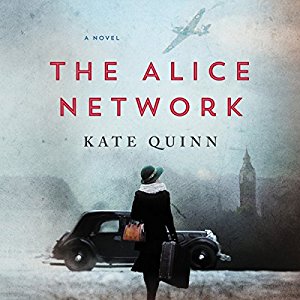
I can’t recommend The Alice Network by Kate Quinn enough, particularly if interested in historical fiction and World Wars I and II.  American college girl Charlie St. Clair is pregnant and trying to find out what happened to her cousin Rose.  Set in 1947 and the aftermath of World War II, Charlie leaves her mother behind and travels to London to find Eve Gardiner, her only lead in her search for Rose.  She is lost, driven by emotion, and angry that she is unable to access her own money.  What happens next sets Charlie on an adventure throughout the French countryside.

Throughout the novel, we get Eve’s history during World War I and her involvement with the Alice Network, which is almost another novel.  I normally don’t read afterwards in novels, but I did this time.  I am glad I did.  It turns out that much of Eve’s story does involve real actions taken by the Alice Network during World War I.  Eve’s story intertwines with Charlie’s in unique and interesting ways, ultimately answering Charlie’s questions about Rose and helping Eve to make long awaited peace with her past.

There is romance in both stories to some extent, but it tends to move the plot along and isn’t romance for the sake of romance.  The part I enjoyed most is Charlie’s determination to live her life on her terms and her terms alone.  Throughout the novel, she is bombarded with familial and societal expectations.  Ultimately, she leaves them behind and creates her own future.  The reader is taken along for one fun ride.

In Eve’s story, much of the action is hard to take.  It is difficult to realize just how much she and her fellow Alice Network members risked every minute they lived under German occupation.  It is ultimately satisfying for the reader when she finally makes peace with her past.  I only wish that a few of the male characters were more fully developed, but it is a minor issue considering it is not their story.  I hate to admit this, but it would make a wonderful movie.

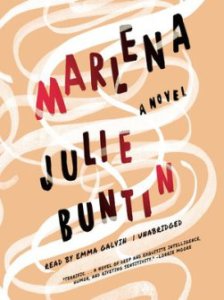
Book Review: Marlena: A Novel by Julie Buntin

I enjoyed reading Marlena.  While it contains components of a YA (young adult) novel, I would classify it as emerging adult.  Fair warning:  Lots of drugs and sex involved.  The good news is that the drugs, and to a lesser extent, sex, drive the plot.  They are necessary to the plot, and fortunately, do not glamorize the consequences of either.  By the way, when I mention drugs here, I am including alcohol.

I didn’t read Marlena with a set purpose in mind.  It wasn’t a book club pick or anything.  In fact, I discovered it by browsing a selection of online books available through my library’s website.  It just sounded good.  It is ultimately a tale of two best friends growing up in a dull northern Michigan town.  It took a while for me to get into the book.  The protagonist, Cat, isn’t the easiest person to get to know.  Also, in the beginning, I didn’t get the fixation on drugs.  She clearly understands right from wrong, but she is fixated on her new best friend Marlena and making the worst possible choices for her life.  By approximately a quarter of the way through the book, I was hooked and found it difficult to put down.

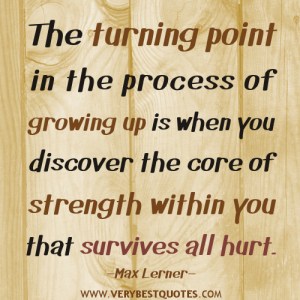
Cat, at least the older, wiser version in the novel, nails what it is like to grow up, to love and lose.  There are so many powerful lines I found myself highlighting them in my Kindle copy, forgetting that it is a library book.  Below are a few of what I consider to be the most powerful lines in the novel.

Close enough to being a writer, isn’t it, working at a library? – Page 45

As an aspiring writer, I loved this quote.  Ultimately, Cat is a writer, but it took her a while to find her voice.  Her empathy for other young women is clearly demonstrated later in the novel in her approach to difficult young library patrons.

For so many women, the process of becoming requires two.  It’s not hard to make out the marks the other one left. – Page 96

This passage really made me think.  I thought of the friends, male and female, in both high school and college, who helped to shape the woman I became.  It made me think of what I wrote about W.M here in particular.  There is something to be said for reconnecting with old friends after years apart and seemingly nothing (and everything) has changed.

I think it’s pretty common for teenagers to fantasize about dying young.  We knew that time would force us into sacrifices – we wanted to flame out before making the choices that would determine who we became.  When you were an adult, all the promise of your life was foreclosed upon, every day just a series of compromises mitigated by little pleasures that distracted you from your former wildness, from your truth. – Pages 129-130

This struck a nerve with me as well.  First, I vividly remember being terrified of dying young as a teenager.  Both of my parents lost close relatives as teenagers, and those stories stayed with me.  Second, the fact that “time would force us into sacrifices” continues to be at the forefront of my mind.  I have always tried to find a way to leave as many doors open as possible.  There is just too much I want to do in life.

I was always aware, in some buried place, that girls my age had just entered their peak prettiness, and that once my pretty years were spent my value would begin leaking away.  I saw it on TV and in magazines, in the faces of my teachers and women in the grocery store, women who were no longer looked at … – Page 143

I so desperately want this not to be true, but it is true.  I loathe this fact about our culture.  Hopefully I will live long enough to see it change, permanently.

Before that year I was nothing but a soft, formless girl, waiting for someone to come along and tell me who to be. – Page 250

Thinking back to what I was like at ages 15-16, I like to think I was somehow stronger than Cat.  Unfortunately, that just isn’t the case; I could closely identify with Cat in the novel.  It makes the novel much darker.  There is a fine line between the successful teenage Cat and the degenerate.

I would recommend the book, especially if you love to write or like reading about love and loss (or even friendship in general).  Is the story sad?  Yes, but it is also full of hope.  It does seem that Cat is at least trying to deal with her loss, with varying degrees of success.

I know I have talked about this before, but I am convinced the right books find me at exactly the right time.  While I certainly wouldn’t call Marlena great literature, it addresses certain topics I would like to cover in my own writing.  I will be rereading this novel.

Perfectionism, Procrastination, and Perseverance

The Heavy Link – Perfectionism and Procrastination

The Most Important Thing a Writer Needs

As much as I don’t want to admit it, I am a perfectionist to a fault.  There is a link to perfectionism and procrastination, and frankly, I am not sure what to do about it.  Several years ago, my boss, who through a strange set of circumstances has known me most of my life, once labeled me as a perfectionist.  I bristled.  I didn’t want to admit it.  I would admit that I was a perfectionist at one time.  At the time, I did not believe the label still applied to me.  Well, it does.  It always will.  I may have let a few things go, but I still strive for perfection in everything I do.

Procrastination is what’s wrong with perfectionism.  Procrastination keeps me from doing what I need to do, especially when it comes to my writing and my personal life.  Trying not to procrastinate led me to make one of the biggest mistakes of my life:  my ex.  I should have listened to my intuition and realized that it wasn’t going to work from the beginning, but I committed myself to making it work.  Unfortunately, it was one sided, and I was too stubborn to realize it.  Procrastination is behind my most egregious mistakes.  When will I learn not to question myself too much and just do what I need to do?

Fortunately, perseverance is part of the equation as well.  I will succeed.  It isn’t too late to go back to do what I need to do.  I am thankful that I am stubborn enough to stick with it until the end.  It may take me decades, but I will persevere as a writer.  I must stop comparing myself to anyone else.  How many times do I tell myself that before I begin to believe it?

Quotes and Inspiration

Churchill

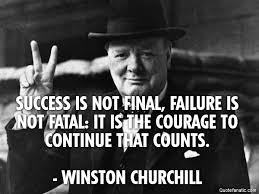
It is no secret that Winston Churchill is one of my favorite historical figures (although one among many). As quotes are a big part of the curriculum where I will be teaching, I decided to start off the school year with this quote. I love it. Students may not fully appreciate it until they are older, but man, is it ever true. There is always the opportunity to start over and to make tomorrow better than today.

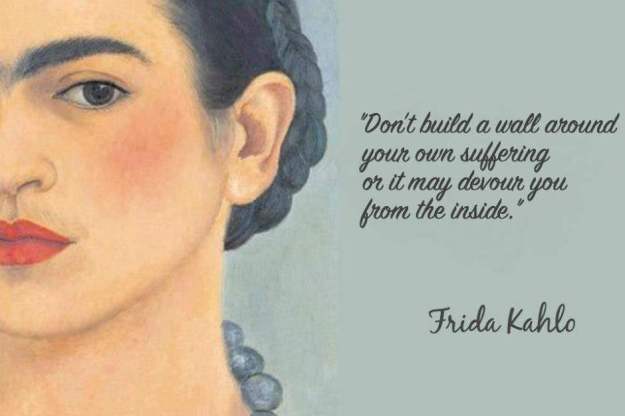
This is precisely why I love Churchill. He refused to give up in the worst of circumstances. Period. I want to build upon that idea all year long. In fact, my Spanish classes will definitely be studying Frida Kahlo. She had that same tenacity. In fact, I wish that I could show the movie Frida (one of my favorites). Unfortunately, that isn’t a possibility. Hopefully, sharing some of her artwork and quotes will inspire them anyway.

It is by studying those who came before us and accomplished great things that we can truly become inspired. This is why I love memoir, biographies, and autobiographies. So many times I am left wondering how people persevered in the face of what appeared to be insurmountable obstacles. There is always a way.

Frida 2

Oh, We Have to Talk About Snape …

Snape

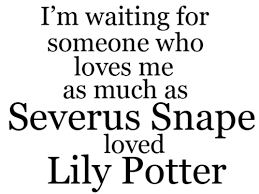
I never intended to fall in love with another fictional character, but I did. Over the course of the seven Harry Potter novels, Professor Snape won my heart by his courage and undying love for Harry’s mother, Lily Potter. No other fictional character, with the possible exception of Fitzwilliam Darcy in Pride and Prejudice, can hold a candle to Professor Severus Snape. As much as I love Fitzwilliam Darcy and all of his wonderful brooding moodiness, he is now a distant second. I have to ask myself why. Why, out of the hundreds of fictional characters I’ve been exposed to over my lifetime, does Severus Snape stand out?

Always

First, from the moment he is introduced in Harry Potter and the Sorcerer’s Stone, I was intrigued. Maybe it is because I am a writer, but Snape had “story!” written all over him. He obviously had a past, and I wanted to know more. If you haven’t realized it by now, I always want to know more, and secrecy is a surefire way to keep my interest. I cut my teeth on mysteries and only lost interest when they became too predictable. I argue that Snape is the final and best mystery revealed in the Harry Potter series. It is the love story – and it is a story born out of true love – that drives the action. I can’t imagine if I had lived the rest of my life without reading the entire series.

Second, Snape stands out due to the complexity of his character. It is telling that I immediately purchased and read Snape: A Definitive Reading by Lorrie Kim after I finished Harry Potter and the Deathly Hallows. I became so caught up in the ending that I needed to go back and read the evidence. Kim’s Snape: A Definitive Reading painstakingly chronicles Snape’s actions throughout the entire series, even using quotes and page numbers. She provides just enough commentary to keep it from becoming too dry. It did help me more deeply appreciate the most complex fictional character I have ever come across.

Ever since I finished the series, I’ve asked myself why my favorite fictional characters from childhood – Laura from the Little House on the Prairie series, Anne of the Anne of Green Gables series, and Nancy from the Nancy Drew series – seem utterly dim when compared to the complexity of Snape? The answer is unbelievably simple. With the exception of Laura Ingalls, the characters mentioned above didn’t grow much throughout the course of the series, especially Nancy Drew. They were simply the same characters who were thrown into new situations. The fictional Laura is a special case because she did grow as a character in complexity and in age throughout the series. However, I find the real-life Laura Ingalls Wilder, the writer and mother who had a complex relationship with her only daughter, infinitely more interesting. Snape’s complexity is apparent from the beginning, but it doesn’t come front and center until the end of the series. I have nothing else to compare his character to at the moment. Nada.

Finally, Professor Snape’s love for Lily Potter and the courage he demonstrated in keeping both Harry Potter and Draco Malfoy safe, along with his final interactions with Dumbledore, almost defy the imagination. Yet, his entire life prepared him for and led him to the final events of the series. I can’t even begin to imagine how he managed to teach and face Harry Potter on a daily basis when all Snape could see in him was the man whom Lily Potter ultimately married. Snape felt responsible for James’ and Lily’s deaths, and he had a living, breathing reminder of that guilt and unrequited love in his classroom. Snape even managed to drill important lessons into his students’ heads outside of the classroom, knowledge that would ultimately help them survive. He may hold petty grudges and act extremely unprofessionally as a teacher, but he did get the job done.

After All This TIme

The Patronus

When I first read the scene in which Harry is led to the Sword of Gryffindor by the silver doe patronus, I knew that it was meant to be a pivotal point in the series, but I didn’t recognize just how pivotal it was until the final novel. We later learn that Snape’s patronus is Lily’s silver doe. He loved her that much. He never stopped loving her. If I were to write or describe magic, I would do so with the silver doe patronus scene in mind. So much love wrapped up in one simple, beautiful symbol. Not only is it a symbol of Snape’s undying, unrequited love for Lily, but I also see it as a symbol of Lily’s love of Harry – a mother’s love and protection. As a woman who grew up in the northern woods of Michigan, there are few things more beautiful than deer. There are few fictional scenes that leave me with goosebumps; this was one of them.

Undoubtedly I will read the entire Harry Potter series again, even if it isn’t until I have a child of my own. I am so glad that I read the entire series, even if I am not exactly a reader of fantasy. I can now fully understand why those novels will stand the test of time and inspire such a loyal following. I will always have a soft spot in my heart for Professor Snape. Always.

Know It All

Is it just me, or did Hermione Granger seem to have a bit of a crush on Professor Snape?

Gypsies – Part 2

Read gypsies part 1 here.

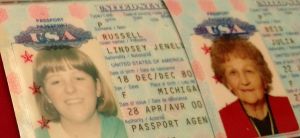
What can I say about these passport photos? They hold so many memories. Yes, even Grandma’s. I never did travel internationally with Grandma, with the exceptions of a trip to Aruba in the early 1990s and a trip to Ontario during my high school years, but she always supported my endeavors. I still have letters that she and Grandpa wrote to me during my first years at Michigan State. When I spent a semester in Quito, Ecuador, I came home one day to my host mother speaking on the phone in English with Grandma. At the time, I didn’t even know that my host mother spoke English that well! It turned out that she had studied abroad in Wisconsin.

One of my favorite stories took place in 2002 just before I was to leave for Austin, Texas to complete a six month co-op with Applied Materials. First, one has to understand that Texas has always loomed large in my imagination. My grandparents lived in Fort Worth during World War II. On Mom’s side, my great-grandfather spent the last years of his life outside of Houston ranching. Well, I think Grandma could tell I was a bit nervous as I said goodbye for several months. She told me, “You know, they are going to call you a damn Yankee!” Of course, I thought that she was joking. She always joked around. That may have been true in the ‘40s, but the early 21st century? Nah. It turns out the joke was on me.

In the days before GPS everywhere, I stopped at a grocery store to ask for directions to my new apartment complex. Unfortunately, I was lost. As soon as I opened my mouth, the man I had approached joked “Damn Yankee, huh?” and proceeded to laugh at my very Michigan accent. Then, he gave me the correct directions, and I was on my way. Literally the first words I heard in Texas were “damn Yankee.” All in good fun, of course. I ended up falling in love with Texas – Austin in particular – and planned to move there after my graduation from Michigan State. Well, I did move to Houston upon graduation, but frankly, I loathed Houston. It just wasn’t the same without my friends from Austin.

Today I am grateful that I moved back to Michigan. I would have never had those last years with my grandparents. As much as I love to travel, family means too much to me. As I am now a vital part of the future of the canoe livery, there are other considerations as well. Deep down, I always planned to come home, even if I didn’t want to admit it in my 20s.

As for those passport pictures, Grandma’s is one of my favorite pictures of her. During my later high school years, she traveled to Poland with family in order to see where her parents were born. She wanted to see where her parents’ grew up. That is why she ended up getting this passport in the first place. Over the years, she traveled extensively in the Caribbean and the United States. She hadn’t needed a passport since a trip to Brazil in the 1970s. As I waited for her in her car one day outside the canoe livery (we were headed somewhere, of course), I noticed her application for a passport. What struck me then was the names of her parents’ birthplaces. She had had to list the various countries those towns became a part of after World Wars I and II – a miniature lesson in the history of Eastern Europe during almost the entire 20th century – or so it seemed to me at the time. Even though I didn’t fully appreciate it until many years later, I think of the sacrifices my great-grandparents made to come to the United States legally. My great-grandmother was only in her teens at the time. I know what it is like to live in another country for a short period of time, but to never see your home country or parents again? I can’t begin to imagine.

My passport picture in another story entirely. When I see that picture, I think of how naive I was at the time. I can’t help but want to warn my 19 year-old self of the worst she’ll experience abroad – as well as tell her how worth it it all was, how much she will experience, most of it wonderful. I would tell her to not worry about all of the guys she’ll meet – none of them are “the one.” None of them are worth the heartache they will cause. Above all, have fun. Oh, and I would tell her that one day, she will want to teach Spanish. Take the necessary tests! It isn’t that easy to get fluency back once it is lost.

A Guarded Heart

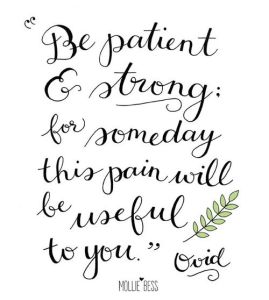
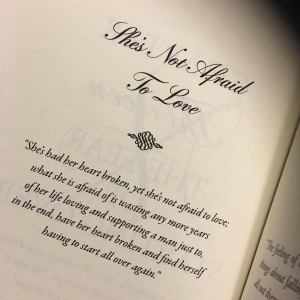
I came across this passage not too long ago, and I keep coming back to the message. My personal experiences aside, I do believe that this is what most women – heck, what most people – are feeling after the break up of a long term relationship or even marriage. No one wants to think that they have loved in vain.

My bigger question here is this: When does guarding your heart against another broken heart cross into just shutting everyone out, period? There has to be a line, doesn’t there? I would love to know precisely where it is. I’m sure that it would be different from person to person, but how does one know where his or her personal line is? It is an intriguing question. Is it possible to get so caught up in oneself – dreams, ambitions, and so much more – that the idea of having a significant other just doesn’t matter anymore? I truly hope that I never arrive at that point. Yet, what if it doesn’t happen? That fact can’t be dwelt upon either, otherwise you end up miserable.