Book Review: The Alice Network by Kate Quinn

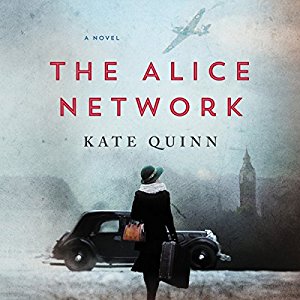
The Alice Network, by Kate Quinn

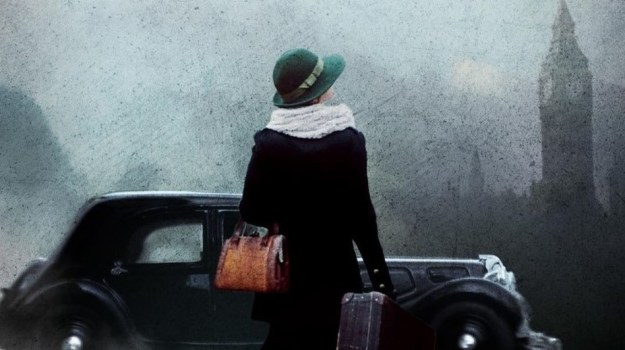
I can’t recommend The Alice Network by Kate Quinn enough, particularly if interested in historical fiction and World Wars I and II.  American college girl Charlie St. Clair is pregnant and trying to find out what happened to her cousin Rose.  Set in 1947 and the aftermath of World War II, Charlie leaves her mother behind and travels to London to find Eve Gardiner, her only lead in her search for Rose.  She is lost, driven by emotion, and angry that she is unable to access her own money.  What happens next sets Charlie on an adventure throughout the French countryside.

Throughout the novel, we get Eve’s history during World War I and her involvement with the Alice Network, which is almost another novel.  I normally don’t read afterwards in novels, but I did this time.  I am glad I did.  It turns out that much of Eve’s story does involve real actions taken by the Alice Network during World War I.  Eve’s story intertwines with Charlie’s in unique and interesting ways, ultimately answering Charlie’s questions about Rose and helping Eve to make long awaited peace with her past.

There is romance in both stories to some extent, but it tends to move the plot along and isn’t romance for the sake of romance.  The part I enjoyed most is Charlie’s determination to live her life on her terms and her terms alone.  Throughout the novel, she is bombarded with familial and societal expectations.  Ultimately, she leaves them behind and creates her own future.  The reader is taken along for one fun ride.

In Eve’s story, much of the action is hard to take.  It is difficult to realize just how much she and her fellow Alice Network members risked every minute they lived under German occupation.  It is ultimately satisfying for the reader when she finally makes peace with her past.  I only wish that a few of the male characters were more fully developed, but it is a minor issue considering it is not their story.  I hate to admit this, but it would make a wonderful movie.

Carpe Diem and Other Plans

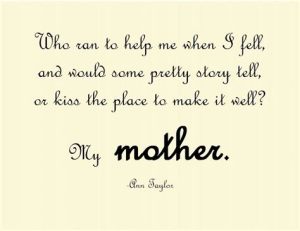
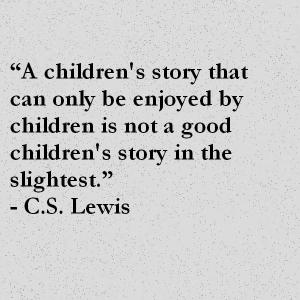
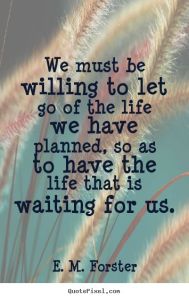
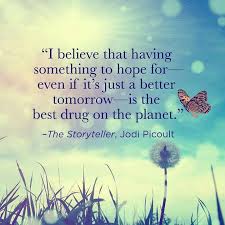
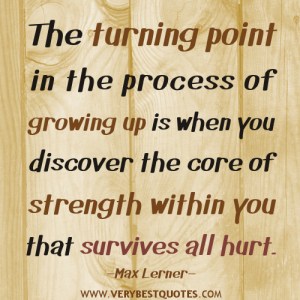
It is no secret that I love quotes.  Every so often, one hits you right in the gut.  That is what happened one morning in church.  Before church truly begins, our ley leader normally shares a funny inspirational story or quote.  That particular week, she shared the quote shown above.  It works on so many levels.

First, I have so many ideas for stories, books, and series that I don’t know where to begin half of the time.  There are always fresh ideas competing with the old and written projects badly in need of editing, not to mention conferences and workshops to attend.  How do I keep track of it all or know where to start?

Second, this is one of my biggest fears:  I will never get around to writing what I need to write.  If I didn’t do anything else in my life, I would still have enough experiences, memories, and ideas to keep me writing for the rest of my days.  This is where my perfectionist nature rears its ugly head.  It is the best stories that keep me up at night.  How do I get them down correctly the first time?  Well, writing doesn’t work that way, unfortunately.  Intellectually I understand, and yet, I can never quit shake the feeling I left something important out, no matter how well-intentioned my first draft.

Finally, this quote gets to the heart of how I would like to live my life.  At the end of my life, I don’t want to wonder “what if …,” but it may be inevitable.  I doubt anyone dies without regrets.  It is possible to minimize them, however.  It is time to get busy.

Dreams

I don’t talk about my mom nearly enough.  If you would have asked me five years ago if we were close, I would have told you no, we aren’t particularly close.  I’m not exactly sure when that changed, but it did change, for the better.  As an undergrad at Michigan State University, I used to marvel at the girls who called their moms every day.  It confused me.  On one hand, I wanted that type of relationship with my mom; on the other, I loved my independence too much.  However, if I didn’t call every Sunday, I would be tracked down.

Now that I am older, I am grateful for that independence, although I can’t imagine it today.  I do talk to my mom almost every day now.  My parents were more concerned when I was commuting and taking classes at Saginaw Valley State University (SVSU) a few years ago than they ever were during my years at Michigan State.  I find it funny and fascinating.  I think I understand it though.  My parents still had my sister and brother at home.  They were still dealing with sports activities and whatever trouble my brother decided to get into that particular week.  Still, I would never go as far as to say that I had a difficult relationship with my parents, even when we didn’t talk all that often.  They just let me get on with having fun in college – and I did.

As a teenager, it was common for my dad, brother, and sister to watch TV together in the living room.  My mom and I would watch something else in my parents’ bedroom.  I would lounge on my parents’ bed while mom would get her clothes ready for the next day, etc.  One of our favorites happened to be Ally McBeal.  At times, we would have some great conversations too.

During one weekend home during my sophomore year at MSU, such a scenario took place when I needed my mom’s advice most.  At the time, I felt as though I had to choose between semester long Spanish programs in Spain or Ecuador.  How was I supposed to choose between the two?  I didn’t want to have to make that decision.  I wanted to do both.  I asked my mom what she thought.  All she asked is that I be home for Christmas.  It worked.  I found a way to make it work without delaying graduation.  I never forgot my parents’ support of that decision.  I also learned to be flexible and find a way to do what I wanted to do – on my terms.

Shortly before my mom retired in 2010, I learned she dreamed of writing children’s books in retirement.  Considering her career as an elementary school teacher, it isn’t surprising.  What surprised me most is:  1.  I never knew that my mom wanted to write at all.  I thought it was my dream alone, and one I didn’t share with many people at the time.  2.  I didn’t learn this from my mom, I learned it through a mutual friend.  Shocked, surprised, and happy, we began working on her children’s books together.  She wanted my input and help polishing them.

Here’s the problem:  I am way too close to my mom’s books.  I love them.  I know exactly where she is going with them, and I love the fact her books are based on part of a writing curriculum she used in her kindergarten classroom.  We both need to get writing again and finish getting those books ready to submit.  Every time we work on them, I fall in love with her books all over again.

I love the process that we have working together.  It is fun working with her and bouncing ideas off one another.  We can usually come to some sort of agreement or even come to the same conclusions.  I hope we can eventually get to the point where we are comfortable submitting them for publication.  It is time.

The funny thing is that I can just hear my mom reading her books to groups of kids.  As a child, there was nothing better than her versions of Sesame Street books.  She is great at making all of the different voices necessary to make a children’s book come alive.  Grover and the Count are still favorites with her grandchildren.  I can’t wait to hear her reading her own books in front of a crowd eager for more.

Bring Pretty Back

If you haven’t checked out Bring Pretty Back yet, you need to do so now.  Kristen is such a positive person, and her message of encouragement for all women is what we all need.  You can find episodes of Pretty Coffee with Kristen here.

The reason I wanted to talk about Bring Pretty Back today is because I can relate.  I know exactly what it feels like to feel ugly and to lose self-confidence.  I’ve struggled with self-confidence my entire life.  I have never felt beautiful or felt that society has ever accepted the way that I look.  When Kristen talks about feeling pretty, I understand what she is trying to say, but I can’t help wondering when I ever felt beautiful.  I would love to provide an example, but I truly can’t think of one.

My entire life I’ve found it difficult to find clothes that fit correctly thanks to my short stature and my Turners body.  There is a reason why women with Turner Syndrome joke about starting their own clothing lines.  The fact that women with bodies like mine are not normally represented anywhere in popular culture just adds to the feeling that my body is and always will be “wrong.”

I’ve struggled with my weight my entire life, but even when I was within 15 lbs. of what I “should” weigh, I still felt fat and ugly.  Looking back at that time, I was pretty, or at least cute.  Even then, I couldn’t enjoy it because all I could still see were my imperfections.  With those imperfections, according to popular culture and my childhood peers, I was unworthy of notice.


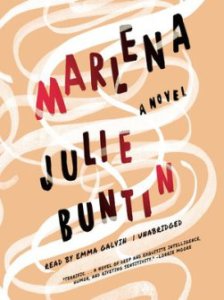
Book Review: Marlena: A Novel by Julie Buntin

I enjoyed reading Marlena.  While it contains components of a YA (young adult) novel, I would classify it as emerging adult.  Fair warning:  Lots of drugs and sex involved.  The good news is that the drugs, and to a lesser extent, sex, drive the plot.  They are necessary to the plot, and fortunately, do not glamorize the consequences of either.  By the way, when I mention drugs here, I am including alcohol.

I didn’t read Marlena with a set purpose in mind.  It wasn’t a book club pick or anything.  In fact, I discovered it by browsing a selection of online books available through my library’s website.  It just sounded good.  It is ultimately a tale of two best friends growing up in a dull northern Michigan town.  It took a while for me to get into the book.  The protagonist, Cat, isn’t the easiest person to get to know.  Also, in the beginning, I didn’t get the fixation on drugs.  She clearly understands right from wrong, but she is fixated on her new best friend Marlena and making the worst possible choices for her life.  By approximately a quarter of the way through the book, I was hooked and found it difficult to put down.

Cat, at least the older, wiser version in the novel, nails what it is like to grow up, to love and lose.  There are so many powerful lines I found myself highlighting them in my Kindle copy, forgetting that it is a library book.  Below are a few of what I consider to be the most powerful lines in the novel.

Close enough to being a writer, isn’t it, working at a library? – Page 45

As an aspiring writer, I loved this quote.  Ultimately, Cat is a writer, but it took her a while to find her voice.  Her empathy for other young women is clearly demonstrated later in the novel in her approach to difficult young library patrons.

For so many women, the process of becoming requires two.  It’s not hard to make out the marks the other one left. – Page 96

This passage really made me think.  I thought of the friends, male and female, in both high school and college, who helped to shape the woman I became.  It made me think of what I wrote about W.M here in particular.  There is something to be said for reconnecting with old friends after years apart and seemingly nothing (and everything) has changed.

I think it’s pretty common for teenagers to fantasize about dying young.  We knew that time would force us into sacrifices – we wanted to flame out before making the choices that would determine who we became.  When you were an adult, all the promise of your life was foreclosed upon, every day just a series of compromises mitigated by little pleasures that distracted you from your former wildness, from your truth. – Pages 129-130

This struck a nerve with me as well.  First, I vividly remember being terrified of dying young as a teenager.  Both of my parents lost close relatives as teenagers, and those stories stayed with me.  Second, the fact that “time would force us into sacrifices” continues to be at the forefront of my mind.  I have always tried to find a way to leave as many doors open as possible.  There is just too much I want to do in life.

I was always aware, in some buried place, that girls my age had just entered their peak prettiness, and that once my pretty years were spent my value would begin leaking away.  I saw it on TV and in magazines, in the faces of my teachers and women in the grocery store, women who were no longer looked at … – Page 143

I so desperately want this not to be true, but it is true.  I loathe this fact about our culture.  Hopefully I will live long enough to see it change, permanently.

Before that year I was nothing but a soft, formless girl, waiting for someone to come along and tell me who to be. – Page 250

Thinking back to what I was like at ages 15-16, I like to think I was somehow stronger than Cat.  Unfortunately, that just isn’t the case; I could closely identify with Cat in the novel.  It makes the novel much darker.  There is a fine line between the successful teenage Cat and the degenerate.
I would recommend the book, especially if you love to write or like reading about love and loss (or even friendship in general).  Is the story sad?  Yes, but it is also full of hope.  It does seem that Cat is at least trying to deal with her loss, with varying degrees of success.

I know I have talked about this before, but I am convinced the right books find me at exactly the right time.  While I certainly wouldn’t call Marlena great literature, it addresses certain topics I would like to cover in my own writing.  I will be rereading this novel.
#MeToo

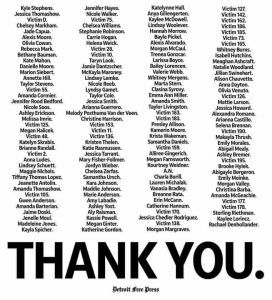
Over the last week, I’ve loosely followed the Nassar case.  While I couldn’t stomach listening to the testimony of his victims, clearly several institutions and people in positions of power (I would not call them leaders by any stretch of the imagination) failed dozens of women and girls.  Sadly, that includes Michigan State University.  The resignation of MSU’s president and athletic director is a start, but it certainly isn’t enough.  Hopefully MSU will have a largely new board of trustees after November.

What angers me more than anything is the attitude of disbelief that seems to surround allegations of sexual assault victims (up to and including rape), particularly when there is an imbalance of power between victim and alleged perpetrator.  This seems to get to the heart of the issue in the Nassar case.  At one time he was a respected physician, how could these allegations possibly be true?

If anyone thinks that this is an issue confined to MSU, USA gymnastics, or college sports in general, think again.  As far as I am concerned, what happened at MSU could have happened on any college campus on any given day.  That is where the real change needs to happen.  Unfortunately, we live in a society that continues to look the other way when it comes to sexual assault, sends severely mixed messages to young men and women about sex, and all too often blames the victim.  That is where the #MeToo movement comes in.  I do hope it encourages victims of sexual assault to come forward.

If anything positive comes out of the #MeToo movement, it will be an increased awareness that sexual assault is more common than most people would like to believe.  There is a widely quoted statistic that one out of four college women will be sexually assaulted in her lifetime (you can find more information at oneinfourusa.org).  A couple of years ago, a male professor at Saginaw Valley State University asked our class – a class of future secondary social studies teachers – if we felt that the statistic was accurate.  Every single woman raised her hand.  The reason our professor asked is because he didn’t believe the statistics and felt that they had to be greatly exaggerated.  He didn’t say a word after almost every single person in the classroom raised his or her hand.

Sexual assault is a major issue that needs to be addressed in our society.  Nothing will change until those who covered it up and enabled the abuse are punished as well.  If nothing else, maybe MSU can be held up as an example on how not to handle sexual assault allegations.  I would have thought the same thing after what happened at Penn State though.  What will it take for our society to change?  There have been too many men and women whose lives have been ruined already.

There is so much more I could say here.  I’ve struggled all week with how to approach this topic.  I do hope that all Nassar’s victims eventually find healing.  Thank you to all of those who testified against him.  As a proud MSU alum, it has been difficult to watch those in a position of leadership at my beloved alma mater be so thoroughly tone deaf.  That must change.  Now.

Perfectionism, Procrastination, and Perseverance

The Heavy Link – Perfectionism and Procrastination

The Most Important Thing a Writer Needs

As much as I don’t want to admit it, I am a perfectionist to a fault.  There is a link to perfectionism and procrastination, and frankly, I am not sure what to do about it.  Several years ago, my boss, who through a strange set of circumstances has known me most of my life, once labeled me as a perfectionist.  I bristled.  I didn’t want to admit it.  I would admit that I was a perfectionist at one time.  At the time, I did not believe the label still applied to me.  Well, it does.  It always will.  I may have let a few things go, but I still strive for perfection in everything I do.

Procrastination is what’s wrong with perfectionism.  Procrastination keeps me from doing what I need to do, especially when it comes to my writing and my personal life.  Trying not to procrastinate led me to make one of the biggest mistakes of my life:  my ex.  I should have listened to my intuition and realized that it wasn’t going to work from the beginning, but I committed myself to making it work.  Unfortunately, it was one sided, and I was too stubborn to realize it.  Procrastination is behind my most egregious mistakes.  When will I learn not to question myself too much and just do what I need to do?

Fortunately, perseverance is part of the equation as well.  I will succeed.  It isn’t too late to go back to do what I need to do.  I am thankful that I am stubborn enough to stick with it until the end.  It may take me decades, but I will persevere as a writer.  I must stop comparing myself to anyone else.  How many times do I tell myself that before I begin to believe it?

To Love Again

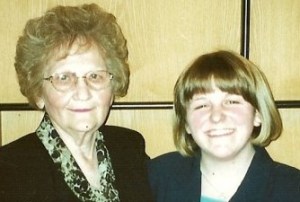
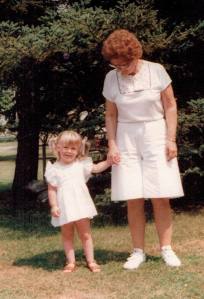
Grandma and me – Michigan State University – 2001

Somewhere along the line, I lost my love of life.  When I think back to the young woman I was during my years at Michigan State, I can’t help but wonder what happened.  I was always planning a new adventure, whether another study abroad program, participating in Alternative Spring Break, or internship/co-op opportunities, not to mention various part-time positions (paid and unpaid) I held while on campus, among many other experiences.  No, I am not that young anymore, but that doesn’t mean I can’t go after what I want out of life.


Unfortunately, over the last decade or so, I began to doubt myself and question everything.  It no longer matters how or why, what matters now is that I get back to pursuing what I love.  Now, I must figure out precisely what that looks like.  There is so much work to do.

A couple of weeks ago, my aunt, my mom, and I went through several drawers of my grandmother’s memorabilia – family photographs, cards, letters, newspaper clippings, and more.  One thing stood out above everything else:  Grandma lived her life to the fullest, even in the face of tragedy.  How I wish I could talk to her now.  Today is the first anniversary of her death.  Tomorrow would mark her 93rd birthday.  There is so much I wish I could ask her.

When I think of all the legacies left behind, it is her love of life that stays with me the most.  She did exactly what she wanted to do and how she wanted to do it.  My dad, her youngest son, did the same.  Both passed that on to me.  I am just as stubborn as well.  Now to figure out what’s next.  I am far from where I was five years ago, but I am not yet where I need to be.

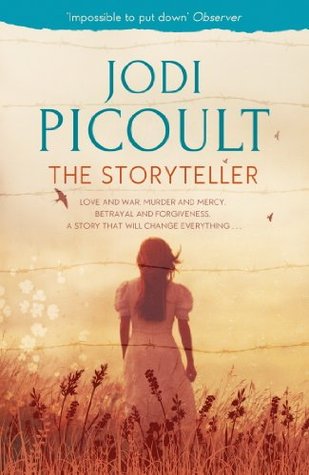
Book Review: The Storyteller by Jodi Picoult

Storyteller 1

I just finished reading The Storyteller by Jodi Picoult.  I found it difficult to put down, and that hasn’t happened for quite some time.  That isn’t to say that I didn’t find issue with some parts of the book.  It simply means that I enjoyed the overall story, particularly Minka’s story of survival during World War II.  I could certainly relate to Sage as well, particularly to her desire for solitude and her relationship with her grandmother.  Unfortunately, I found several things about the modern story to be “off.”  If you are planning to read the novel, you might want to stop here.  Please keep in mind that these are just my opinions.

First, let’s start with Sage.  I couldn’t quite reconcile her personality with her actions.  She may be an atheist and she may harbor lots of guilt, but that doesn’t seem to be enough for her to become deeply involved with married man (Adam).  Being a guilt-ridden atheist doesn’t make one lack moral judgement.  In fact, I would say that her guilt demonstrates that she does indeed have a moral compass.  She even grudgingly agrees with Mary that her relationship with Adam is inherently flawed.  If she was so guarded in her human interactions that she chose to work alone overnight as a baker, why wouldn’t she see all the potential pitfalls in their relationship?  Not only is Adam a funeral director in their shared small town, which practically guarantees that he knows most people in town, he works for his father-in-law.  If Sage was so intent on punishing herself by remaining in an adulterous relationship with Adam, why wouldn’t she consider those who would be hurt by its revelation, namely Adam’s wife and children? It just doesn’t add up.

Then we get to Adam.  Sage already told Adam that she wanted to break it off.  He then doubles down and divorces his wife.  Sage then definitively breaks it off with him.  None of it makes sense to me.  I can understand why Adam decided to divorce if he felt so strongly about Sage; however, wouldn’t one think that he would check with Sage before he just throws his marriage and possibly his career out the window?  It is this impulsiveness in the present-day story that gets to me, which leads me to Leo.

I find Leo to be the most troubling character in the novel.  Something just doesn’t sit well with me.  He waltzes in and sweeps her off her feet with no real backstory.  The backstory available is hardly worth mentioning, and frankly, cliched.  At least it takes Sage a little while to realize that she is falling for Leo.  That doesn’t appear to be the case with Leo.  He fell for Sage practically the moment he met her.  His old-world manners and mannerisms could be charming if they were more fully developed, but that just isn’t the case.  I am all for a happy ending, but Sage and Leo’s relationship at the end appears false and forced in a way that I can’t quite decipher.

In the end, it doesn’t really matter.  Minka’s writing and real-life story make the novel well worth reading, even if she appears to be the only well-rounded character in the novel.  It is enough.  I highly recommend taking the time to read this book, particularly if interested in the World War II era at all.

On a personal note, I finally realized why W.M. found his way into my subconscious lately (read here).  Somehow, I connected Leo’s character with W.M.  I am not sure why, but I did.  I am happy I figured it out!  Mysteries like that have a nasty way of staying with me.  Now to figure out why.


Storyteller 3