Tag Archives: Russell Canoe Livery

Faster. Better. Cheaper.

Little known fact: The US military is the largest supply chain in the world.

My supply chain management education will always color the way I view things.  At times, I wish it didn’t.  In education, I like to believe that most students will find their way, eventually.  Most will find their purpose.  I feel for those who don’t, but it is a reality of life.  There are always those who remain lost, and sadly, I’ve known a few.  I can help, but I can’t be everything to everyone.

With supply chain issues, there is a solution.  There is always a solution.  We just need the resolve to follow through and make necessary changes.  We learned so many supply chain and economic lessons from the Greatest Generation and World War II, but as that generation passed away, I fear that we have lost those lessons or even ignored them completely.

Let me start at the beginning.  I am deeply proud to come from a long line of entrepreneurs.  I long idolized my dad and Grandpa Buttrick.  Both owned and ran their own companies and were self-employed, as different as their companies were and still are.  My dad developed Russell Canoe Livery around our family and our lifestyle.  He had no desire to build it beyond what it is now, even if we had the opportunity.  

Grandpa, on the other hand, loved to build.  He expanded his convenience store business into screen printing, Subway franchises, propane, hotels, and more.  He even loved to compete against himself from time to time.  As a child who loved to build, I took notice.  In having the opportunity to manage one of his convenience stores for a few years, I am grateful to have learned just why Grandpa loved the c-store business so much.  Ultimately, it helped me become a better manager at the canoe livery and a more empathetic boss.

While this cover is exactly how I remember it, it must be an updated version!
No WI-Fi in the 80s and 90s!

As a child, one of the most fascinating books I owned was The Way Things Work by David Macaulay.  I wanted to know how and why things worked.  Looking back, this helps explain why I chose supply chain.  It fit the bill.  I knew I didn’t want to study management.  I wanted to know exactly how value was added, and not just become increasingly removed from day-to-day operations that actually pay the bills.  Accounting and finance never even entered the picture.  In fact, my mom and I joke that we would starve if we had to try and make a living as accountants.  I am decent at math, but I make errors far too often, and it is not my thing.

I do have two older cousins who earned supply chain degrees from Michigan State and blazed the trail, but as my older cousin Emily tried to sell me on supply chain, it made me look at the program more critically.  Instead, my experiences at the Broad Business Student Camp (BBSC) after my junior year of high school sold me on Michigan State and supply chain management.  During that week attending BBSC, I had the opportunity to explore State’s incomparable campus, everything the Eli Broad College of Business had to offer, as well as all things supply chain.  In short, I had the opportunity to preview what my life would be like as a Michigan State business student with one of my best friends.  What was not to like?  By the time my parents dropped me off at MSU in August of 1999, I had to kick them out of my dorm room as I had already connected with student groups in the business school, and I was not going to be late for the first meeting.

Now you know why I never wavered in my pursuit of my supply chain degree, in spite of the fact that, deep down, I knew that I wanted to be a teacher as well.  As for the deeper lessons that stayed with me and kept me up at night, it all started with a business history class I took during the winter of 2000, the very heights of the dot.com bubble.  In fact, the bubble burst that consumed that spring forced me to pay attention.  My history professor, in fact, predicted the fall of the stock market (the dot.com bubble) publicly almost as soon as classes started in January.  When it finally happened in March, as a 19 year old, it left a deep impression.  However, as memorable as that experience was, this is not primarily why I remember this class 25 years later.

Instead, my professor’s description and explanation of how Detroit became the “arsenal of democracy” still sends shivers down my spine.  He made the case that the United States and the Allies would not have won World War II without Detroit.  While I knew Detroit played an important part in the war, I didn’t realize just how important.  Supposedly, when Hitler received intelligence of manufacturing totals coming out of Detroit, he didn’t believe it.  Those who had gained manufacturing experience in cities like Detroit, especially Detroit, would turn their focus to the war effort.

When you think of the manufacturing capability we had during that time, the early 20th century, it makes sense. We were able to help supply Great Britain long before we officially entered the war after Pearl Harbor.  Thanks to FDR, we switched from manufacturing consumer goods to munitions.  We went from cars and refrigerators to tanks and aircraft.  This is the question that keeps me up at night:  Would we be able to do so again if faced with such a crisis?  I don’t know.

Actually, I doubt it, as the way things are now.  Born at the end of 1980, I’ve watched my entire life as Michigan lived up to its “rust belt” image.  Most of the business professionals I graduated with in 2004, me included, had to relocate to states such as Texas and California to find jobs.  When my parents graduated from college in the late 70s, there were still good manufacturing jobs to be had right out of high school, although that would soon come to an end.  I grew up hearing of plant closures, manufacturing outsourcing, and general loss of manufacturing capability in the United States.  It is all I knew. By the time I sought to start my career, little remained.  Instead, less secure positions with multinationals outsourcing much of their labor to places like China, Mexico, and India took their place, particularly in the shadow of the first dot.com bust.

By the time I interned with IBM out in Rochester, Minnesota during the summer of 2001, not only did they not have enough for their interns to do, their full-time, permanent employees didn’t either.  Instead, they were focusing on their garage bands and updating their resumes.  In 2003, as part of a tour of a GM factory in Mexico near the border, I vividly remember seeing rows upon rows upon rows of brand new Pontiac Azteks and Buick Rendezvous awaiting shipment as our chartered bus slowly approached the plant.  Looking back, it foreshadowed Pontiacs epic downfall several years later. Tragically, Pontiac would never recover from the monstrosity that was the Pontiac Aztek.

My last semester at Michigan State in 2004 brought the Eli Broad College of Business’s first Chinese Supply Chain Symposium.  Of course, it focused on all of the wonderful benefits of outsourcing manufacturing to China.  I left wondering if I was the only one asking just how long before we were outsourcing our own jobs?  Where and when would it end?  Was I the only one seeing the connection between outsourcing and both unemployment and underemployment in the United States?

Even Russell Canoe Livery has a supply chain,
one with its own set of challenges and setbacks.

I will leave you with this summary.  We desperately need to bring manufacturing back to this country.  If you think the supply chain interruptions during the COVID 19 pandemic were bad (and I followed them closely), what would happen in the case of an even worse global crisis?  Good manufacturing jobs helped finance the growth of the middle class throughout most of the 20th century, particularly after World War II.  Why can’t we get back there?  We’ve learned so much during that time, and we have the workforce, if given a chance.  I hope I live to see it.  By the way, this doesn’t mean becoming isolationist.  It is simply expanding beyond the pharmaceutical, technology, and service industries.  Supporting local farms wouldn’t hurt either!  Cheap is good, but it is not always best in the long-run.  We’ve remained far too short-sighted and complacent for far too long.
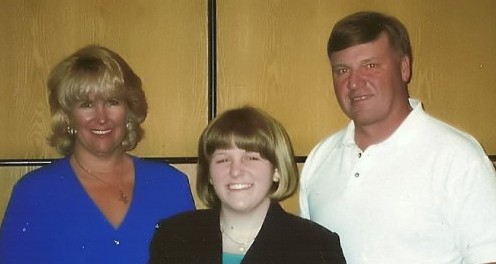
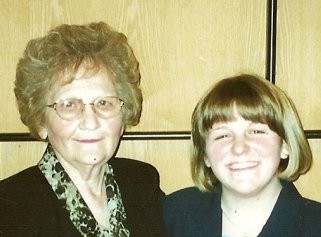
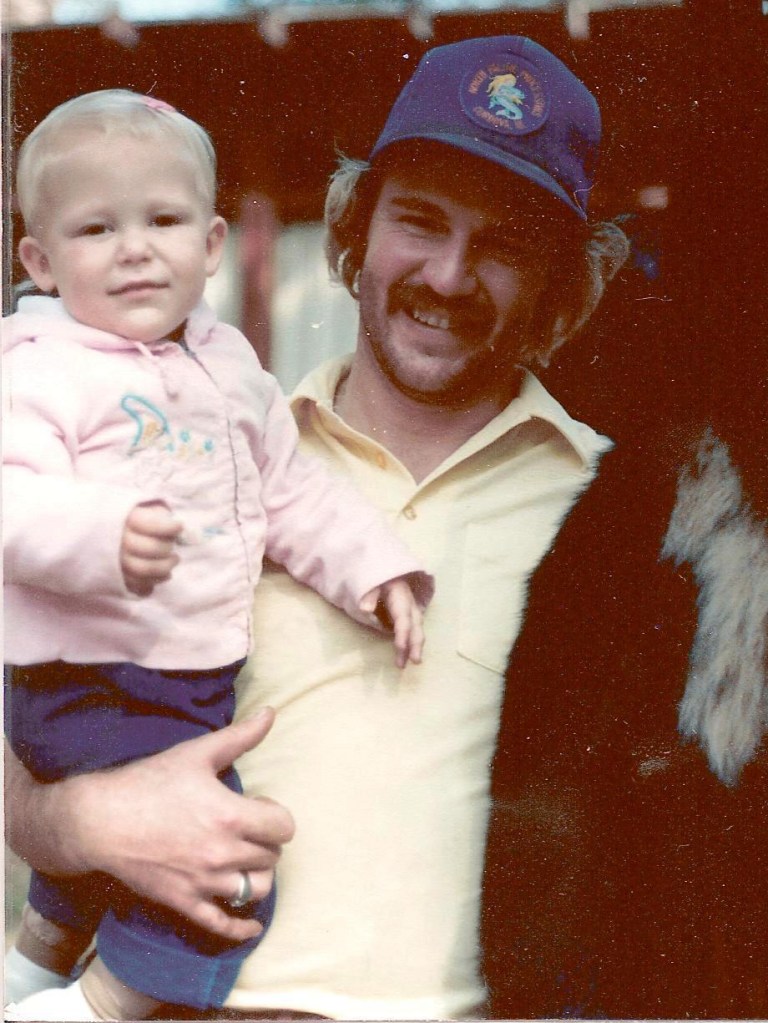
Mom, Dad, and I – Spring 2001
Tower Guard Induction – Beaumont Tower, Michigan State University
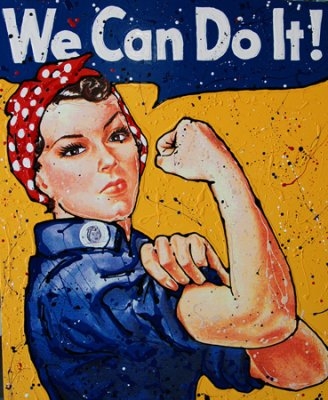
In honor of Grandma Reid, who worked as a riveter in both Hamtramck, MI and Fort Worth, TX during the World War II era, all before the age of 20.

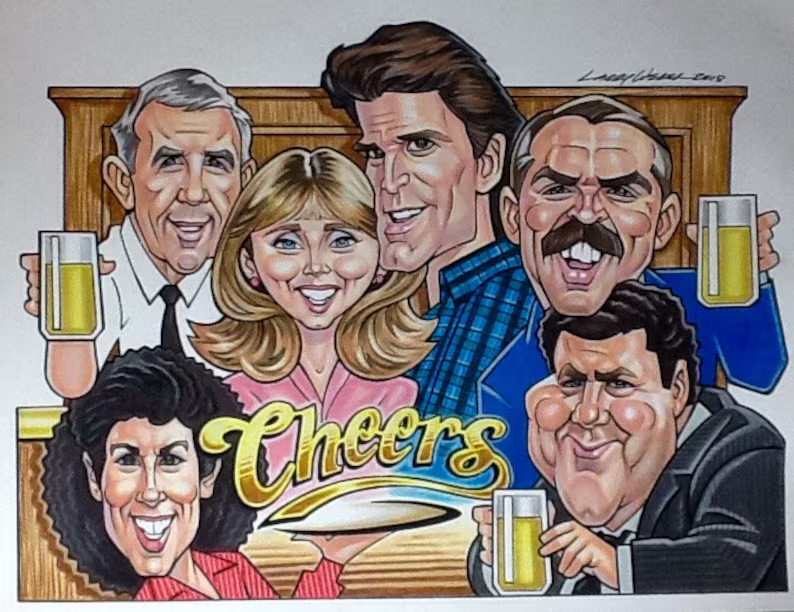
Classic TV Endings – Cheers (1982-1993)

At times, the ending of a TV series works, and at others, it doesn’t (I’m looking at you Seinfeld!).  When Cheers aired its final episode in May 1993, I watched.  I remember Shelley Long (Diane) returning and the cast partying as it aired (infamously so), but I do not remember it being so poignant.  The final scenes with Sam and Norm, and later, Sam alone in the bar, are now among my favorite TV series endings of all time.

Growing up, I adored Cheers.  I watched it with my parents every week.  As an adult, I rewatched the series.  The characters still hold up.  It wasn’t just the main characters – Sam, Diane, Coach, Carla, Woody, and Rebecca – that drew us back every week, but an entire complimentary cast of characters capable of anything – Norm and Cliff, not to mention Frasier and Lillith.  The episode in which we met Lillith remains one of the funniest.  Throughout the rest of the series, Dr. Lilith Sternin-Crane developed into one of the funniest and quirkiest female characters on TV.  She is still one of my favorite TV characters after all these decades.

Who can forget Lilith? Enough said.

Aside from all of the laughs and hijinks throughout the series, the humanity of all of the characters (every last one deeply flawed) shined through.  Yet, the last scenes of the final episode hit me right in the gut.  It isn’t every day that a TV show can make you deeply and profoundly appreciate what you have.

It starts innocently enough.  Norm stays after everyone else heads out after welcoming Sam back to the bar after escaping marriage to Daine yet again.  He didn’t want anyone else to hear what he has to say, and he’s up for one last beer, of course.  He tells Sam that love is the true meaning of life.  He continues to state that people are always faithful to their one true love, that he’d be unable to be unfaithful to her.  When Sam asks whom that would be, Norm simply states “Think about it, Sam,” smiles, and leaves, setting up the final shots of Sam in the bar alone.

Alone in his bar, Sam slowly realizes that it is his bar that is the love of his life.  He recognizes just how much it, and all those in it, mean to him.  He even straightens Coach’s framed portrait of Geronimo before closing up.  In a clever twist, the final shot of Sam closing up and heading towards the back entrance of the bar mirrors the opening of the series in which Sam makes his way to the front of the bar as he is opening up for the day.

Nearly 30 years ago … Working with Grandma Reid at the canoe livery.

All I can say is this:  As someone who has spent her entire life watching her parents and grandparents build a family business – and as someone who will one day fully take over said business with her brother – I get it.  Boy, do I ever get it.  I can’t imagine my life without the canoe livery.  I hope that I never have to do so.  It is the people – employees (current and former) and customers – that make the business, along with the river and the land itself. I’m lucky, indeed.

I say it often, but we have the best customers.  I estimate that 99% of our customers are great.  The remaining 1% make for great stories.  We are currently winding down for the year, but when spring comes once again, I will be ready to start it all over again.

Dr. Fraiser Crane in one of the longest-running TV characters in history.
The reboot of Fraiser will soon start its second season.

A Summer Full of Memories

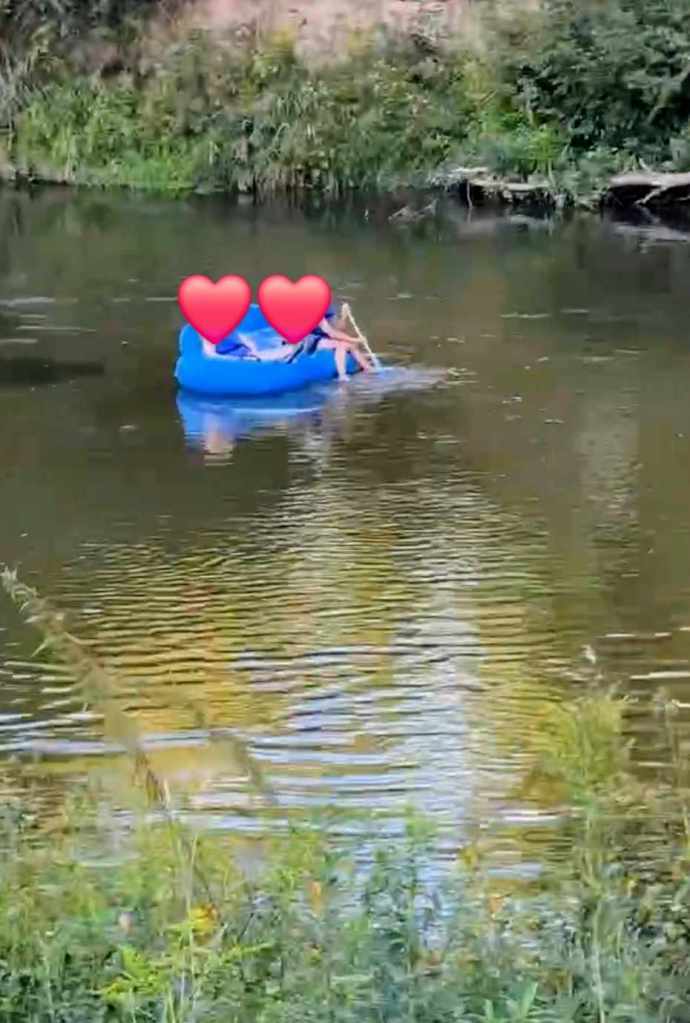
Summer 2024 – Rifle River – Omer, Michigan

I’m always conflicted Labor Day Weekend.  On one hand, I am happy for summer and the canoe livery to be over for the time being.  Fall is my favorite season.  I’m eager to get back to the classroom.  On the other hand, I love 10 PM sunsets and the very idea of the endless summers of my childhood.  I vividly remember my dad taking my sister and me home to put us to bed while it was still light out, begging him to take the backway home (Jose Rd.), Erica and I exhausted from a full day swimming in the river.  We lived the river all summer long.  At 10, I distinctly remember walking downtown Omer during Suckerfest in early April, fixated on how unfair it was that it would be close to two months before I could swim in the Rifle again.

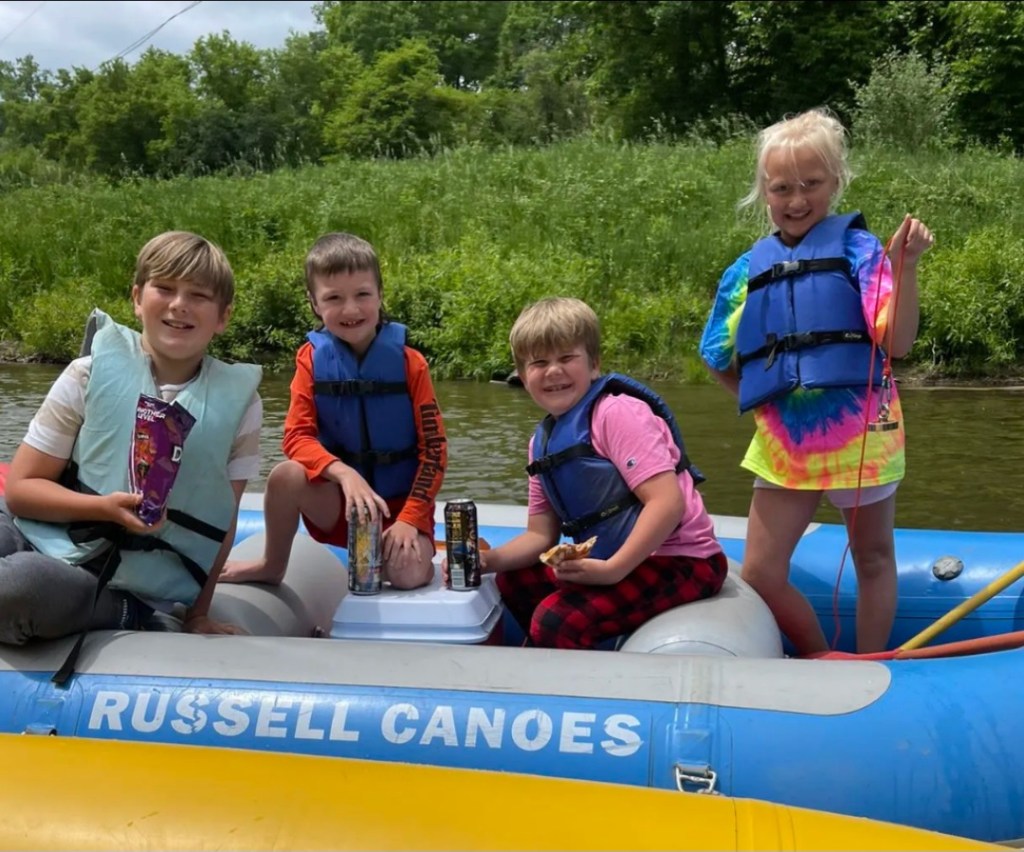
As of late, I watch and notice how my niece and nephew enjoy being kids growing up at the canoe livery.  Each year brings forth more long-forgotten childhood memories.  This weekend, my niece and a friend took tubes to the end of the road and floated around the entire campground back to our dock.  My friends and I did this countless times at their age.  To be 10 again without a care in the world!

Earlier this summer, I overheard kids discussing what I grew up calling “rocky.”  It is a simple game.  All one needs is two people, a tube, and a body of water.  Two kids sit across from one another on the tube and lock legs, bouncing as hard as possible to knock the other kid off into the river.  Our river version required a short walk upstream and had a natural time limit.  We would walk the short, sandy straightaway upstream leading to the dock, the object being to knock the other person off before we reached the dock.  My sister Erica, our cousin Abby, and I spent countless hours playing various versions of this game, leaving the river waterlogged with suits and hair full of sand.  I am grateful that, in spite of all that has changed in the last 30 plus years, I still live in a world where children are still allowed carefree summers.

Russell Canoe Livery and Campgrounds Promo Video

I thought that I would share the latest version of our Russell Canoe Livery promo video.  Put together by Garrett Russell, much, if not all, of the footage was created by him as well.  I’d love for him to create more!  Due to copyright and music editing issues, it is best to watch the video without sound.

Hello August!

How is it August already?  I will soon start gearing up for the upcoming school year, and the canoe livery will be winding down for another year.  By the time the school year is finished, I am eager for all of the craziness that is the canoe livery.  By Labor Day, I am more than ready for the next school year.  Right now, I am excited for the new school year to begin. The planning has indeed already begun!

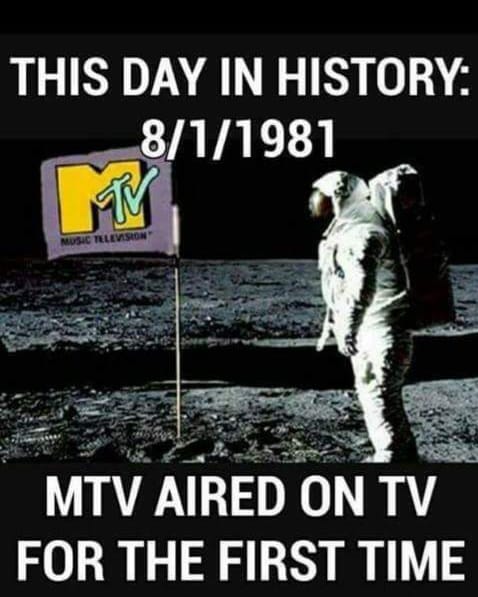
On a historical note, MTV debuted with “Video Killed the Radio Star” by the Buggles on this date 43 years ago.  I can’t imagine a more perfect first video, especially considering that the year was 1981.  Campy and self-aware, it set the stage for a solid 15 year run of great music videos.  That may be a joke, and even a meme, but it isn’t far from the truth.  By 2000, the MTV we grew up with and loved – the MTV that took Madonna and Michael Jackson to new levels of stardom – turned primarily to reality TV never to return to its roots.  Gen X and Xenniels remember …

The first music video aired on MTV when it first aired on August 1st, 1981 –
“Video Killed the Radio Star” by the Buggles

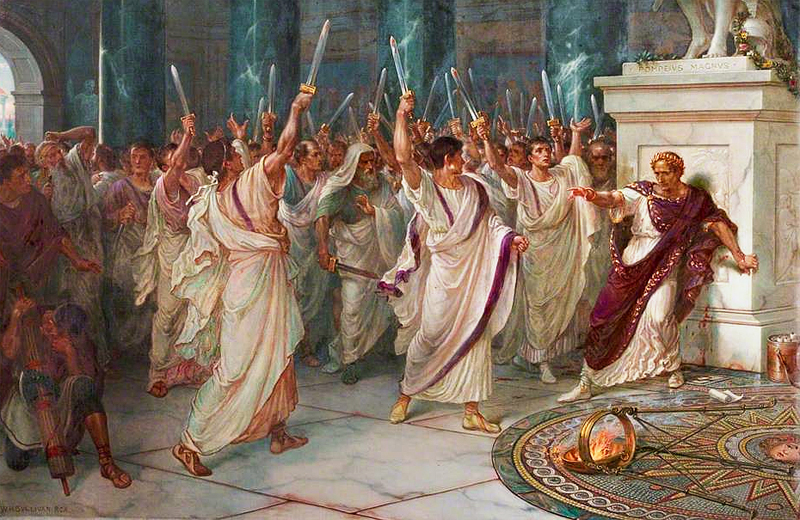
The Ides of March

The middle of March will always bring memories of long family weekends in Grayling, MI.  Every year, we would attend the annual Michigan Recreational Canoeing Association meeting.  For my parents, it meant meetings, ordering merchandise for the summer ahead, and sharing ideas with other canoe livery owners.  As a child, it meant a long weekend swimming in the hotel pool, interspersed with time in the arcade and ordering pizza at least once.  Above all, I counted it as a sure sign of spring and the long summer to come.  Throughout my childhood, I considered it the first sign of spring – right up there with the return of the robins,

I loved going to the Holidome for the weekend.  My immediate family all attended, of course, but the entire conference took on the atmosphere of a family reunion at times.  When my aunt married, she and her then husband Kevin purchased a canoe livery on the AuSable.  We spent lots of time with Aunt Amy during RCA weekends.  In fact, when Aunt Amy later helped my mom and I place orders for the upcoming summer during the pandemic – an experience I hope to never repeat – it sparked a bit of nostalgia between sisters.  As Mom and Aunt Amy said, we were the association before the association.  They reminisced about the old meetings and some of the more memorable owners.  At one point, my dad even served as president.

Other liveries on the Rifle attended too.  One of my dad’s best friends at the time, Phil, owned Cedar Springs.  His wife and daughter, both named Connie, attended as well.  Both were family favorites.  Phil’s daughter taught with my mom for years, while his wife watched us while we were in the pool from time to time.  Every time we passed Cedar Springs on our annual overnight canoe trips with our dad, my sister Erica and I were treated to ice cream cones as we headed home on the river.

The White family attended as well.  White’s Canoe Livery happened to be the first canoe livery on the Rifle.  In fact, there would be no Russell Canoe Livery without White’s.  My grandfather got the idea from Don White and then started Russell Rent-a-Canoe out of what is now my home.  It all started in 1959 with a Ford pickup and a six haul of canoes.  To this day, the only person I know who knows the Rifle River as well as my dad is Ladd White, Don’s son and current owner.  I hate to think of the knowledge that will be lost when my dad and Ladd are no longer around.

Canoeing near the park in Omer ~ early 20th century.  The site of the former Omer park is just downriver from our main location in Omer.

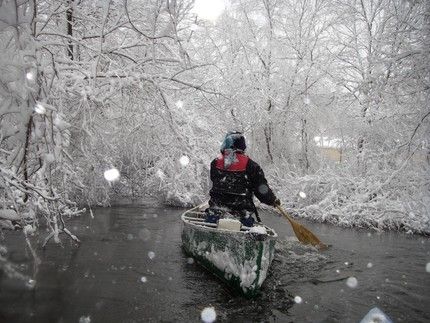
For some reason, I seem to remember that there would be a March canoe trip as part of the meetings.  At one point, it may have been referred to as the Ides of March trip.  As a child, that fascinated me.  I could not understand why anyone would want to canoe in the winter.  In my child’s mind, canoeing and tubing meant one thing and one thing only:  swimming.  What was the point of canoeing if you couldn’t get wet?  That happened to be my biggest gripe about March.  March supposedly brings spring, and yet, it would be months before I could swim the river again.  It didn’t seem fair.

The Rifle River and Russell Canoe Livery will always be a part of me.  My first home happened to be near our main location in Omer.  One day, hopefully decades in the future, it will also be my last.  March is when it all starts to spring to life once again.  Reservations start rolling in, plans are made, and merchandise is ordered.  I love it all, especially our customers.  Here is to a wonderful summer 2024!

Not The End, The Beginning – Part 3

Cousin fun on the Rifle River, Omer, Michigan.June 2023

Part 1

Part 2

This year will mark my 12th year back working at Russell Canoe Livery.  Each year, I love it even more and appreciate what my parents and grandparents built.  Without the canoe livery, pursuing my teaching career, and student teaching in particular, would not have been possible.  None of it would have been an option.  Only when I returned to the family business in 2013 did I fully understand just how much my mom contributed to the canoe livery.  After retiring from teaching in 2010, Mom became more involved in the business.  Only in 2013 did I begin to take over some of her responsibilities.  I had to reconsider what I wanted and the narrative I had created for myself.

Growing up, I always looked up to my dad and Grandpa Buttrick.  Both businessmen, I saw how both had created a life for themselves using family businesses.  In Dad’s case, the seasonal nature of the canoe livery allowed him to pursue other interests and provide us with a great quality of life.  As his sidekick, I grew up watching Dad making decisions about the business.  Prior to building the Crystal Creek shower house in 1992, I went with him to check out similar showerhouses.  One of my earliest memories is going with Dad in his truck to unclog the artesian well across the road in Crystal Creek Campground.  I used to argue with him when Erica and I would catch the bus from our house behind Crystal Creek to our main location in Omer.  He, of course, wanted us to ride in his bus.  Knowing that he wouldn’t let me bounce around in the back of the bus, I wanted to ride with anyone else.  Dad often won.

Grandpa Buttrick, on other hand, moved his young family from Marshall, Michigan to Standish, Michigan to take over his grandfather’s business:  Forward Corporation.  On our yearly trip to the Upper Peninsula with my Buttrick grandparents and cousins, we always had to stop in Gaylord to check on his convenience stores.  He loved the business, and due to a unique set of circumstances, I managed one of his convenience stores for a few years.  Through that experience, I learned just why he loved that business so much.  If I hadn’t moved back to Michigan in 2005, I would not have had the opportunity to get to know Grandpa Buttrick so well before he passed away in 2007.  Like teaching, business runs deep in my blood.

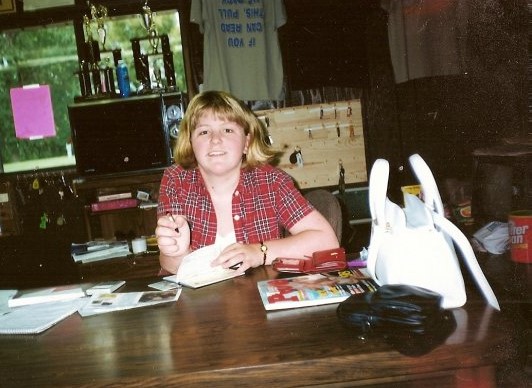
Late 90s at Russell Canoe Livery.
Hard at work!

When I graduated in 1999, I attended Michigan State University to pursue a business degree in supply chain management.  I quickly decided to pursue a Spanish degree too.  I couldn’t give it up.  Both of my older cousins earned degrees in supply chain management from MSU as well.  I knew the program, and frankly, the subject still fascinates me.  Even though I didn’t end up with a long career in supply chain, those experiences during my years at MSU made a deep impression on me and still shape how I view the world.
The processes of working so closely with my parents on all things relating to the canoe livery and establishing my teaching career gave me a whole new appreciation for my mom.  I will never understand how she taught kindergarten for 15 years.  Two half-days substitute teaching in kindergarten were more than enough for me.

As time went on, I slowly realized that the canoe livery would not have been nearly as successful without Mom and Grandma Reid.  Dad may have had the vision and made it happen, but it would not have been possible without great customer service provided by us all.  I may have grown up wanting to follow in Dad and Grandpa Buttrick’s footsteps, but I followed in my mom’s instead.  I just faced a different set of circumstances.

Every New Beginning …

Well, how can I fully explain last week?  Last Thursday, I took my last final exam ever – unless, of course, someone wants to pay for a graduate degree program or PhD.  Frankly, it is amazing.  I attended Michigan State from 1999-2004 – and then Delta College and Saginaw Valley State University to obtain my teaching certificate (2014-2016).  When I started my teaching career, I almost immediately decided that I wanted to add an English endorsement to my social studies and Spanish secondary endorsements.  Back to school I went from 2019, class by class and in the middle of a pandemic, until last week.  I am done.  Now that my grade is finalized, I will finally be able to add the English endorsement (secondary) to my teaching certificate.  In fact, I already applied to have it added.
So, what’s next?  Well, after this summer, I am not entirely sure.  We will see where things take me come fall.  I have several ideas.  For now, I am in the midst of getting the canoe livery ready for the summer.  Starting May 15th, I will be working there full-time once again.  I’ve actually been taking reservations at home all winter.  People are eager to get out on the river!  As I say so many times, we have the best customers.  I love thinking about how many memories have been made at our campgrounds and on the RIfle River over the decades.

RIght now, I couldn’t be in a better place.  I wrapped up so many loose ends over the last academic year and did exactly what I set out to do.  I have so many great options in front of me.  I finally feel ready to move on.  Stay tuned!

Of Hunting and Fishing, Reading and Writing

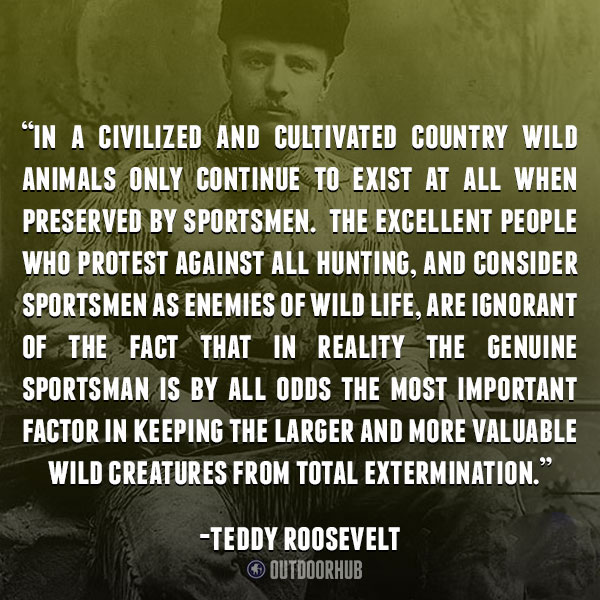
Teddy Roosevelt is easily one of my favorite Presidents.

Sometimes I question whether or not Dad realizes what an example he set for his children – or at least me, as I can’t speak for my brother or sister.  He, along with my mom, spent the last nearly 46 years owning and operating Russell Canoe Livery and Campgrounds, Inc. and are still actively involved in the business.  They purchased the canoe livery from my paternal grandmother, Judy Reid, in June 1977, a few months prior to their wedding.  Growing up in and with the business, I saw firsthand what my parents and grandparents did to grow the business, including the sacrifices they made.

As a child, whenever anyone asked what my dad did for a living, my response of “he owns a campground and canoe livery” fascinated many.  As the canoe livery developed, Dad focused on creating a business that not only worked around our family life – it complimented my mom’s teaching career and our school schedules well.  It also allowed him to pursue his hobbies of hunting and fishing in a way impossible for most people.

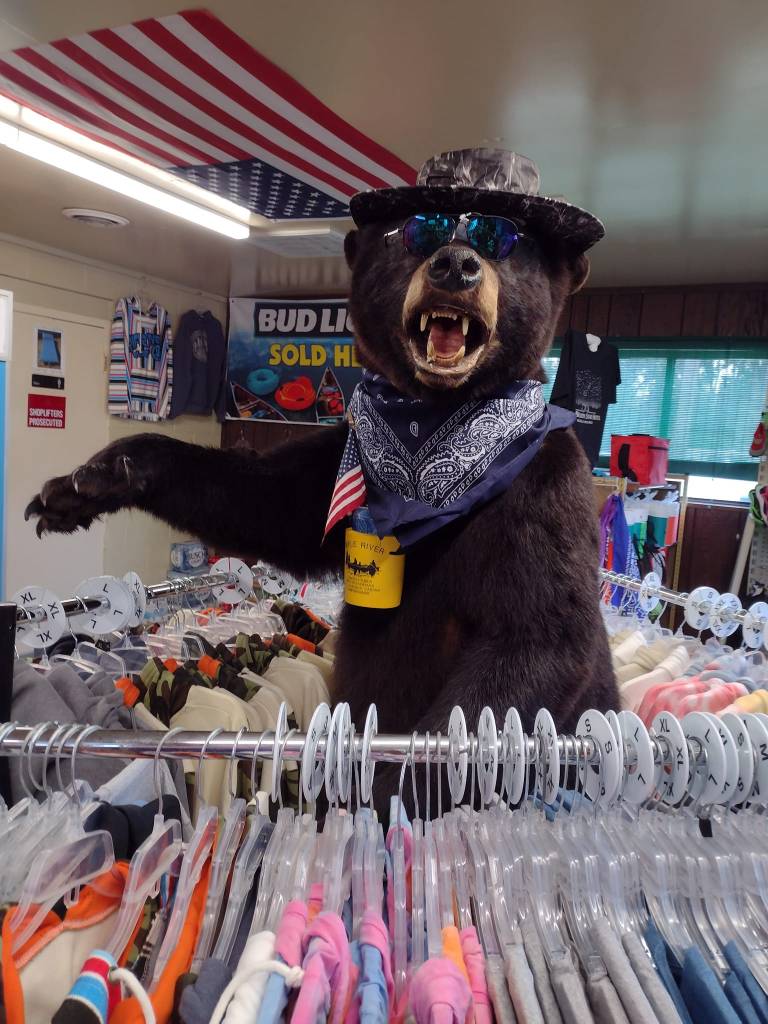
I admit it:  I know more about hunting and fishing than any non-hunter, non-fisherwoman I know.  All thanks to Dad.  I grew up feeding Beagle hunting dogs used for rabbit hunting; with various mounts in our basement; and learning what a Pope and Young record meant, once my dad killed a Canadian black bear with a bow and arrow.  That bear now infamously resides in our main office/store in Omer, a legend in his own right.

This guy gets a lot of attention during the summer months, holding down the fort in our office.
Russell Canoe Livery, Omer, Michigan

As a young child, when I asked Dad why he hunted deer, he took the time to give me the full, true explanation.  At six years old, he explained how deer hunting helps control the deer population in Michigan.  If they weren’t hunted, there would be many more car/deer accidents, and they could become over-populated, causing starvation and disease.  I have never forgotten that lesson.  Even though I am no hunter myself, I have no issue with it – as long as rules are followed and as much of the animal is used as possible.

What I admire most about my dad is how he was able to create a life for himself in which he prioritized what he wanted out of life – and it wasn’t money – it was about lifestyle.  Even though he didn’t directly use his degree in wildlife biology in his career – he didn’t become a conservation officer – that knowledge allowed him to more fully understand what was needed to become a better hunter and fisherman.  Dad’s passion for his hobbies, even today in his 70s, still inspires me.

What I’ve long realized is that I am just as passionate about reading and writing.  He may not see it or recognize the correlation, but I do.  It is the reason why I earned my writing certificate from Delta College, took additional humanities courses when possible, joined Mid Michigan Writers, attended several writing workshops, and so much more.  Everyone should be so lucky.  I am never bored.  I am eternally grateful that my dad was able to find a way to make it all work and set an example for me to follow.  Per usual, I’m just doing things the “hard” way.  I will get there … eventually.

Omer, Michigan

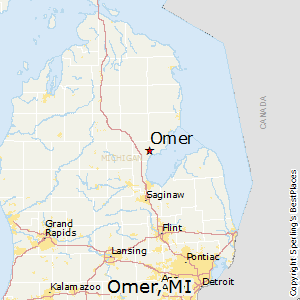
Recently, I realized that I mention my hometown extensively without providing many details.  Unfortunately, many readers – even seasoned Michiganders – might have no idea where Omer, Michigan is.  It is just under an hour north of Bay City.  If you take the 188 Standish exit off of I-75, you will likely end up on US 23 north in Standish.  Omer is the next small town, approximately 7 miles north on US 23.  A bridge over the Rifle River, a caution light, and a set of railroad tracks are all landmarks to let you know that you have traveled through the city.

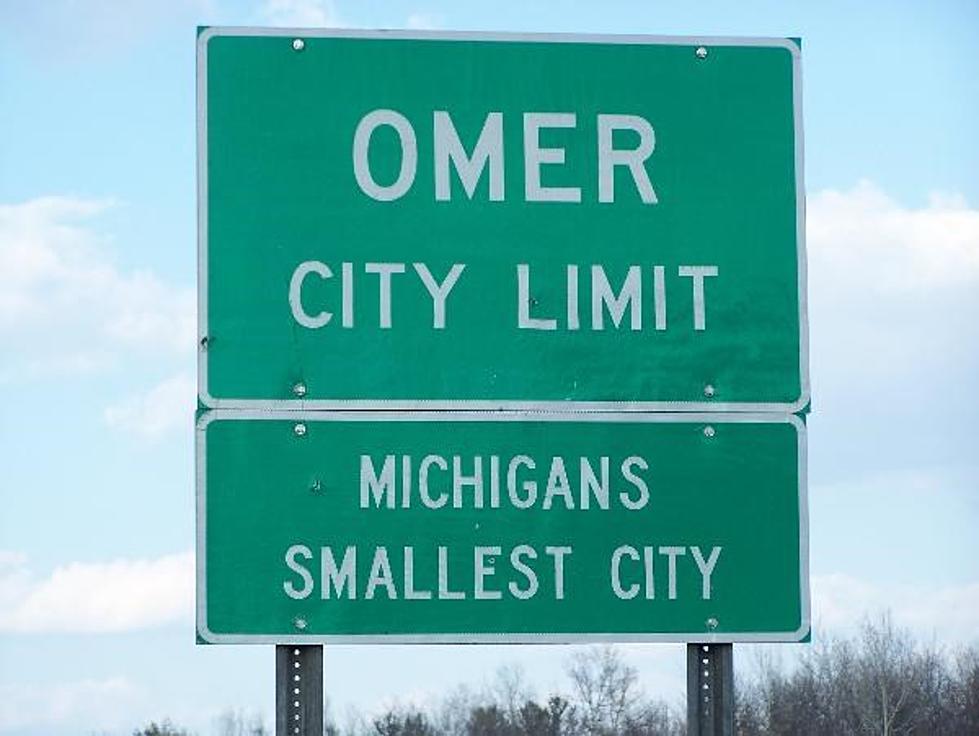
Being from Omer, Michigan isn’t for the faint of heart.  For decades, the city of Omer has held the distinction of being Michigan’s smallest city, boasting a population just shy of 300 souls.  Living in a small town does not come without its hazards.  Nothing remains private for long.  Both of my parents grew up in the area as well, with both of their families having ties to the area going back generations.  Growing up attending Standish-Sterling Community Schools, not only was I a teacher’s kid as my mom spent most of her teaching career at Standish Elementary, our family business, Russell Canoe Livery, meant that my family was well-known in both Omer and Standish.  In fact, Omer has no school, aside from a Head Start program aimed at preschoolers.  When Omer’s school burned down in the early days of the 20th century, it was never rebuilt.

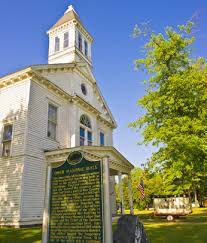
Sadly, despite its location in the heart of Arenac County and its one-time status as the county seat, little remains of a once thriving city.  Today, the Arenac Country Historical Society works to preserve the Old Courthouse, the lone remaining structure to tell Omer’s cautionary tale.  During the early part of the 20th century, roughly 1905-1918, Omer experienced a series of natural disasters (namely fires, floods, and tornadoes) that nearly destroyed the city.  Throughout the 80s and 90s, the local diner, first known as Cody’s and later Ziggy’s (now a Dollar General), had disposable placemats outlining Omer’s history, including the natural disasters.

Originally named Rifle River Mills, Omer’s identity has always depended on the Rifle River.  In the late 19th century, lumber from dense northern Michigan forests traveled rivers such as the Rifle to the sawmills in the south, namely in Bay City and Saginaw.  In fact, our main location in Omer, our smaller campground, is the remains of an old mill pond.  In fact, it becomes easy to imagine the pond if you look at the current topography of the campground.  Today, the Rifle River is used exclusively for recreational purposes – fishing, canoeing, kayaking, rafting, tubing, and more.  One day last summer, I saw two young girls in bathing suits walking down Carrington St. carrying their canoe.  It is forever frozen in my mind as the most “Omer” thing I’ve ever seen in my life.

Today, Omer is home to three campgrounds, two of which are also canoe liveries, Russell Canoe Livery and Campgrounds, Inc., being the largest.  In addition, Omer is home to Meihls Mechanical, a self-storage business that is continually growing, Dollar General, the Sunrise Side Senior Center, a library attached to city hall, a post office, a small park with basketball hoops and playground, the Old Courthouse, and not much else.  While not exactly thriving, the city itself looks better than it has in decades, closed Rob’s Auto and Greg’s Market aside.

Today, Omer is relatively well known for two things:  the local sucker run and witchy wolves.  The sucker run deserves it own post.  As it will be starting soon, stay tuned.  My piece on the witchy wolf legend, dating back to right after the US Civil War, can be found here.  Omer will never be perfect, but it will always home.