Tag Archives: travel

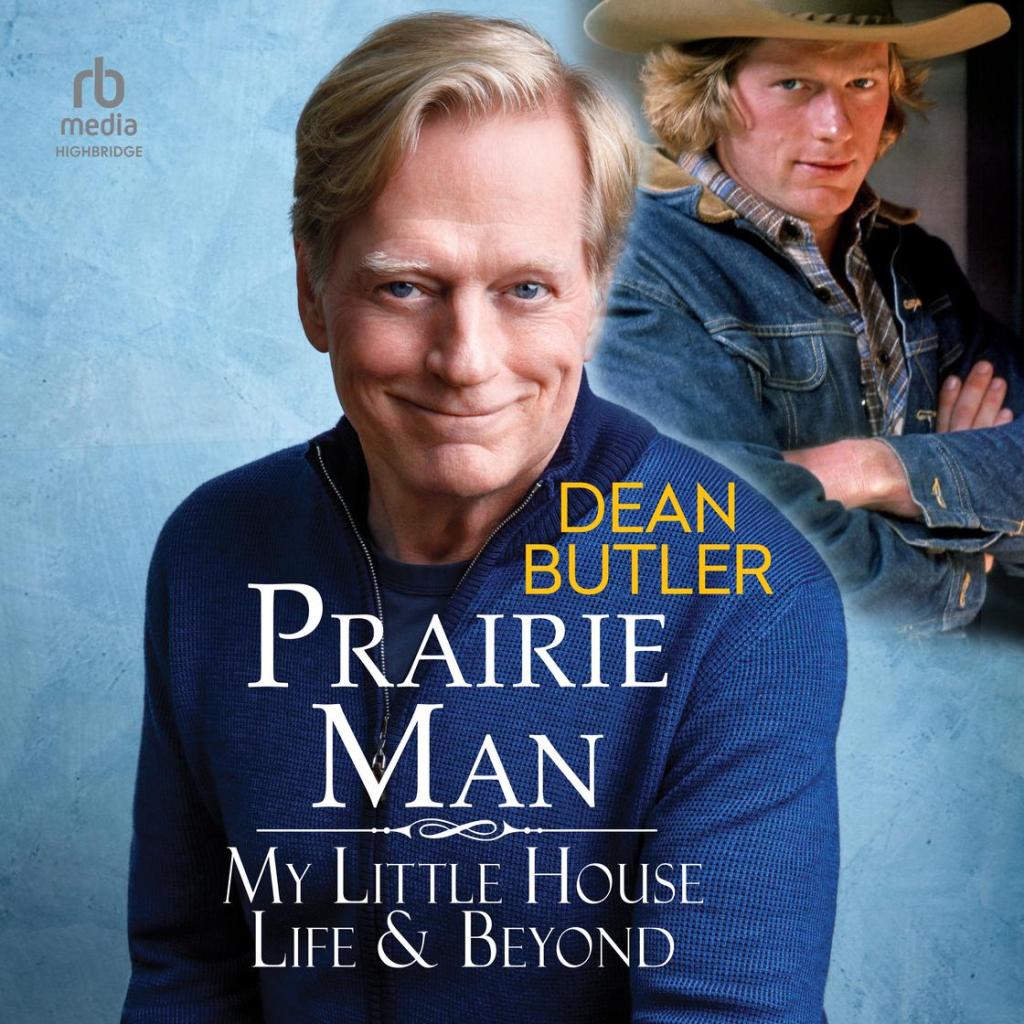
Book Review: Prairie Man by Dean Butler

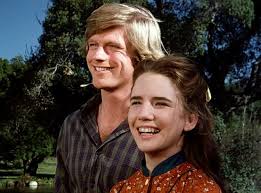
Dean Butler as Almanzo Wilder
in Little House on the Priarie

This year, the TV show Little House on the Prairie celebrates 50 years since its television debut.  Oh, and does that show still have a following.  To celebrate, several events were held at various locations throughout the country, including most of the homesites of the Ingalls and Wilder families.  They even recreated several of the sets at Big Sky Movie Ranch in Simi Valley, California, where most of the series was filmed.  Infamously, the last installment of the series saw the original set of the town literally destroyed as part of the plot.  Under the terms of filming, the producers of Little House on the Prairie contractually had to return the land to its original condition.

So, where does Prairie Man by Dean Butler come in?  First, the book debuted this summer in the midst of all of the events.  Second, and most importantly, Dean Butler, who played Almanzo Wilder in the last years of the series, and Alison Arngrim, the one and only Nellie Oleson, who famously penned Confessions of a Prairie B*tch, have worked tirelessly to keep the legacy of the TV show alive.  In fact, this entire year, they decided to host a podcast dedicated to all things relating to the 50th anniversary of the Little House on the Prairie TV show.

Prairie Man stands out for a couple of reasons.  First, I may not be technically correct on this, but I believe that Dean Butler is the oldest surviving male cast member.  Several actors that played young boys on the series survive, but the grown men, including Michael Landon, Victor French, Richard Bull, and Dabs Greer, just to name a few, are long gone.  While there are several memoirs written by female cast members, including two alone written by Melissa Gilbert, Prairie Man is the only one written by a man. 

While I’ve only read Confessions of a Prairie B*tch by Alison Arngrim (you can read my review here) and Prairie Man by Dean Butler, they could not be more different.  I loved both, but I enjoyed Butler’s sense of history, not to mention his diplomatic handling of tensions between fans of the books and fans of the TV show.  He addressed all of the controversies surrounding both series well.

I learned a lot.  While I knew that Rose Wilder Lane’s “adopted” grandson, Roger Lea McBride, ended up with the television rights to the novels, I did not know the full story.  The real story is included in Prairie Man.  In the early 70s, Ed Friendly purchased the rights from McBride due to his wife’s and daughter’s love of the books.  Only when Michael Landon became involved as executive producer, taking the TV show further and further from the original books, did trouble occur.  According to Butler, Roger Lea McBride became horrified when realized what he had done.  Like Friendly, he envisioned a TV series much more faithful to the books.
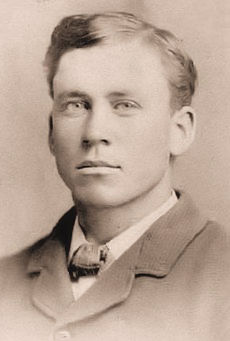
The real Almanzo Wilder, subject of Farmer Boy by Laura Ingalls Wilder

Eventually, all of this grew tension between Landon and Friendly.  Landon’s vision, of course, ultimately prevailed.  It may have been for the best.  Ask yourself, how many children and adults were introduced to the books via the TV show?  Alison Arngrim even admitted that she didn’t read the books until after being cast as quite possibly the best child villain ever portrayed on television, Nellie Oleson.  Michael Landon may have taken extreme creative license, but love it or hate it, Little House on the Prairie, the television show, is still shown all over the world in syndication 50 years later.  It will not die.

The funny thing is that I used to blame Roger Lea McBride for selling the rights to the television series and Michael Landon for what it became.  I used to view the Little House series of books as a cautionary tale as to what can happen if an author’s legacy isn’t well-guarded or just ends up in the hands of attorneys.  For those who don’t know, Rose Wilder Lane never had children (she never formally adopted Lea), and thus, with her death in 1968, Laura Ingalls Wilder and Almanzo Wilder no longer had any direct descendents.  I see it differently today.  I suppose I now subscribe to the old saying “any publicity is good publicity.”

While I probably would have discovered all of the books on my own, especially after my 2nd grade teacher, Mrs. Butz, read Little House in the Big Woods to our class, I doubt any of it would have left such a lasting impression without the TV show.  Early elementary school would not have been the same without it.  I distinctly remember jumping off the bus after school, pigtails flying behind me, eager to catch the 4 PM reruns.  Funny note:  Due to the fact that I grew up on the reruns, I thought Dean Butler was significantly younger, by at least a decade, than he actually is.  His book, of course, made this clear.

Today, I am not necessarily a fan of the TV show, although I do greatly admire what Dean Butler and Alison Arngrim have done for all Little House on the Prairie fans.  I suppose I am not a typical fan.  Normally, most people are devoted fans of the books or the TV show, not necessarily both.  More than anything, I am a huge fan of the real person, the writer herself, the real Laura.  Her true story is far more fascinating than just the books.  She lived an incredibly full additional 70 years after the life she described in all of her books.  When you add in all of the drama surrounding her only daughter, Rose Wilder Lane, it justifies all of the relatively new scholarly work surrounding the Ingalls and Wilder families.  There are still so many questions left to answer.

If you are interested in the Little House series at all, whether book or TV show, Prairie Man is well worth reading.  Butler makes the case that he feels he was born to play Almanzo.  Growing up on a ranch in California, he describes in detail how his entire career has been shaped by that one role.  As he grew older, he decided to lean into it and run with it, much as Alison Arngrim has over the last few decades.  Fortunately for Little House fans, its incredible legacy is in good hands for the time being.

You can also check my review of Prairie Fires by Caroline Fraser here.
Thirty-One – The One Where We Say Goodbye

I found out that direct sales company Thirty-One, named after the Bible passage in Proverbs 31 that describes a virtuous wife, is closing at the end of the year.  Approximately a decade ago, I sold for a handful of direct sales companies hoping that one would stick and that I had inherited a few of the skills that led to Grandma Reid’s successful 40 year direct sales career.  She only stopped when she could no longer find a quality women’s clothing direct sales company to carry.  In fact, she outlasted several companies, namely Minnesota Woolen, Queensway, and Beeline.  I still happen to have an adorable small stained glass plaque advertising Beeline, bees and all.  I couldn’t bring myself to get rid of it.  I had to at least try.

At the time, I tried selling Avon, PartyLite, and of course, Thirty-One.  Handsdown, Thirty-One is the one that captured my heart.  If it hadn’t become so oversaturated, I would probably still be selling it.  Avon needed no introduction and offered high quality products.  The problem became that they ran new catalog campaigns every two weeks.  If you are doing anything else, and I mean anything else, it quickly becomes unsustainable.  PartyLite offered great products too – I had done my homework – but nothing ever stood out as special to me.  As much as I personally loved burning candles, I stopped years ago due to the damage constant candle use can do to walls and ceilings.  Even candle and wax warmers can be extremely messy when you want to change scents.

That left Thirty-One.  By the time I decided to stop carrying PartyLite and Avon, I became undecided with Thirty-One.  I still loved the company and the products.  At the time, I also started substitute teaching several days a week while earning my teaching certificate.  Every single teacher’s lounge contained the latest Thirty-One catalogs, an open party, and the business card of a consultant.  How can you compete against that?  Not easily.  I knew I had to move on, not matter how much I loved and believed in the product.

Speaking of Thirty-One products, I have quite the collection.  After ten years of constant use, most of my items are still in near perfect condition.  I’ll have them for years to come.  I may have spent a chunk of change upfront, but in my case, I have no regrets.  I use them daily.  Thirty-One bags may have been at a fairly high pricepoint, but they were worth the money.  Oh, and adorable too!

They’re the same thing, right?

Here’s the thing:  Thirty-One knew – and still knows – their audience.  Their bags are functional and stylish.  They targeted busy moms of faith who needed the right tools to haul all the gear everywhere.  Of course, they wanted to look good doing it, too.  No wonder I saw teachers heavily targeted!  In the future, when I look back at the 2010s, Thirty-One bags will certainly be a part of the aesthetic.  In other words, if I were responsible for designing an American Girl doll representing the decade of the 2010s, she would certainly have Thirty-One bags as go-to accessories.  By the way, American Girl absolutely slayed their dolls representing the 80s and 90s, but that is another story entirely.  I could not have done a better job myself.

Sadly, I doubt that there will ever be another Thirty-One.  They knew their target market because it was created by a busy mom on the go for other busy moms of faith.  Whether we like it or not, women carry the mental load in our society – married, single, with or without children; it doesn’t matter.  Women are tasked for making a house a home, remembering all the things for everyone, not to mention organizing life in general.  As a woman and teacher, it is just true, and it is the reason why my Thirty-One bags have come in so damned handy over the years.  If I were still in business school, I’d love to do a case study on Thirty-One to see where it all went wrong. By the way, if you are under the impression that business is dull and boring, think again.

Camp

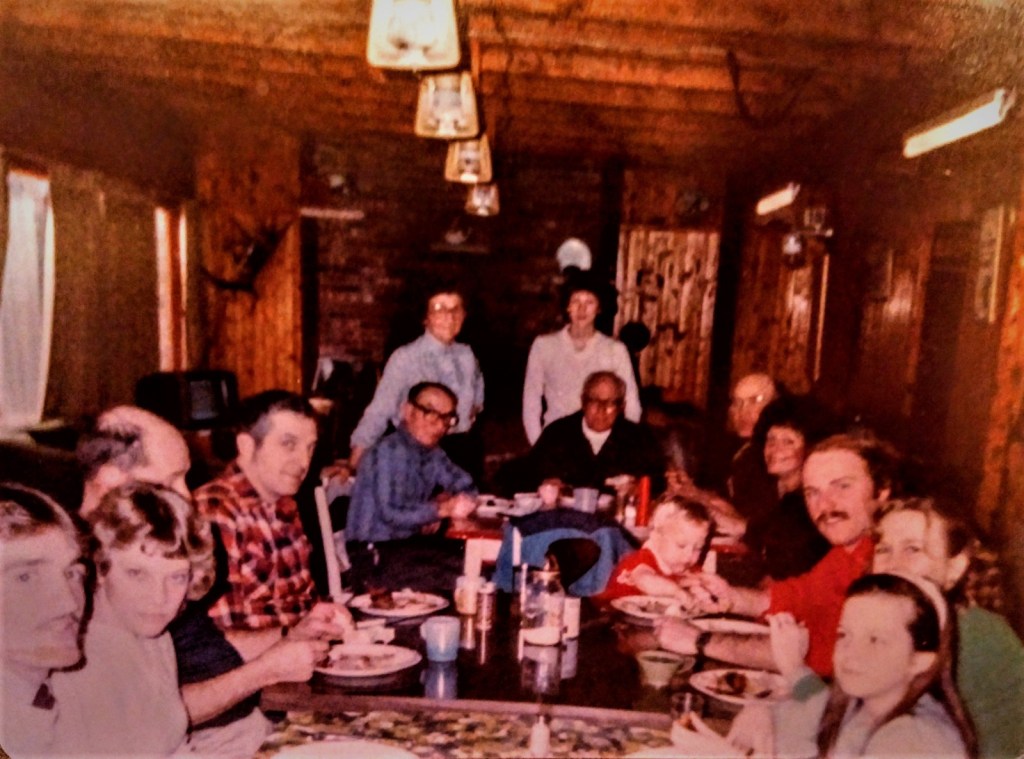
Camp Russell – Thanksgiving 1982

Ah.  Camp!  Such a loaded small word.  First and foremost, there is camping with family and friends.  Even though my parents owned and operated two campgrounds and a canoe livery, I didn’t grow up camping much in the traditional sense.  Even if we didn’t camp much, the overnight canoe trips we took with Dad (Mom was one and done!) were legendary.  I think about the planning that went into our trips and how we broke the “rules” and threw a tube in with our gear – Erica and I taking turns tubing for a bit; Dad pretending to leave me in the dust when it was my turn, waiting for me around the next bend.  Mrs. Taylor would be waiting for us at Cedar Springs with ice cream cones.

Over the years, I attended the National Turner Syndrome Camp, memorized Bible verses at church camp, spent endless hours playing with cousins at deer camp(s) (there were deer camps on each side of my family), helped run 4-H day camps for elementary students, and ended up with my picture in the paper participating in a local Vacation Bible School day camp.  I also attended Camp Oak Hills as a Brownie, my first time away from home aside from spending the night at my grandparents’ house, and the Broad Business Student Camp (BBSC) at Michigan State, which led to my decision to attend the Eli Broad College of Business (hence the name) at Michigan State University to study supply chain management.  Quite simply, much of my life as a child and young adult – indeed, some of my best memories – involved camp in some way, shape, or form.  I would not be the same person without it.

Each August, Grandma and Grandpa Buttrick would take us grandkids to Kenton in the Upper Peninsula (almost to Watersmeet) for a week, the site of a hunting camp passed down on Grandpa’s side for generations, the land originally homesteaded by my Forward ancestors.  We spent the week visiting waterfalls, riding the hills around camp, swimming in and hiking around Tippy Lake, traveling into the tiny village of Kenton itself to visit the grocery store/library/post office, and holding target practice with Grandpa using a pellet gun.  At night, there were hot games of Uno and Spoons around the living room table.  As a kid, there is nothing better than sharing a bunk room with your siblings and cousins!

So many camp memories stand out.  As a child attending church camp at Bayshore Camp in Michigan’s Thumb, I first experienced tipping over in a canoe.  As a tween, I paired up with a boy I didn’t know well.  In spite of explaining that I had years of canoeing experience as my parents’ owned a campground and canoe livery, he insisted on steering.  Inevitably, we ended up in the lake, the coolness of the lake hopefully camouflaging my rising anger.  I have never forgotten.

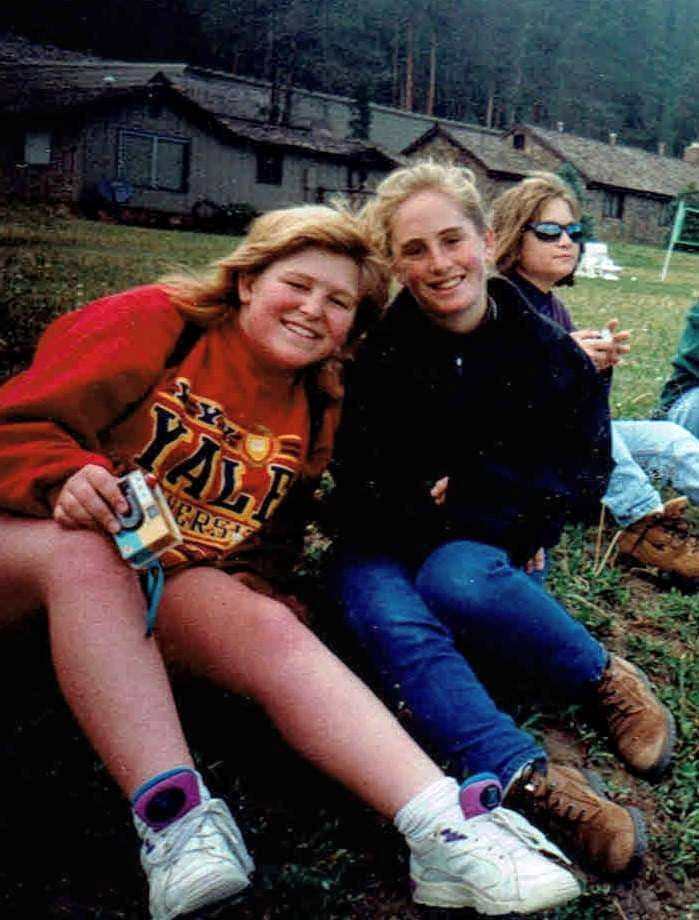
My friend Brenna and I outside of King Mountain Ranch in Estes Park, Colorado.
The 2nd Annual National Turner Syndrome Camp 1996.

Years later, as a teen, I attended the National Turner Syndrome Camp at King Mountain Ranch in Estes Park, Colorado.  I met other teen girls who faced the same physical, emotional, and social challenges as me for the first time.  Words fail me other than to say that those experiences at King Mountain Ranch filled me with a confidence that I would not have had otherwise.  One of my favorite memories is of how my friends and I scared ourselves silly watching The Shining after learning that the movie was filmed nearby.  It is still my favorite horror movie and my favorite Stephen King novel.  Those two years attending the National Turner Syndrome Camp still mean so much decades later. Most of all, I hope children of all ages have the opportunity to experience camp in all its forms.  Those varied experiences not only added to my education in invaluable ways, but they shaped the person I am today in countless ways.

The Ides of March

The middle of March will always bring memories of long family weekends in Grayling, MI.  Every year, we would attend the annual Michigan Recreational Canoeing Association meeting.  For my parents, it meant meetings, ordering merchandise for the summer ahead, and sharing ideas with other canoe livery owners.  As a child, it meant a long weekend swimming in the hotel pool, interspersed with time in the arcade and ordering pizza at least once.  Above all, I counted it as a sure sign of spring and the long summer to come.  Throughout my childhood, I considered it the first sign of spring – right up there with the return of the robins,

I loved going to the Holidome for the weekend.  My immediate family all attended, of course, but the entire conference took on the atmosphere of a family reunion at times.  When my aunt married, she and her then husband Kevin purchased a canoe livery on the AuSable.  We spent lots of time with Aunt Amy during RCA weekends.  In fact, when Aunt Amy later helped my mom and I place orders for the upcoming summer during the pandemic – an experience I hope to never repeat – it sparked a bit of nostalgia between sisters.  As Mom and Aunt Amy said, we were the association before the association.  They reminisced about the old meetings and some of the more memorable owners.  At one point, my dad even served as president.

Other liveries on the Rifle attended too.  One of my dad’s best friends at the time, Phil, owned Cedar Springs.  His wife and daughter, both named Connie, attended as well.  Both were family favorites.  Phil’s daughter taught with my mom for years, while his wife watched us while we were in the pool from time to time.  Every time we passed Cedar Springs on our annual overnight canoe trips with our dad, my sister Erica and I were treated to ice cream cones as we headed home on the river.

The White family attended as well.  White’s Canoe Livery happened to be the first canoe livery on the Rifle.  In fact, there would be no Russell Canoe Livery without White’s.  My grandfather got the idea from Don White and then started Russell Rent-a-Canoe out of what is now my home.  It all started in 1959 with a Ford pickup and a six haul of canoes.  To this day, the only person I know who knows the Rifle River as well as my dad is Ladd White, Don’s son and current owner.  I hate to think of the knowledge that will be lost when my dad and Ladd are no longer around.

Canoeing near the park in Omer ~ early 20th century.  The site of the former Omer park is just downriver from our main location in Omer.

For some reason, I seem to remember that there would be a March canoe trip as part of the meetings.  At one point, it may have been referred to as the Ides of March trip.  As a child, that fascinated me.  I could not understand why anyone would want to canoe in the winter.  In my child’s mind, canoeing and tubing meant one thing and one thing only:  swimming.  What was the point of canoeing if you couldn’t get wet?  That happened to be my biggest gripe about March.  March supposedly brings spring, and yet, it would be months before I could swim the river again.  It didn’t seem fair.

The Rifle River and Russell Canoe Livery will always be a part of me.  My first home happened to be near our main location in Omer.  One day, hopefully decades in the future, it will also be my last.  March is when it all starts to spring to life once again.  Reservations start rolling in, plans are made, and merchandise is ordered.  I love it all, especially our customers.  Here is to a wonderful summer 2024!

Nelly Furtado – I’m Like a Bird (2000)

Nelly Furtado – I’m Like a Bird (2000) (Video) (Lyrics)

(Written February 11, 2024)

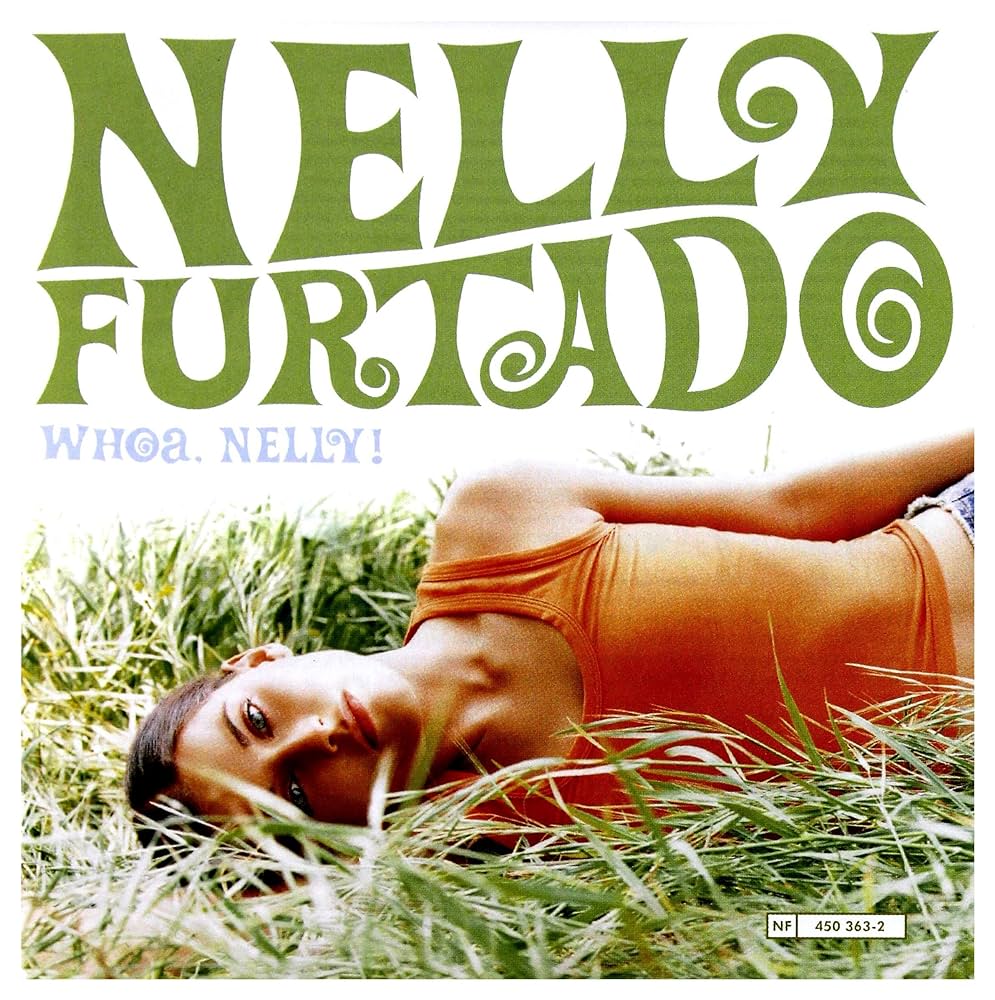
Late to the party, I discovered Nelly Furtado’s incredible album “Whoa, Nelly!” nearly a year after it dropped.  It became a huge part of the soundtrack to my semester in Quito, Ecuador during the fall of 2001.  If I was traveling across Ecuador, I had “Whoa, Nelly!” with me.  “I’m Like a Bird” happens to be the breakout single and the most well-known song on the album, but the entire album is incredible.  “Trynna Find a Way” and “Turn Off the Lights” stand out as well, but it remains one of the rare albums I can still listen to in its entirety.

Why did I like it so much?  Wanderlust, probably.  The entire album is about making your way in the world, figuring out what you want out of life, and every other 90s inspirational/motivational cliche one can imagine.  Nelly just did it a bit better than others.  What always struck me about this album, the song themselves, the music videos, and Nelly herself is the originality of it all.  “Whoa, Nelly!” as a whole definitely fit the late 1990s/early 2000s aesthetic perfectly.  Yet, something unique about Nelly herself stands out and shines.  And then there is the uniqueness of her voice.  There is no mistaking it.

Originality always resonates with me, and I think that is why I love this song and the entire album so much.  I can’t help but think of all of the adventures I had across Ecuador, including the bio research station Tiputini (in the Amazon), Otovalo, the Galapagos Islands, and more each time I listen to Nelly.  There is nothing quite like being 20 and having the entire world before you.  “Whoa, Nelly!” captures it well.

One of the highlights of my semester at la Universidad San Franciso del Quito, an epic trip to biological research station Tiputini in the heart of the Amazon (la selva)!

Morcheeba – Rome Wasn’ t Built in a Day (2000)

Morcheeba – Rome Wasn’ t Built in a Day (2000) (Official Video) (Lyrics)

(Written March 6, 2023)

I wish I could convey to today’s teenagers and young adults how much freedom we had in the late 1990s/pre-September 11th, 2001.  I consider myself fortunate to have grown up just enough to enjoy all that that time period had to offer.  Those years, roughly 1996-2001, still loom large in my life.  What a soundtrack I could create for that time!  Morcheba’s Rome Wasn’t Built in a Day would feature front and center.  It is upbeat, optimistic, and fun in a way that is sorely missing today.  The video is infectious and fits the song perfectly.

I don’t remember exactly when I first heard the song, but it will always remind me of my summer in London.  My freshman year at Michigan State, I had no doubt that I’d study abroad.  The only questions that remained were:  when, where, how, and why.  I settled into life at Michigan State with my mom’s experience studying abroad in the United Kingdom in the ‘70s firmly in the back of my mind, oblivious to the profound impact it would all have on my life.

From all the stories I grew up with, I could tell that studying abroad loomed large in my mom’s college experience.  It’s clear that she loved every minute of it.  Interestingly, I’m not sure if it would’ve happened without my dad.  When my mom wanted to marry my dad before graduating from Central Michigan University, my grandparents handled it brilliantly.  They suggested that she study abroad before she married.  I don’t know if she would have taken that step otherwise.  I’m just glad that she did and shared those stories with me.  I doubt she knows the extent to which they inspired me.

Spring semester 2000, the professor in my freshman literature class passed out a flier for a short term study abroad program in the United Kingdom that summer.  Even though I would be taking another literature course I didn’t necessarily need, I’d be able to finish up my required humanities credits.  A summer in London sounded perfect.  I couldn’t sign up fast enough.  In the end, I would spend five weeks in the heart of London (Bloomsbury) and one week in Glasgow, Scotland.  For the first time, I would be away from my family and the canoe livery for an extended period of time during the summer.

Russell Square Station just happened to be the closest tube stop to the University of London and Commonwealth Hall. Sadly, Russell Sq. Station was bombed in an act of terrorism on 7 July 2005.

It’s funny what I’ve taken away from the entire experience.  First, I became an addict.  I became addicted to studying abroad.  As soon as I returned to Michigan, I knew that I wanted to spend at least one full semester studying abroad.  I hadn’t given up Spanish just yet and spending a semester (minimum) in a Spanish-speaking country seemed a foregone conclusion.  The width and breadth of Michigan State University’s Office of Study Abroad did not make it easy – or maybe a little too convenient.  The choices seemed endless.  I couldn’t make up my mind between a semester in Caceres, Spain or Quito, Ecuador.  Ultimately, I didn’t have to choose.  With my parents’ blessing and plenty of scholarship opportunities, I did both.  In the end, I participated in five separate study abroad programs through Michigan State and three alternative spring break programs in Mexico (two in Merida and one in Puebla).  The two study abroad programs not mentioned above were short term programs studying business in Mexico (one in Monterrey and one in Merida).  I could not have asked for a better education.  I like to think that it all started with that summer in London.

When I finally returned to campus, I landed a position as a peer advisor in what was then called the Office of Study Abroad on campus.  I spent my time working in the Office of Study Abroad helping students plan their own study abroad experiences.  To this day, it is the best job I’ve ever held (Russell Canoe Livery exempted, of course).

In addition to becoming an addict, my experiences in London and Glasgow left me with the sense that I could take on just about anything.  I grew up in Michigan’s smallest city, Omer, Michigan.  Attending one of the largest universities in the United States, Michigan State University definitely resulted in culture shock, and yet, it was nothing compared to what I experienced living in London during that time period.

In essence, London and Glasgow represented an awful lot of firsts in my life.  For the first time in my life, I had easy access to world class museums and theatres.  In fact, the program I completed focused extensively on the Arts and Crafts movement.  Not only did I have the opportunity to visit the Victoria and Albert (the V&A), we often visited various exhibits as part of class.  One free weekend, I explored the Louvre with friends, traveling to Paris via the Chunnel shortly after it opened.  I also experienced all the pomp and circumstance of the British monarchy as the Queen Mum turned 100 years old that summer.  A closeup I’d taken of a Bobby while witnessing the changing of the guard at Buckingham Palace didn’t win the Office of Study Aboad’s photography contest, but it did end up in their catalog for the following year.  I still have the catalog and countless memories.

Every time I hear Rome Wasn’t Built in a Day, I am instantly transported back to that time in London, to the 19 year old I once was, so many opportunities unfolding before me for the first time.  I can imagine myself rushing to catch the tube to class or the V&A each morning from Russell Square Station.  I envision myself catching the train to Bath after a failed attempt to spend a weekend of adventure in Wales or heading to the airport to spend the weekend in Dublin.  I can’t think of anything more powerful than the ability of music to transport you back to a time and place.

Guns N’ Roses – November Rain (1991)

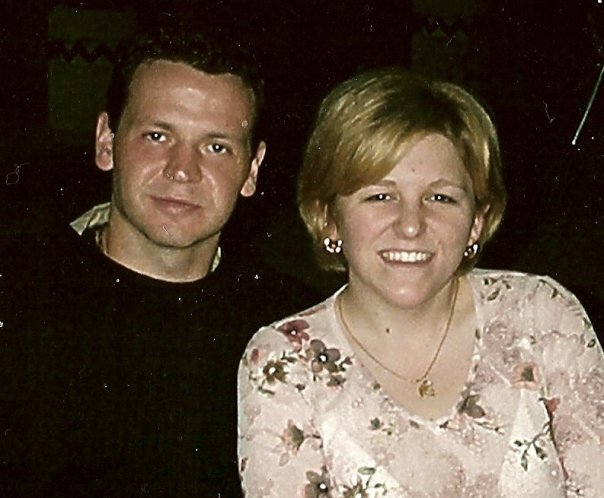
W.M. and I – Puebla, Mexico – March 2004

Guns N’ Roses – November Rain (1991) (Official Video) (Lyrics)

(Written February 2, 2023)

Ah, Michigan State and all of my Alternative Spring Break (ASB) memories in Mexico.  Some of my best ASB memories involve W.M., and one in particular, November Rain by Guns N’ Roses.  It takes me back to nothing less than the most romantic evening of my life.

I met him at the airport as we headed to Merida, Mexico for a week of working hard doing volunteer work and playing even harder.  I was listening to Here Comes the Sun, ready to relax in the Yucatecan sun in the middle of a busy, crazy spring semester, and here was this guy – our site leader for the week – chatting me up.  He flashed me this great smile and asked me what I was listening to at the moment.  We bonded over George Harrison.

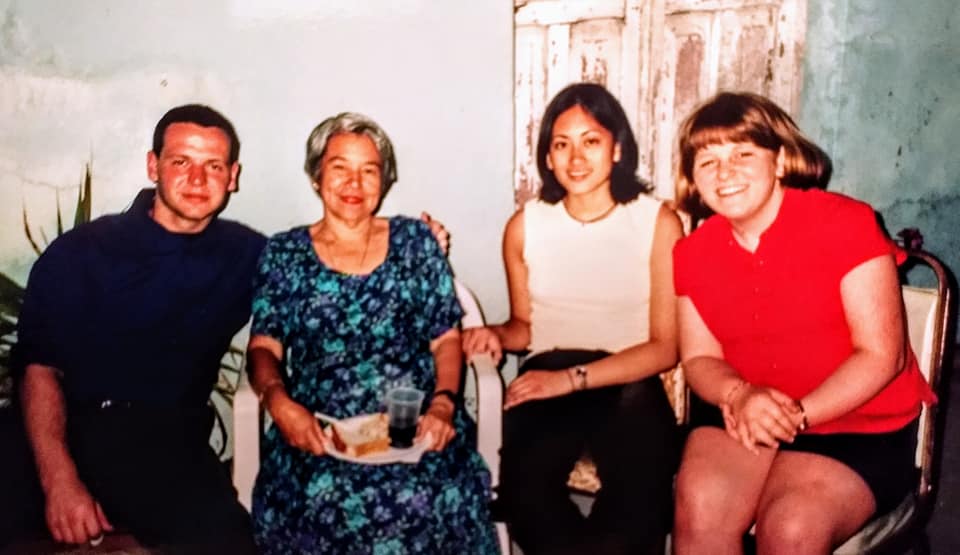
Lunch break with friends – Merida, Mexico – March 2001
The week W.M. and I met.

It didn’t take us long to become friends.  By the end of our first day of volunteer work, we were hanging out eating pizza and drinking Mexican beer, getting lost in deep, meaningful conversations.  I had lost my grandfather almost exactly a year before – at age 20, the first real loss of someone so close to me – and I was happy to find someone who understood.  That was the thing – W.M. and I should have had everything in common.

A year ahead of me, he studied marketing and Spanish to my supply chain management and Spanish.  No wonder we had found one another.  Later, the only time I actually met up with him on campus in East Lansing – or the United States for that matter, and for lunch no less – he told me all about his semester in Quito, Ecuador.  I don’t remember if I had already decided on a semester in Ecuador, but after hearing about W.M.’s experiences there, it was a forgone conclusion.

I’d love to say that this story is a college romance that ended well, but that simply wasn’t the case.  Instead, it is a story of friendship spanning years, countries, cultures, and continents that didn’t end so well.  It is also a story of unrequited love on my part.  I fell. Hard.

The thing is that I was never going to change my plans for anyone, muchless a man who hadn’t shown the least bit interest in anything more than friendship.  We left it as friends and that was it.  We were both driven with much to do.  That is, until Spain.

Fast forward nearly two years, and I was in the middle of my semester abroad in Caceres, Spain.  I’d resigned to myself that W.M., unfortunately, wanted to remain friends, nothing more.  Then I received the email.  The week before Valentine’s Day, I receive an email from him stating that he had landed an internship in Madrid – an easy train ride away – did I want to meet up?  Did I!

In the end, we spent a fun weekend in Madrid hanging out.  He booked me a hostel near wherever he was living.  We spent Saturday hanging out, eventually ending up at the Hard Rock Cafe and a beautiful park nearby.  We talked for hours.  Too good to be true, right?  Right.  When he walked me back to the hostel and didn’t even so much as kiss me goodnight, I wept.

In 2004, I returned to Mexico and ASB as a site leader myself.  Now a senior, I juggled interviewing for full-time positions in Texas with classwork along with all of my extracurricular responsibilities, including ASB.  As a result, I had to fly into Mexico City on my own and take a bus to Puebla to meet up with the rest of the group.  I don’t remember exactly how it happened, but W.M. got ahold of me once again.  Would I like to meet up for dinner in Puebla one evening?  He happened to be working in Mexico City at the time.

Beyond confused, I, of course, said yes.  I had no idea what to expect.  Why would this man take a bus at least two hours each way just to spend the evening with me?  He knew no one else in the group and the plan was just for the two of us to meet up.  We were friends, but seriously, what else was going on here?

I met him in the zocalo, or town square, and we quickly found an outdoor table at a local restaurant.  In my mind, the only thing better than Mexican food is authentic Mexican food.  The cuisine in Puebla tops them all.  Pollo en salsa mole anyone?

After watching the sunset over an incredible authentic Mexican dinner, a little red wine, and the ever present great conversation, W.M. and I somehow found our way into the Mexican equivalent of a dive bar.  Now, I am not much of a drinker, but I love the atmosphere in dive bars from time to time.  This one happened to be perfect.

I never really did see any sign advertising the place, but I could not have had more fun.  W.M. and I ended up holding court with a group of Mexican young men roughly our age.  We, two gringos who spoke Spanish who happened to end up in this cool unadvertised bar, stood out.  In fact, they thought we were married.  So, in this ambiance, we all start singing along to November Rain – very poorly.  It is still among the most romantic nights of my life – and he never even so much as kissed me.  Yet, there was at least enough chemistry between us for people to think we were married.

That was the last time I ever saw W.M.  In 2008, I looked him up on Facebook, and unfortunately, it ended up in a political argument that ended our friendship.  I still have no idea how he could have attended the same business school as me, and yet not understand the impact government can have on business, good or bad – small business in particular.  Time had not treated him well.  In fact, Diego Rivera comes to mind.  I recently watched Frida and it all came flooding back, much to my amusement.  The passion between Frida and Diego gets me every time.

Over the years, I’ve tried and tried to capture our friendship in writing, and I’ve never been able to do it well.  I once even brought an effort for critique, and the reaction of the men in my writing group still cracks me up.  Every last man in our group believed him to be gay.  All I have to say is this:  If he is indeed gay, he didn’t know it himself at the time.  The last I knew, he had a Mexican girlfriend and lived in California.

I can’t help but think of him every time I watch Casablanca, particularly the line “We’ll always have Paris.”  Indeed.  We’ll always have Merida, Madrid, and Puebla.

Hitting the Road

I’ve always loved traveling, no matter how short or long the trip.  This wanderlust has taken me on so many wonderful adventures over the years, and fortunately for me, so many of my best childhood memories were made hitting the road with Grandma Reid.  The woman just loved to go.  She rarely spent time at home, at least until age caught up with her.  In fact, she spent over forty years selling women’s clothing from a variety of catalog companies.  So many of her customers were housewives who lived out in Michigan’s Thumb.  She’d drive to her customers, bags and bags of clothing samples in tow.  She quit selling in the early/mid-1990s only due to the fact that she could no longer find a quality company to represent.  The last company she carried sold more home goods than clothing.  Unfortunately, the quality was nothing compared to the companies she worked for during the 1950s-1980s.  Even as a teenager, I loved to go clothes shopping with Grandma.  She had a way of helping you find the right fit and could be brutally honest if need be.  I learned to love the road and basics of business, at least in part, at my grandmother’s knee.  

During my preschool years, Grandma would pick me up from time to time.  At the time, I was used to her late ‘70s/early ‘80s blue Chysler station wagon, the same one that I tried to make Grandpa Reid promise to take care of as it was now his.  If you knew Grandpa Owen, it was a futile effort, even if asked by his adorable granddaughter.  I can still envision the station wagon parked underneath the old apple tree at the canoe livery – or as we always called it, the park – Grandpa napping in the backseat in the heat of a Michigan summer.


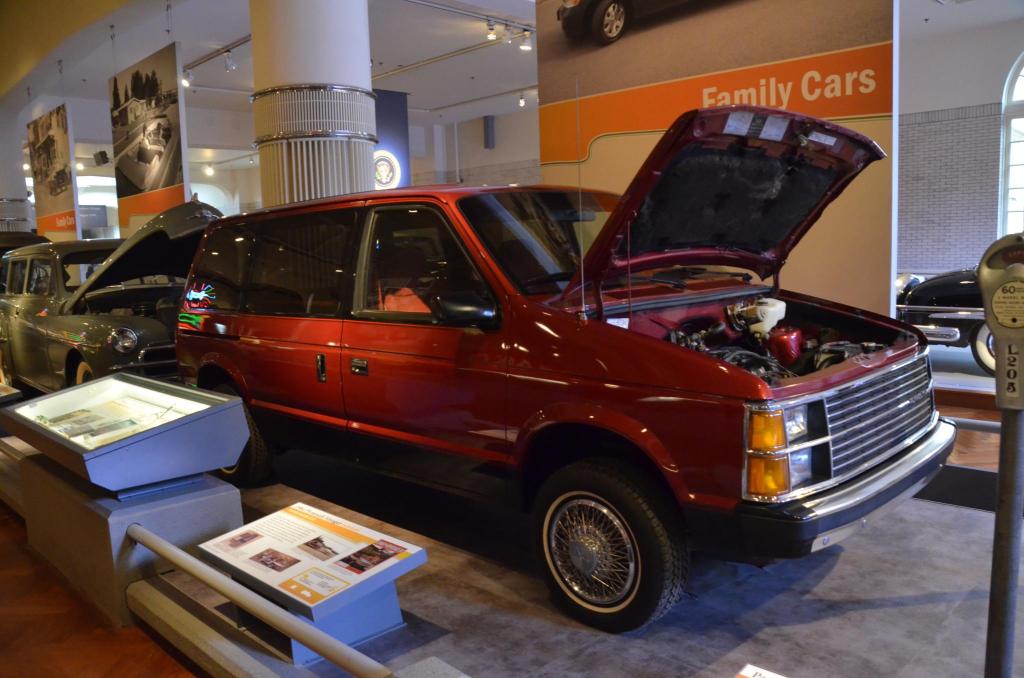
The Chrysler minivan on display at the Henry Ford.

1984 Plymouth Voyager Minivan by Chrysler – The Henry Ford – Engines Exposed Exhibit 2-22-2016 (1)” by Corvair Owner is licensed under CC BY-SA 2.0.

Then one day, I couldn’t find Grandma’s station wagon in the preschool parking lot.  Grandma’s new vehicle was one for the books.  She purchased one of the first Chrysler minivans, and what a vehicle it was!  I have no idea how many miles she put on the thing, but I do know that she replaced the engine at one point.  She finally totaled it in the early 90s in an accident on her way to one of my sister’s softball games.  That iconic tan minivan, when it was finally put to rest, represented the passing of an era.

What makes certain vehicles from our childhood so damn memorable?  I wrote a piece about my first car, which my mom drove for a large chunk of my childhood.  I could write something similar about my dad’s ‘77 Freewheelin’ Ford Bronco, his green Jeep Grand Cherokee that my sister inherited as her first vehicle, or even the lemon fullsize blue Ford van with the squealing fan belt that hung around the canoe livery forever – the one we drove to Florida to Walt Disney World.  It isn’t the vehicles so much as the journeys and times they represent.

Last spring, touring the Henry Ford Museum for the first time with my middle school students, I was taken back by a veritable wave of nostalgia seeing one of first Chrysler minivans (in this case, a Plymouth Voyager – almost identical to the first Dodge Caravans) at the end of a long line of evolving family vehicles.  It stopped me for a moment.  All it needed was a tan paint job/interior and Dodge badging to be Grandma’s minivan of my childhood.

More than anything, that minivan represents, at least to me, countless trips to the movies, Lutz’s Funland in Au Gres, putt-putt golf in Tawas, ice cream runs, and the Bear Track.  I think of the infamous trip to Kings Island in Ohio where Mom and Grandma tried to remain calm as we were caught in an awful storm.  We were parked, Grandma had her foot on the brake, and the van was still shaking.  How many trips to weddings, family reunions, and showers did I take with her in that van?  Last, but not least, we took Grandma’s van to the airport on our infamous trip to Aruba with Dad, Erica, Emily Lammy, Grandma, and Dean Gillette (Mom was too pregnant with Garrett to fly) for New Year 1991.  On the way home, something was wrong with the van, and we could only travel in 15 minute spurts.  I thought we’d never get home, but eventually, we arrived.

Grandma knew how to make any trip fun.  It wouldn’t be a summer adventure if we didn’t stop for ice cream.  On one such occasion, we’d stopped for ice cream after hitting a local amusement park for putt-putt and go-karts.  Per usual, Grandma had a van full.  In addition to my sister and I, cousins Michael and Linda were there as well, and I may even be forgetting someone.  As we are enjoying ice cream on the way home, suddenly my sister’s ice cream falls off of its cone squarely into Michael’s hand.  We had to pull over we were laughing so hard, especially Grandma.  Now well into our 30s and 40s, the ice cream incident is still mentioned from time to time.  Something about it was so incredibly funny, or as Grandma would say, comical.

Now, I’m the one who is rarely home.  I’m the one “running the roads” as my dad would say.  I hope to make the same kind of road memories with my niece and nephews as they grow up, but that is more my mom’s territory, for now.  I normally tag along in her car, playing navigator if need be.  Maybe one day they will reminisce about all the Buick Enclaves in our family at the moment (3 and counting) or Uncle Garrett’s Avalanche.  

At this point, I doubt my love of the road will ever die.  Thank you, Grandma.

Ghost Stories

W.M and I – Puebla, Mexico. March 2004.

As a writer, I am struggling with how to properly tell the story of my friendship with W.M. throughout my college years.  Even though we never really dated, there was something more than friendship there.  If writing from my perspective, the story would have to include themes of romance and unrequited love.  How do I tell the story fairly?  I have no clue what really happened in the end, why he kept seeking me out, but it never went further than friendship.  When I did try to write the story, the men in my writing group all appeared to come to the same conclusion:  He must be gay.  I don’t believe that to be the case.  If that were the case, I would like to think that we were good enough friends that he could have told me.  I did find it telling that they came to that conclusion after reading the story from my perspective.

I wish I knew what to do with the story.  It is the reason why people study abroad and learn foreign languages.  It is at least part of the reason why Spanish continues to play such a major role in my life.

W.M. and I had a major falling out several years ago now to the point where I haven’t thought about him in years.  Yet, our friendship has been on my mind lately.  The truth is that Michigan State wouldn’t have been the same without him.  Alternative Spring Break and study abroad wouldn’t have been the same without him.  My experiences in Mexico and Spain wouldn’t have been the same without him.  Maybe it is fitting that he must have been on my mind as I am trying to figure out exactly what it is that I want in my personal life.

Gypsies – Part 2

Read gypsies part 1 here.

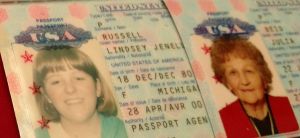
What can I say about these passport photos? They hold so many memories. Yes, even Grandma’s. I never did travel internationally with Grandma, with the exceptions of a trip to Aruba in the early 1990s and a trip to Ontario during my high school years, but she always supported my endeavors. I still have letters that she and Grandpa wrote to me during my first years at Michigan State. When I spent a semester in Quito, Ecuador, I came home one day to my host mother speaking on the phone in English with Grandma. At the time, I didn’t even know that my host mother spoke English that well! It turned out that she had studied abroad in Wisconsin.

One of my favorite stories took place in 2002 just before I was to leave for Austin, Texas to complete a six month co-op with Applied Materials. First, one has to understand that Texas has always loomed large in my imagination. My grandparents lived in Fort Worth during World War II. On Mom’s side, my great-grandfather spent the last years of his life outside of Houston ranching. Well, I think Grandma could tell I was a bit nervous as I said goodbye for several months. She told me, “You know, they are going to call you a damn Yankee!” Of course, I thought that she was joking. She always joked around. That may have been true in the ‘40s, but the early 21st century? Nah. It turns out the joke was on me.

In the days before GPS everywhere, I stopped at a grocery store to ask for directions to my new apartment complex. Unfortunately, I was lost. As soon as I opened my mouth, the man I had approached joked “Damn Yankee, huh?” and proceeded to laugh at my very Michigan accent. Then, he gave me the correct directions, and I was on my way. Literally the first words I heard in Texas were “damn Yankee.” All in good fun, of course. I ended up falling in love with Texas – Austin in particular – and planned to move there after my graduation from Michigan State. Well, I did move to Houston upon graduation, but frankly, I loathed Houston. It just wasn’t the same without my friends from Austin.

Today I am grateful that I moved back to Michigan. I would have never had those last years with my grandparents. As much as I love to travel, family means too much to me. As I am now a vital part of the future of the canoe livery, there are other considerations as well. Deep down, I always planned to come home, even if I didn’t want to admit it in my 20s.

As for those passport pictures, Grandma’s is one of my favorite pictures of her. During my later high school years, she traveled to Poland with family in order to see where her parents were born. She wanted to see where her parents’ grew up. That is why she ended up getting this passport in the first place. Over the years, she traveled extensively in the Caribbean and the United States. She hadn’t needed a passport since a trip to Brazil in the 1970s. As I waited for her in her car one day outside the canoe livery (we were headed somewhere, of course), I noticed her application for a passport. What struck me then was the names of her parents’ birthplaces. She had had to list the various countries those towns became a part of after World Wars I and II – a miniature lesson in the history of Eastern Europe during almost the entire 20th century – or so it seemed to me at the time. Even though I didn’t fully appreciate it until many years later, I think of the sacrifices my great-grandparents made to come to the United States legally. My great-grandmother was only in her teens at the time. I know what it is like to live in another country for a short period of time, but to never see your home country or parents again? I can’t begin to imagine.

My passport picture in another story entirely. When I see that picture, I think of how naive I was at the time. I can’t help but want to warn my 19 year-old self of the worst she’ll experience abroad – as well as tell her how worth it it all was, how much she will experience, most of it wonderful. I would tell her to not worry about all of the guys she’ll meet – none of them are “the one.” None of them are worth the heartache they will cause. Above all, have fun. Oh, and I would tell her that one day, she will want to teach Spanish. Take the necessary tests! It isn’t that easy to get fluency back once it is lost.