A journal full of blogging topics and ideas and here I am at a loss as to what to write. Nothing feels right – and it hasn’t for months. That in and of itself is the reason for the silence. It needs to end.
A few months ago, I joined an active Facebook group focused on Xennials, those of us born between 1977 and 1983. I am smackdab in the middle, and I definitely belong to that micro generation. I mention it because there is one recurring theme in this particular group that resonates deeply with me at this point in my life: When did we become the adults? I imagine that particular thought crosses everyone’s mind once they hit 40. Frankly, it sucks.
On a brighter note, I’ve really enjoyed the Xennial Facebook group. After working with teeneagers day in, day out, it is nice to chat online with a crazy group of people who actually get your cultural references. It is reassurance that it isn’t just you, the world is incredibly different from the one in which you grew up. That brings me to tech.
As I’ve been working from home as a long-term online substitute teacher over the last few months, I rediscovered my love of tech. At one time, I thought that I would have a corporate career in the semiconductor industry. I interned at IBM and completed a co-op position with Applied Materials as an undergrad. Applied Materials, a leading manufacturer of capital equipment for the semiconductor industry, still fascinates me. It wasn’t meant to be; however, tech still runs deep in my soul.
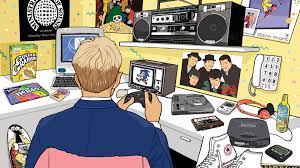
Of course, as Xennials, one thing that completely separates us from Gen X and Millennials – we are both and neither – is technology. Gen X learned most modern technology as adults, while Millennials are digital natives. Xennials grew up right along with tech and adapted as we grew. We had an analog childhood (praise God!) and a digital adulthood. That is what makes us unique, and frankly, it is at least in part why I feel our experiences need to be preserved.
No one else experienced the growth of tech quite like Xennials. Our parents, mainly Boomers, turned to us as their personal tech support. We could program VCRs, set up gaming system and computers, and recommend a good cell phone without batting an eye. Growing up, my sister and I were the first to navigate the internet in our household, not our parents. I could feel just as at home on an old Apple II as with a 2023 Acer with the latest 2 TB solid state AMD harddrive. By some accident of history, I witnessed unprecedented changes in technology that have fundamentally changed the way we live, work, and play. Eerily, I believe it is just getting started. AI is next.
When I started The Mixtapes project on Ramblings of a Misguided Blonde, I knew that I would eventually have to address my love of the Beatles. Where to begin? As a result, I let nearly a year go by. Now, the decision has been made for me. We will start at the end.
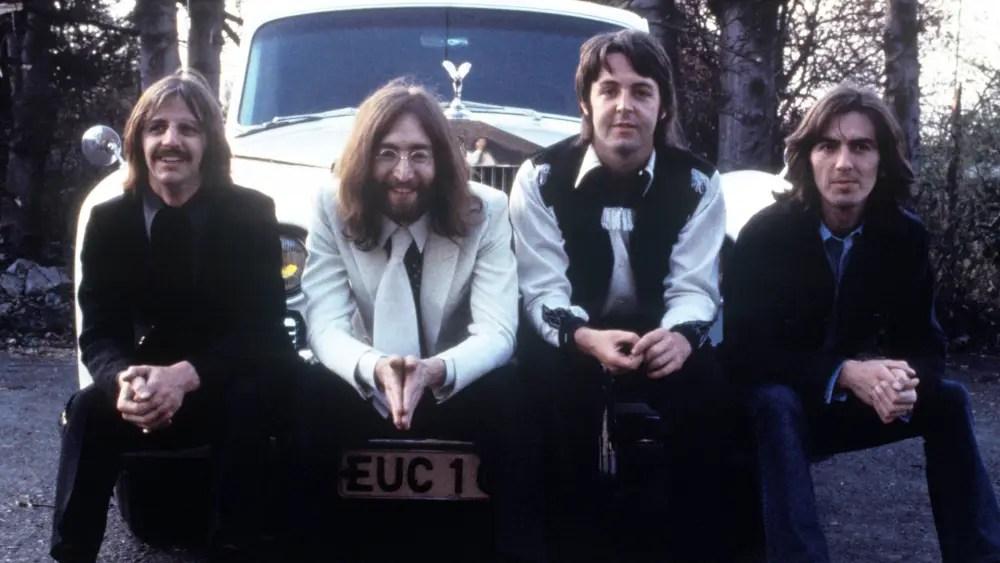
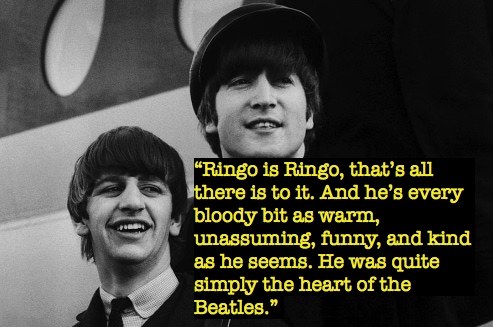
I never dreamed that I would get the opportunity to write about a “new” Beatles release. Here I am, almost a month after the fact, doing just that. As a girl born a few days after John Lennon’s untimely death, a fan who witnessed the release of the Anthology Project during her high school years, it feels a fitting conclusion to all that the Beatles have achieved over the decades. Over the last month, I’ve watched as the reactions to “Now and Then” itself, the music video, and the mini-documentary came rolling in. Unsurprisingly, there is no consensus.
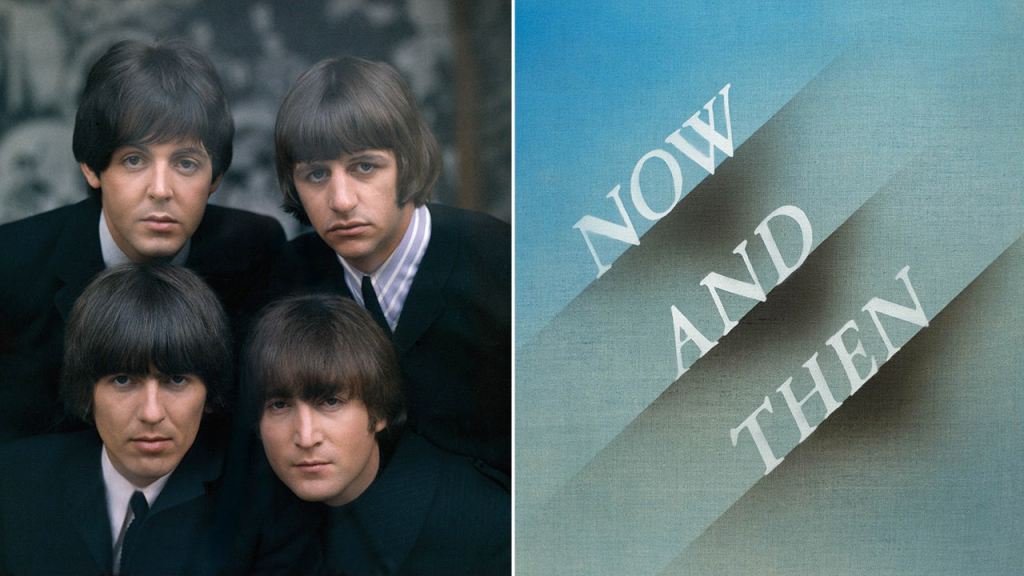
My only criticism of the “Now and Then” project: the lackluster design for the single. However, considering the rerelease of the “Red” and “Blue” compilation albums, it somewhat makes sense.
Beatles fans appear to be solidly in two camps. The first group is dismissive, stating that “Now and Then” will never rank among their greatest hits. Of course it won’t! How could it? That is not the point. Advances in technology aside, they state that it never should have been made. I’ve also heard “fans” (I purposely use that term loosely) complain that video clips of John and George used in the official video are too “irreverent.” I still have a hard time understanding that criticism from self-professed fans.
My response is simply this: Did you understand the Beatles – the band and the then young men who created it – at all? Their humor is a huge part of what made them so great. Their humor still holds up today. They simply would not have been the Beatles if you took humor out of the equation. I love that I can laugh at images of two men who are long gone and dearly missed in a newly released music video.
Then there is my favorite: “Now and Then” sounds too much like John Lennon’s solo work from the late 1970s. Of course it does. That is exactly what “Now and Then” represents, if only a demo. John did record it in the 70s, and as the Beatles disbanded in 1970, he likely meant for it to be a solo effort. However, that is only part of the story.
“Now and Then” is also one of a handful of unfinished demos that Yoko Ono gave to Paul McCartney upon John’s death. During the Anthology Project, Paul, George, and Ringo completed two of the other demos, “Free as a Bird” and “Real Love.” At the time, both songs climbed the charts and introduced the Beatles to an entirely new generation of fans. By the way, both songs, along with their music videos, still hold up – even if some fans are now calling for them to be “cleaned up” as well.
Even though I didn’t think about it at the time, it makes sense that there was supposed to be a third song released with the Anthology Project. It was released in three parts after all. That third song? “Now and Then.” It just took a few decades, Peter Jackson, and new technology lovingly called “MAL” for it to come to fruition.
Personally, I don’t think that the Beatles could have ended on a better note. It is nostalgic, almost timeless, and with its humor, the video is even better. It is a true love letter from Paul and Ringo to George and John – not to mention all of us, the fans. So, to Sirs Paul and Ringo, thank you! Once again, the Beatles will be rediscovered by an entirely new generation of music junkies.
On a sidenote, even the 5th Beatle, George Martin, was there in a sense. In his absence, his son Giles Martin, who just happened to play a huge role in the orchestration of “Love,” helped put those finishing touches on “Now and Then.”
I am ashamed to admit it, but I have yet to fully read one of Anne-Marie Oomen’s memoirs or books of poetry, even though I own two of her books (signed) and have attended a couple of her writing sessions (one for teachers and other, this past spring, open to the general public), as well as a reading from her latest book, As Long As I Know You: The Mom Book. I’ve only read and heard snippets of her work … so far.
What I’ve read and heard thus far is wonderful, and knowing the topics/subjects/genre included in many of her books, I know that I will love them. How could I not purchase a book titled Love, Sex, and 4-H? Then there is As Long As I Know You: The Mom Book. I can’t wait to read it. The passages that she read during her author event, along with the anecdotes she shared about herself, her mom, and writing the book, definitely left me hooked.
What I really want to discuss today is her capacity as a teacher. Just over a month prior to the shutdown orders signaling the official start of the pandemic, I had the opportunity to attend a day-long writing program aimed at teachers. Titled “Homecoming: Coming Home,” it was sponsored by the Saginaw Bay Writing Project. Anne-Marie Oomen happened to be one of the presenters that morning.
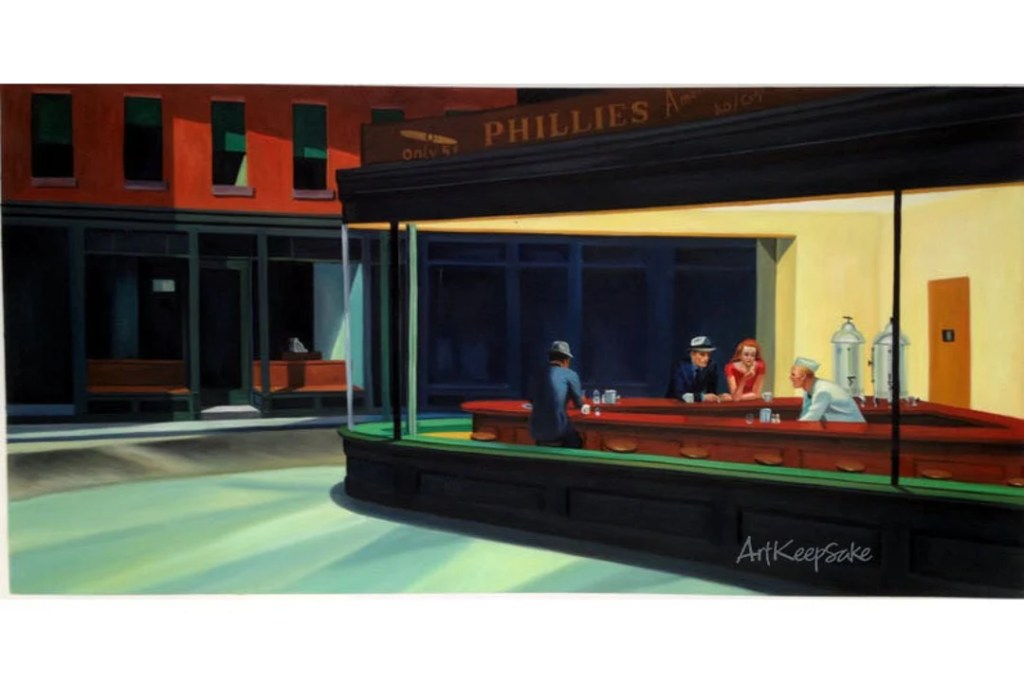
During her allotted time, she taught us the term ekphrasis – a method of using different works of art to create various forms of writing, whether poetry, personal essay, or short story. Imagine studying a painting and then creating a poem from your experience. That is ekphrasis.
After explaining the process and providing us with examples of her own work, Anne-Marie Oomen had us create our own art inspired piece. She brought with her a large collection of postcards. I chose one with a portrait of Annie Oakley on the front, “little sure-shot.” I enjoyed the experience and still have a digital copy of her presentation from that day. I left realizing that I could easily create vision boards on Pinterest to gather my thoughts and ideas for various writing projects.
Anne-Marie Oomen used the painting Nighthawks by Edward Hopper to demonstrate the process of ekphrasis.
As wonderful as that experience was, a few months ago I learned that Anne-Marie Oomen was to be a guest scholar at Saginaw Valley State University. During that time, she conducted a similar writing session open to the general public at the Marshall Fredericks Museum on SVSU’s campus. I am so glad that I attended. It made me look at one of my favorite museums in an entirely different light. I left with a notebook full of ideas and even a rough draft. The following evening, Anne-Marie Oomen held a reading at the Wirt Public Library in Bay City, sharing snippets from As Long As I Know You: The Mom Book. I’m so glad that I attended as it brought back so many memories of the short few months I had living with Grandma Reid before she needed more care than I could provide. It is never easy watching someone you love age and decline.
I took something away from each of Anne-Marie Oomen’s events. On top of sharing her love and knowledge of writing, she is a wonderful teacher. Better yet … she is a Michigan author willing to help aspiring writers and teachers.
Anne-Marie Oomen’s latest book As Long as I Know You: The Mom Book details her experience dealing with her relationship with aging mother.
“All Things Must Pass” is a documentary that covers the rise and fall of Tower Records during the second half of the 20th century and the first few years of the 21st. What I love about the documentary is the fact that I experienced a lot of changes that took place in the record industry, particularly in the record stores, during those years. As a businesswoman, I loved the discussion surrounding the birth and death of Tower Records’ business model. At the end of the documentary, I left thinking what a great case study it would make.
I can just imagine the beginnings. Supposedly Tower Records started as Tower Drugs. After World War II, leading into the 1950s, Tower Drugs began carrying 45s in an effort to tempt their teenage customers hanging out at the soda fountain. As the granddaughter and great-granddaughter of entrepreneurs who owned a pharmacy in Marshall, Michigan during this same time period, I can picture it.
In fact, my maternal grandparents met at Peck’s Drugstore in Marshall. My grandfather’s parents were partners in the business, and at the time, before graduating from high school and enlisting in the US Navy during World War II, Grandpa worked there as a soda jerk. Grandma, who attended then nearby Marshall High School, loved their lemon Cokes. I’ve visited Marshall and located the corner where Peck Drugs once stood. Marshall Junior High School, once Marshall High School, is located right across the street. Even though my grandparents were gone by that time, I could easily envision the circumstances under which they met.
This burgeoning teenage culture in the 40s and 50s led to rock and roll and the astronomical growth of the record industry from the 40s through the end of the century. I happen to be just old enough to have witnessed the heights of the 1980s, the changes experienced all throughout the 1990s, and the chaos that followed in the first decade of the 21st century.
I lived it. Madonna and Michael Jackson’s reign as Queen and King of pop were a huge part of my childhood, as were Tina Turner, Whitney Houston, Cyndi Lauper, Wilson Phillips, Paula Abdoul, and so many others. As grunge exploded in the 1990s, the music industry fractured in the wake of Kurt Cobain’s death and the advent of the internet. The music industry wasn’t nearly as tightly controlled as it once was and formats were changing yet again.
As a teenager, I understood the frustration. During the early part of my childhood, vinyl and cassette tapes dominated. Before long, CDs took over. WIth each new format, some felt the need to repurchase their music collection yet again. However, by the late 90s, people had had enough. During that time, I remember the anger that the equivalent of the 45 didn’t really exist in the CD format. You might be able to purchase singles, but they were never the hit songs. In essence, the record industry reached a point where they were pricing teenagers out of the market. Full CD albums during that time period usually ranged from $15-$20, depending on the artist and popularity. Today, I spend $8.99 a month for Amazon Music, which includes electronic access to whatever is available via Amazon Music – i.e. pretty much anything and everything.
The sad thing is that rural teenagers in the 90s, like me, mostly had access to the big box music retailers of the time, such as the behemoth Tower Records – or the CD clubs of the era, Columbia House and BMG Music. Oh, how I wished there were used record stores near me! When I arrived on campus at Michigan State in 1999, my friends and I made regular visits to The Wazoo, a mom and pop used record/CD store run by an old hippie who truly loved music, or WhereHouse Records, another great used music store. We could get an entire pile of albums for the price of one new release.
This atmosphere and the business model became a recipe for disaster. Enter the file sharing frenzy that took place in the early aughts. Napster and Limewire were king at this time. Why purchase music at all when you could download your favorite songs for free from a friend of a friend of a friend? While it wasn’t that simple – mislabeling ran rampant and download times could be excessive – it worked well enough. If anyone had actually been prosecuted for downloading music illegally, our judicial justice system would have quickly collapsed. Colleges, universities, and even many high schools would have been empty with students rotting in jail instead of receiving an education. That may be hyperbole, but not by much.
In the end, it could not last. Businesses such as Tower Records, so heavily dependent upon real estate and inventory, could not survive once people refused to repurchase their music collection yet again, pay full price for CD albums with only a handful of well-known songs (if lucky), downloaded whatever pirated music they wished via Napster and LimeWire. The electronic music market, now dominated by Amazon and Spotify, had not yet come into its own. Today, Tower Records lives on in Japan, a testament to its homegrown slogan – “No Music. No Life.”
“All Things Must Pass” is entertaining if you are interested in music and the history of the music business at all. It brought back a lot of memories for me, and frankly, I feel for teens today who do not have the experience of spending time in stores dedicated solely to music. Creating a Spotify or Amazon Music playlist just isn’t the same. The title “All Things Must Pass” comes from the sign a former Tower Records employee put on their sign as their original store was closing. “All Things Must Pass … Thanks Sacramento.” It is, of course, also the name of George Harrison’s triple solo album and hit, “All Things Must Pass.”
WordPress, which I love, has a new feature that provides a writing prompt each day. One that caught my attention was “what makes someone unique?” The idea of individuality – ie uniqueness – gets right at the heart of what it means to be human. Sadly, there are times when our individuality sets us apart from the rest of society due to no fault of our own.
When do we learn in elementary school that the “other” is not OK? I’d love to think that things have changed since I was bullied in early elementary school due to my appearance, mostly height and weight, but I’m not that naive. I’ve watched in recent years as various school districts have tried to address the root of bullying with varying degrees of success. Unfortunately, it all starts at home. Children need to learn from a young age that we are all different. We all have different talents and ambitions, as well as strengths and weaknesses. All of us – all eight billion people on Earth – face challenges at different stages in life.
There are certain things that a person may experience in life that no one will fully understand unless they have been through it – or something similar. For example, unless you have lost a parent or a child, it is impossible to truly understand that level of grief. It is similar when dealing with infertility. Unless you are affected, it is impossible to imagine the depth to which it alters one’s life.
Aside from all that sets us apart from one another, including our challenges, there are interests. My interests are vastly different from that of my siblings or parents. I’m used to it, and over the years, I’ve developed those interests through various opportunities and friendships, both in real life and online.
If I had one wish for students today, it would be for them to have all the resources necessary to first find their interests and then have the ability and support to pursue them further. How many people have stopped doing something they enjoy simply because someone discouraged them, saying they had no talent? I see and hear about it all of the time. It saddens and sickens me. We should be encouraging healthy interests, as well as providing students outlets to develop them. For example, a student who enjoys art should be encouraged to pursue that interest as much as possible, even if there is no interest in making art a career.It comes down to expectations. At times, we focus so much on making ends meet that we need to make a life. We need to teach students that there is so much more to life than material things. It is more than OK to be yourself. You need to be your authentic self.
Teddy Roosevelt is easily one of my favorite Presidents.
Sometimes I question whether or not Dad realizes what an example he set for his children – or at least me, as I can’t speak for my brother or sister. He, along with my mom, spent the last nearly 46 years owning and operating Russell Canoe Livery and Campgrounds, Inc. and are still actively involved in the business. They purchased the canoe livery from my paternal grandmother, Judy Reid, in June 1977, a few months prior to their wedding. Growing up in and with the business, I saw firsthand what my parents and grandparents did to grow the business, including the sacrifices they made.
As a child, whenever anyone asked what my dad did for a living, my response of “he owns a campground and canoe livery” fascinated many. As the canoe livery developed, Dad focused on creating a business that not only worked around our family life – it complimented my mom’s teaching career and our school schedules well. It also allowed him to pursue his hobbies of hunting and fishing in a way impossible for most people.
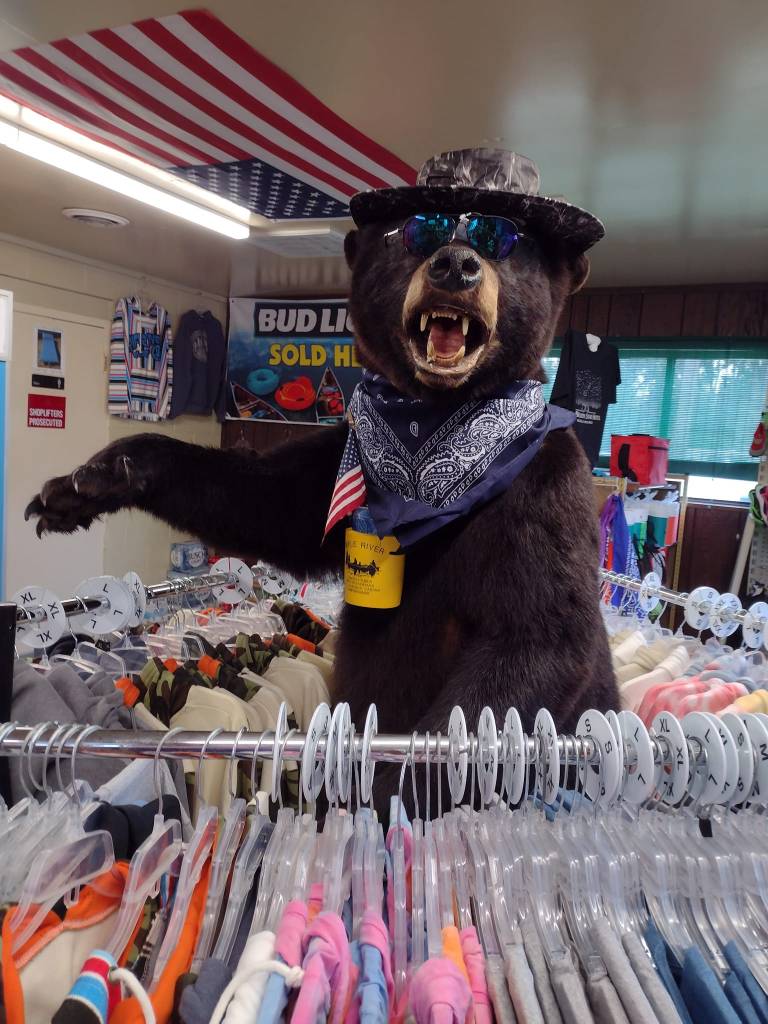
I admit it: I know more about hunting and fishing than any non-hunter, non-fisherwoman I know. All thanks to Dad. I grew up feeding Beagle hunting dogs used for rabbit hunting; with various mounts in our basement; and learning what a Pope and Young record meant, once my dad killed a Canadian black bear with a bow and arrow. That bear now infamously resides in our main office/store in Omer, a legend in his own right.
This guy gets a lot of attention during the summer months, holding down the fort in our office. Russell Canoe Livery, Omer, Michigan
As a young child, when I asked Dad why he hunted deer, he took the time to give me the full, true explanation. At six years old, he explained how deer hunting helps control the deer population in Michigan. If they weren’t hunted, there would be many more car/deer accidents, and they could become over-populated, causing starvation and disease. I have never forgotten that lesson. Even though I am no hunter myself, I have no issue with it – as long as rules are followed and as much of the animal is used as possible.
What I admire most about my dad is how he was able to create a life for himself in which he prioritized what he wanted out of life – and it wasn’t money – it was about lifestyle. Even though he didn’t directly use his degree in wildlife biology in his career – he didn’t become a conservation officer – that knowledge allowed him to more fully understand what was needed to become a better hunter and fisherman. Dad’s passion for his hobbies, even today in his 70s, still inspires me.
Dad and Me – Camp Russell 1981, with his first bear.
What I’ve long realized is that I am just as passionate about reading and writing. He may not see it or recognize the correlation, but I do. It is the reason why I earned my writing certificate from Delta College, took additional humanities courses when possible, joined Mid Michigan Writers, attended several writing workshops, and so much more. Everyone should be so lucky. I am never bored. I am eternally grateful that my dad was able to find a way to make it all work and set an example for me to follow. Per usual, I’m just doing things the “hard” way. I will get there … eventually.
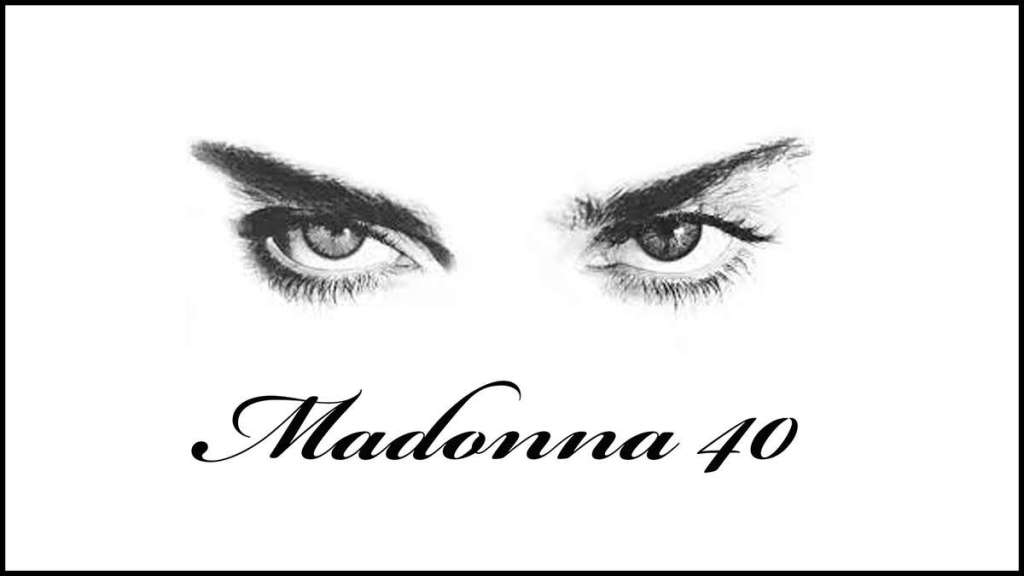
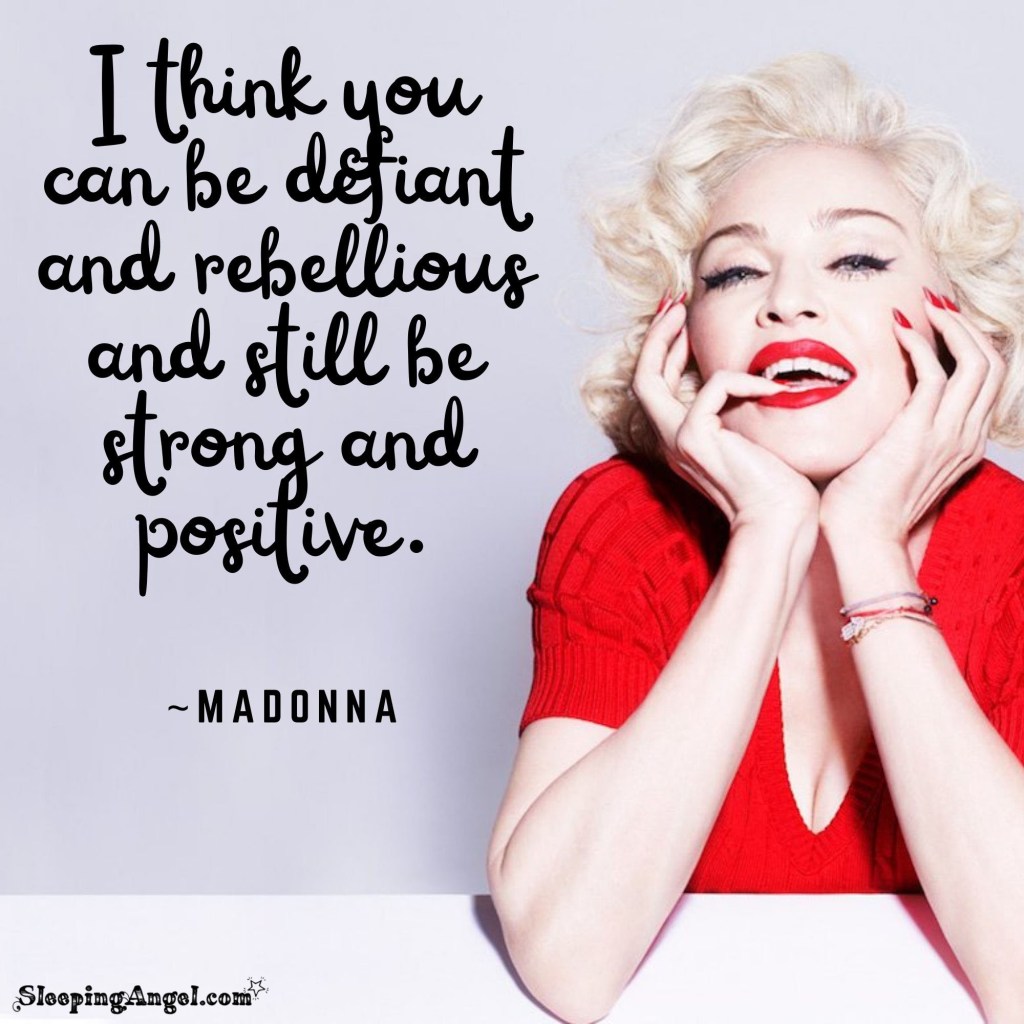
On Friday evening March 31st, 2023, I joined scores of others to attend “Madonna 40” at the Delta College Planetarium. A sold out show, it was incredible – and a lot of fun! Designed to honor Madonna’s 40th anniversary of her first hit single “Holiday” and her always controversial place in Bay City history, it did not disappoint. My only wish: I would have thoroughly enjoyed another hour of her classic music videos and would have gladly paid accordingly. There is nothing quite like watching the music videos that made Madonna a superstar and an inspiration to a generation of girls and women, for better or worse, on the big screen. It is an experience I will never forget. Her early music will always be a part of the soundtrack to my early childhood memories. In designing the program, the following original, unedited music videos were shown in all of their ‘80s and early ‘90s glory:
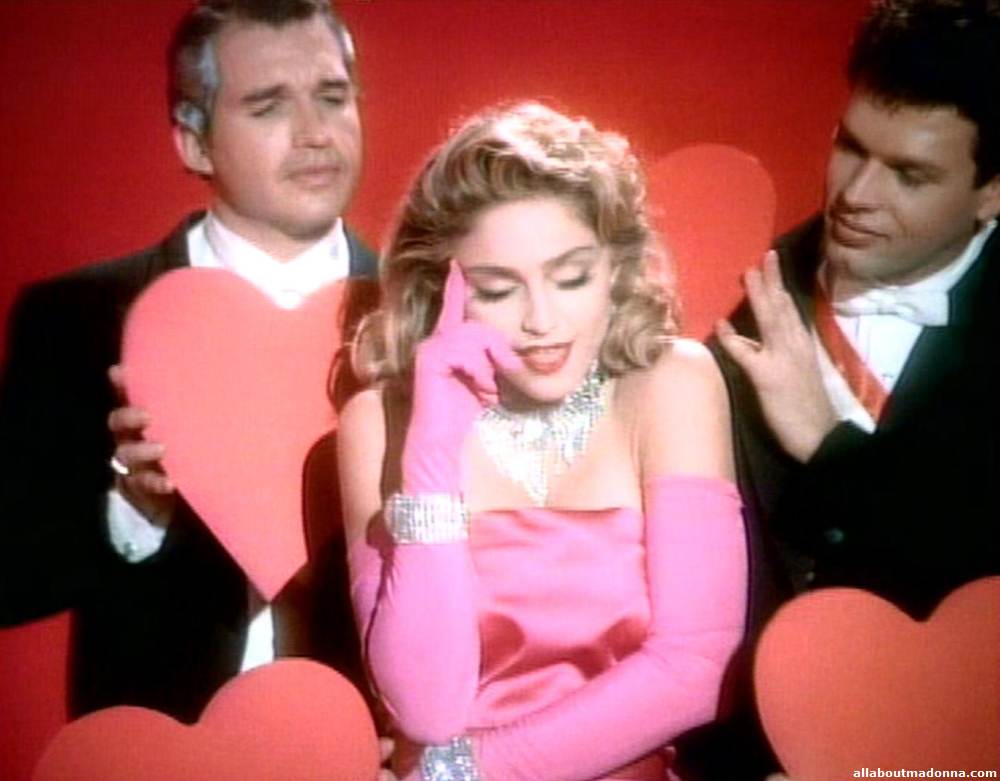
A still from arguably Madonna’s most iconic music video, Material Girl (1984).
Frankly, the music video portion of the program outshone everything else. The videos have held up over nearly four decades. What struck me most in the vintage videos was Madonna herself. Definitely not model thin or “fat,” she exuded old-school glamor in “Material Girl,” “Vogue,” and “Like A Prayer” with the dance moves that made her famous. As for “Papa Don’t Preach,” she looks like any fresh-faced midwestern high school or college girl.
Personally, I felt that the organizers/designers missed a huge opportunity by not including at least the videos for both “Promise to Try” (1989), which was largely filmed at her mother’s gravesite in Kawkawlin, Michigan (just north of Bay City), and “This Used to Be My Playground” (1992), which was included on the A League of Their Own soundtrack and supposedly written about Bay City becoming her refuge after her mother’s untimely death. The only actual footage of Madonna in or near Bay City was not included in the program. How?
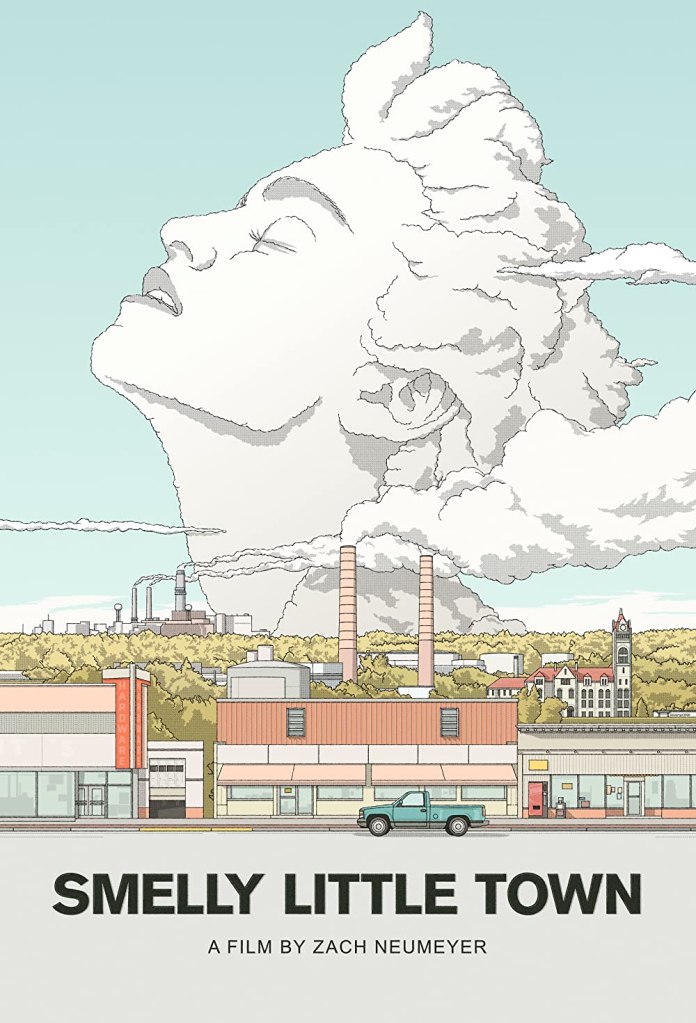
The next segment of the program, “Smelly Little Town,” is originally why I wanted to attend the event and even moved around my schedule to do so. Debuting as part of the Hell’s Half Mile Film and Music Festival in Bay City in 2021, I doubted I would ever have another opportunity to see it. Growing up with the controversy, knowing Bay City a little too well, and having been born in Bay City myself, I had to check it out.
First and foremost, it is quite possibly the most Bay City thing I’ve ever seen in my life. Let me just say this: It began and ended with scenes of people polka dancing at the St. Stan’s Polish festival to the Steve Drzewicki Band, both Bay City institutions. I half expected to see my ex’s parents go dancing on by. In general, the film did a decent job describing Bay City, covering all aspects of the “smelly little town” controversy with Madonna, and explaining how ever-corrupt Bay City small town politics is the answer as to why Bay City has never really been able to capitalize on the fact that it is the birthplace of Madonna.
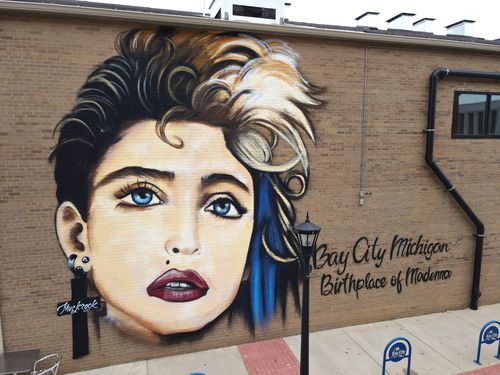
This mural in downtown Bay City was privately funded and tucked away on a small side street.
For those who don’t know, Madonna Louise Ciccone was born at the former Mercy Hospital in Bay City, Michigan on August 16th, 1958. Madonna is her actual given name as she was named after her mother. Upon her mother’s tragic death in 1963, Madonna spent time in Bay City with her grandmother, who lived in the Banks area, then home to a nearby oil refinery (hence the “smelly little town” comment that caused such an uproar). To this day, there is very little commemorating Madonna in Bay City. Then again, this is the same city that passed on becoming home to a casino and a minor league ballpark, both of which went to nearby communities.
If something wonderful is planning on coming to Bay City, one can be sure that public outrage will ensue in some way, shape, or form. I am speaking from experience. When I moved back to Michigan with my ex, a Bay City native, in 2005, the controversy over the then new Wirt Public Library – a gorgeous new anchor for downtown Bay City – had yet to wane. While I agree it doesn’t have the history of the historic Sage Library in Bay City, people were genuinely upset over a beautiful new library downtown. I will never understand the mentality.
Then again, back in 2005, Michigan experienced a one-state recession which was about to turn into the Great Recession. 2008 is covered well in the documentary. It is rightfully called one of the darkest times in Bay City history, and frankly, I consider my life in Bay City (2005-2012) one of the darkest periods in my life as well. Yet, while Bay City is almost unrecognizable from that dark hour, there is still nothing formal honoring Madonna in the city.
As much as I wanted to see “Smelly Little Town,” I doubt it would have been half as entertaining if not for my own experiences with Bay City and my early love of Madonna’s music. In fact, much of it is forgettable. However, it did a good job highlighting the ridiculousness of the entire situation and Bay City politics. I actually understand the controversy now. A little explanation and context behind Madonna’s comments would have changed everything. In the same infamous 1985 interview with Jane Pauly, Madonna goes on to say that she has “great affection” for Bay City.
By the way, Bay City still is a “smelly little town.” In a hilarious coincidence, I happened to drive by the Michigan Sugar plant on Friday on my way to see “Madonna 40.” For those who don’t know, processing sugar beets can smell like hot garbage on a good day. Friday, as I drove by, it never smelled worse.
Clearly, Madonna’s relationship with Bay City remains complicated. I fully understand why. My love/hate relationship with Madonna – I will always love Madonna’s music, but question her methods of self-promotion – mirrors my love/hate relationship with Bay City itself. I do hope that she is commemorated in Bay City at some point. Not every small town can claim to be the birthplace of the best-selling female musical artist of all time.
By the way, if you want a quick, accurate outline of Madonna’s complex history with Bay City, the article below does a wonderful job of doing just that.
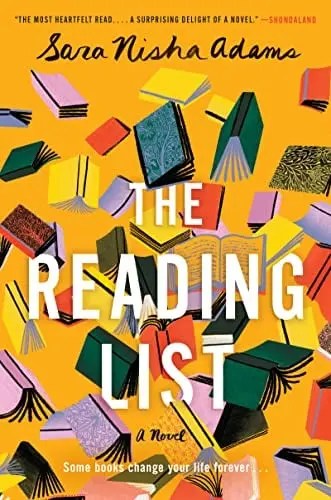
The overall message of The Reading List by Sara Nisha Adams far outweighs anything else I can say about the book. Are the characters relatable and well-developed? Yes. I found myself cheering them on throughout the entire book. Would I say that they are the best or most important aspect of the book? No. The relationships they develop with one another are much more interesting. Above all, the role that the local library and the reading list plays in the plot and the development of the relationships between various characters is the real story.
The main protagonists, Aleisha, a young teenage girl with a troubled home life who works at the library over the summer at the suggestion of her older brother, and Mukesh, a widower who struggles to regain his sense of purpose after the loss of his wife of decades, Naina, meet at the local library. The unlikely friendship that unfolds after their first unpleasant meeting sets the stage for all that follows that fateful summer, changing both of their lives irrevocably.
Set in the quiet London Borough of Ealing, the local library serves as a focal point for the community, even if it is well-loved and in search of additional patrons. The reading list Aleisha finds, labeled “just in case you need it,” ultimately brings several people together in unexpected ways. It is this list that I find to be the most interesting aspect of the book. It is obvious that The Reading List was written by a bibliophile for bibliophiles.
The following reading list is found in the book:
In Case You Need It …
The Time Traveler’s Wife * (discussed in the book, but not included on the list)
To Kill a Mockingbird
Rebecca
The Kite Runner
Life of Pi
Pride and Prejudice
Little Women
Beloved
A Suitable Boy
______________________
From the Author …
Jhumpa Lahiri, The Namesake
Arundhati Roy, The God of Small Things
Zadie Smith, White Teeth
Chimamanda Ngozi Adichie, Americanah
Katherine Heiny, Standard Deviation
Rohinton Mistry, A Fine Balance
Hiromi Kawakami, Strange Weather in Tokyo
Angela Carter, The Magic Toyshop
Maya Angelou, I Know Why the Caged Bird Sings
Attia Hosain, Sunlight on a Broken Column
Ali Smith, There But For The
Ultimately, The Reading List is about how books and libraries can bring us together. It is a great message that more people need to hear. While I don’t often hear it anymore, there are still some people who do not recognize the modern importance of libraries. Personally, I believe that they are more important than ever. I am grateful that my local libraries appear to be doing well and have a lot of local support. I can’t imagine life without them. What makes The Reading List so powerful is the demonstration of how various characters connect over books and how those connections impact their lives. The right books seem to appear at just the right time. I feel for anyone who has not had that experience. I cannot recommend The Reading List enough.
Yes. I do intend to eventually read through both lists.
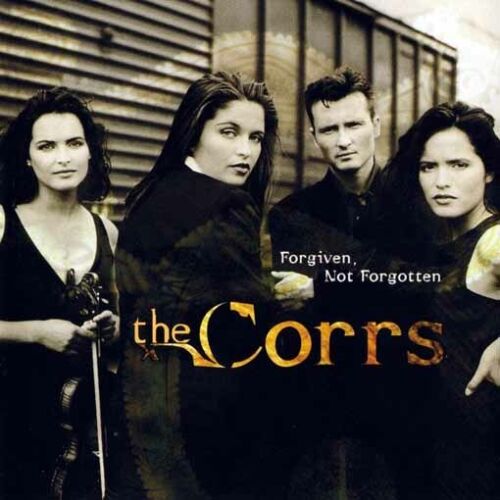
It seemed appropriate to share a beautiful song by an Irish band on St. Patrick’s Day. I fell in love with the entire album when it first came out, even though it wasn’t exactly the music I was into at the time. It certainly has held up.
I hope to revisit Ireland one day. I only spent a long weekend in Dublin while studying abroad in the United Kingdom, and yet, it left a deep impression on me. I have yet to travel anywhere where I felt so at home.
Happy St. Patrick’s Day! More to come on Ireland in the week ahead.
As with so many writers, I fell in love with reading first. Over the years, I have found my reading life crucial to my continuing education as a writer. The best writing advice I’ve ever received is to read as widely as possible. The best part: Most of the tips, resources, and suggestions I am sharing here are little to no cost. One crucial requirement: a library card.
The following is a continuation of the list I started in Part 1. You can find it below.
I currently belong to three book clubs, and all three serve different roles in my reading life. First, as a writer, I would encourage you to join a book club similar to Mid Michigan Writers’ own Scribblers and Scholars. We meet every-other month to discuss books from the point of view of writers. Lately, we’ve been working on comparing Educated by Tara Westover to The Glass Castle by Jeanette Walls. Scribblers and Scholars aims to provide writers with a book club focused on dissecting the craft of writing, although we tend to discuss just about anything related to the books.
I’ve also belonged to the Standish-Sterling Book Club for years. It is the first formal book club I’ve joined, and while we certainly discuss the books we picked, there is an in-person social aspect to the club that I love. In fact, two of my former teachers also belong to the club, both of whom have had a profound impact on who I am today. We meet monthly, and there is truly no judgment if you don’t quite finish a book that is less than thrilling or if you can’t make a meeting.
Last but not least, I’ve also joined the Spartan Book Club, which resides entirely online, as an alumni of Michigan State University. In fact, it has its own forum and much more. Books are selected quarterly, and once again, members are free to participate as much or as little as you’d like. I’ve met some wonderful people online and have thoroughly enjoyed the book selections. I’ve also used the Spartan Book Club for reading suggestions, as there are also several wonderful books mentioned not chosen as a book club selection.
I mention all of my book club experiences because they demonstrate that there is one out there for every type of reader. As a writer, all of my book club experiences led me to books I would not have picked up otherwise. I am a better writer for it, and it provides yet another outlet in which to discuss books. Think about what you would like out of a book club, and with a little research, you will find it.
Embrace eBooks
If you haven’t discovered the benefits of ebooks yet, here are a few things I’ve noticed as a writer. First, I tend to be a collector. I intentionally collect certain books, hopefully to be read more than once. While there is nothing quite like the smell of a good book, collecting hundreds of ebooks takes up a lot less space in my home. Second, with Kindle, my preferred ereader and type of ebook, I can have my entire ebook library not only on my phone, but on my Chromebook and Kindle Paperwhite as well. Last but not least, I have a hard time highlighting or writing in traditional books. Ebooks allow me to highlight and make notes to my heart’s content without marking up a traditional book. My notes and highlights are waiting for me when I return.
Ebooks tend to be more cost effective as well. Often, the Kindle version is less expensive than either paperback or hardcover. While the prices of Kindle books are rising in some cases, there are also several websites and offers for free or low-cost Kindle books. BookBub is one of the best. I actually had to quit because I found too many great free books. It became overwhelming. Of course, libraries are increasing their access to ebooks as well. The beauty of ebooks from the library is that, not only is there no cost, you don’t need to physically visit the library or remember to return the book either.
Research and Read Book Reviews
There are countless places to find good book reviews and research book suggestions. Goodreads has everything and provides access to all kinds of reviews. Personally, I enjoy book blogs. My favorite is Modern Mrs. Darcy. She has it all: endless book lists, audiobook recommendations, her own book club, a podcast, and so much more. If you are into the reading life, you need to check it out. It might take some research, but once again, there are book blogs and review sites aimed at every type of reader. It is a matter of finding your niche.
Take a Class
I admit, pursuing my English Language Arts (ELA) endorsement in secondary education (grades 6-12) forced me to branch out as a reader. I’ve learned so much from my formal writing and literature courses. Yet, it isn’t necessary to spend hundreds or even thousands of dollars on tuition to take a literature class.
Two trusted, established sites I’ve used in the past are Coursera and Canvas. While I haven’t taken writing or literature courses specifically on either site, I do know that they are readily available at little or no cost. Other courses I’ve taken on those sites, mainly on educational technology, have been wonderful. On the clearinghouse site ClassCentral, a quick search under literature resulted in free survey courses offered by the likes of Harvard and the University of Pennsylvania on a wide variety of subjects relating to all aspects of literature. You can find my search result here. There is also The Great Courses Video BingePass available on Hoopla that allows patrons access to the The Great Courses Video Collection for free for a week. The possibilities are endless.
Curate Your Own Lists of Books/Literature
Of course, there is always the DIY approach. Take the time to make your own lists of books and other forms of literature that interest you. I’ve made several of these lists over the years, and it helps me keep track of things that I came across years ago. I’ve found creating lists of authors and major works to be helpful. Make the list you are seeking if it doesn’t quite exist yet – and have fun.