I’ve tried to blog countless times since school started this fall, and well, if I am honest, I’ve felt overwhelmed ever since Charlie Kirk’s tragic death. There still are no words. No matter what I have to say, all I could think of is that it could potentially add to the hate, and that would never be my intention. It isn’t that I didn’t or don’t have anything to say. No. Quite the opposite. I have so much to say that I didn’t know where to begin. Sometimes, it just comes to you. Sometimes, you just have to start again.
On rare days as a teacher you may have small wins. Sometimes a lesson goes particularly well; it may finally “click” for that student you’ve been worried about all school year. A small victory in the grand scheme of things, but invaluable when you truly care. It is the same with writing. There are times where you just have to get it down before it is gone forever. It may not be perfect, but there is a kernel of truth in there somewhere. On the rarest of rare occasions, both happen on the same day within the hour. That was my day today, but first, a little background.
My dream of creating a creative writing club for my students may have started during my years teaching middle school at St. Mike’s, but I had no idea where it would lead. At St. Mike’s, my teacher bestie Dorri and I teamed up to form a group for students grades 3-8 interested in writing. We were small but mighty – and we even survived a pandemic. I wish others could have witnessed the patience that my middle schoolers had with Dorri’s budding 3rd grade authors. Dorri and I may no longer teach together, but we still bring up the magic that happened during writing club. In fact, this fall, I learned that one of my former students, one of those patient middle schoolers now a high school senior, will soon have a short story published in an anthology. He couldn’t be more deserving or have a brighter future.
Last year, my first year as a full-fledged teacher at Michigan Virtual Charter Academy (MVCA) teaching 10th grade high school English, I knew that I wanted to try again. I wanted to create a creative writing club for our high school. Throughout the school year, we became a tight knit group of writers who wholeheartedly supported one another. I hated to see it end. This year, I didn’t know if I could create that atmosphere twice.
Fortunately, I did. Even though I have an almost entirely new group of students this year, they are just as supportive and passionate about writing. Above all, they are wonderful writers. In fact, in addition to sharing what I wrote today during our session, I wish I could share some of my students’ work as well. They are far more talented than I ever was during my high school years. It is beautiful to see and gives me so much hope for the future. Gen Z – and what I’ve witnessed of Gen Alpha – are far more compassionate and understanding than the Gen Xers, Xennials, and Millennials I grew up with. They seem to grasp just how much damage mere words can do. They also understand that there is more to life than work, image, and material things.
So, I decided to share with you what I wrote today in the span of twenty minutes. It is not perfect, but it is a start. There is something there. In that same twenty minutes, one of my students created a piece so wonderful that it is begging to be shared. I am hoping to get at least a paragraph of her work in the yearbook. Yes, 2026 is off to a great start. Today was a good day.
Why I Write …
I write to not be forgotten.
I write to calm the storm and slow down time.
I write to express and gather my thoughts and ideas.
I write to make sense of the chaos trying to drown me.
To create order out of chaos.
I write to explain the inexplicable.
I write to support and inspire others.
I write to find meaning where there is none.
I write to remember what shouldn’t be forgotten.
To capture what could be lost, what shouldn’t be lost.
I write to learn and study.
I write to make connections and share with others.
I write to expand my understanding of everything around me.
I write to learn how to teach others to write, wonder, and explore.
Little known fact: The US military is the largest supply chain in the world.
My supply chain management education will always color the way I view things. At times, I wish it didn’t. In education, I like to believe that most students will find their way, eventually. Most will find their purpose. I feel for those who don’t, but it is a reality of life. There are always those who remain lost, and sadly, I’ve known a few. I can help, but I can’t be everything to everyone.
With supply chain issues, there is a solution. There is always a solution. We just need the resolve to follow through and make necessary changes. We learned so many supply chain and economic lessons from the Greatest Generation and World War II, but as that generation passed away, I fear that we have lost those lessons or even ignored them completely.
Let me start at the beginning. I am deeply proud to come from a long line of entrepreneurs. I long idolized my dad and Grandpa Buttrick. Both owned and ran their own companies and were self-employed, as different as their companies were and still are. My dad developed Russell Canoe Livery around our family and our lifestyle. He had no desire to build it beyond what it is now, even if we had the opportunity.
Grandpa, on the other hand, loved to build. He expanded his convenience store business into screen printing, Subway franchises, propane, hotels, and more. He even loved to compete against himself from time to time. As a child who loved to build, I took notice. In having the opportunity to manage one of his convenience stores for a few years, I am grateful to have learned just why Grandpa loved the c-store business so much. Ultimately, it helped me become a better manager at the canoe livery and a more empathetic boss.
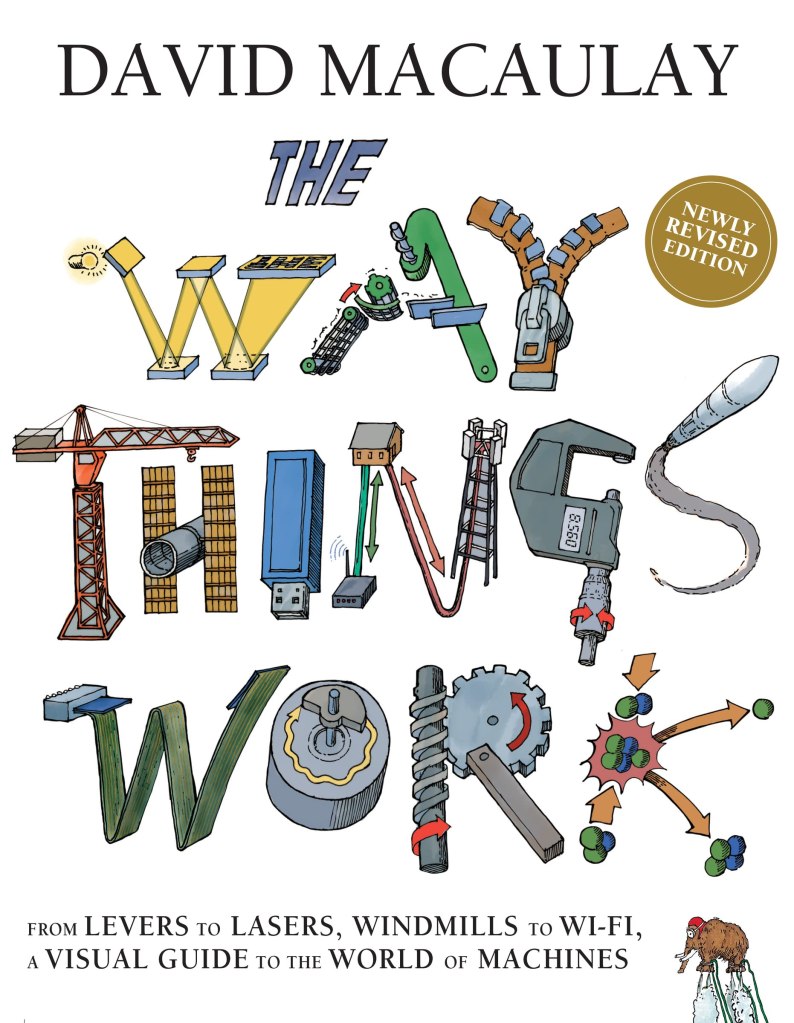
While this cover is exactly how I remember it, it must be an updated version! No WI-Fi in the 80s and 90s!
As a child, one of the most fascinating books I owned was The Way Things Work by David Macaulay. I wanted to know how and why things worked. Looking back, this helps explain why I chose supply chain. It fit the bill. I knew I didn’t want to study management. I wanted to know exactly how value was added, and not just become increasingly removed from day-to-day operations that actually pay the bills. Accounting and finance never even entered the picture. In fact, my mom and I joke that we would starve if we had to try and make a living as accountants. I am decent at math, but I make errors far too often, and it is not my thing.
I do have two older cousins who earned supply chain degrees from Michigan State and blazed the trail, but as my older cousin Emily tried to sell me on supply chain, it made me look at the program more critically. Instead, my experiences at the Broad Business Student Camp (BBSC) after my junior year of high school sold me on Michigan State and supply chain management. During that week attending BBSC, I had the opportunity to explore State’s incomparable campus, everything the Eli Broad College of Business had to offer, as well as all things supply chain. In short, I had the opportunity to preview what my life would be like as a Michigan State business student with one of my best friends. What was not to like? By the time my parents dropped me off at MSU in August of 1999, I had to kick them out of my dorm room as I had already connected with student groups in the business school, and I was not going to be late for the first meeting.
Now you know why I never wavered in my pursuit of my supply chain degree, in spite of the fact that, deep down, I knew that I wanted to be a teacher as well. As for the deeper lessons that stayed with me and kept me up at night, it all started with a business history class I took during the winter of 2000, the very heights of the dot.com bubble. In fact, the bubble burst that consumed that spring forced me to pay attention. My history professor, in fact, predicted the fall of the stock market (the dot.com bubble) publicly almost as soon as classes started in January. When it finally happened in March, as a 19 year old, it left a deep impression. However, as memorable as that experience was, this is not primarily why I remember this class 25 years later.
Instead, my professor’s description and explanation of how Detroit became the “arsenal of democracy” still sends shivers down my spine. He made the case that the United States and the Allies would not have won World War II without Detroit. While I knew Detroit played an important part in the war, I didn’t realize just how important. Supposedly, when Hitler received intelligence of manufacturing totals coming out of Detroit, he didn’t believe it. Those who had gained manufacturing experience in cities like Detroit, especially Detroit, would turn their focus to the war effort.
When you think of the manufacturing capability we had during that time, the early 20th century, it makes sense. We were able to help supply Great Britain long before we officially entered the war after Pearl Harbor. Thanks to FDR, we switched from manufacturing consumer goods to munitions. We went from cars and refrigerators to tanks and aircraft. This is the question that keeps me up at night: Would we be able to do so again if faced with such a crisis? I don’t know.
Actually, I doubt it, as the way things are now. Born at the end of 1980, I’ve watched my entire life as Michigan lived up to its “rust belt” image. Most of the business professionals I graduated with in 2004, me included, had to relocate to states such as Texas and California to find jobs. When my parents graduated from college in the late 70s, there were still good manufacturing jobs to be had right out of high school, although that would soon come to an end. I grew up hearing of plant closures, manufacturing outsourcing, and general loss of manufacturing capability in the United States. It is all I knew. By the time I sought to start my career, little remained. Instead, less secure positions with multinationals outsourcing much of their labor to places like China, Mexico, and India took their place, particularly in the shadow of the first dot.com bust.
By the time I interned with IBM out in Rochester, Minnesota during the summer of 2001, not only did they not have enough for their interns to do, their full-time, permanent employees didn’t either. Instead, they were focusing on their garage bands and updating their resumes. In 2003, as part of a tour of a GM factory in Mexico near the border, I vividly remember seeing rows upon rows upon rows of brand new Pontiac Azteks and Buick Rendezvous awaiting shipment as our chartered bus slowly approached the plant. Looking back, it foreshadowed Pontiacs epic downfall several years later. Tragically, Pontiac would never recover from the monstrosity that was the Pontiac Aztek.
My last semester at Michigan State in 2004 brought the Eli Broad College of Business’s first Chinese Supply Chain Symposium. Of course, it focused on all of the wonderful benefits of outsourcing manufacturing to China. I left wondering if I was the only one asking just how long before we were outsourcing our own jobs? Where and when would it end? Was I the only one seeing the connection between outsourcing and both unemployment and underemployment in the United States?
Even Russell Canoe Livery has a supply chain, one with its own set of challenges and setbacks.
I will leave you with this summary. We desperately need to bring manufacturing back to this country. If you think the supply chain interruptions during the COVID 19 pandemic were bad (and I followed them closely), what would happen in the case of an even worse global crisis? Good manufacturing jobs helped finance the growth of the middle class throughout most of the 20th century, particularly after World War II. Why can’t we get back there? We’ve learned so much during that time, and we have the workforce, if given a chance. I hope I live to see it. By the way, this doesn’t mean becoming isolationist. It is simply expanding beyond the pharmaceutical, technology, and service industries. Supporting local farms wouldn’t hurt either! Cheap is good, but it is not always best in the long-run. We’ve remained far too short-sighted and complacent for far too long.
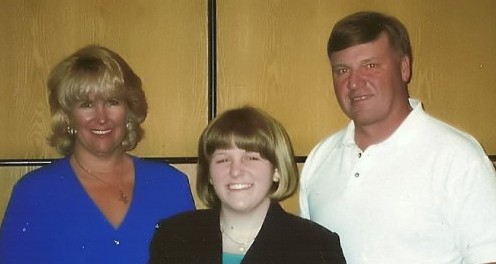
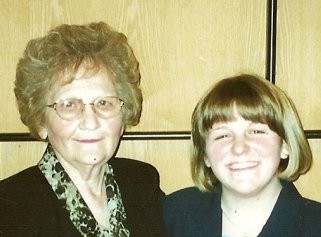
Mom, Dad, and I – MSU Spring 2001Grandma Reid and I – MSU Spring 2001 – One of the best business women I’ve ever known!
Mom, Dad, and I – Spring 2001 Tower Guard Induction – Beaumont Tower, Michigan State University
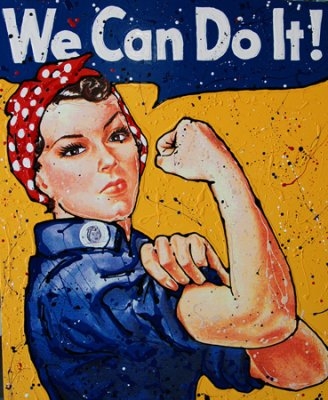
In honor of Grandma Reid, who worked as a riveter in both Hamtramck, MI and Fort Worth, TX during the World War II era, all before the age of 20.
I did not set out to become a teacher, I left that to my younger sister Erica. As her older sister, I’ve never known her to want to be anything other than a teacher and a mother. I envied the fact that she was so certain about her desired profession, not to mention her dedication to her love of children. When we played school – and we did often – I ended up being the school librarian while she insisted on being the teacher. Until our younger brother was born when I was age 10 and Erica age 7, we didn’t have a single pupil. By the time he was two, Erica made our toddler brother a series of report cards, grading him on things like “listening” and “sitting still.” But, this isn’t my sister’s story. It is mine.
My story of pursuing a career as a secondary teacher is by no means conventional. In fact, it is so unconventional and challenging that I would recommend it to no one. If it weren’t for the facts that teaching is in my DNA and I am meant to be a teacher, I would have given up long, long ago. Instead, I doubled-down when I was faced with what at the time seemed to be insurmountable obstacles. I even went back to substitute teaching when needed while deciding what my next step would be. I am a better person, and teacher, for it.
Every story needs to start somewhere, and mine starts with the statement that teaching is in my blood. It truly is. As a genealogist, as far as I can tell, the teaching tradition goes back at least five generations on my mom’s side of the family. It likely goes back even further. Both of Mom’s grandmothers taught, and one of her grandfathers served as principal of his daughters’ elementary school, as well as coach.
Interestingly, the teaching careers of my great-grandmothers could not have been more different. I knew both Grammy Bea (Beatrice Williams), who taught kindergarten and first grade for decades at the height of the baby boom, and Great (Leona Buttrick), who taught in a one-room schoolhouse and quit teaching once she married my great-grandfather Hatley. Although these are stories for another time, their careers illustrate massive changes in public education.
Funnily enough, the teaching tradition isn’t exactly confined to mom’s side of the family. Even though neither of my dad’s parents had the opportunity to further their education, they highly encouraged their children to do so. Both did, and even though my dad and his sister didn’t necessarily see eye-to-eye on much of anything, I find it telling that they both married teachers. On the Suszko side of Dad’s family, there are several special education and agricultural teachers. In fact, my cousin Kristy, a woman with whom I attended school at all levels from kindergarten to college, now teaches dairy science at the university level.
As much as I did not want to admit it, I am a teacher. It took me far too long to make peace with that fact. Something inside me would not let it go. As soon as I graduated from Michigan State in 2004 with degrees in supply chain management and Spanish, my entire world shifted. It would not be made right again until I went back to school in 2013.
It all started during the Great Recession with a casual conversation with my ex’s mom Cindy. We were invited to dinner as usual, and Cindy and I struck up a conversation. She told me that she wished that she’d gone back to school to become a nurse. All I could think at the time was that I did not want to be in my 50s and regret not pursuing an interest. During the Christmas shopping season of 2008, I worked at Best Buy in Saginaw. As I lived in the South End of Bay City at the time, I drove by Saginaw Valley State University (SVSU) every day on my way to work. Slowly, I started to wonder what would happen if I did decide to go back to school to become a teacher. The idea excited me and fed my imagination. How could I make it happen? How would I adjust? Online classes, in their infancy back in 2004, intimidated me.
Eventually, I had the ability to make it happen in 2013. I largely enjoyed my time at Saginaw Valley State University (SVSU), although I would advise commuter students to do their homework. For example, if I had not followed up with my advisor, I would have stressed out about the math portion of the general MTTC exam necessary to even apply to the College of Education. I didn’t necessarily doubt my ability to do higher-level math likely trigonometry and low-level calculus, but I had not remotely touched those subjects in well over a decade. The thought terrified me. Much to my relief, my counselor informed me that I scored high enough on the ACT test I took in high school that I did not need to take the general MTTC at all. I then questioned why I wasn’t informed earlier. She simply stated that it likely stemmed from the fact that I was a commuter and a non-traditional student. While I would highly recommend SVSU to traditional college students coming right from high school, I’m not so sure in other situations.
I enjoyed most of my classes and professors at both Delta College and SVSU, but I can’t say that I didn’t have any bad experiences. In fact, one professor and class at SVSU stands out for all of the wrong reasons. This particular professor taught a class that focused on diversity. However, somehow, throughout the entire semester, he managed to offend nearly everyone in the class. Horribly. He supposedly hated coaches. When I ran into a former classmate in a school setting years later, we naturally discussed this infamous class and professor. This man, who happened to coach as well as teach, informed me that this professor tried to get him removed from the College of Education program, likely because he planned to coach.
Somehow, this professor appeared to have no issue with me or one of my good friends, even though he had long ago deeply offended us both. As we paired up to complete our main teaching project for the course, things fell apart. When it came time to “teach” our project, our professor respected my teaching time and even seemed pleased. Then, he proceeded to continually interrupt my friend and teaching partner for her entire portion of the project. He made it exceedingly difficult for her to even finish. Already extraordinarily introverted, I have no idea how she made it through. Disrespectful doesn’t even begin to cover it. Unfortunately, she never did become a teacher, although she would have been wonderful. Instead, she became a librarian. To this day, I still believe that the world needs introverted teachers too. There are too many people like this professor that discourage future teachers every step of the way before they even get started.
Stay tuned … There is much more to this story.
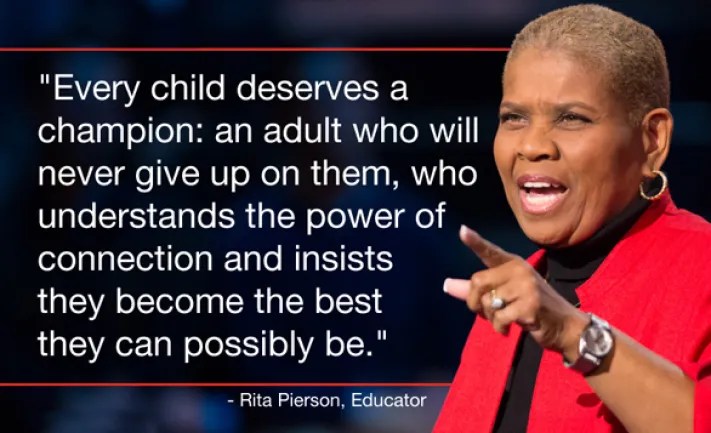
Not just my favorite TED Talk on education and teaching, my favorite TED Talk period.
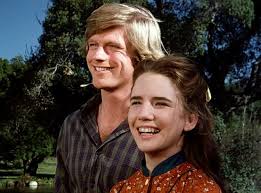
Dean Butler as Almanzo Wilder in Little House on the Priarie
This year, the TV show Little House on the Prairie celebrates 50 years since its television debut. Oh, and does that show still have a following. To celebrate, several events were held at various locations throughout the country, including most of the homesites of the Ingalls and Wilder families. They even recreated several of the sets at Big Sky Movie Ranch in Simi Valley, California, where most of the series was filmed. Infamously, the last installment of the series saw the original set of the town literally destroyed as part of the plot. Under the terms of filming, the producers of Little House on the Prairie contractually had to return the land to its original condition.
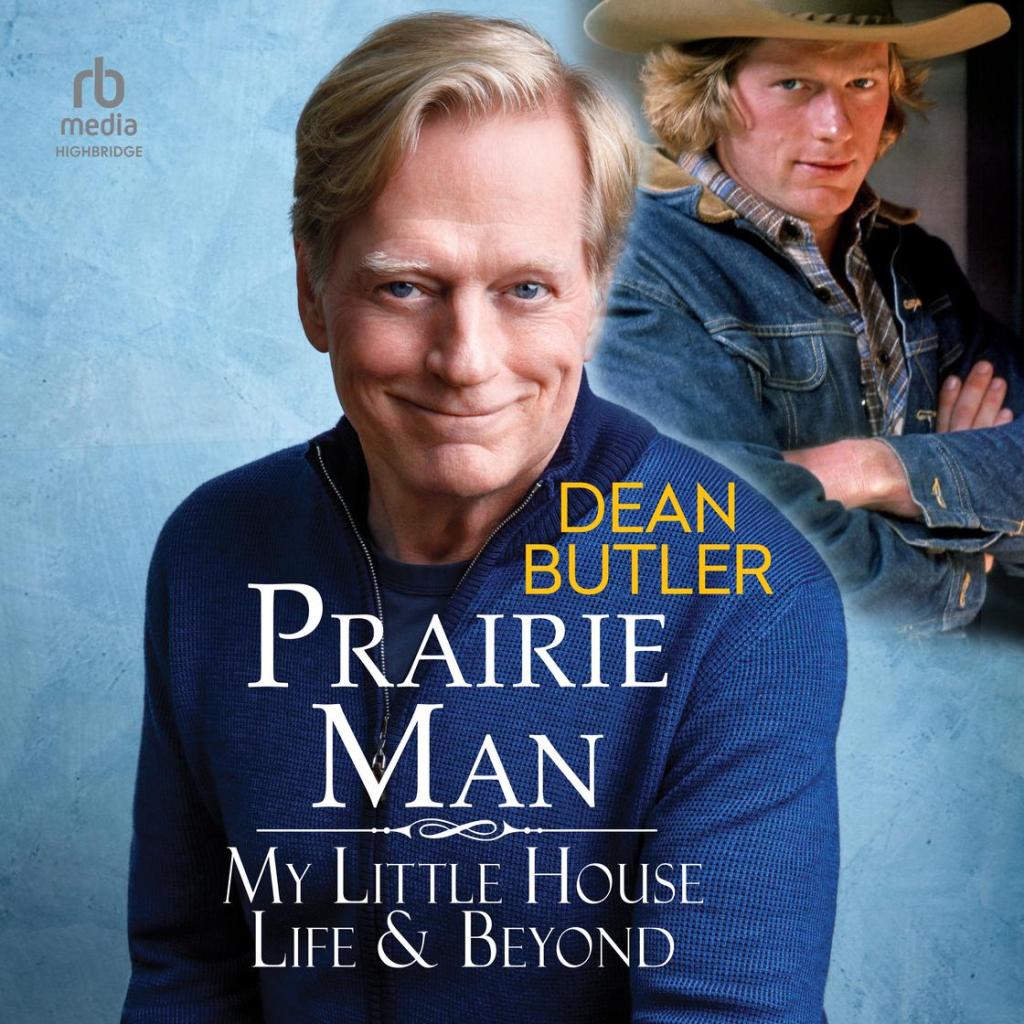
So, where does Prairie Man by Dean Butler come in? First, the book debuted this summer in the midst of all of the events. Second, and most importantly, Dean Butler, who played Almanzo Wilder in the last years of the series, and Alison Arngrim, the one and only Nellie Oleson, who famously penned Confessions of a Prairie B*tch, have worked tirelessly to keep the legacy of the TV show alive. In fact, this entire year, they decided to host a podcast dedicated to all things relating to the 50th anniversary of the Little House on the Prairie TV show.
Prairie Man stands out for a couple of reasons. First, I may not be technically correct on this, but I believe that Dean Butler is the oldest surviving male cast member. Several actors that played young boys on the series survive, but the grown men, including Michael Landon, Victor French, Richard Bull, and Dabs Greer, just to name a few, are long gone. While there are several memoirs written by female cast members, including two alone written by Melissa Gilbert, Prairie Man is the only one written by a man.
While I’ve only read Confessions of a Prairie B*tch by Alison Arngrim (you can read my review here) and Prairie Man by Dean Butler, they could not be more different. I loved both, but I enjoyed Butler’s sense of history, not to mention his diplomatic handling of tensions between fans of the books and fans of the TV show. He addressed all of the controversies surrounding both series well.
I learned a lot. While I knew that Rose Wilder Lane’s “adopted” grandson, Roger Lea McBride, ended up with the television rights to the novels, I did not know the full story. The real story is included in Prairie Man. In the early 70s, Ed Friendly purchased the rights from McBride due to his wife’s and daughter’s love of the books. Only when Michael Landon became involved as executive producer, taking the TV show further and further from the original books, did trouble occur. According to Butler, Roger Lea McBride became horrified when realized what he had done. Like Friendly, he envisioned a TV series much more faithful to the books.
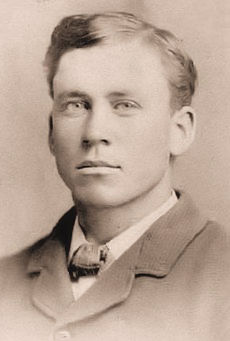
The real Almanzo Wilder, subject of Farmer Boy by Laura Ingalls Wilder
Eventually, all of this grew tension between Landon and Friendly. Landon’s vision, of course, ultimately prevailed. It may have been for the best. Ask yourself, how many children and adults were introduced to the books via the TV show? Alison Arngrim even admitted that she didn’t read the books until after being cast as quite possibly the best child villain ever portrayed on television, Nellie Oleson. Michael Landon may have taken extreme creative license, but love it or hate it, Little House on the Prairie, the television show, is still shown all over the world in syndication 50 years later. It will not die.
The funny thing is that I used to blame Roger Lea McBride for selling the rights to the television series and Michael Landon for what it became. I used to view the Little House series of books as a cautionary tale as to what can happen if an author’s legacy isn’t well-guarded or just ends up in the hands of attorneys. For those who don’t know, Rose Wilder Lane never had children (she never formally adopted Lea), and thus, with her death in 1968, Laura Ingalls Wilder and Almanzo Wilder no longer had any direct descendents. I see it differently today. I suppose I now subscribe to the old saying “any publicity is good publicity.”
While I probably would have discovered all of the books on my own, especially after my 2nd grade teacher, Mrs. Butz, read Little House in the Big Woods to our class, I doubt any of it would have left such a lasting impression without the TV show. Early elementary school would not have been the same without it. I distinctly remember jumping off the bus after school, pigtails flying behind me, eager to catch the 4 PM reruns. Funny note: Due to the fact that I grew up on the reruns, I thought Dean Butler was significantly younger, by at least a decade, than he actually is. His book, of course, made this clear.
Today, I am not necessarily a fan of the TV show, although I do greatly admire what Dean Butler and Alison Arngrim have done for all Little House on the Prairie fans. I suppose I am not a typical fan. Normally, most people are devoted fans of the books or the TV show, not necessarily both. More than anything, I am a huge fan of the real person, the writer herself, the real Laura. Her true story is far more fascinating than just the books. She lived an incredibly full additional 70 years after the life she described in all of her books. When you add in all of the drama surrounding her only daughter, Rose Wilder Lane, it justifies all of the relatively new scholarly work surrounding the Ingalls and Wilder families. There are still so many questions left to answer.
If you are interested in the Little House series at all, whether book or TV show, Prairie Man is well worth reading. Butler makes the case that he feels he was born to play Almanzo. Growing up on a ranch in California, he describes in detail how his entire career has been shaped by that one role. As he grew older, he decided to lean into it and run with it, much as Alison Arngrim has over the last few decades. Fortunately for Little House fans, its incredible legacy is in good hands for the time being.
You can also check my review of Prairie Fires by Caroline Fraser here.
I just found out today is National Author’s Day. How appropriate! The creative writing club I started at school met this afternoon at the end of the school day. There is never a dull meeting. They are so passionate about their interests, including but not limited to writing. I’ve watched as members have bonded over music and other media. It is inspiring how they support one another, too.
In the online school environment, there aren’t quite as many opportunities to strike up friendships with classmates as in brick and mortar. Personally, I think that is why school clubs are so vital in an online school environment. Last year, my first year teaching online, I watched as students planned for weeks and even months for the in-person prom held at the Lansing Center. Students attended from all over Michigan. The pictures, conversations, and friendships made that evening were discussed repeatedly as the school year came to a close. I can only hope that that same can be said when I reflect on the creative writing club at the end of the school year.
In my first year as mentor and creator of the club, I sought to find the best possible resources for aspiring high school writers. Luckily, my online classroom set aside for our new club allowed me to do just that. It is now a place where students can collaborate, offer one another and seek encouragement, as well as find resources and inspiration. I can only imagine if I had had such a resource in high school. I admit, I’ve had too much fun setting things up. So far, my entire experience with the creative writing club has underscored the importance of community as a writer.
Face it: Writing can be lonely work. Over the years, I’ve always enjoyed meeting other writers. I can’t imagine where I’d be as a writer without Mid-Michigan Writers. I’ve learned so much from other members over the years, and I would not have discovered Delta College’s general writing certificate program if I hadn’t attended MMW’s Gateway to Writing workshop with other writers who raved about the experience. If my students take away anything from our creative writing club, I do hope that they realize the importance of community for writers. Brainstorming works best with others! At some point, we could all use a second opinion. We all have to learn from someone. I can’t imagine not having my very own community of writers and readers. Happy National Author’s Day!
First, fair warning: this is going to be a series of posts. There is simply too much material, and the entire premise of the project means too much to me. Before I get into the meat of the book, it is better if readers understand the background. While John gave me a beautiful hardcover version for Christmas 2021, I am just now reading it. I knew that I will get sucked in, and I wanted to give it the time and attention it deserves. The entire idea of this massive memoir grabbed my imagination as soon as it was announced.
In his introduction, Paul McCartney discusses how he has been approached several times to write a memoir or autobiography. With this idea rolling around for years, his former brother-in-law, Lee Eastman (the late Linda McCartney’s brother), gave him the idea to write a memoir using his song lyrics, explaining their backgrounds and inspirations. Frankly, it is a brilliant idea. In creating The Lyrics, Paul McCartney sat down with renowned poet Paul Muldoon to discuss the poetry behind the lyrics. Paul Muldoon also served as editor.
I may be only through songs starting with C, but I am thoroughly enjoying the book. The entire organization of the book is unique. The Lyrics, of course, covers some of the earliest Beatles songs (back to the Quarrymen, actually) to Paul’s latest solo efforts, with Wings in between. It truly covers 65 years of some of the best pop music ever written. Some songs written were given to other bands or acts, such as Peter and Gordon and Badfinger. The book is not in chronological order, but it is instead arranged by song title. Throughout the book are dozens of historic photographs from McCartney’s personal archives. Throughout, he explains his song writing process and inspirations. Another cool feature of the book is that someone took the time to create a Spotify playlist that includes all of the songs in The Lyrics in order that they appear in the book. You can listen along as you read. In my opinion, it doesn’t get much better than that.
I look forwarding to sharing more about The Lyrics once I finish the book. It may a bit, but it will be well worth it in the end. As a writer, music lover, and avid Beatles’ fan, especially Paul McCartney, I’m obviously the target audience. Yet, I feel as though there is something for everyone in the book. Now in his 80s, Paul McCartney is still touring, still writing music, and still out there. Supposedly, his shows are right around three hours long, without a break. His work ethic, his passion for performing and songwriting, and deep appreciation for his fans is the only explanation.
I’ve been thinking about the delicate balance between reading and writing lately. As a writer, I love to create. At the same time, I am continually inspired by what I read. I am still trying to find a balance. When you add in teaching and my love of technology, it becomes easier to see why I should be both writing and reading more.
Over the last several years, I’ve dabbled in other forms of storytelling. As I earned my writing certificate through Delta College, I had the opportunity to take a screenwriting course. While I have no plans to write screenplays, it opened me up to the storytelling potential of even short videos. I’ve never looked at movies the same since. During the pandemic, I dabbled with learning how to podcast. I found it fun, but unlike here at Ramblings of a Misguided Blonde, I would like to dedicate a podcast to a single topic. I haven’t found the right topic … yet.
As a teacher, I took a short digital storytelling class a few summers ago. I learned so much, and as I pursue teaching online, I am sure that I will have the opportunity to create several videos for my classes. Today, I thought I’d share the video that I created a few summers ago. Just another fun form to explore!
The post was originally published on an earlier version of my blog. I’ve slightly updated and modified the post. Anything in bold I added to the original post. Tigers’ opening day is April 5th at Comerica Park! GO Tigers!
I’ve tried writing this post several times over the last several years. Sometimes there is so much to say, no mere words can do the subject justice. Somewhere along the line, somewhere between childhood and adulthood, I forgot what baseball once meant to me. I also forgot just how intertwined baseball is with some of my favorite childhood memories.
Back in 2012, it all started with me getting the crazy idea that my baseball obsessed ex-boyfriend Brian and I should watch the Ken Burns’ documentary Baseball – all almost 20 hours of it. I checked it out from the library sometime early in September 2012. Brian and I then spent the next couple of weeks watching the entire documentary, including great interviews with Bob Costas, Yogi Berra, and Rachel Robinson, the widow of Jackie Robinson, among others.
For me, the most memorable part of the series had to be the clip of Bob Costas discussing his first experience at Yankee Stadium with his father. As a young child, he was awed by the sheer size of the stadium and the size of the pitching mound. After the game, fans back then could cross the field to a second exit. As Bob Costas and his father crossed the field, he became very upset. He loved baseball so much that somewhere during his childhood, he got the idea that Yankee greats such as Babe Ruth and Lou Gehrig were buried on the field. He didn’t want to disturb what he believed to be their graves. The stories of baseball memories bringing together fathers and sons, as well as fathers and daughters, stayed with me.
Mom, Dad, and I ~ 1983
Dad sporting his lucky #3 hat. Some of my earliest memories are of watching the Detroit Tigers on TV with my dad.
I found myself asking why baseball is so different from football, hockey, or basketball. I’m not sure, but I do know this: there is something about baseball that transcends time. I have memories of watching the Red Wings win the Stanley Cup in 1996 and 1997 with Dad, as well as countless other games, but my most powerful memories all relate to baseball.
Many of my earliest memories of Dad involve baseball. As a very young child, I remember watching the Detroit Tigers with Dad and eating Schwann’s black cherry ice cream. Somehow, Dad ended up attending one of the 1984 World Series games at Tiger Stadium. At that game, he bought a signed baseball that sat on the roll-top desk in his office for years. In fact, it might still be there. I loved that baseball and thought that it was amazing that Dad attended one of the World Series games. I also remember rummaging through the top drawer of Dad’s desk and coming across his father’s Masonic ring. In the eyes of a young girl, the Masonic symbol was a baseball diamond. Above all, there were the games.
My youngest nephew, Owen, sporting lucky #3 and keeping the tradition alive, even if it is his basketball jersey. Dad always seemed to end up as #3.
Throughout my early childhood, Dad, a former high school athlete who played football, basketball, and baseball, played on a men’s softball team. As a preschooler, I loved watching Dad play ball. I liked the entire experience. I was so proud to have Dad out there in his lucky #3 baseball hat with his well-worn glove. I loved watching him bat.
Of course, it wasn’t just about baseball. I also loved playing in the dirt next to the dugout, running around the poker straight pine trees behind the dugout, and playing with the old-fashioned water pump between the dugout and the pines. More than anything, I loved going to the bar with everyone after the games. As Dad and his friends, along with their wives and girlfriends, drank pitchers of beer and talked, I played pinball, foosball, Pac Man, and enjoyed pop and chips. It is no wonder I could relate to adults well as a child. I spent a lot of time around adults and enjoyed every minute of it.
I also loved spending time at my grandparents’ house. A trip to my dad’s parents’ home wouldn’t be complete without spending time with their neighbor’s son, Brian K. We were the same age, and he happened to have something I wanted desperately as a child, a tree house! I vividly remember one afternoon spent playing in his tree house. His dog somehow came off his lead, and I became scared as I really didn’t know his dog. Brian K. told me to hang out in the tree house until he chained up the dog.
That day, his mom invited me to attend one of Brian K.’s Little League game with his family – a big deal in the eyes of a six year-old! I felt honored to be sitting on the sidelines cheering on Brian K. along with his parents. At the time, of course, I wanted to be out there on the field too. While I did play softball for one season at age 11, I am no athlete. Grandpa Reid, who loved to watch me play, insisted he never saw anyone walk more than I did. As I’ve always been exceedingly short, no one ever learned how to pitch to me. Instead, I collected baseball cards.
I’m not exactly sure when and why I started collecting baseball cards, but my favorite will always be the Topps 1987 wood grain cards. They remind me of Grandpa B. My maternal great-grandparents owned a cottage on Sage Lake in northern Michigan. I spent many summer weekends there with my parents, my siblings, my grandparents, and much of my extended family. At the cottage, Grandpa loved to get all of us grandkids, all girls at the time, in his station wagon to take us to the pop shop. He let us pick out whatever we wanted. I picked out baseball cards to add to my collection, mainly ’87 Topps. I still have my baseball card collection and fond memories of Grandpa asking me if I was sure that is what I wanted.
I loved everything about collecting baseball cards: organizing them by team, deciding which packs of cards to purchase, and looking up prices. All fun! It is fitting that I lost interest in collecting cards as I became a teenager. My last full set dates to the strike-shortened 1994 season. Around that time, I lost interest in baseball. Coincidentally, it is also the same year the local IGA, my favorite place to purchase cards, closed.
That same year, Dad took Erica, Garrett, and me to a Tigers game at Tiger Stadium on the corner of Michigan and Trumbull. That day happened to be Little League Day. My Dad knew this, so he had my sister wear her softball shirt, my brother his t-ball shirt and hat, and me my old softball shirt. As a result, we had the opportunity to go out onto the field before the game. I’ll never forget looking back at the stands of old Tiger Stadium from the field. I’m grateful to Dad for ensuring his kids had that experience. There is nothing better than going to a baseball game with your dad. Having the opportunity to get out on the field of a historic stadium made it that much better. Somehow I lost interest in the game, but it is still there, was always there, waiting to be rediscovered.
I’m looking forward to cheering on the two below this spring!
Ernie Harwell ~ The voice of Tigers’ Baseball for decades, narrating many summer road trips, especially with Grandma Reid.
I am ashamed to admit it, but I have yet to fully read one of Anne-Marie Oomen’s memoirs or books of poetry, even though I own two of her books (signed) and have attended a couple of her writing sessions (one for teachers and other, this past spring, open to the general public), as well as a reading from her latest book, As Long As I Know You: The Mom Book. I’ve only read and heard snippets of her work … so far.
What I’ve read and heard thus far is wonderful, and knowing the topics/subjects/genre included in many of her books, I know that I will love them. How could I not purchase a book titled Love, Sex, and 4-H? Then there is As Long As I Know You: The Mom Book. I can’t wait to read it. The passages that she read during her author event, along with the anecdotes she shared about herself, her mom, and writing the book, definitely left me hooked.
What I really want to discuss today is her capacity as a teacher. Just over a month prior to the shutdown orders signaling the official start of the pandemic, I had the opportunity to attend a day-long writing program aimed at teachers. Titled “Homecoming: Coming Home,” it was sponsored by the Saginaw Bay Writing Project. Anne-Marie Oomen happened to be one of the presenters that morning.
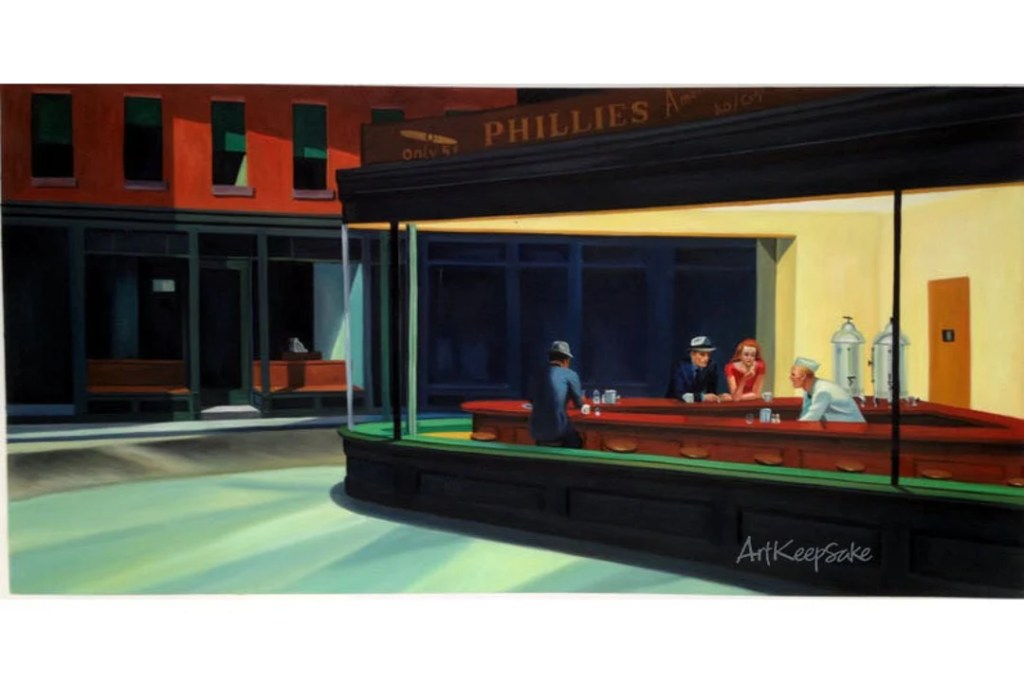
During her allotted time, she taught us the term ekphrasis – a method of using different works of art to create various forms of writing, whether poetry, personal essay, or short story. Imagine studying a painting and then creating a poem from your experience. That is ekphrasis.
After explaining the process and providing us with examples of her own work, Anne-Marie Oomen had us create our own art inspired piece. She brought with her a large collection of postcards. I chose one with a portrait of Annie Oakley on the front, “little sure-shot.” I enjoyed the experience and still have a digital copy of her presentation from that day. I left realizing that I could easily create vision boards on Pinterest to gather my thoughts and ideas for various writing projects.
Anne-Marie Oomen used the painting Nighthawks by Edward Hopper to demonstrate the process of ekphrasis.
As wonderful as that experience was, a few months ago I learned that Anne-Marie Oomen was to be a guest scholar at Saginaw Valley State University. During that time, she conducted a similar writing session open to the general public at the Marshall Fredericks Museum on SVSU’s campus. I am so glad that I attended. It made me look at one of my favorite museums in an entirely different light. I left with a notebook full of ideas and even a rough draft. The following evening, Anne-Marie Oomen held a reading at the Wirt Public Library in Bay City, sharing snippets from As Long As I Know You: The Mom Book. I’m so glad that I attended as it brought back so many memories of the short few months I had living with Grandma Reid before she needed more care than I could provide. It is never easy watching someone you love age and decline.
I took something away from each of Anne-Marie Oomen’s events. On top of sharing her love and knowledge of writing, she is a wonderful teacher. Better yet … she is a Michigan author willing to help aspiring writers and teachers.
Anne-Marie Oomen’s latest book As Long as I Know You: The Mom Book details her experience dealing with her relationship with aging mother.
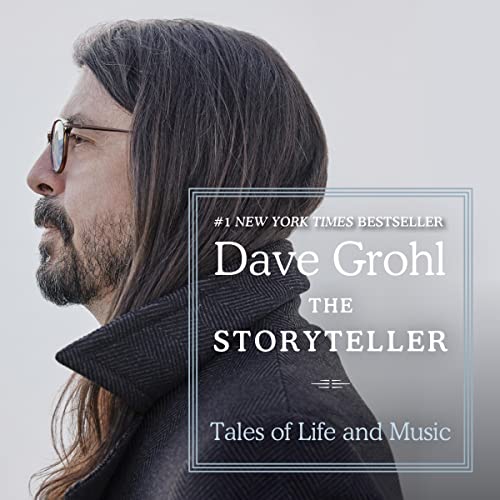
I admit, it took me a little longer than usual to get throughStoryteller: Stories of Life and Music by Dave Grohl, but it certainly didn’t disappoint. It is one of the best memoirs I’ve read. Considering his current stature in the world of pop rock/alternative, whatever you want to call it, as a drummer, his humble nature shines through. It all started with his pure love of pop rock, namely the Beatles, moving on to the punk scene of the late 70s and early 80s, and making it big with Nirvana and grunge. Today, it seems as though Dave Grohl has settled in as drummer and girl dad extraordinaire. If planning on reading the book, I highly recommend the audiobook version as he reads his own memoir. There is nothing quite like hearing about Nirvana’s early days and the danger of their exploding fan base from the drummer himself. Then there are the well-placed expletives in his internal monologue as he meets his musical heroes and juggles world tours with daddy-daughter dances and musical projects with Joan Jett.
There is so much that stands out that it is hard to know where to even begin. First, the unwavering support of his teacher mother is undoubtedly one of several keys to his success. She supported – or put with – his love of music and his decision to drop out of high school in order to tour the United States with a band. Dave’s description of his discovery of punk rock at the hands of a formerly “preppy” family friend is memorable, as is his realization that she was in a punk band herself. It sets the stage for what is to come.
His description of his life between dropping out of high school and eventually joining Nirvana is as hazy and transient as his life at that time. It’s great and easy to imagine. Opportunities to fill in and drum with his idols Iggy Pop and Tom Petty standout as it is clear that Dave was as star-struck as can be at the time.
Frankly, the section in Seattle with Nirvana is just sad as we all know how it ended. Dave’s descriptions of Nirvana’s meteoric rise to infamy is gut-wrenching to read and full of danger. He describes in spectacular detail playing venues far too small for how big Nirvana had grown in such a short amount of time thanks to MTV and “Smells like Teen Spirit.” After Kurt Cobain’s death, Dave understandably took some time to process everything and ground himself once again.
Given the timeline, it appears that Dave developed Foo Fighters and started his family at roughly the same time, both growing together. For me, the best part of the book involves Dave’s descriptions of juggling life with his three daughters and superstardom. Stories involve things such as Paul McCartney giving his eldest daughter her first piano lesson and Joan Jett reading his daughters bedtime stories.
The Joan Jett story is one of my favorites. It starts with Dave in the Barbie aisle helping his daughters pick out a doll and coming across a Joan Jett doll. His girls didn’t realize that Joan Jett was a real person. Soon, Joan herself was over to their house working on some musical project with Dave, when his oldest daughter asked her if she would read them a bedtime story. She did .. in her pjs.
Then there is the story of the daddy-daughter dance. It involves a whirlwind trip to Australia and back to make the dance, the Australian tour itself, and a horrific bout of food poisoning. Yet, he made it and didn’t break his little girls’ hearts.
Above all, it is a series of stories about following your dreams, hard work, fame (or infamy), family, and music. Dave’s descriptions of conversations with his dad are touching in the end. In the beginning, it seemed as though Dave hated his dad due to his conservative politics and his parents’ divorce. While much of Dave’s relationship with his dad remained complicated prior to his fame, it does seem as though they made up in the years before his father passed away. It also appears that Dave took his dad’s financial and career advice.
While I didn’t outline it here, there are plenty of rock star stories from the road in the book as well. They are just as good. Dave appears to have found a balance between his career and family both in the memoir and in real life. If you love music at all or just enjoy memoir, check it out.


















 Ramblings of a Misguided Blonde